
To advance research and development in intelligent electric vehicle technologies and cultivate high-level talent, Taiwan Tech has established the Intelligent Electric Vehicle Powertrain Technology Talent Development Base, funded by the Ministry of Education (MOE). The unveiling ceremony was held today (22) at Taiwan Tech’s Hwa Hsia Campus. The event was attended by Minister of Economic Affairs Ming-hsin Kung, Yu-hui Yang, Director-General of the Department of Technological and Vocational Education, along with representatives from industry, government, and academia, collectively marking a new milestone in Taiwan’s development of intelligent electric vehicle technologies. Through comprehensive curriculum planning and robust industry–academia collaboration mechanisms, Taiwan Tech aims to strengthen interdisciplinary research and development as well as technological integration. Focusing on electric vehicle powertrain systems and intelligent vehicle technologies, the initiative seeks to expand diverse application areas, enhance industrial competitiveness, and address the growing talent gap in the sector.

Taiwan Tech, with funding from the Ministry of Education, has established the Intelligent Electric Vehicle Powertrain Technology Talent Development Base and held its unveiling ceremony today (22) at the Hwa Hsia Campus.
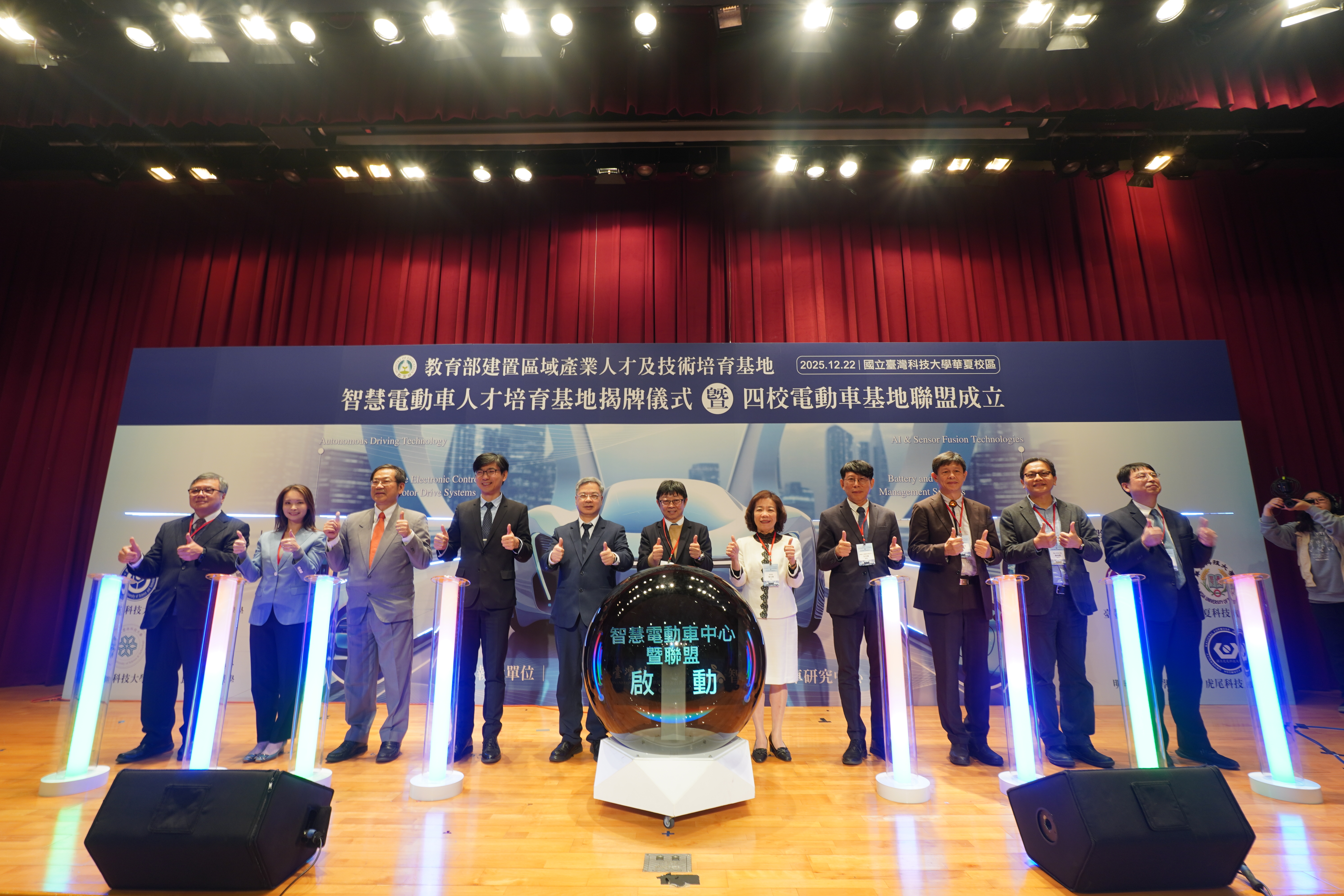
Minister of Economic Affairs Ming-hsin Kung (fifth from left), Yu-hui Yang, Director-General of the Department of Technological and Vocational Education at the Ministry of Education (fifth from right), and representatives from industry, government, and academia were present to witness the occasion, highlighting Taiwan’s advancement into a new stage of development in the intelligent electric vehicle sector.
Centered on the core principles of interdisciplinary collaboration, hands-on learning, and industry–academia integration, the Base brings together faculty expertise and research capacity from Taiwan Tech’s Department of Mechanical Engineering, Department of Electronics and Computer Engineering, Department of Electrical Engineering, Department of Materials Science and Engineering, and Department of Computer Science and Information Engineering. It comprises eight specialized laboratories covering battery applications, powertrain system testing, intelligent electronic control integration, AI-based sensing, edge computing, human–machine interaction, and smart energy management. These facilities support research on key technologies, module development, and system testing. Spanning approximately 240 ping, the Base is equipped with high-end hardware, software, and experimental facilities, providing students with a comprehensive learning pathway—from coursework and laboratory practice to vehicle modification and participation in international competitions such as Formula SAE (FSAE). The goal is to cultivate talent with advanced electric vehicle R&D capabilities.
In addition, Taiwan Tech announced the formation of a four-university Intelligent Electric Vehicle Alliance together with Ming Chi University of Technology, National Yunlin University of Science and Technology, and Kun Shan University. With Taiwan Tech as the hub, the alliance connects each institution’s research strengths, including energy batteries (Ming Chi), intelligent cockpit and autonomous driving systems (Yunlin Tech), and chip modules and charging station R&D and manufacturing (Kun Shan). This cross-university network aims to foster collaborative technology development and talent cultivation. The alliance will establish mechanisms for sharing industry–academia resources, enhancing technical exchange, and jointly proposing integrated collaborative projects, thereby enabling closer alignment between academic R&D outcomes and industry needs. This will accelerate technology transfer and commercialization, ultimately strengthening Taiwan’s overall competitiveness in the intelligent electric vehicle sector.
In terms of curriculum design, Taiwan Tech has developed two major programs: Intelligent Vehicles and Powertrain Systems. The institution works closely with partner universities, research institutions, and leading enterprises, including National Taiwan Normal University, National Formosa University, Ming Chi University of Technology, and Hwa Hsia University of Technology. Through student exchange and internship programs, more than two-thirds of the courses are co-taught by industry experts, ensuring students gain direct exposure to the latest technologies and industry demands. On average, more than 900 students are trained each year. The Base also offers in-service professional programs, industry training, and professional development workshops for senior high and vocational school teachers. To date, over 150 seed teachers have been trained, achieving both vertical advancement and grassroots development in talent cultivation.
Taiwan Tech has received NT$95 million in funding under the Ministry of Education’s Regional Industry Talent and Technology Development Base Program. Together with matching funds from the university, the total investment exceeds NT$150 million. The funding supports the establishment of diverse, high-specification hardware and software facilities, including power conversion systems, electric vehicle motor and power testing platforms, and real-time simulation and control systems, fully supporting education, technological R&D, and practical applications.
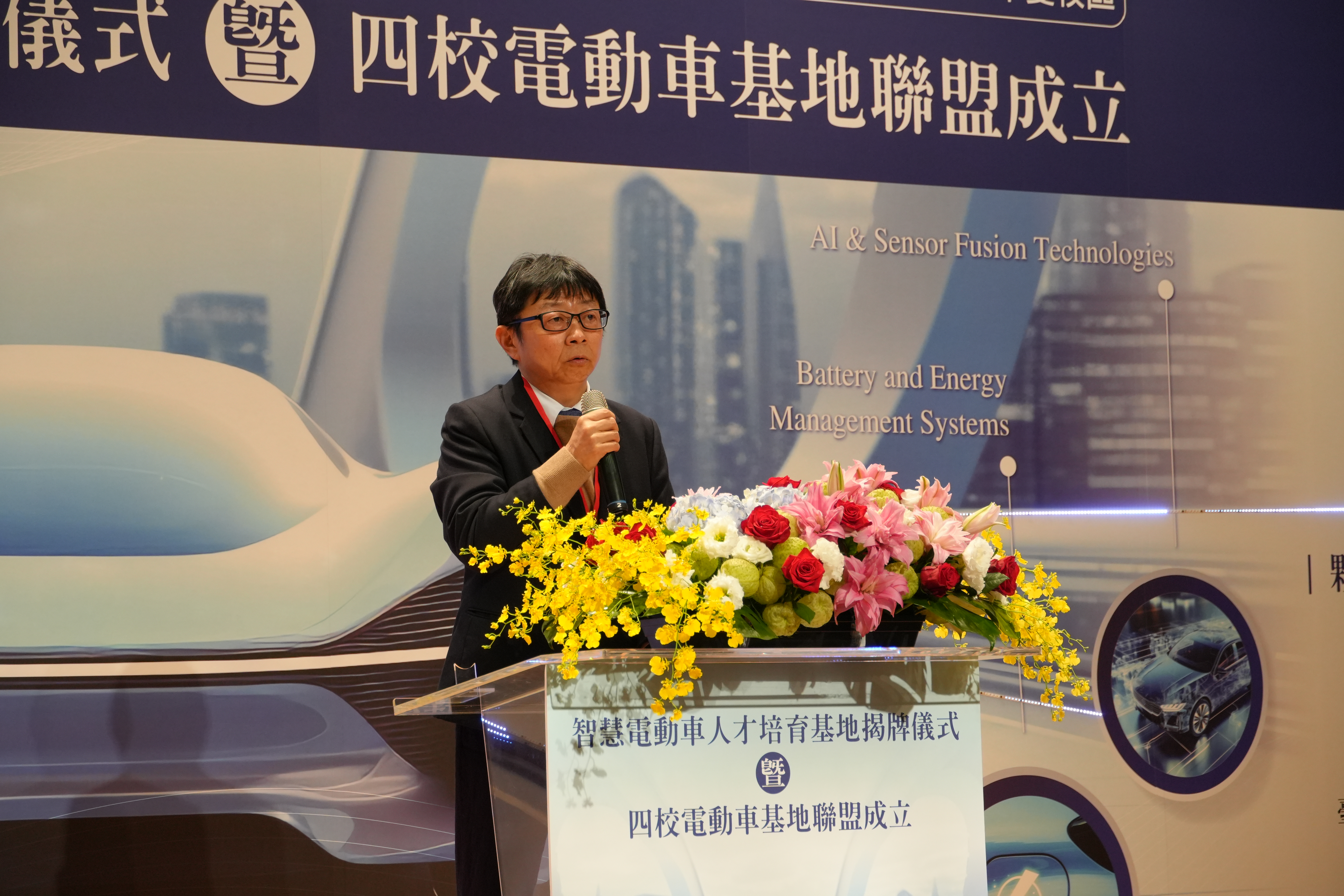
Taiwan Tech President Jia-Yush Yen delivers a speech.
In his remarks, Minister of Economic Affairs Ming-hsin Kung noted that the development of electric vehicles is a global trend and a key pillar of the 2050 net-zero carbon emissions policy. He emphasized that Taiwan holds a competitive advantage in the “three electrics” - electric motors, power electronics, and batteries - which also represents a significant opportunity for the country. Kung added that the establishment of this interdisciplinary and cross-university alliance goes beyond pursuing breakthroughs in individual technologies, placing greater emphasis on the integrated development of intelligent systems. He expressed his hope that industry–academia resources will continue to be connected to strengthen talent cultivation and jointly advance the development of Taiwan’s electric vehicle industry.
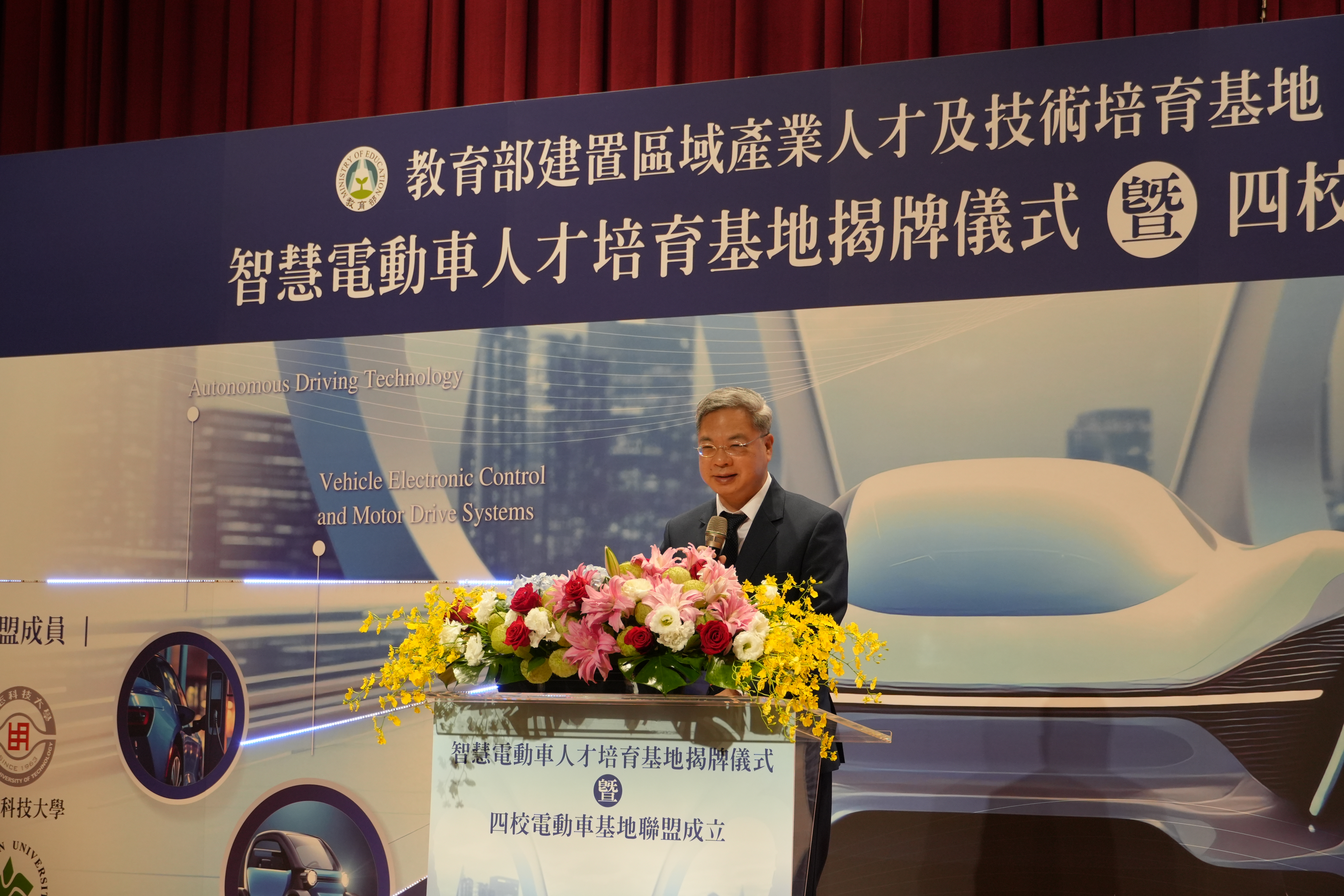
Minister of Economic Affairs Ming-hsin Kung delivers remarks.
Yu-hui Yang, Director-General of the Department of Technological and Vocational Education at the Ministry of Education, pointed out that over the past four years, the Ministry of Education has invested NT$2.4 billion to establish 20 talent development bases. She noted that electric vehicle technologies are inherently interdisciplinary and difficult for any single institution to develop independently. Accordingly, Taiwan Tech, Ming Chi University of Technology, National Yunlin University of Science and Technology, and Kun Shan University have each taken responsibility for key areas, including powertrain systems, battery technologies, autonomous driving, and charging infrastructure, respectively, forming a comprehensive “end-to-end” talent development framework. She expressed hope that through cross-university collaboration and shared industry resources, the alliance will continue to drive the advancement of Taiwan’s electric vehicle industry.
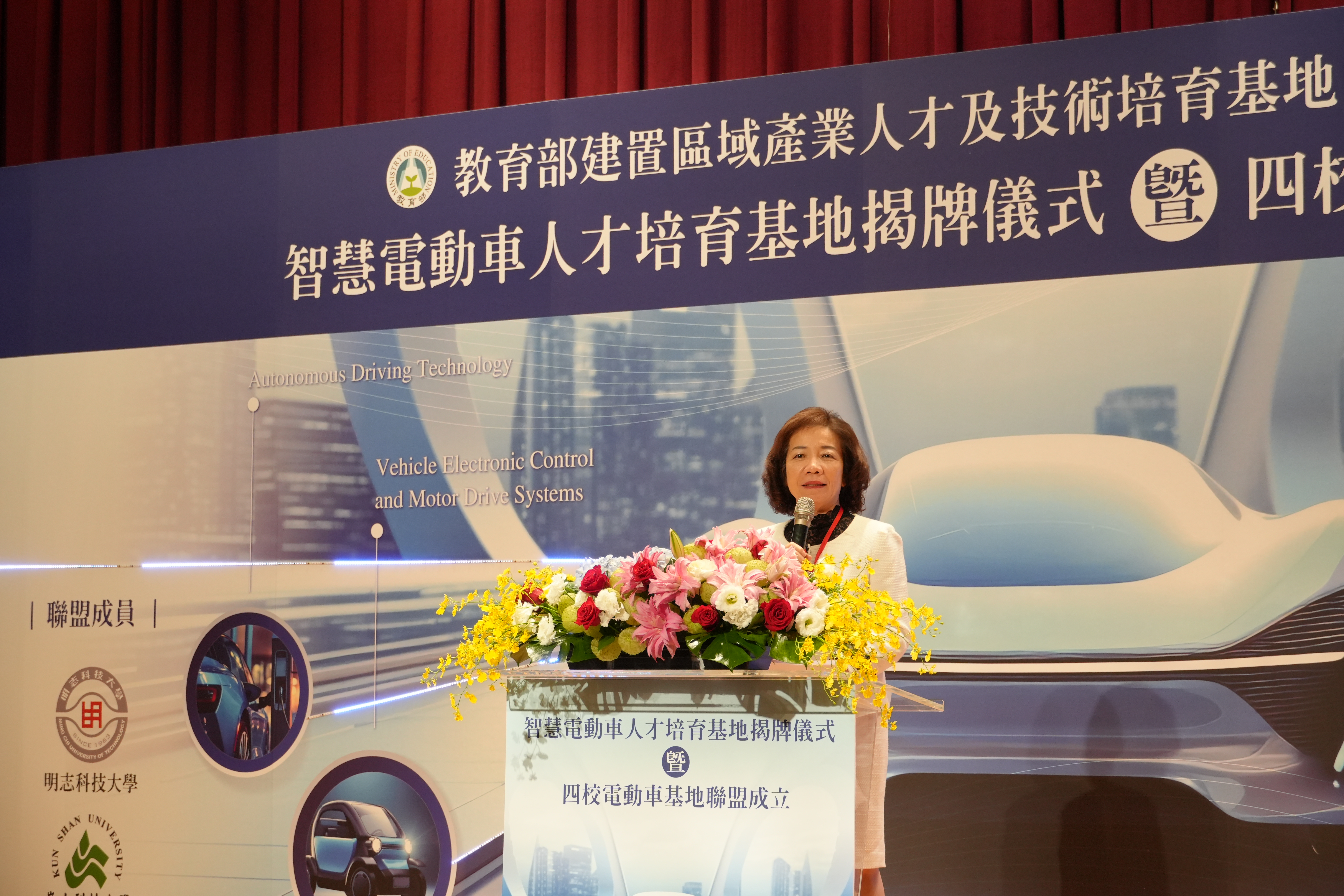
Yu-hui Yang, Director-General of the Department of Technological and Vocational Education at the Ministry of Education, delivers remarks.

Minister of Economic Affairs Ming-hsin Kung and Yu-hui Yang, Director-General of the Department of Technological and Vocational Education at the Ministry of Education, visit the electric race car independently developed by the Taiwan Tech Formula SAE team.
The Base has established long-term industry–academia partnerships with well-known domestic and international companies and institutions, including Foxtron Vehicle Technologies, Ho-Wei Car Tech. Co., Delta Electronics, and the Automotive Research and Testing Center. Through curriculum design, project-based learning, and joint R&D initiatives, students are given opportunities to directly participate in cutting-edge technology development and to build industry-ready skills. In addition, Foxtron Vehicle Technologies has donated an electric vehicle to Taiwan Tech and opened its proprietary in-vehicle computer communication interface, enabling users to read and analyze internal controller data, including signals, error codes, operating modes, and related datasets. Liang-Kuang Chen, Director of the Taiwan Tech Smart Electric Vehicle Research Center, noted that this initiative not only helps students gain deeper insights into core electric vehicle technologies, but also enables them to better understand vehicle architecture and system configurations through hands-on vehicle demonstrations, thereby enhancing the completeness of both teaching and practical training.
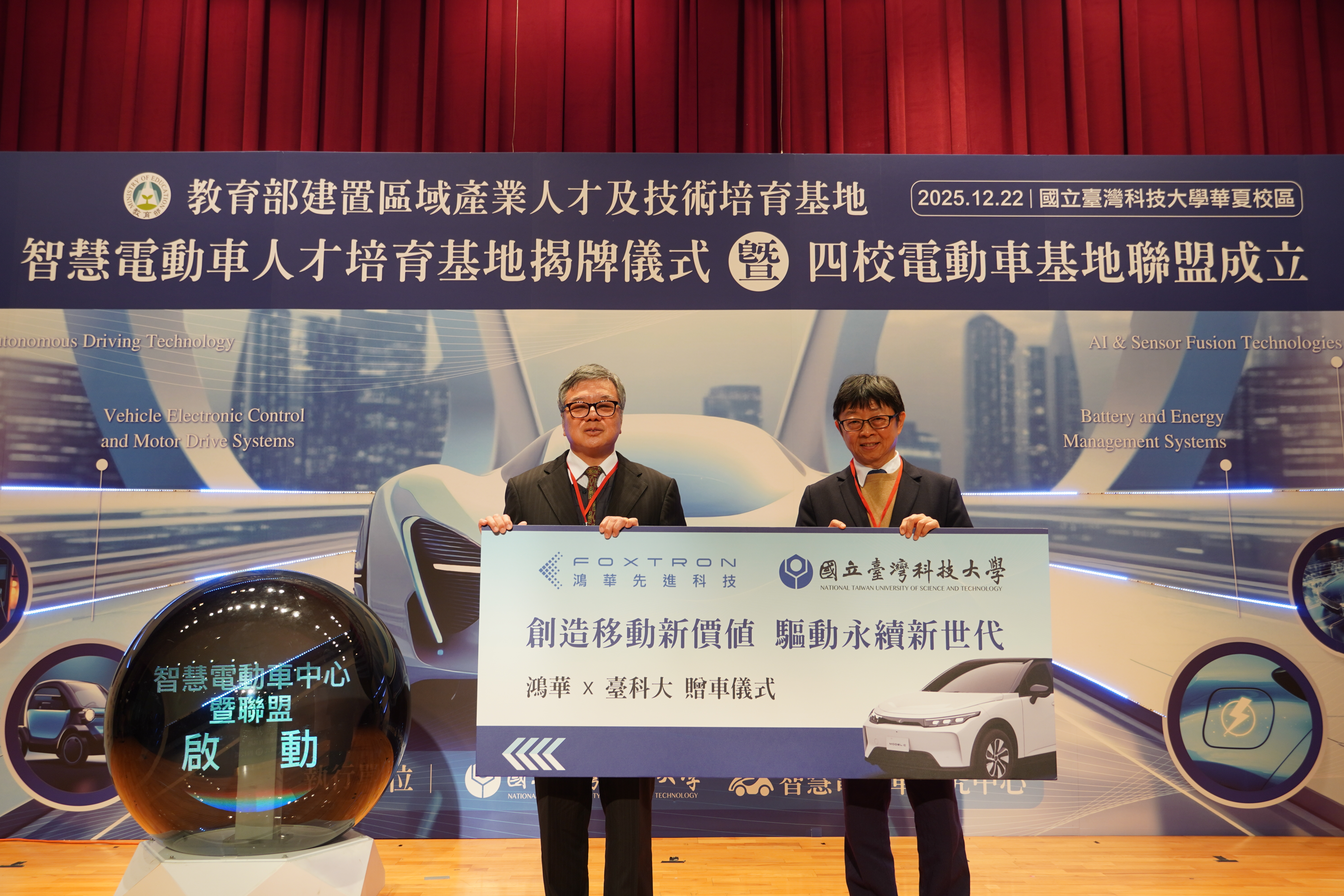
Foxtron Vehicle Technologies has donated an electric vehicle to Taiwan Tech and opened access to its proprietary in-vehicle computer communication interface, allowing students to read and analyze internal controller data, including sensor signals, error codes, operating modes, and related datasets.
Through close collaboration and cross-disciplinary integration among industry, government, academia, and research institutions, the Intelligent Electric Vehicle Talent Development Base serves as a hub that brings together education, R&D, industry–academia cooperation, and international exchange. It not only helps address the shortage of high-level R&D talent but also promotes technological innovation and industrial upgrading. Looking ahead, the Base will align with the government’s intelligent electric vehicle policies to continue cultivating industry-ready talent, support enterprises in maintaining competitiveness in the global market, and attract greater participation from faculty, students, and industry partners across disciplines, collectively advancing toward a new era of smart mobility and green transportation.

Group photo at the launch ceremony. From left to right: Chih-Yi Lin, Senior Director, Delta Electronics; Kuo-liang Weng, Associate General Manager, Lio Ho Group; En-Chieh Chang, Chairman, Eris Technology Corporation; Yu-Wen Wu, Chairman, Alltek Technology Corp.; Jung-Kuei Chen, Associate General Manager, Foxtron Vehicle Technologies; Chien-Tzu Shen, Chairman, Hota Industrial; Chun-Pin Ko, Chairman, Kymco; Chyou-Huey Chiou, Director General, Industrial Development Administration, Ministry of Economic Affairs; Ming-hsin Kung, Minister of Economic Affairs; Jia-Yush Yen, President, Taiwa Tech; Yu-hui Yang, Director-General, Department of Technological and Vocational Education, Ministry of Education; Cheng-Chien Wang, Chairman, Automotive Research & Testing Center; Shih-Hui Huang, Vice President, National Yunlin University of Science and Technology; Chun-Yen Chung, Vice President, Kun Shan University; Wen-Chen Chien, Dean, College of Environment and Resources, Ming Chi University of Technology; Charles C.J. Wang, Vice President, Taiwan Tech; Yi-Hsuan Hung, Dean, College of Technology and Engineering, National Taiwan Normal University; Hsi-Kuei Chen, President, Hwa Hsia University of Technology; and Jeng-Ywan Cheng, Executive Director, Taiwan Tech Smart Electric Vehicle Research Center.
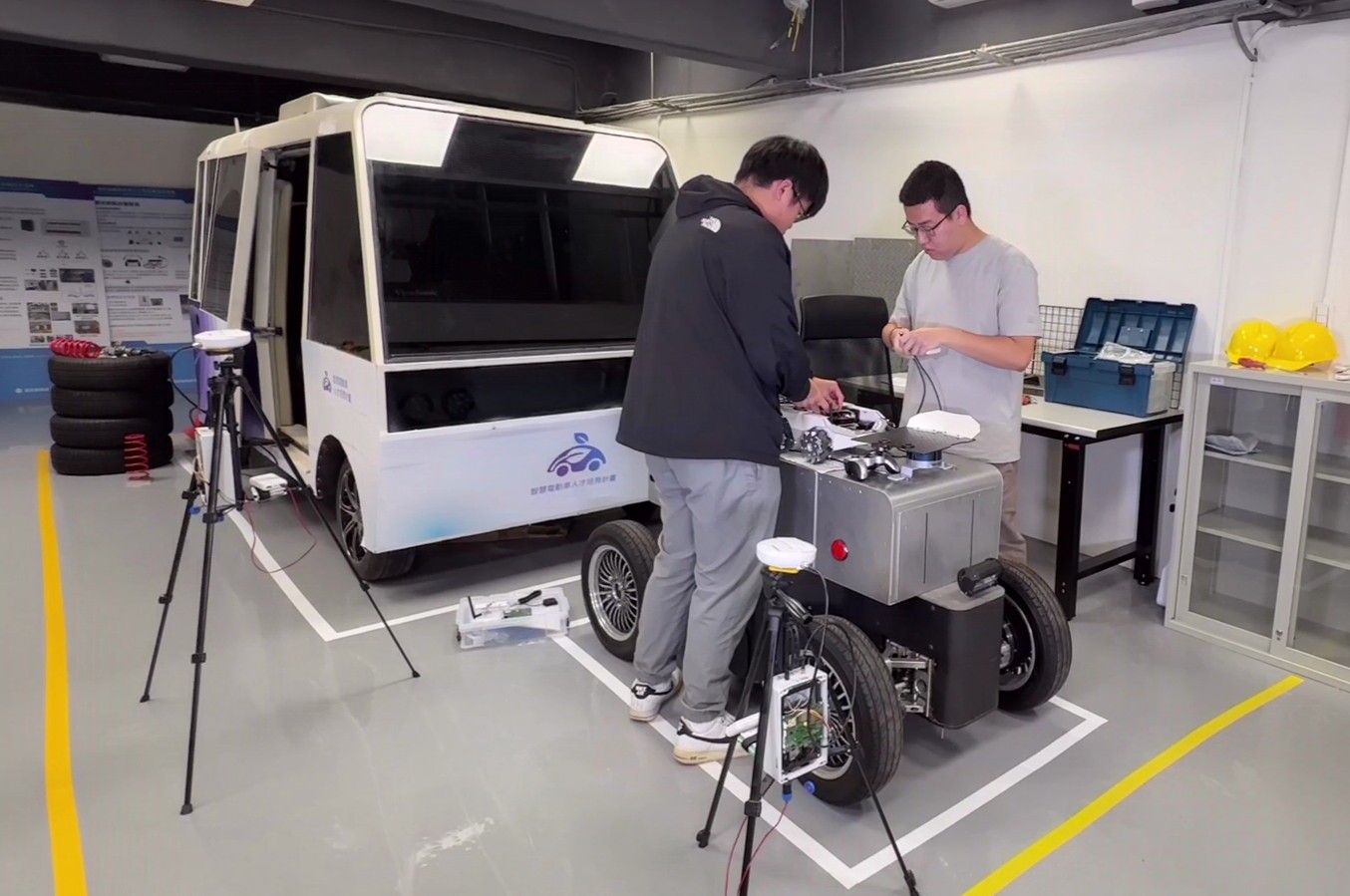
The Intelligent Condition Monitoring and Diagnosis Laboratory uses a mini electric bus as its test platform, integrating an industrial Internet of Things (IIoT) system for rotating machinery condition monitoring with high-precision inertial and attitude measurement acquisition systems to conduct electric vehicle fault diagnosis research. By detecting abnormalities at an early stage of failure, preventive measures can be taken before accidents occur, reducing the risk of personal injury and financial loss.
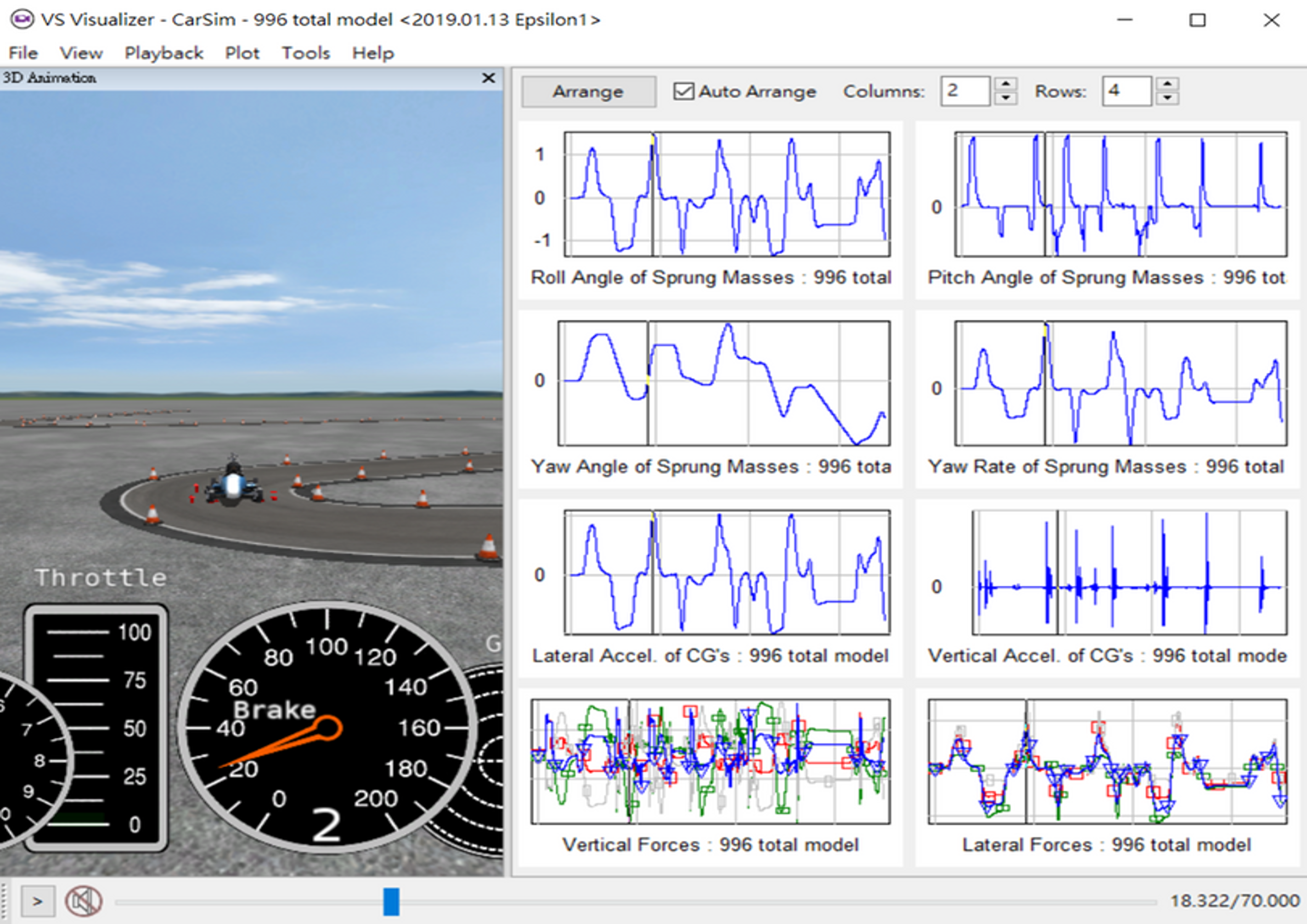
The Vehicle System Modeling and Dynamic Analysis Laboratory utilizes a hardware-in-the-loop (HIL) vehicle dynamics simulation and analysis platform, along with CarSim vehicle dynamics software, to conduct simulations, analyses, and system designs of vehicle dynamics.
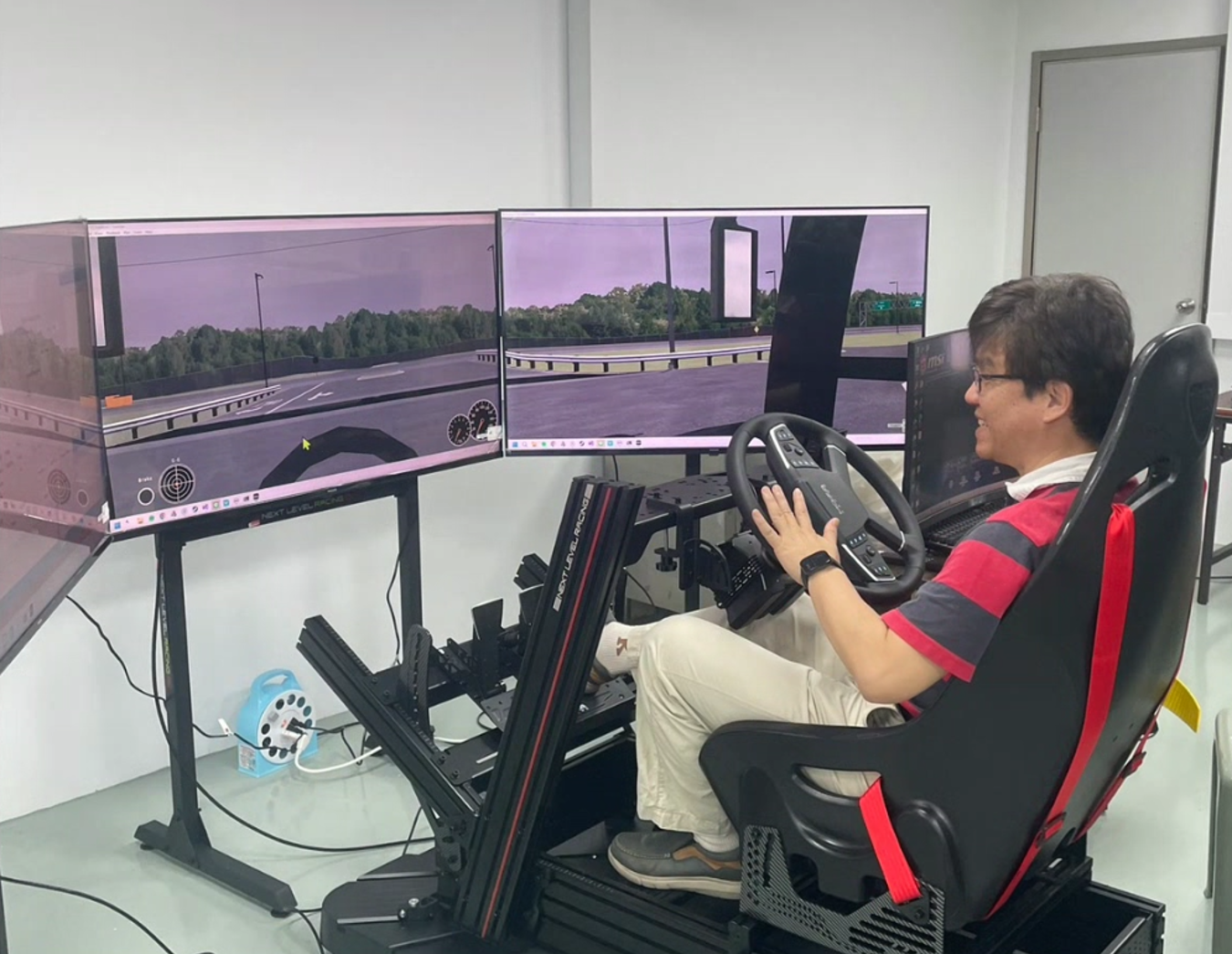
Through vehicle system modeling and dynamic analysis systems, the laboratory enables a comprehensive understanding of electric vehicle driving behavior and performance.