
The Sustainable Electrochemical Energy Development (SEED) Center at Taiwan Tech hosted the International Sustainable Electrochemical Energy Discussion (iSEED) forum from November 25 to 26. Centered on the theme “Discussion on Challenges of Solid-State Batteries,” the forum focused on materials innovation, electrolyte engineering, fabrication technologies, and industrialization challenges in solid-state batteries. Leading scholars and industry leaders from Japan, Canada, Germany, South Korea, China, and Taiwan were invited to participate, collectively exploring critical breakthroughs in solid-state battery research and next-generation energy storage technologies.

Opening group photo of the International Sustainable Electrochemical Energy Discussion Forum (iSEED).
In his opening remarks, Professor Bing-Joe Hwang, Director of Taiwan Tech’s Sustainable Electrochemical Energy Development (SEED) Center, stated that solid-state batteries are considered a core technology for next-generation energy storage. However, current solid electrolytes still face significant challenges in ionic conductivity, interfacial stability, safety, and manufacturing costs. He emphasized that ongoing research in novel materials, interface engineering, green manufacturing processes, and interdisciplinary collaboration represents key opportunities for future breakthroughs.
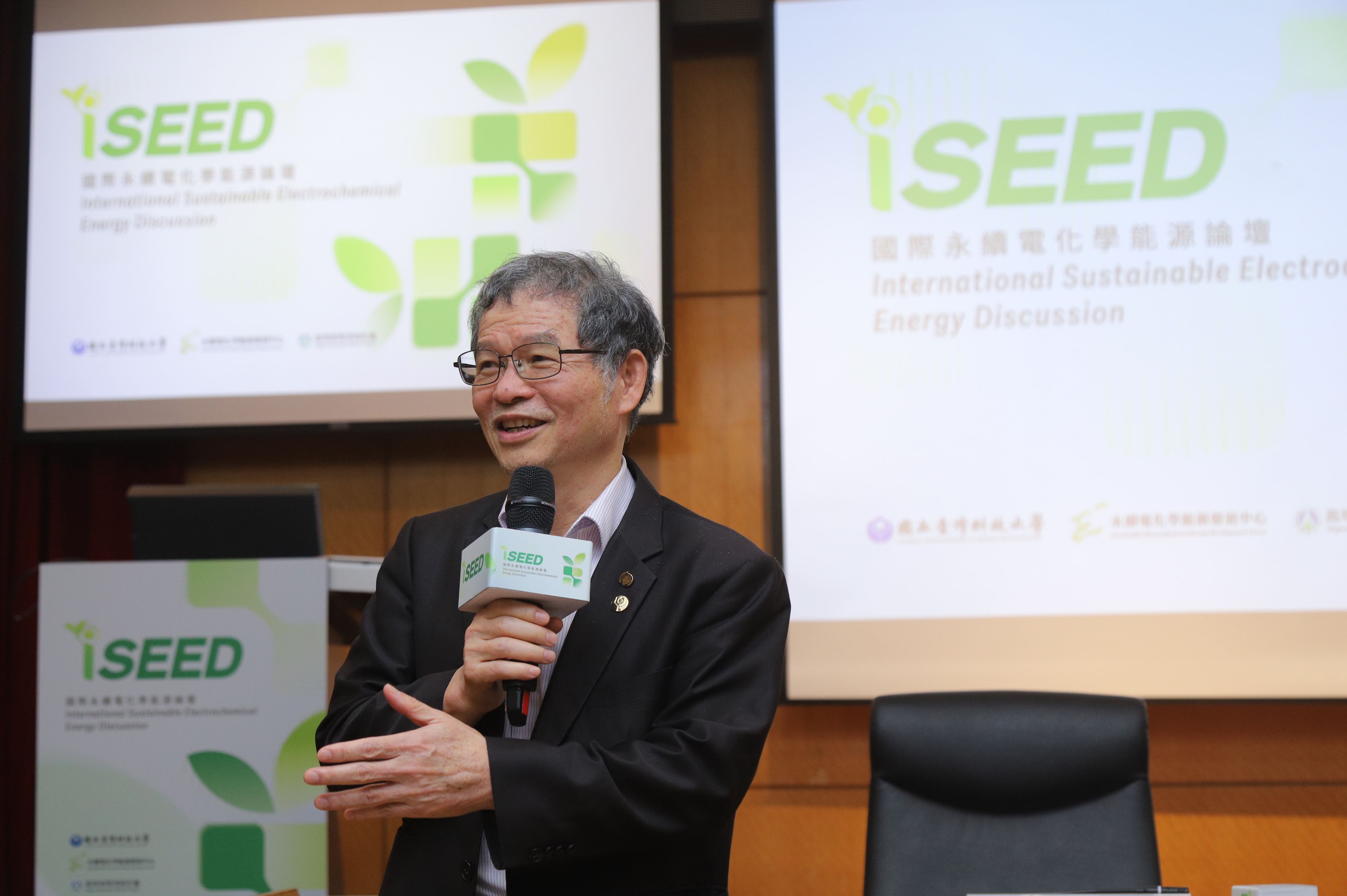
Professor Bing-Joe Hwang, Director of Taiwan Tech’s Sustainable Electrochemical Energy Development (SEED) Center, delivers the opening remarks.
The forum’s agenda and discussion sessions were organized around four key areas: sulfide electrolytes, oxide electrolytes, polymer composite electrolytes, and materials modeling and fabrication processes. By promoting more interactive exchanges, the event aimed to enable participants to fully share insights and deepen understanding, jointly exploring the next steps for solid-state batteries in both research and industry, and contributing safer, more efficient, and more sustainable solutions to the global energy transition.
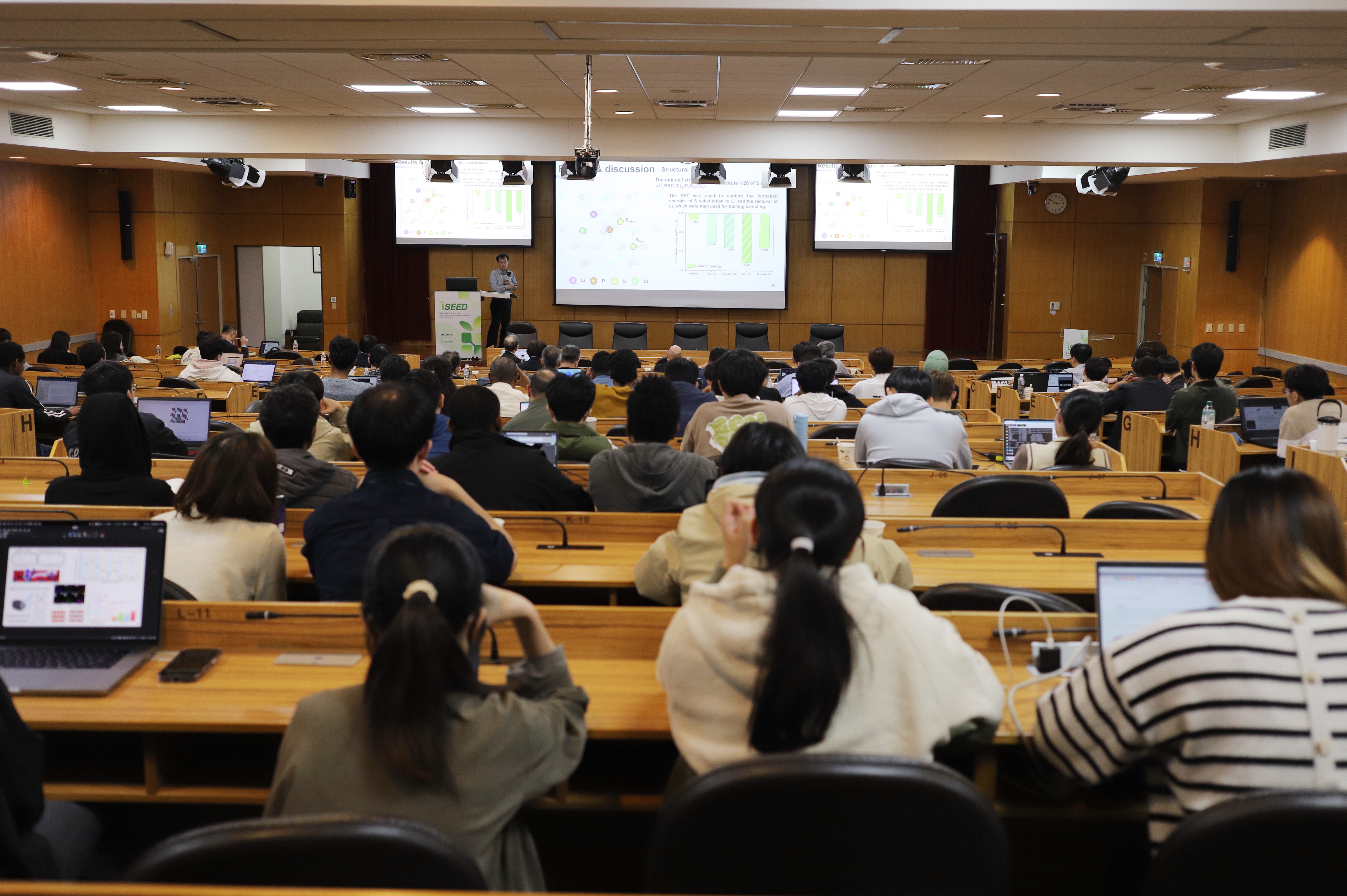
The International Sustainable Electrochemical Energy Discussion Forum, themed “Discussion on Challenges of Solid-State Batteries,” focused on materials innovation, electrolyte engineering, fabrication technologies, and industrialization challenges in solid-state batteries. The event attracted approximately 180 scholars from Taiwan and abroad in related fields.
The forum invited several prominent international speakers to share their research findings and industry insights, including Ryōji Kanno, a pioneer in the field of solid-state batteries and professor at the Tokyo Institute of Technology, Japan, and Dr. Cheng-Chieh Chao, Vice President of QuantumScape, a leading U.S. company in ceramic separator batteries. Professor Kanno presented on the synthesis, structure, and ion transport mechanisms of LGPS sulfide solid electrolytes, reviewed research progress on LGPS-type materials, and highlighted the potential advantages, current challenges, and possible future research directions for high-lithium-conductivity LGPS solid electrolytes.
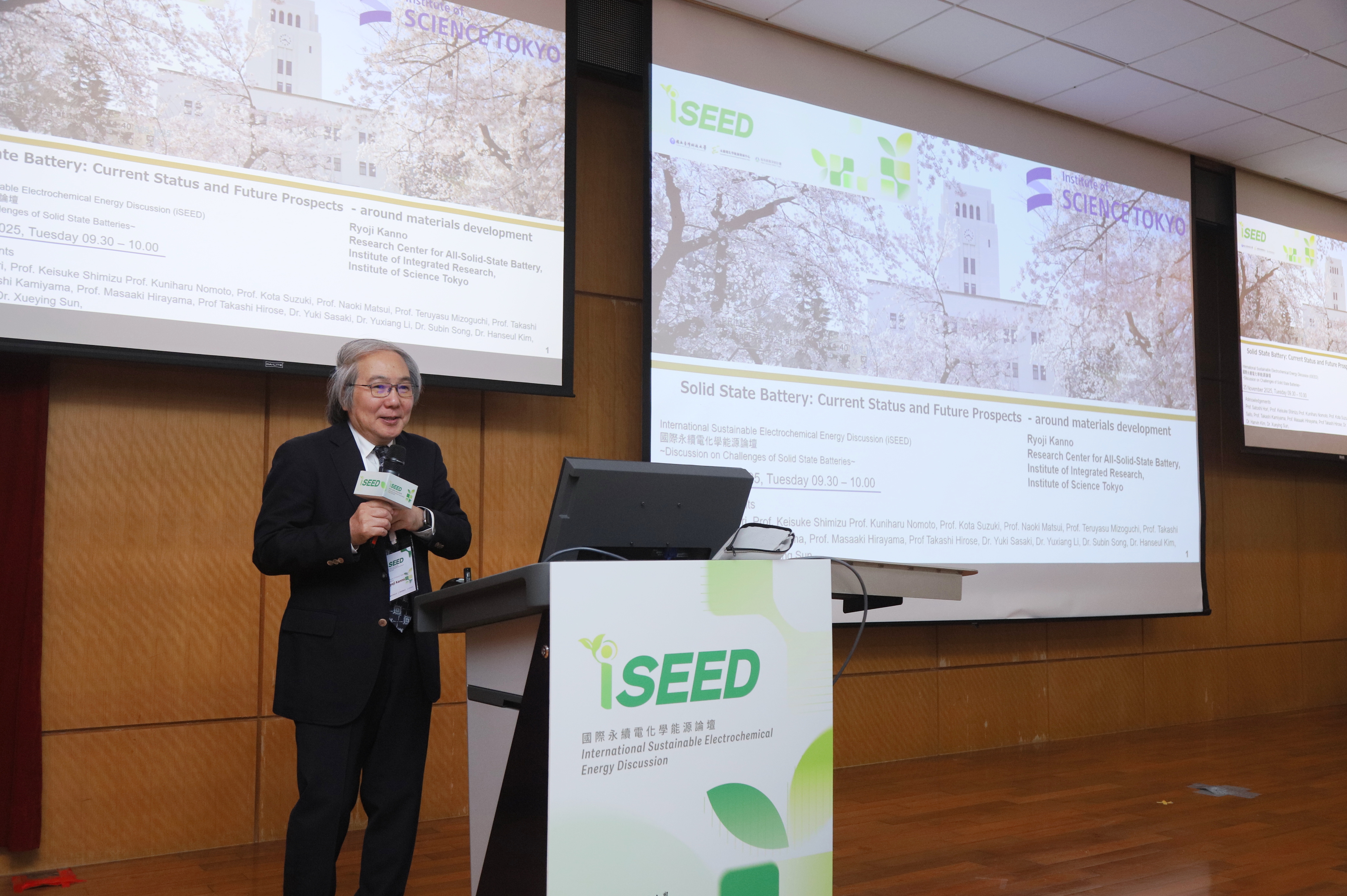
Professor Ryōji Kanno of the Tokyo Institute of Technology explained the synthesis, structure, and ion transport mechanisms of LGPS sulfide solid electrolyte materials, and reviewed the research progress on related LGPS-type materials.
Dr. Cheng-Chieh Chao, Vice President of QuantumScape, shared the company’s key solid-state battery production technology, the “Cobra” ceramic separator process. This process significantly improves production efficiency and capacity, with thermal treatment speeds 25 times faster than the previous generation, while also reducing equipment footprint-an important breakthrough toward large-scale battery factories (Giga Factories) and gigawatt-level mass production. QuantumScape also showcased its latest-generation ceramic separators (solid electrolytes), which are as thin as a hair and flexible, enabling solid-state batteries to achieve energy densities above 300 Wh/kg and charge to 80% in just 12.2 minutes, promising substantial improvements in both electric vehicle performance and safety.
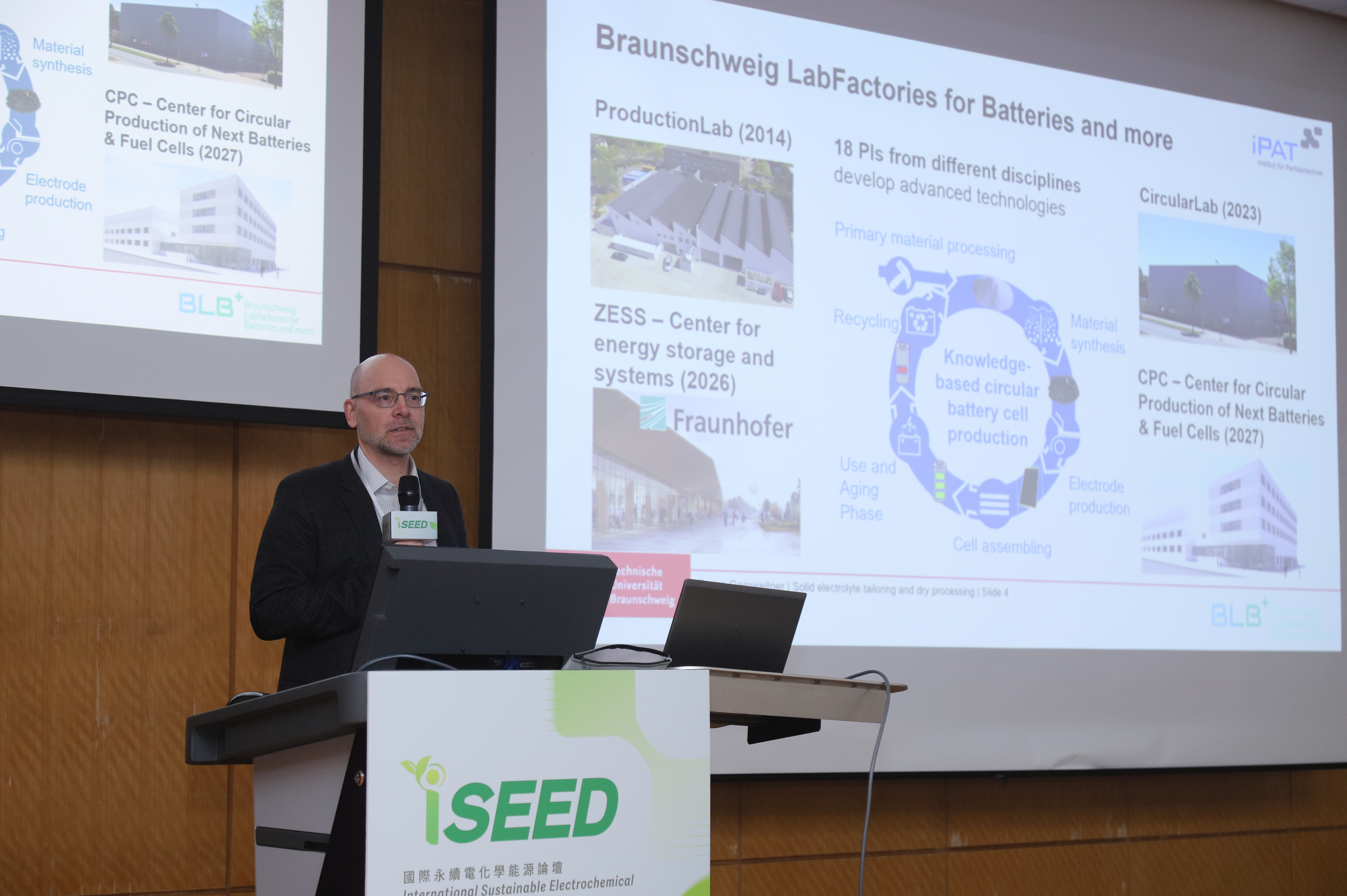
Professor Georg Garnweitner from Technische Universität Braunschweig, Germany, shared insights on the dispersion control of solid electrolytes and their applications in dry-processing for solid-state battery electrodes.
The forum featured 22 keynote presentations and 48 poster displays, with 30-minute expert discussion sessions scheduled after each presentation to enable deeper exchanges between speakers and the audience, fostering cross-disciplinary dialogue. The event attracted approximately 180 participants. On the first day, speakers included academic leaders from around the world, such as Professor Xueliang Sun from Western University in Canada, Professor Naoaki Yabuuchi from Yokohama National University in Japan, and Professor Georg Garnweitner from Technische Universität Braunschweig in Germany. They explored frontier topics including solid electrolytes, defect engineering, composite material stability, and interface design, showcasing the global research trends in solid-state battery technology.
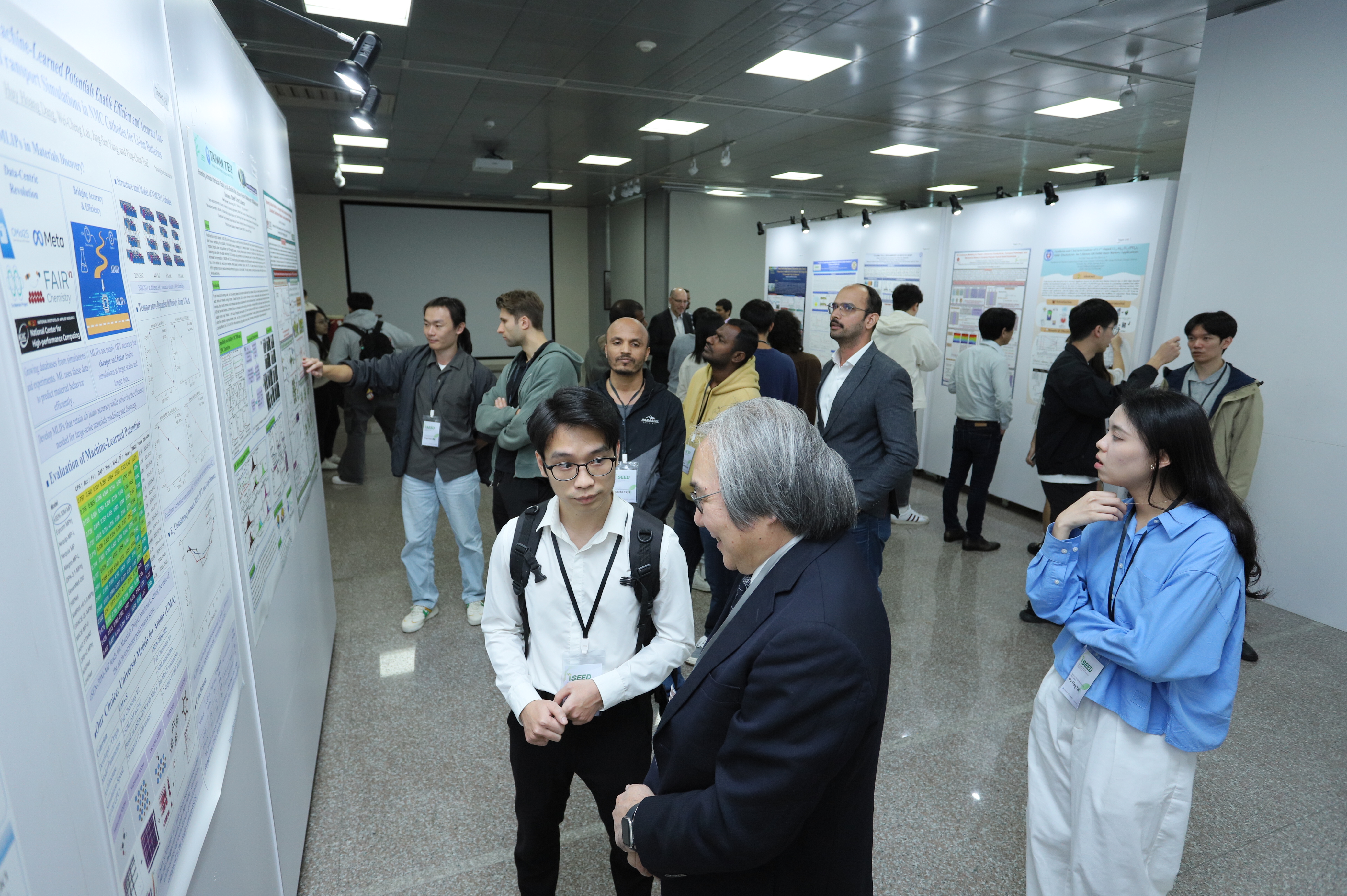
The International Sustainable Electrochemical Energy Discussion Forum featured 22 keynote presentations and 48 poster displays, with 30-minute expert discussion sessions following each session to facilitate deeper exchanges between speakers and the audience and stimulate cross-disciplinary ideas.
The Sustainable Electrochemical Energy Development (SEED) Center focuses on battery energy storage and hydrogen conversion technologies, encompassing areas such as advanced materials design, green manufacturing, and fuel cell development. This year’s iSEED International Sustainable Electrochemical Energy Forum successfully connected academia and industry from Taiwan and abroad, facilitating the exchange of cutting-edge research and cross-disciplinary dialogue. The forum not only highlighted the latest advances in solid-state battery technology but also demonstrated Taiwan Tech SEED Center’s pivotal role in integrating research capabilities, leading technological development, and promoting international collaboration in the energy sector.
Looking ahead, the SEED Center will continue to deepen international cooperation, strengthen industry–academia linkages, and leverage the expertise of 33 faculty members and international advisors to drive energy technology innovation, making significant contributions to Taiwan’s and the world’s energy transition and sustainable development.