
At the intersection of advanced materials, electronics, and real-world applications, Prof. Adhimoorthy Saravanan is shaping how next-generation sensors and intelligent devices are designed, fabricated, and deployed. An Associate Professor at the National Taiwan University of Science and Technology (NTUST), Prof. Saravanan’s work focuses on nano-hybrid semiconductor materials, self-powered optoelectronic systems, and intelligent sensors integrated for IoT and sustainable technologies.
Affiliated with both the Graduate Institute of Electro-Optical Engineering and the Department of Electronic and Computer Engineering, Prof. Saravanan has established an interdisciplinary research program that bridges materials science, device engineering, and system-level applications. Since joining NTUST, he has published more than 70 peer-reviewed journal articles, holds three patents in the United States and Taiwan, and has authored high-impact work featured in leading Q1 journals, including a 2025 review article in Materials Science and Engineering: R: Reports (IF: 26.8) and a front-cover paper in Small, Wiley (IF: 12.1).
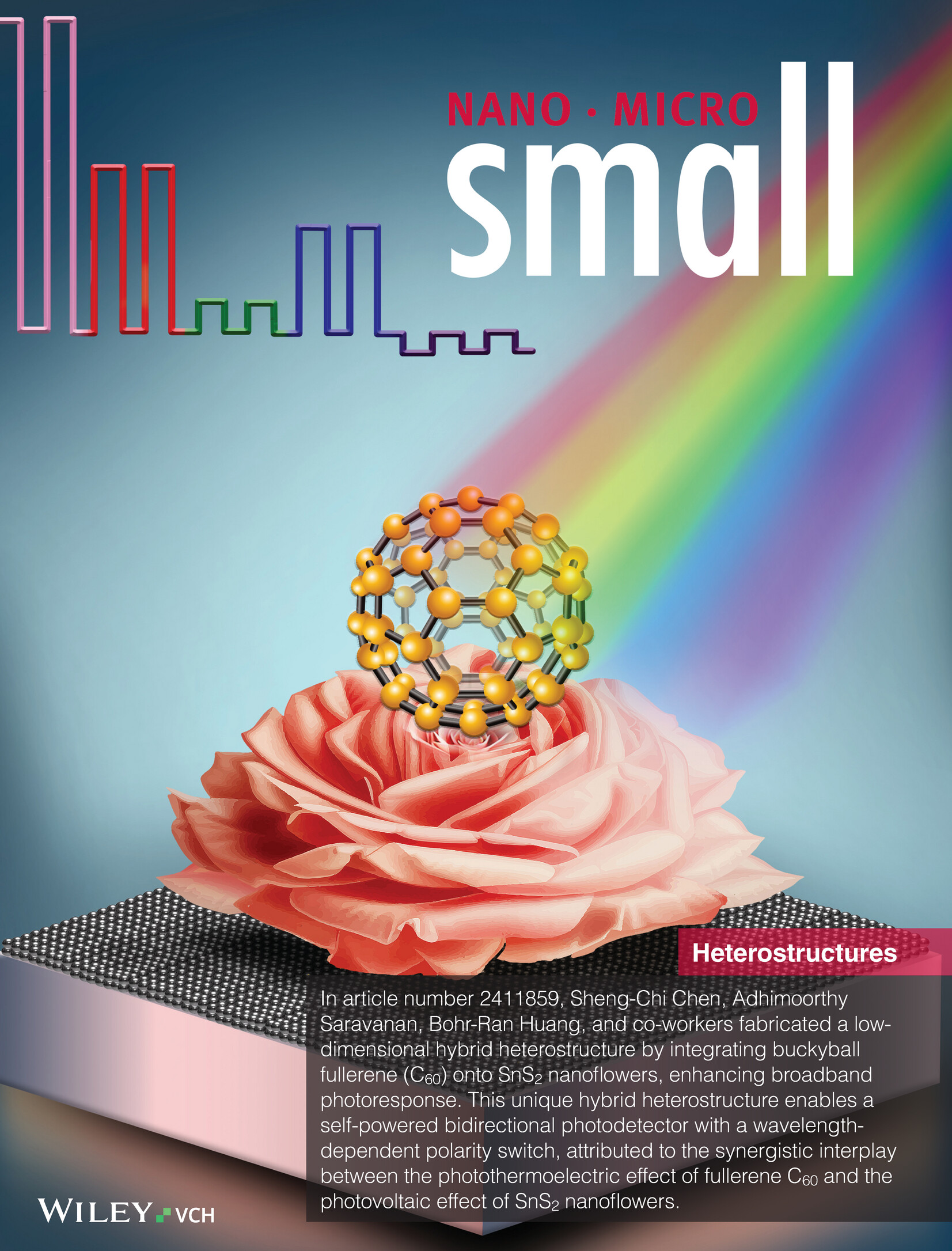
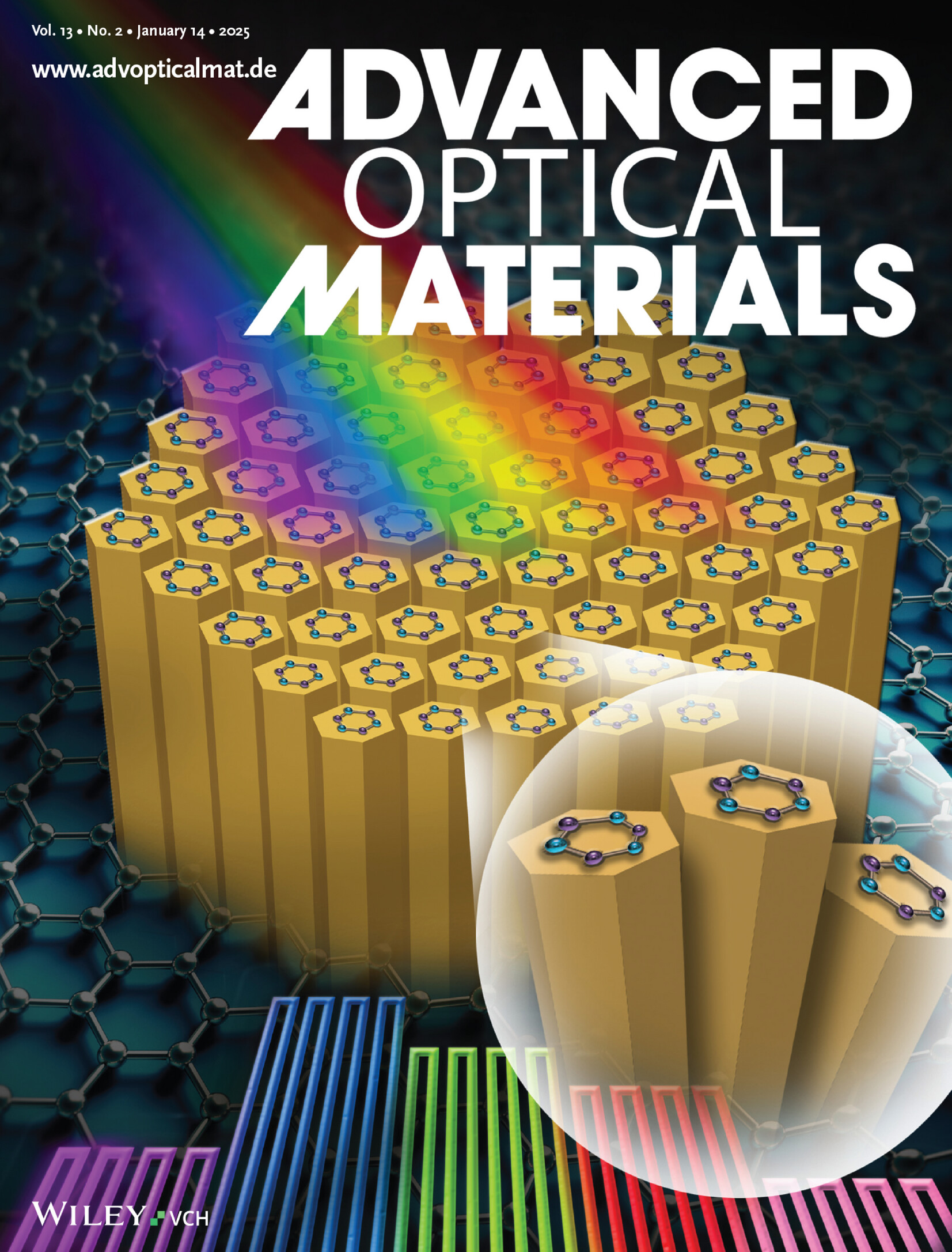
Prof. Saravanan’s research team in collaboration with Prof. Bohr-Ran Huang and Prof. Sheng-Chi Chen, with their advanced sensor research selected as the frontispiece and front.
Beyond research output, Prof. Saravanan is recognized for his commitment to teaching, mentorship, and international engagement. He is the recipient of the NTUST Outstanding Teaching Award, serves as Vice-President of the International Alumni Association, and actively supports early-career researchers through collaboration, publication guidance, and industry connections. In addition, he/she serves as an Editor for the Journal of Nanotechnology (Wiley), the Journal of the Chinese Institute of Engineers, and Micromachines.
In this interview, Prof. Saravanan reflects on his research journey, explains his work in simple terms, and shares his perspective on the future of intelligent sensing, AI/IoT sensor integration, and academic mentorship.
Q: What originally inspired you to pursue this line of research?
My research journey started from materials science, particularly with an interest in emerging low-dimensional and 2D materials. When you look at modern technology, smartphones, wearable devices, cameras, automotive systems, almost everything relies on silicon-based semiconductors. Silicon has been incredibly successful, but it is also a very mature technology with certain limitations.
Rather than trying to replace silicon, my approach has been to enhance it. By hybridizing silicon with advanced 2D materials, we can improve device performance and enable new functionalities. This idea of combining established semiconductor platforms with emerging materials became a strong motivation for my work and continues to guide my research today.
Q: If you had to explain your research to a non-expert, how would you describe it?
In very simple terms, we develop advanced sensors using new materials. Sensors are everywhere in daily life. For example, every time you take a photo with your phone, a photosensor is working in the background. Without that sensor, there is no image.
My work focuses on improving these sensors, making them faster, more sensitive, and more efficient, by using advanced materials and smart device designs. The goal is to help everyday technologies work better, whether it’s imaging, environmental monitoring, or intelligent electronics.
Q: Have you faced any major challenges that shaped your research direction?
One major challenge is that many advanced materials are difficult to synthesize with consistent quality, especially when you aim for low-cost and scalable fabrication methods. Another challenge is infrastructure. High-level semiconductor device fabrication often requires specialized facilities such as cleanrooms, which means collaboration becomes essential.
These challenges actually shaped my approach in a positive way and learning experience from my PhD adviser Prof. Bohr-Ran Huang. They encouraged me to work closely with other laboratories, universities, and international collaborators. Over time, this strengthened both the technical quality of my research and the global network around my work.
Q: Your research is often described as interdisciplinary. How does this influence its real-world impact?
Interdisciplinarity is essential because real-world problems do not belong to a single discipline. Our work combines materials science, electronics, optics, and system integration to create self-powered and intelligent sensing systems.
Many of our devices are designed for applications such as environmental monitoring, wearable sensing, and smart IoT systems. By focusing on energy efficiency, sustainability, and integration with digital platforms, we aim to move beyond laboratory demonstrations toward technologies that can realistically be deployed in society.
Q: Artificial intelligence is rapidly transforming research. How does AI connect to your work?
AI plays a critical role, especially when combined with hardware and sensing technologies. Sensors are the foundation of AI systems because they provide the data that AI algorithms depend on.
In my research, we develop sensors that can mimic certain biological functions, for example, vision-inspired photonic sensors. These devices can enable more efficient and accurate data collection for AI systems. I see AI and sensor technology evolving together, with hardware innovation being just as important as software advancement.
Q: You were the first international PhD graduate at NTUST to be promoted to Associate Professor. What did this milestone mean to you?
It was meaningful not just as a personal achievement, but as recognition of sustained effort in research, teaching, and service. For me, it reinforced the idea that consistent research output, collaboration, and mentorship matter over the long term.
Even today, I prefer working closely with my students in the lab rather than staying isolated in an office. I believe staying connected to experiments and student research keeps both my teaching and research grounded.
Q: You are also known for your teaching and mentorship. What is your teaching philosophy?
I strongly believe in practical, experience-based learning. I integrate real research examples into my courses, teach students how to write and publish scientific papers, and organize industry visits whenever possible.
Each year, I also invite experts from industry and international academia to speak with my students. This exposure helps students understand how their knowledge connects to real-world challenges and career paths.
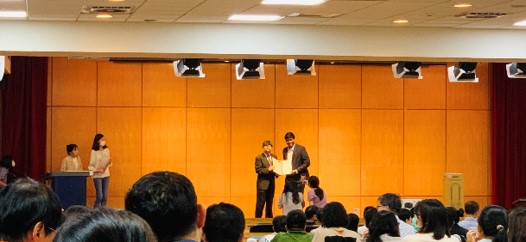
Prof. Saravanan, recognized as the first NTUST international scholar to receive the Outstanding Teacher Award and promotion to the rank of Associate Professor.
Q: How do you support international students and early-career researchers?
As an international faculty member myself, I naturally become a mentor for many international students. I focus on helping them build strong research foundations, publish high-quality papers, and connect with academic and industry networks.
I also work closely with alumni and industry partners to help students find suitable research opportunities or career placements. For me, mentorship does not end at graduation, it continues as students transition into their professional lives.
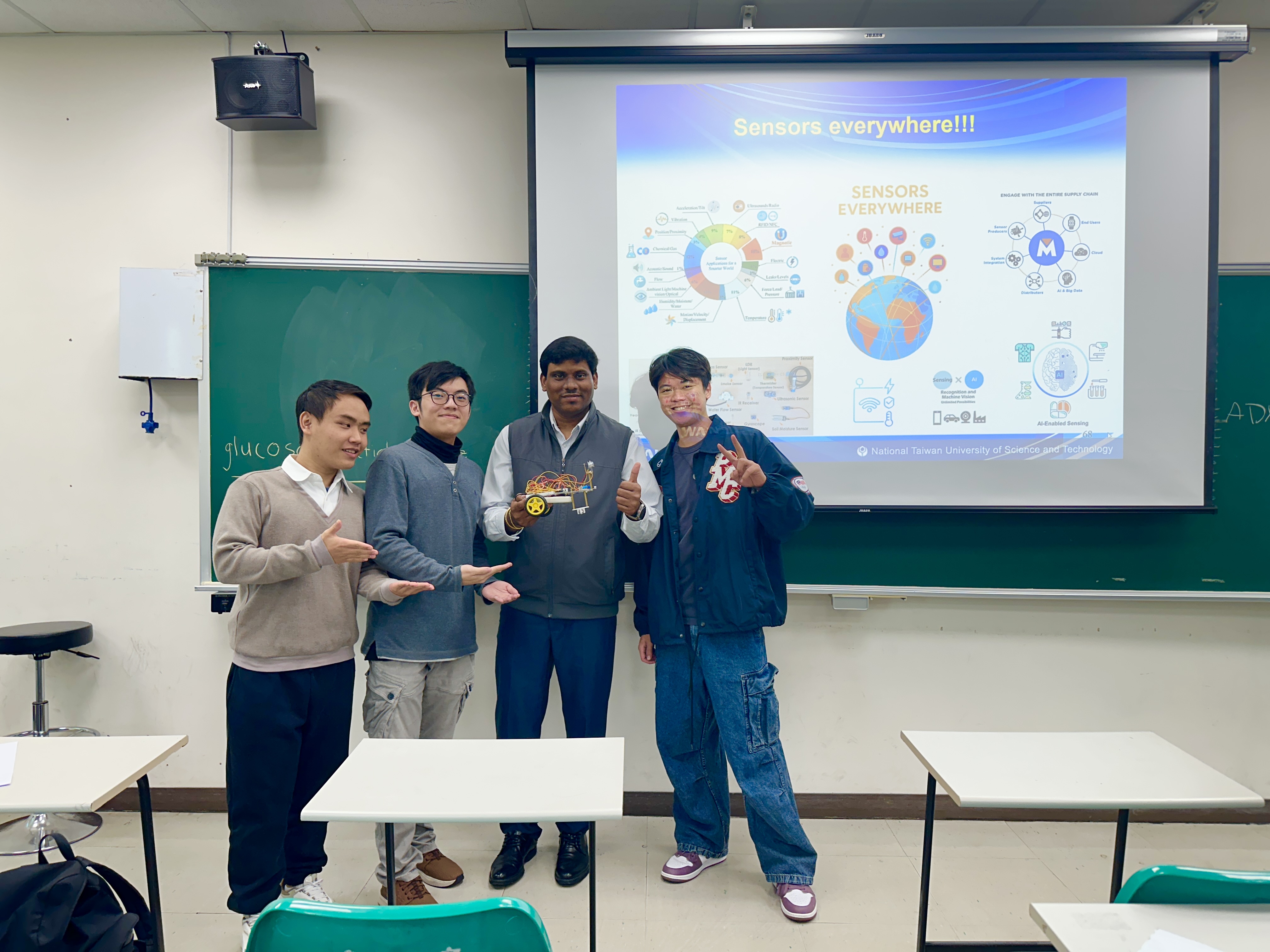
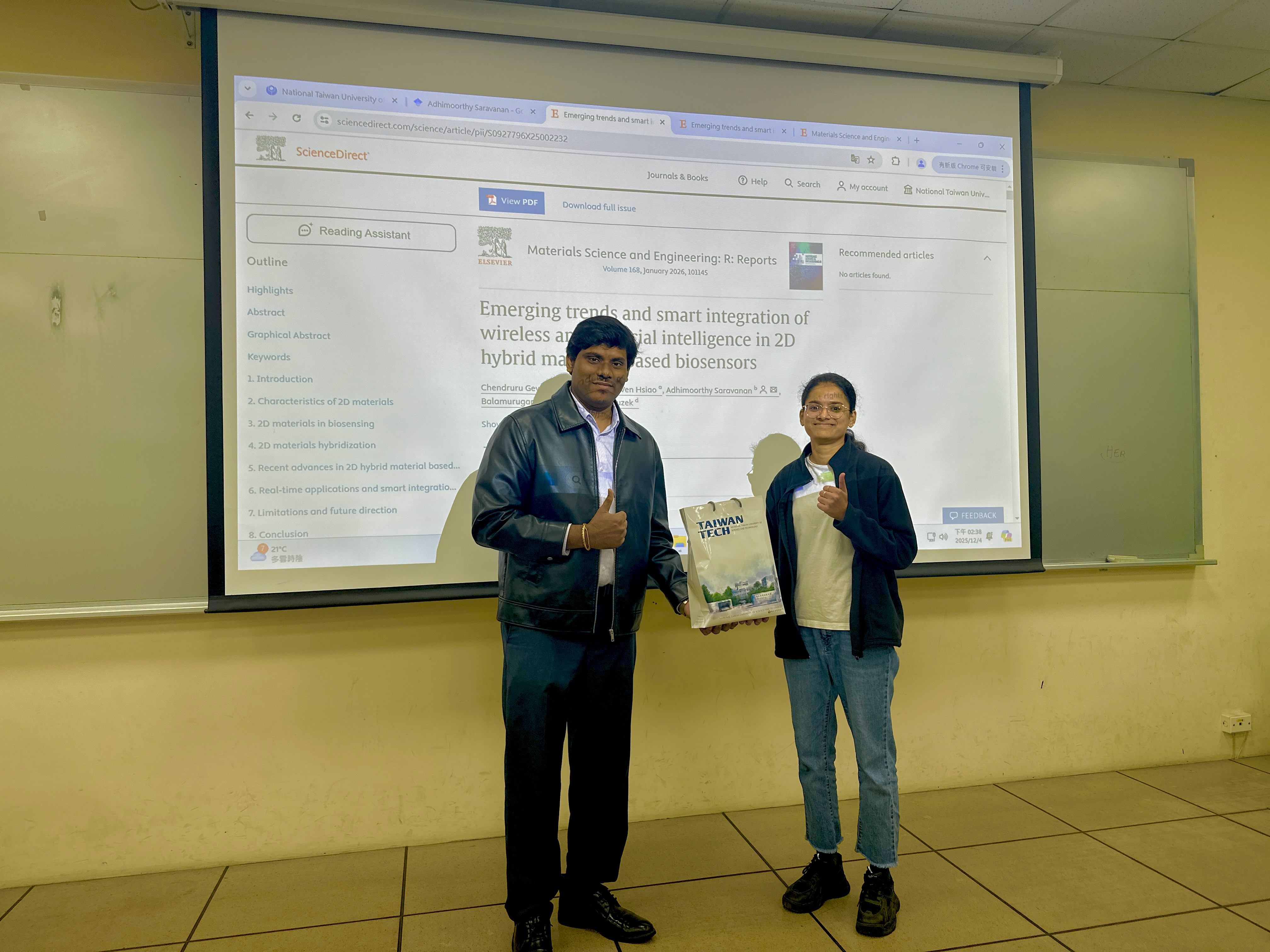
Prof. Saravanan’s research team—PhD student GeyaSree, Prof. Wesley Wei-Wen Hsiao (NTUST), and Prof. Karel Bouzek (University of Chemistry and Technology Prague, Czech.
Q: If you had to summarize your research philosophy in one sentence, what would it be?
Focus on current real-world challenges, identify meaningful research gaps, work toward practical solutions, and share the results openly so society can benefit.
Q: What advice would you give to NTUST students and young international researchers?
Work hard, but also work smart. Learn skills that are relevant to the future, especially AI-related tools, and do not hesitate to collaborate. Research today is a collective effort, and collaboration accelerates both learning and impact.
Most importantly, choose research topics that matter. When your work addresses real needs, your publications, recognition, and career growth will follow naturally.