
To promote artificial intelligence education and industry–academia co-creation, the School of Management at Taiwan Tech has partnered with the global semiconductor leader Advanced Micro Devices (AMD) to introduce AI laptops and mini PCs powered by AMD Ryzen™ AI processors. Together, they are building a next-generation AI teaching and hands-on practice environment, enabling students to connect with industry technology trends during their studies and cultivate interdisciplinary talent capable of using AI to solve real-world problems.
The School of Management at Taiwan Tech has long promoted an interdisciplinary teaching model that integrates business management and technology, aiming to nurture talent with both managerial insight and technological thinking. Through this collaboration, industry-grade AI computing equipment has been directly introduced into classrooms, allowing students to learn artificial intelligence technologies in real hardware environments. From model construction and inference applications to scenario-based implementation, this initiative comprehensively strengthens both the depth and breadth of AI education. By integrating curriculum design with industry resources, Taiwan Tech not only enables students to “learn AI” but further guides them to “use AI to solve problems”, fully embodying an educational philosophy that values both theory and practice.
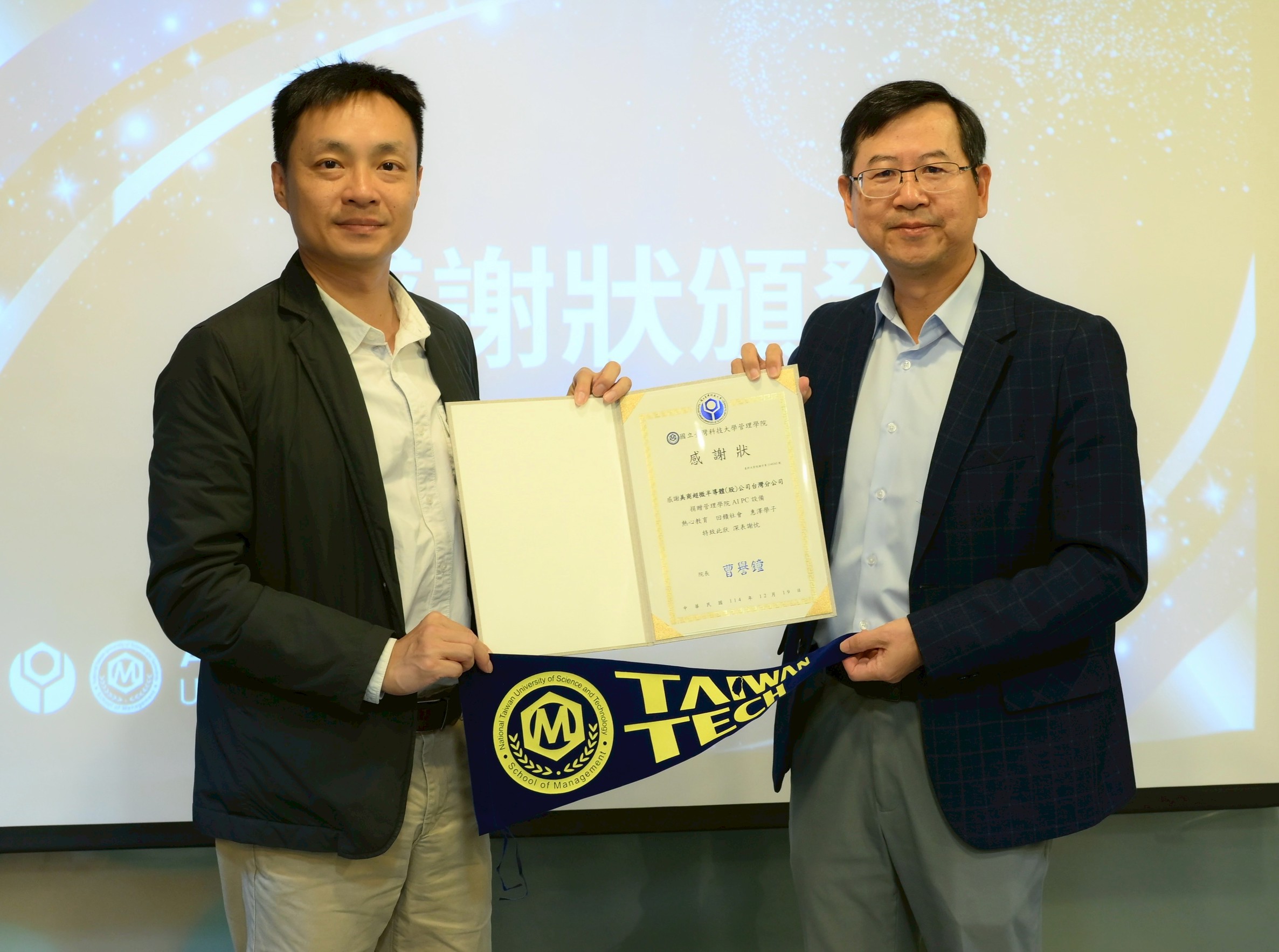
The School of Management at Taiwan Tech and the global semiconductor company AMD have joined forces to build a next-generation AI teaching and practice environment and to cultivate interdisciplinary talent capable of applying AI to real-world problem-solving. From left to right: Yu-Chung Tsao, Dean of the College of Management at Taiwan Tech; Chien-Cheng Lin, Senior Vice President of Sales, AMD Taiwan.
AMD AI PCs feature a Zen-architecture CPU, RDNA-architecture GPU, and XDNA-architecture NPU, with unified memory, enabling effective support for large language model deployment. Professor Yu-Chung Tsao, Dean of the School of Management, stated that this collaboration enables Taiwan Tech to establish a truly “deployable and repeatedly testable” AI teaching environment at an affordable cost. He emphasized, “We hope that AI technology will no longer be the privilege of a few, but an innovative language that every student can master”.
In terms of curriculum design, Professor Yu-Chung Tsao hopes students will understand that “AI does not only exist in the cloud; it can be created, modified, and applied in real-world scenarios on the computer in everyone’s hands”. With support from the AMD University Program, the College of Management’s AI application practice courses cover core concepts such as local LLM agents and retrieval-augmented generation (RAG), enabling students to experience the complete workflow of local computing for AI inference and applications. The courses also incorporate various practical cases, including object detection using computer vision (CV) models and voice-based interaction through automatic speech recognition (ASR) models, helping students understand how AI is applied in industrial and everyday-life scenarios.
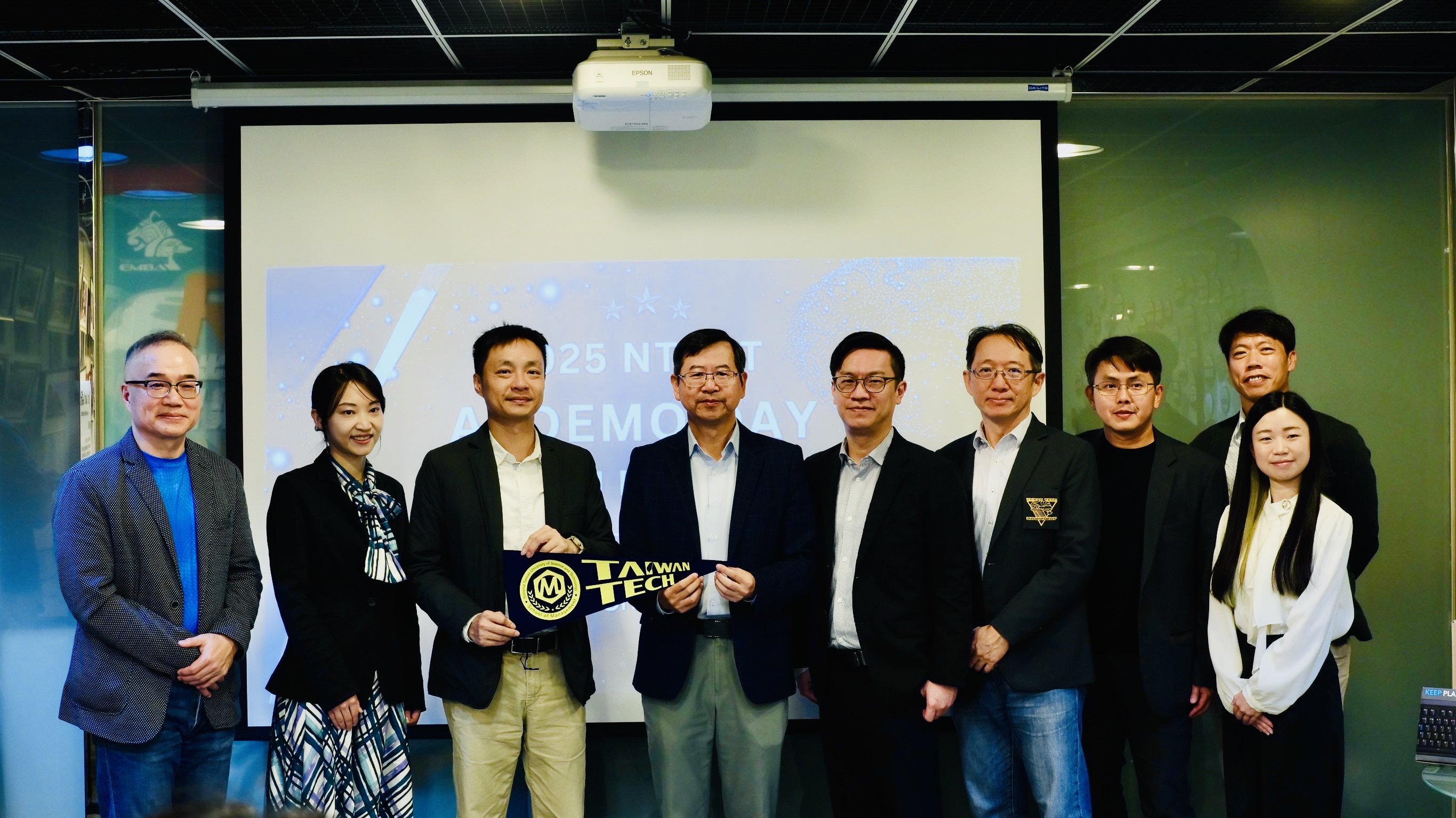
The School of Management and AMD jointly promote AI professional application courses, deepening industry–academia collaboration through hands-on coursework and equipment operation. The photo shows a group photo from the AI Demo Day Results Showcase. From left to right: Cheng-Kang Chen, Professor, Department of Information Management; Hsiao-Mei Lin, Assistant Professor, Department of Information Management; Yu-Chung Tsao, Dean of the School of Management; Jian-Cheng Lin, Senior Vice President of Sales, AMD Taiwan; Hsun-Yu Ma, Sales Manager, AMD Taiwan; Shi-Woei Lin, Vice Dean of the School of Management; Shih-Hao Lu, Vice Dean of the School of Management; Chao-Lung Yang, Chair of the Department of Industrial Management; Shan-Ya Yang, Software Engineer, AMD.
Jian-Cheng Lin, Senior Vice President of Commercial Business at AMD Taiwan, pointed out that “AI has become a key skill across all fields. Through collaboration with academia, we hope students can gain earlier exposure to real application environments, understand how AI technologies are used to solve real-world problems, and inspire the next generation of innovation”.
With the powerful computing capabilities of AMD AI PCs, students can run various mainstream programming language models without relying on cloud resources, creating a local AI server environment that supports offline operation and provides an ideal platform for AI hands-on teaching. This local AI computing capability allows students to repeatedly experiment, compare model performance, and fine-tune parameters without cloud limitations, truly achieving “learning by doing and learning from mistakes”, significantly enhancing both the speed and depth of AI learning.
Hsiao-Mei Lin, Assistant Professor in the Department of Information Management and instructor of the AI application practice course, stated that the course adopts a project-based learning (PBL) approach to stimulate students’ collaborative problem-solving potential and encourage them to transition from AI users to creators and contributors. She emphasized, “Being able to build AI locally on one’s own is the most important learning milestone in the AI era. We also hope students will use AI to create works that the world can see”.
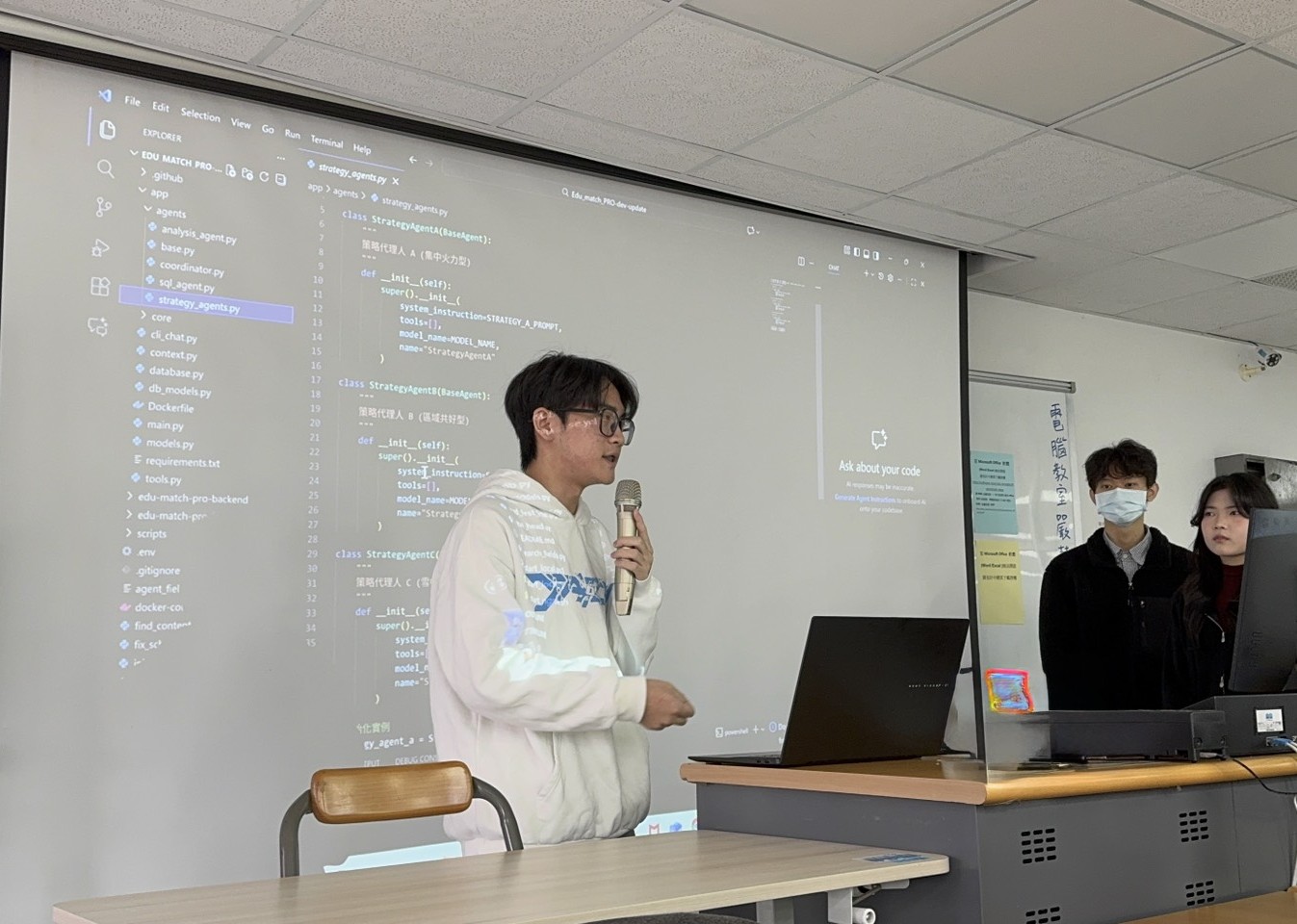
Hsiao-Mei Lin, Assistant Professor in the Department of Information Management, stated that the AI application practice course adopts a project-based learning (PBL) approach to stimulate students’ collaborative problem-solving potential and encourage them to transition from AI users to creators and contributors.
In addition, AI PCs equipped with the AMD Ryzen AI Max+ 395 processor can easily support large language models with tens of billions of parameters, enabling a single AI PC to complete full AI experimentation and application development. Student teams applied what they learned in class and utilized hands-on resources to unleash creativity, completing multiple projects that integrate AI with real-world scenarios. These projects include fruit quality inspection for smart agriculture, a dance posture detection system combining AI and sports data analysis, and an intelligent map project using RAG technology for route recommendation.
Other students developed a campus AI assistant to help international students quickly locate medical resources, demonstrating Taiwan Tech students’ ability to apply technology to real societal needs. Some student project results are also planned to be released as open source in the future, contributing back to the open-source community and promoting a positive cycle in Taiwan’s AI ecosystem.
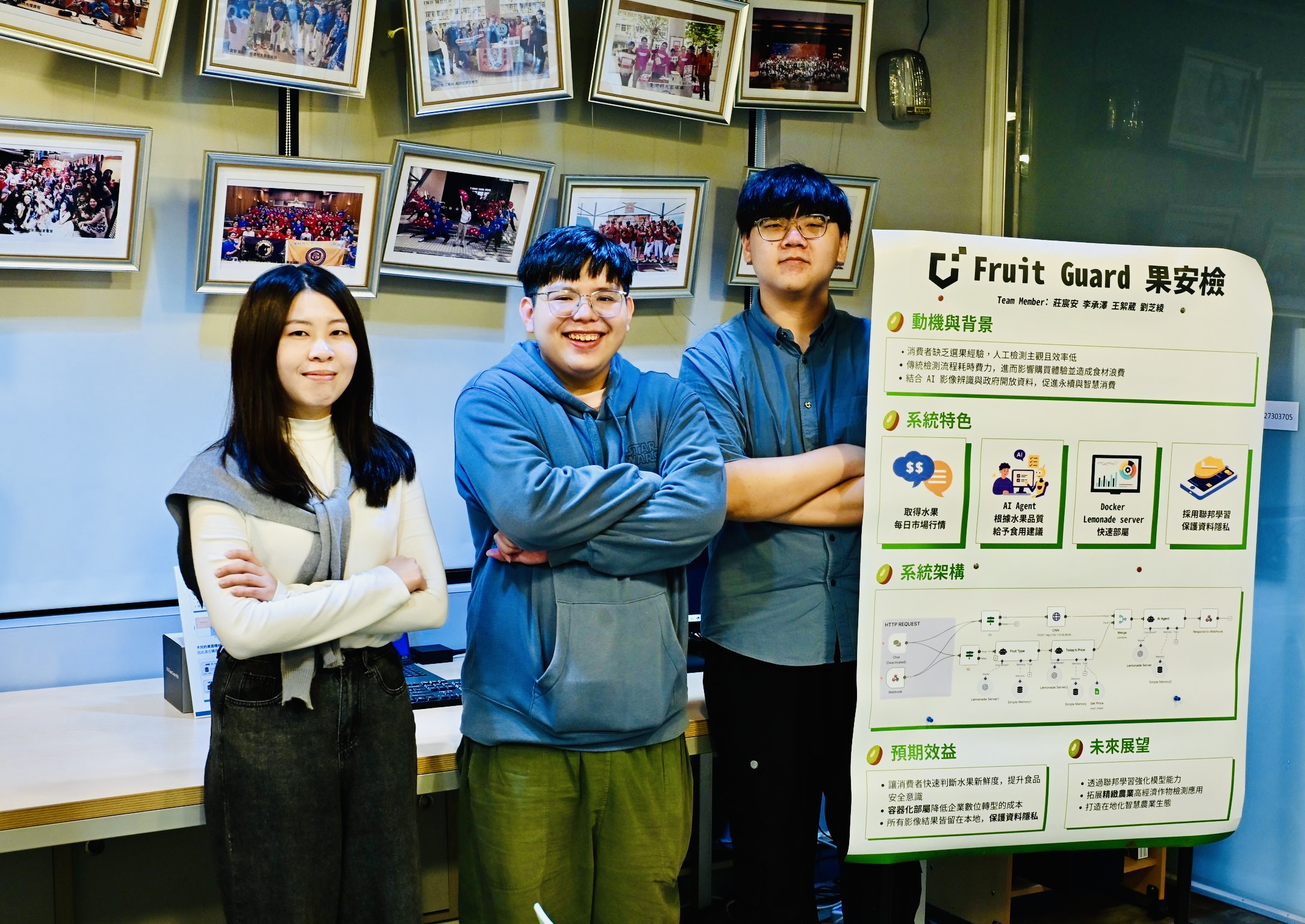
A student team combined AI image recognition with government open data to develop the fruit quality inspection system “Fruit Safety Check”, helping consumers quickly assess fruit freshness and enhance food safety awareness.
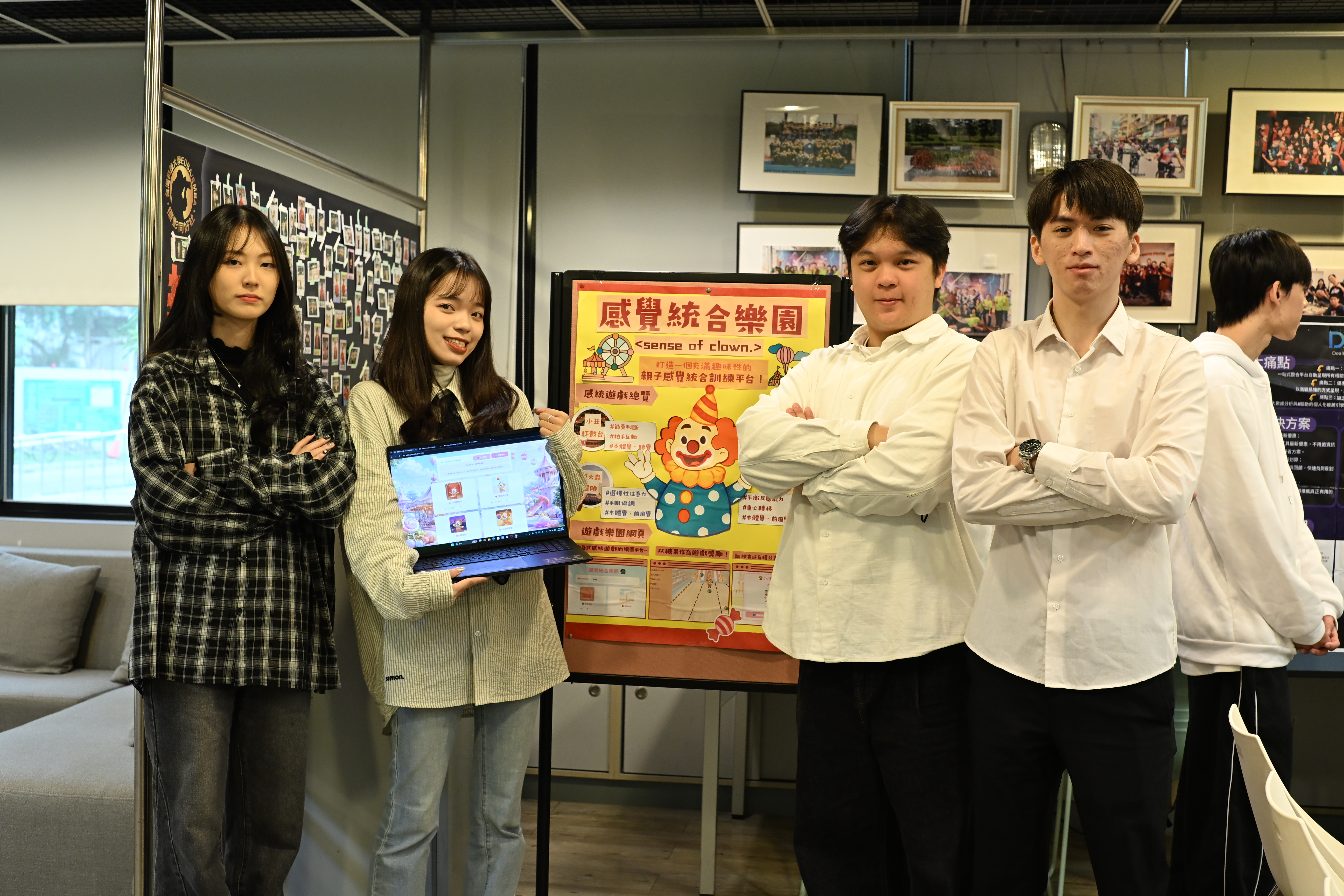
A student team developed an online sensory integration game to build a parent–child sensory integration training platform titled “Sensory Integration Wonderland,” designed to train young children’s balance response and hand–eye coordination abilities.
Associate Professor Shih-Hao Lu, Vice Dean of the School of Management, noted that through this collaboration, students not only completed technical implementations but also designed deployable prototypes starting from user needs and industry scenarios, showcasing the interdisciplinary integration capabilities of a new generation of AI talent. Looking ahead, this partnership is expected to impact more than one hundred emerging AI students, help the College of Management establish a sustainable AI teaching system, and respond to industry demand for advanced AI professionals.