
As the world faces growing energy shortages and water resource crises, Professor Wei-Song Hung of the Graduate Institute of Applied Science and Technology at Taiwan Tech has led his research team to successfully develop a multifunctional graphene-based membrane capable of “generating electricity while purifying water”. Nicknamed the “Black Magic Carpet,” the technology is powered by solar energy and wave energy. As long as sunlight and water movement are present, it can simultaneously produce clean water and electricity. After receiving multiple prestigious awards, Professor Hung’s team has further advanced the technology toward modular applications and practical low-carbon manufacturing processes.
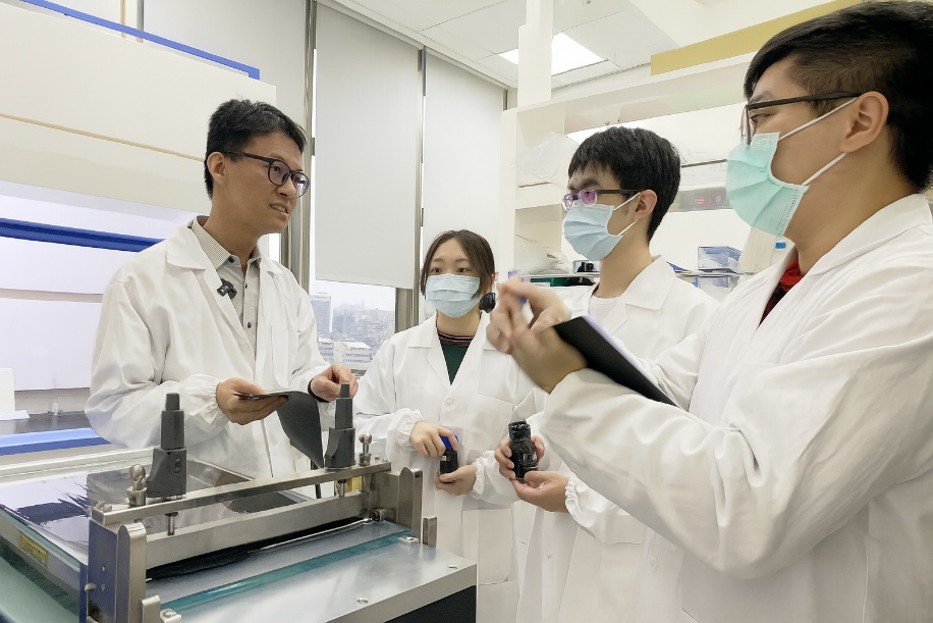
Professor Wei-Song Hung (left) hopes students can transform research into products, step onto the global stage, and even attract industry collaboration.
The research results of the “Black Magic Carpet” were published in the internationally renowned journal Advanced Functional Materials. The technology has also received numerous accolades, including the 2022 R&D 100 Awards, the championship and Best Popularity Award of Taiwan in the 2025 Net Zero Emissions International Competition, and, most recently, the Honorable Mention Award at the 2025 Huali Innovative Materials Competition organized by the Chinese Materials Science Society.
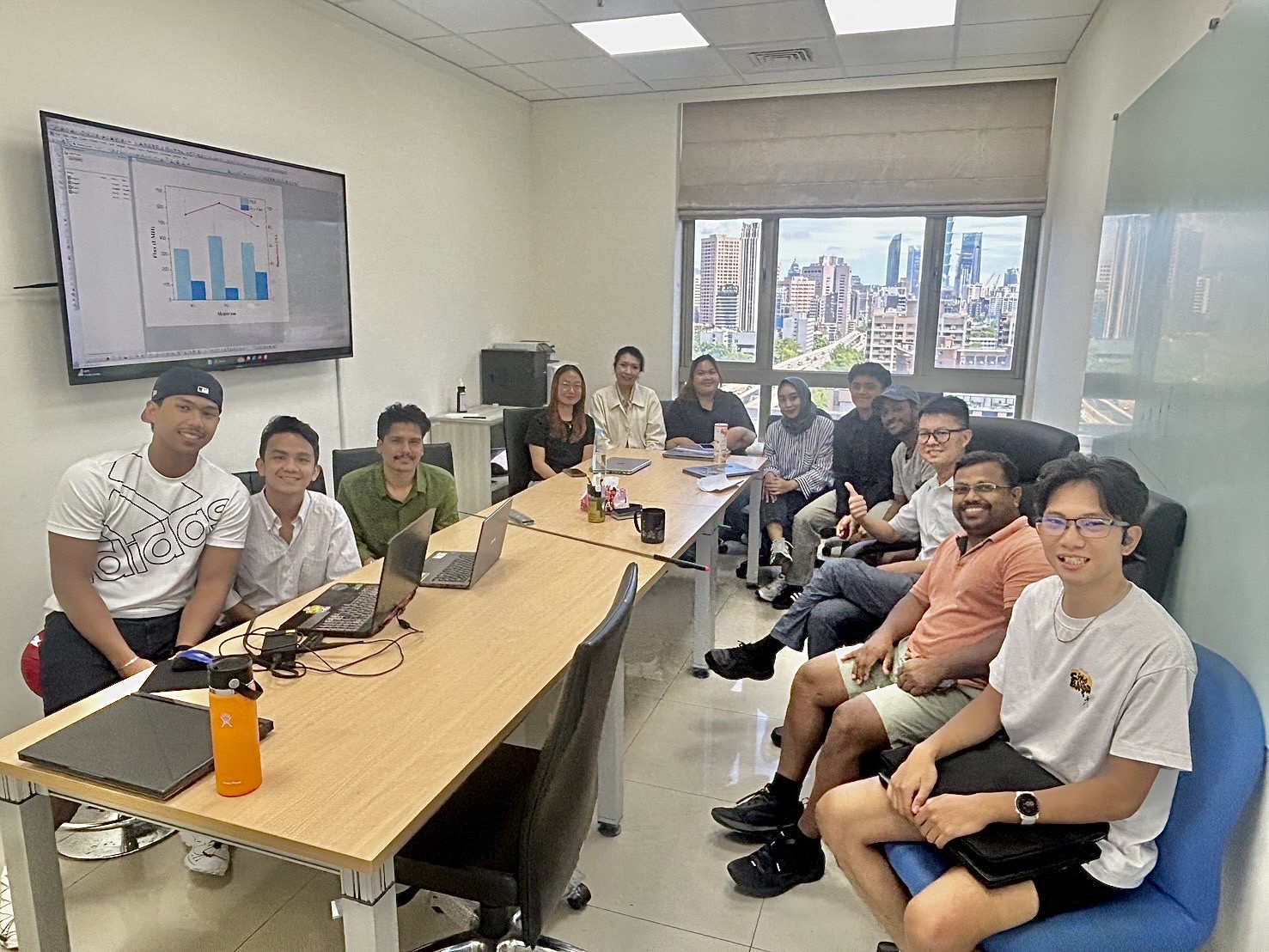
Professor Wei-Song Hung (third from right) frequently holds meetings and discussions with international students.
This graphene-based thin film, known as the “Black Magic Carpet”. draws conceptual inspiration from Phra Phrom (the Four-Faced Buddha), symbolizing the integration of four major environmental functions: solar evaporation, power generation, pollutant degradation, and self-cleaning. Professor Hung explained, “We hope a single membrane can serve as a multifunctional platform - capable of filtration, power generation, and sensing”. He emphasized that this is not merely a laboratory concept, but a cross-disciplinary integration direction for future green energy and smart materials.
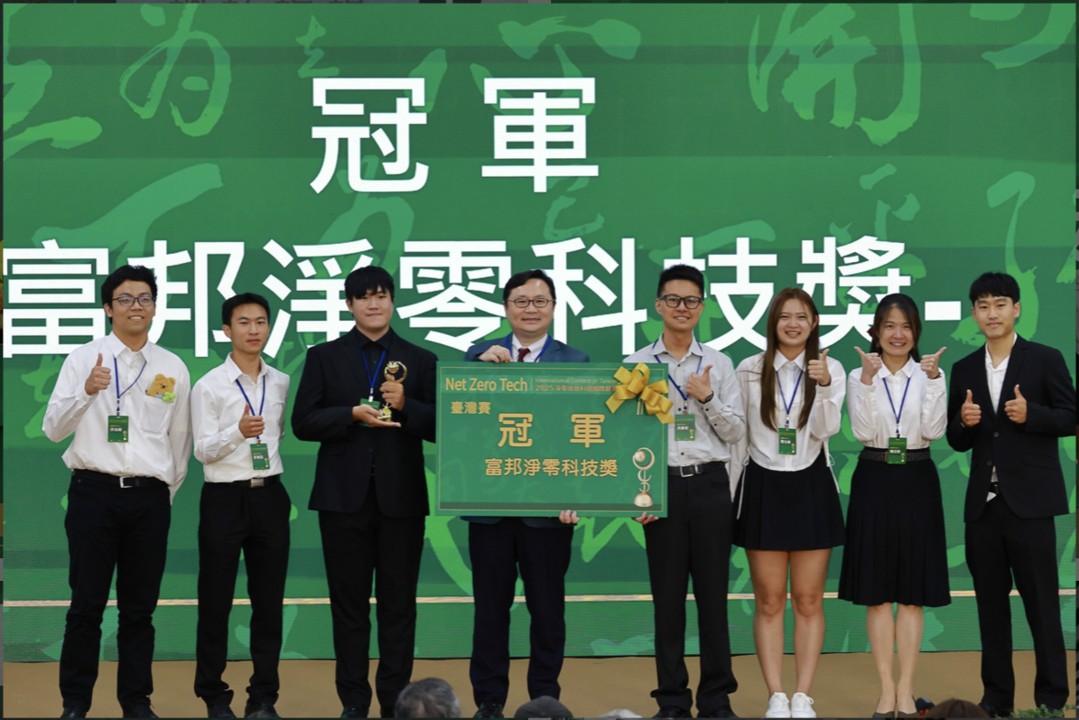
Professor Wei-Song Hung (fourth from right) led his laboratory team to compete in the 2025 TECO Net Zero Emissions International Competition, winning first place in the Taiwan division with a prize of NTD 1 million.
Professor Hung described the membrane as a “breathing towel”. “The upper layer absorbs sunlight and turns seawater into vapor, while the lower layer generates electricity through wave-induced vibrations”, he said. When exposed to sunlight, the membrane absorbs heat to drive evaporation and desalination, converting seawater into clean freshwater. When waves or wind cause movement, the piezoelectric structure generates an electric current. In this way, a single black membrane can simultaneously address drinking water and electricity needs in remote villages, offshore islands, or arid regions.
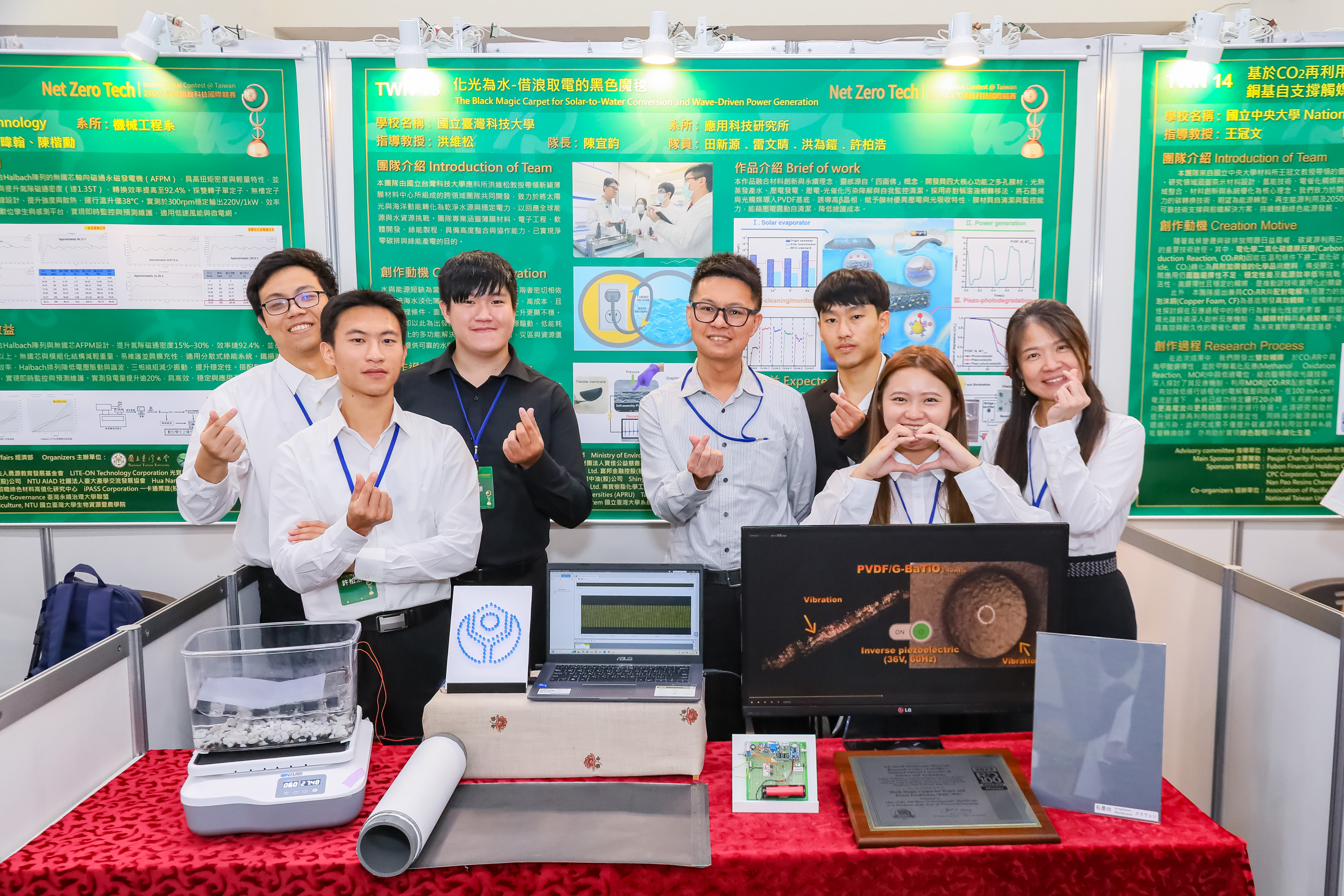
Professor Wei-Song Hung (center) led his laboratory team to compete in the 2025 TECO Net Zero Emissions International Competition, winning first place in the Taiwan division with a prize of NTD 1 million.
During the daytime, the membrane absorbs solar heat, heating seawater into vapor, which then condenses into clean freshwater and drips into a collection tank. At night or when waves strike, the fabric-like membrane “breathes” with the motion, and the special materials inside sense pressure changes and convert them into electrical energy. This is what the team refers to as “dual-functionality in a single membrane: water production on the top layer and power generation on the bottom layer”. Moreover, the Black Magic Carpet features a self-cleaning capability, resisting dust and salt accumulation and maintaining stable efficiency over long-term operation.
Following its award-winning success, the team has rapidly advanced the technology toward more challenging modular designs. These designs are intended for deployment in offshore islands and desert regions where sunlight and water resources are abundant, but electricity supply is limited, enabling mobile “dual water–power systems”. At the same time, the team has focused on low-carbon manufacturing processes and low-energy operation to align with net-zero carbon reduction trends, bringing the research closer to real-world industrial applications.
In teaching, Professor Hung places strong emphasis on a hands-on philosophy of “buildable, testable, and reproducible”. He requires every graduate student to produce functional prototypes and integrate their work with industry partners or field testing. “I hope students can turn research into products, step onto the global stage, and even attract industry collaboration”. Professor Hung stated.
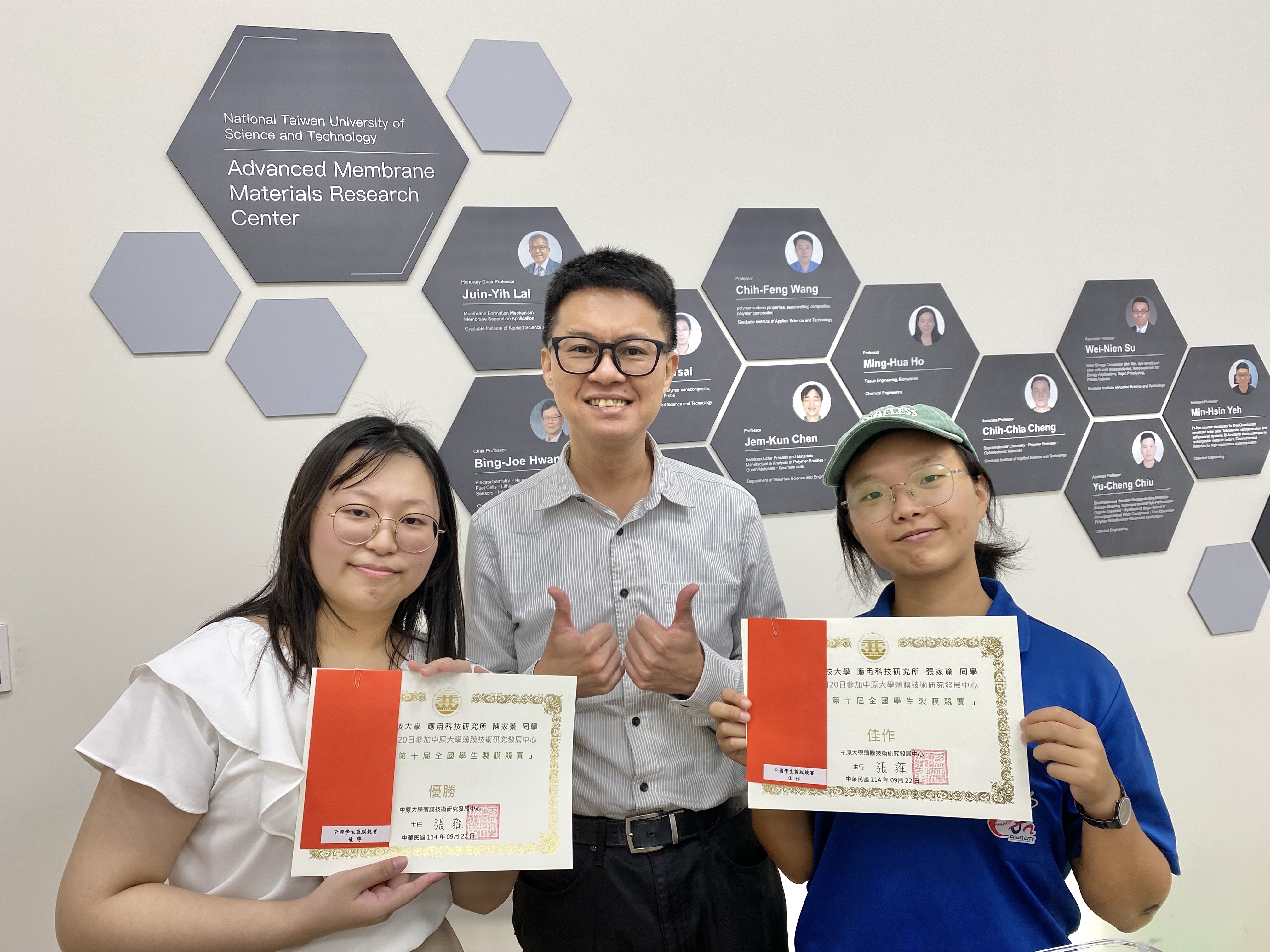
Professor Wei-Song Hung guided students in the 2025 Thin Film Competition, winning both first and second prizes.