
In response to the spatial and cultural challenges brought about by an aging society and rural outmigration, Taiwan Tech continues to center its efforts on University Social Responsibility (USR), deepening interdisciplinary and international collaboration. Under the USR-Hub initiative, the project titled “From Fields to Stage: A Local Revitalization Experiment” formally signed a memorandum of understanding (MOU) in 2025 (ROC Year 114) with the Department of Architecture at Waseda University, the Department of Environmental Architecture and Design at The University of Shiga Prefecture, the Guanshan Township Office in Taitung County, and the Guanshan Township Farmers’ Association in Taitung County.
This collaboration establishes a cross-national, cross-institutional, and cross-disciplinary partnership mechanism centered on “local internationalization”, jointly engaging in the overall planning and design of the public space at the Guanshan Farmers’ Association’s “Rice Country School,” and exploring innovative possibilities for rural spatial regeneration and local cultural action.
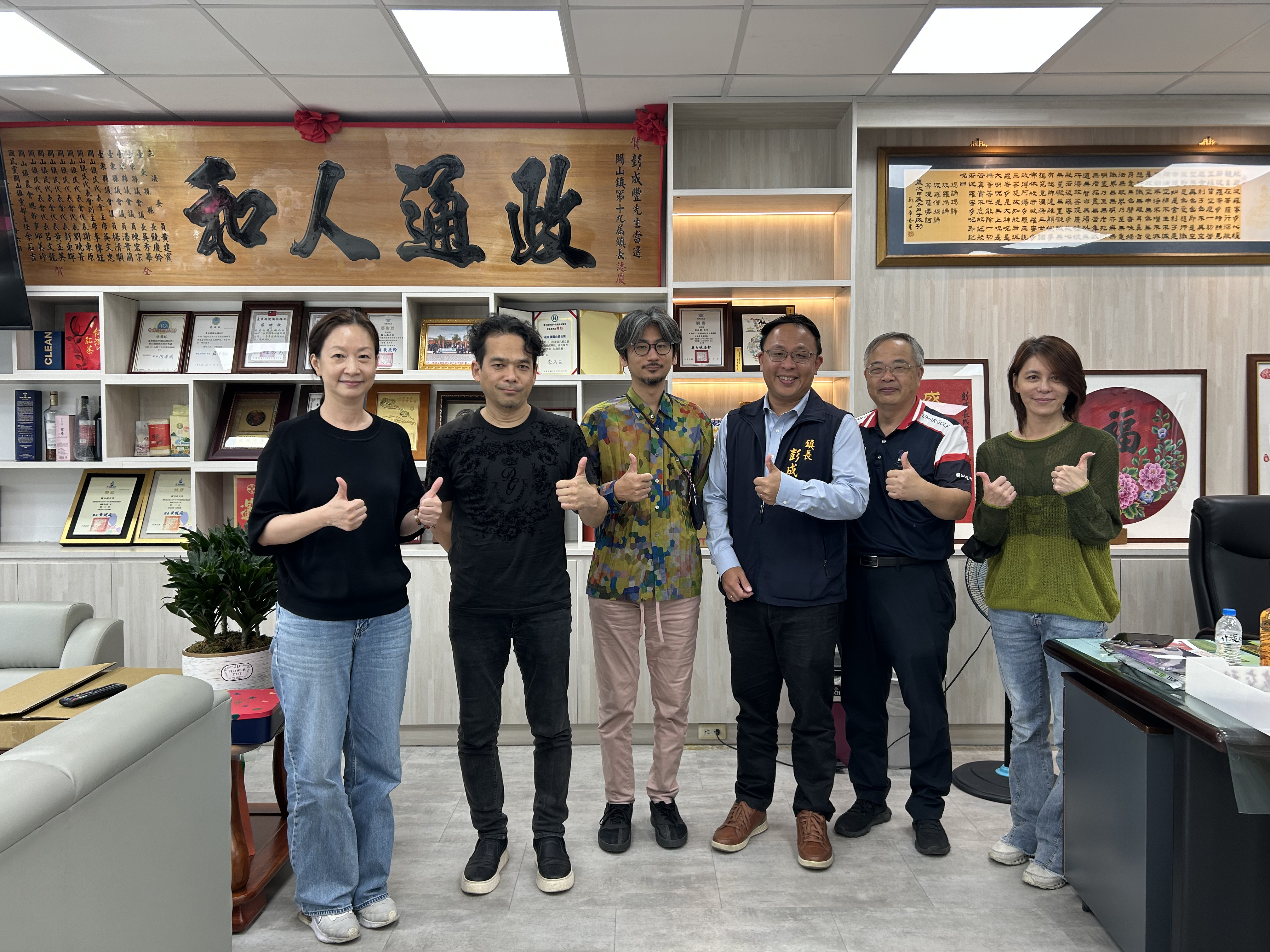
The Department of Architecture at Taiwan Tech led its Japanese partners to Guanshan to sign the MOU with the Guanshan Township Office and the Guanshan Township Farmers’ Association. From left to right: Assistant Professor Fu-Fei Yang (Project Assistant Professor), Professor Ryuichi Ashizawa of the University of Shiga Prefecture, Associate Professor Taishi Watanabe of Waseda University, Guanshan Township Mayor Cheng-Feng Peng, Director Yen-Fang Peng of the Leisure and Tourism Division of the Guanshan Township Farmers’ Association, and Director Li-Chuan Teng of the Guanshan Township Parks Management Office.
This project is coordinated and promoted by Taiwan Tech’s Department of Architecture, in collaboration with the Department of Information Management, integrating architectural design expertise, digital management perspectives, and international academic resources. It responds to structural issues faced by the Guanshan region amid population aging and rural outmigration, including deteriorating public spaces, increasing vacant buildings, and insufficient cultural capacity, thereby constructing a local practice platform capable of both local responsiveness and international dialogue.
Recently, the Department of Architecture led its Japanese partners on a field visit to Guanshan and completed the MOU signing with the Guanshan Township Office and the Farmers’ Association, officially launching subsequent design, teaching, and hands-on exchange activities. This demonstrates a concrete commitment by industry, government, and academia to local revitalization and embodies the spirit of “using local issues as the starting point for international collaboration,” forming a sustainable partnership model.
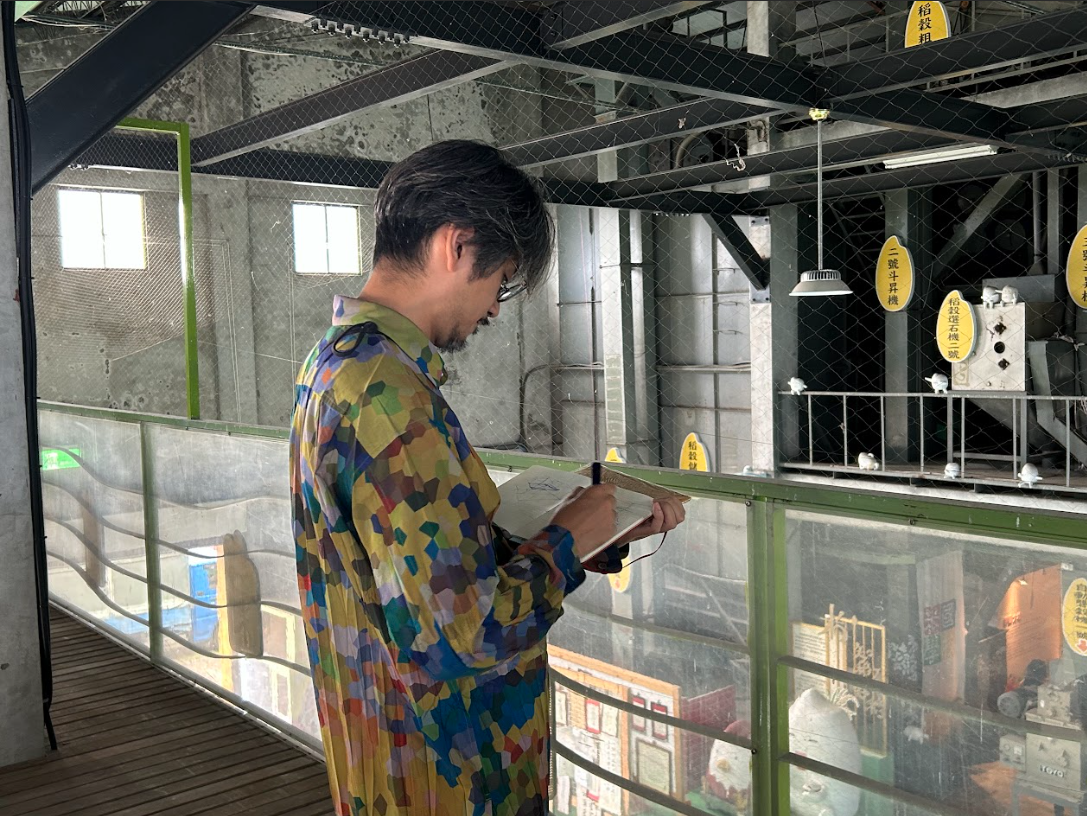
Associate Professor Taishi Watanabe of Waseda University’s Department of Architecture conducted an on-site inspection and documentation of the existing granary stage at the Guanshan Rice Country School.
Project Principal Investigator and Project Assistant Professor Fu-Fei Yang of Taiwan Tech’s Department of Architecture stated that Japanese society entered the aging stage earlier than Taiwan and has accumulated long-term practical experience in urban-rural regeneration systems and the revitalization of idle spaces, circumstances highly similar to those currently faced by Taiwanese rural communities. Through this collaboration, the project introduces Japan’s experience in spatial regeneration in aging societies and the integration of design education, transforming it into actionable models applicable to Taiwanese rural areas, ensuring that international cooperation goes beyond exchange and contributes meaningfully to local practice.
The project site focuses on the Guanshan Farmers’ Association’s “Rice Country School”, formerly a wartime granary that lost its original function due to changes in agricultural patterns and industrial structure. Through years of efforts and revitalization by local residents and the Farmers’ Association, it has successfully transformed into a public platform that integrates cultural performances, agricultural promotion, and food and farming education, becoming an important cultural node in Guanshan. However, with diversified activities and increased frequency of use, the existing stage space has gradually experienced aging facilities, insufficient space, and limited flexibility, urgently requiring comprehensive planning and design renewal to meet diverse needs for cultural revitalization and public use.
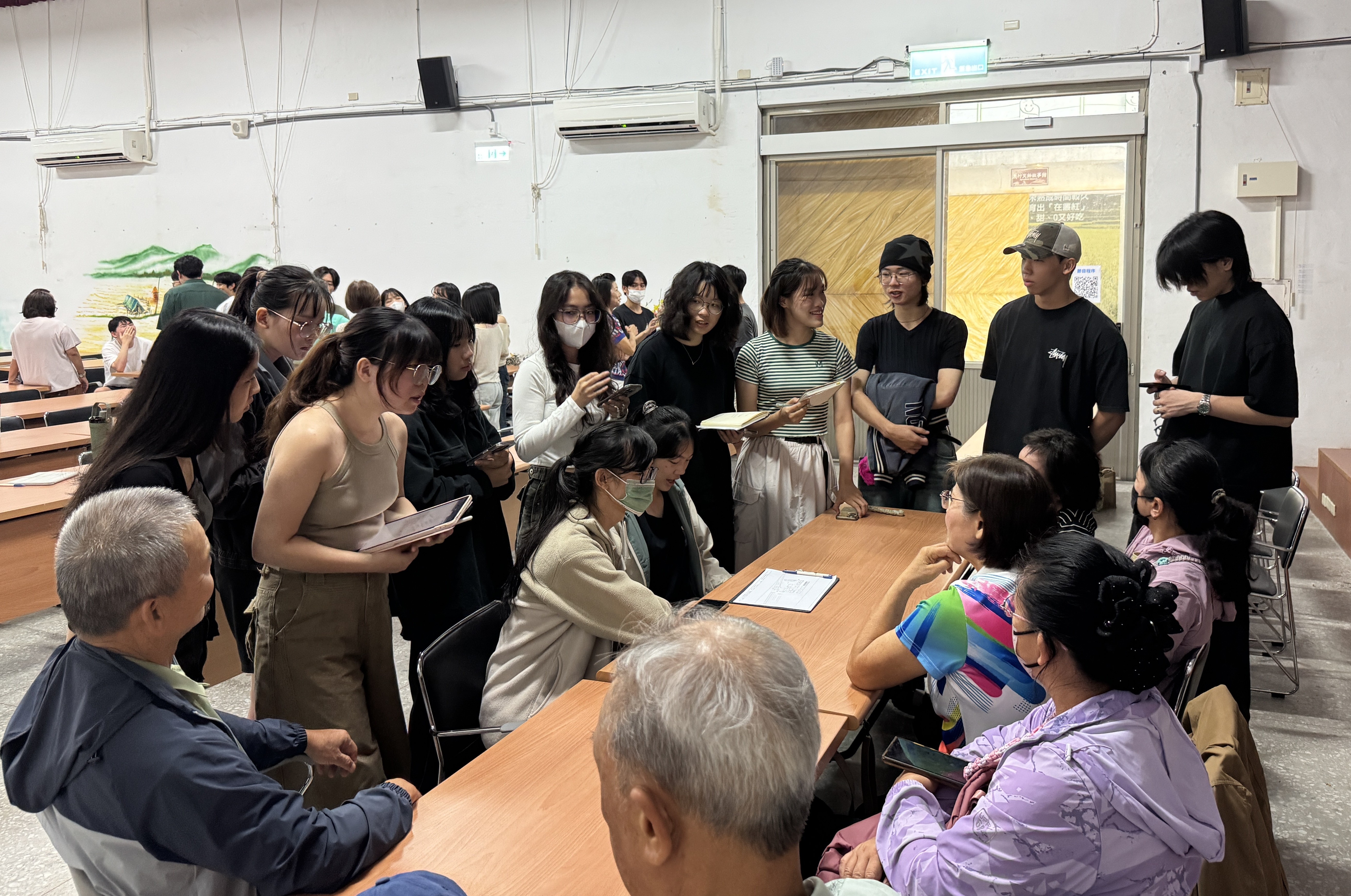
To address limitations of the existing stage at the Rice Country School, architecture students from Taiwan Tech entered the Guanshan community to conduct user interviews and collect feedback as an important basis for subsequent design planning.
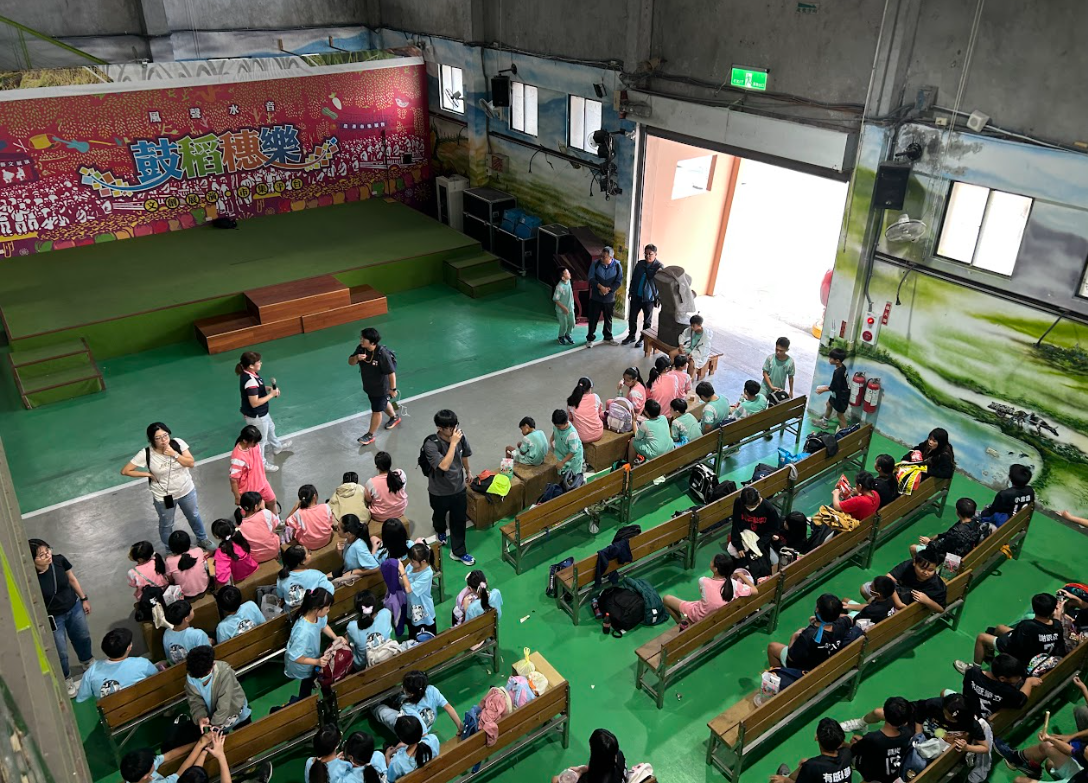
The current stage space at the Rice Country School has gradually faced issues of facility aging, insufficient space, and restricted flexibility, urgently requiring comprehensive planning and design updates to meet diverse public and cultural revitalization needs.
Accordingly, the project team plans to renovate the existing granary stage and to add a new outdoor performance space, the “Autumn Stage”, in the rice fields on the southern side of the site, serving as the core venue for harvest festivals and local events. The overall design incorporates sustainable design principles and the United Nations Sustainable Development Goals (SDGs), utilizing driftwood left behind after Typhoon Morakot as locally meaningful recycled building materials, integrating environmental issues into design education and public space practice, and deepening students’ understanding of sustainability, locality, and social responsibility.
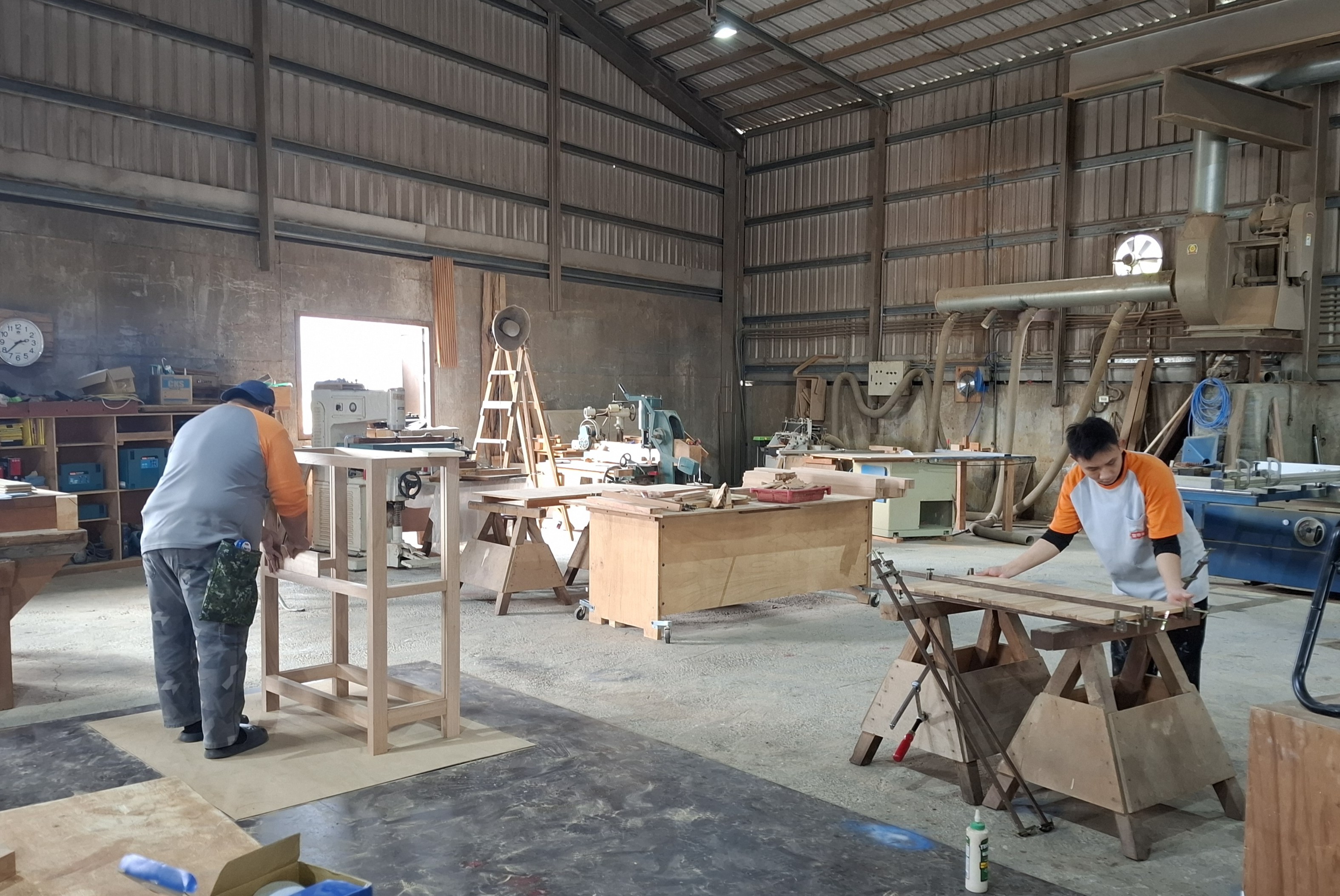
The project team has added the outdoor “Autumn Stage” in the rice fields on the southern side of the site, using driftwood left after Typhoon Morakot as recycled materials with local significance. The image shows the Houshan Sawmill of Ziyuan Enterprise Co., Ltd. in Guanshan.
In terms of teaching and talent cultivation, the project actively guides students to transform classroom knowledge into real-world design and implementation capabilities and to participate in national and international competitions. Among these achievements, the proposal for renovating idle space at the Guanshan site won the Gold Award in the “Sustainable Revitalization and Reuse” category at the 2025 Taiwan Sustainable Architecture Design Student Competition, demonstrating the concrete results and impact of USR teaching that integrates local issues with international perspectives.
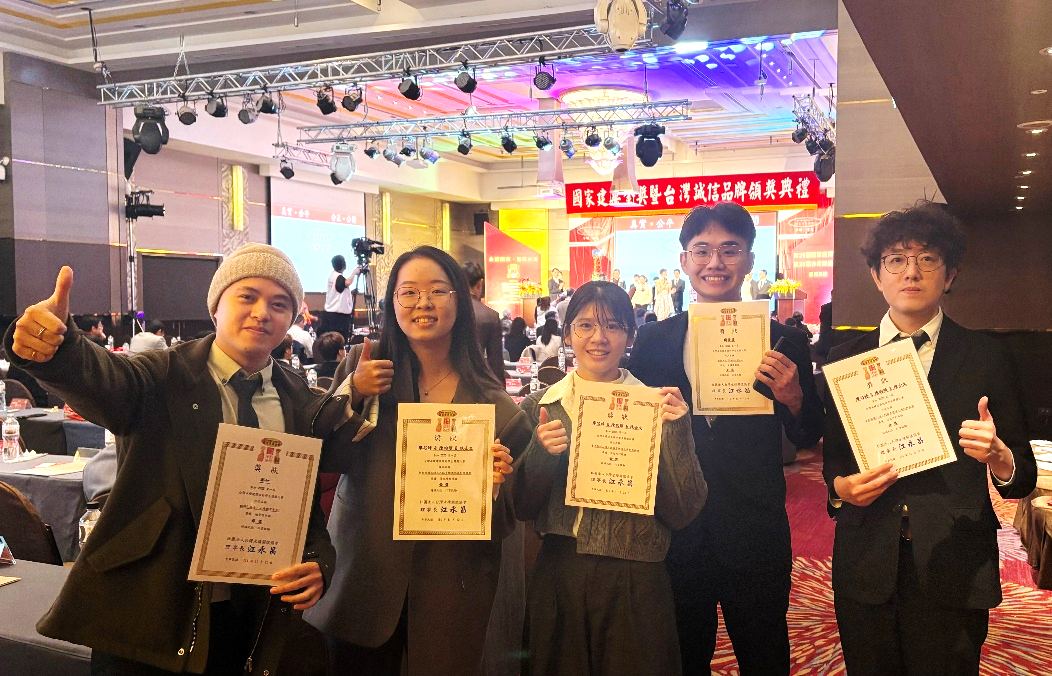
The Guanshan site renovation proposal won the Gold Award in the “Sustainable Revitalization and Reuse” category at the 2025 Taiwan Sustainable Architecture Design Student Competition, showcasing the tangible outcomes and influence of USR teaching.
Through this MOU signing and collaboration, Taiwan Tech, its Japanese partners, the local government, and the Farmers’ Association will jointly engage in stage space design concepts, teaching practice, and operational discussions. This multi-party participation promotes local practice in which spatial renewal is no longer limited to facility improvement, but instead responds more closely to residents’ practical needs and cultural context, developing into a rural public venue with cultural performance, educational promotion, and tourism potential.
“We hope to create a stage, not an arena,” stated Director Yen-Fang Peng of the Leisure and Tourism Division of the Guanshan Township Farmers’ Association and promoter of the Rice Country School. He emphasized that the stage created by the Rice Country School is not oriented toward competition and winning, but rather serves as an open and inclusive public space, where more local residents and groups can step onto the stage and gradually build confidence through continuous participation and performance. Taiwan Tech’s USR-Hub project “From Fields to Stage: A Local Revitalization Experiment” echoes this vision by integrating architectural expertise, interdisciplinary teaching, and international collaboration to help transform space into a platform that supports cultural performance and resident participation. In doing so, it builds for Guanshan a stage rooted locally yet connected internationally, serving as an important model for promoting local revitalization in aging rural communities.