
Professor Yi-Zeng Hsieh from the Department of Electrical Engineering at Taiwan Tech leads a research team that integrates Mixed Reality (MR) technology. Using head-mounted devices, the system overlays patients’ 3D bone images in real time onto the surgeon’s field of view, assisting in determining the optimal position and angle for hip implant placement.
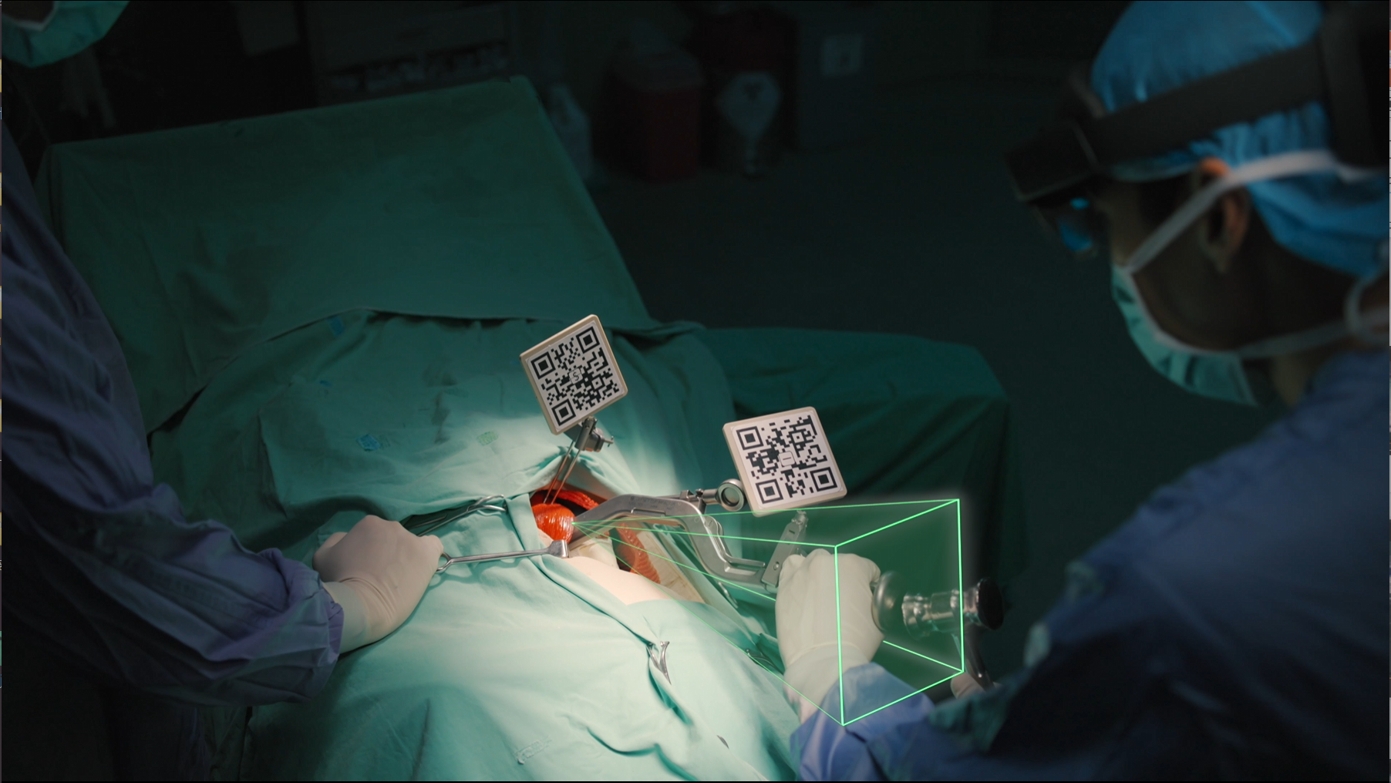
The “AccuHip: MR-Based Hip Replacement Surgical Navigation System” enables surgeons to precisely identify lesions, critical blood vessels, and nerves during procedures through real-time image guidance, making the Safe Zone visible.
Professor Yi-Zeng Hsieh noted that the system was developed in response to clinical needs. Traditional hip replacement surgery relies heavily on surgeons’ experience, while existing high-precision navigation or robotic systems are costly. Therefore, the team collaborated with clinical physicians to introduce MR technology and develop a more intuitive and cost-effective surgical assistance solution.
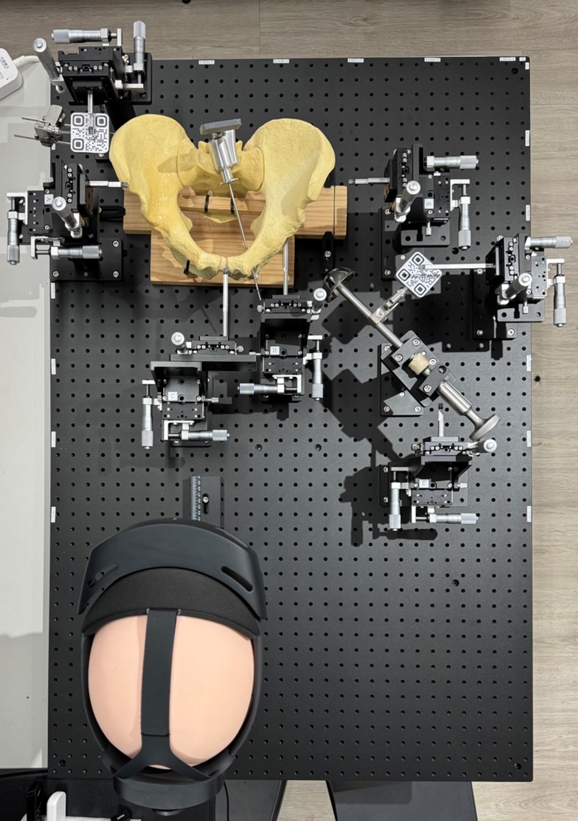
The system has undergone simulation testing in laboratories using human skeletal models (sawbones), and has been validated according to real surgical procedures to ensure that its accuracy meets clinical requirements.
Professor Yi-Zeng Hsieh explained that with MR technology, surgeons no longer need to frequently look at external monitors during surgery. Instead, they can access key information within the same field of view, achieving intuitive “hand-eye coordination”. The system can display the inclination and anteversion angles of the implant in real time, helping reduce surgical errors while minimizing reliance on additional imaging, thereby improving surgical precision and lowering radiation exposure.
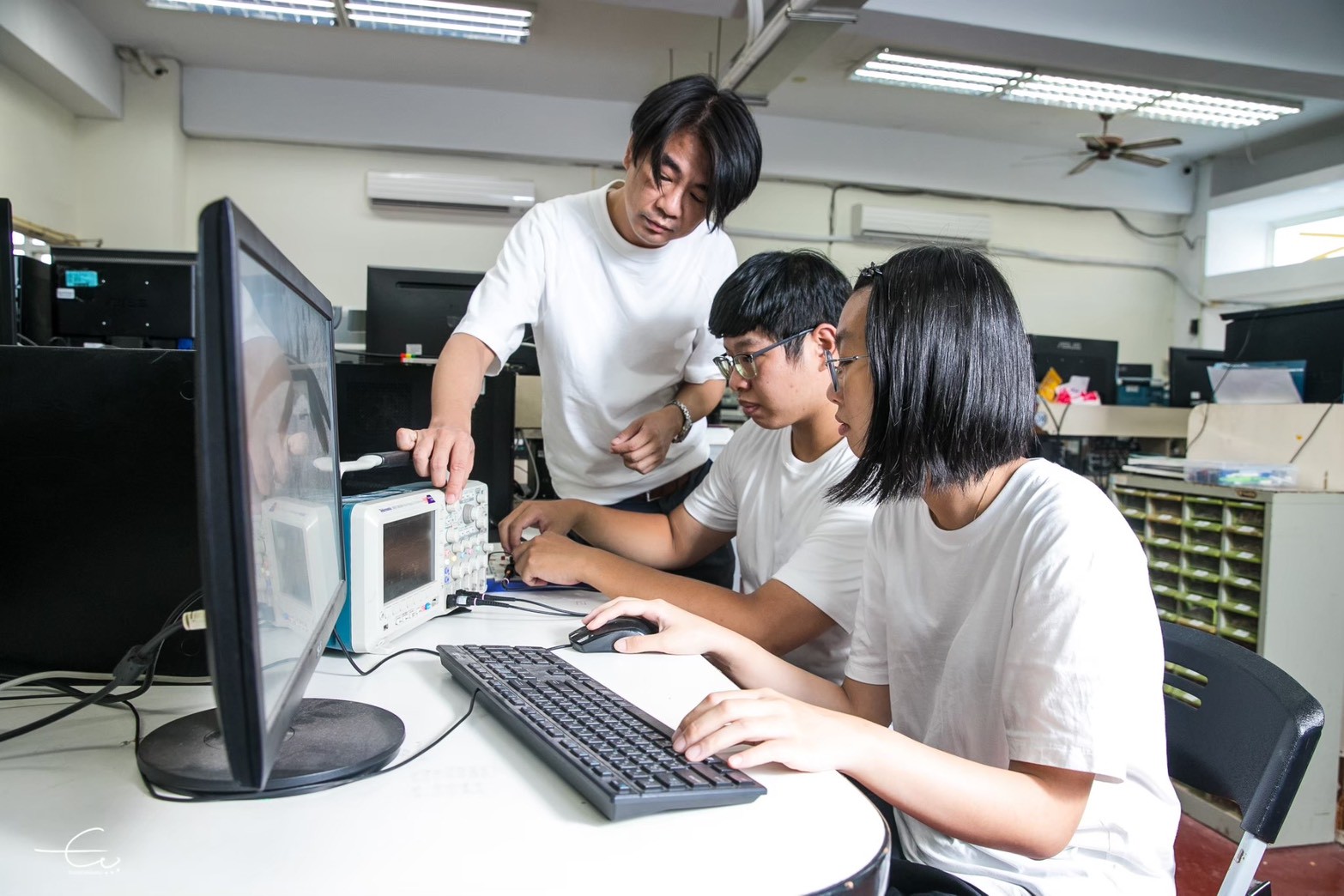
Professor Yi-Zeng Hsieh (far left), Department of Electrical Engineering, Taiwan Tech, leads students in developing generator-related technologies using oscilloscopes.
During system development, the team encountered several technical challenges, including maintaining accurate image registration in dynamic, high-interference surgical environments, and converting medical imaging data into algorithms suitable for real-time computation. Doctoral student and team leader Cheng-Hao Tsou stated that the system is currently tested primarily using human skeletal models (sawbones), with validation based on actual surgical workflows. The team simulates complete surgical procedures on these models and analyzes positioning errors through an optical measurement platform to ensure clinical-level accuracy.
To ensure the system design closely reflects real clinical scenarios, the team also observed complete surgical procedures in operating rooms. Doctoral student Cheng-Hao Tsou noted that such observations help engineering teams better understand clinical needs and constraints, allowing them to refine system design. He added that observing surgery at close range for the first time required overcoming psychological pressure, but the experience deepened the team’s appreciation for the professionalism and rigor of medical practice.
During development, team members contributed based on their expertise. Master’s student Che-Yang Lin translated surgical procedures and anatomical definitions from medical literature into mathematical models and developed related algorithms. Doctoral student Chia-Hsuan Wu was responsible for experimental design and accuracy validation, and collaborated with medical device manufacturers on positioning technologies. Another doctoral student, Chun Chen, focused on system testing and model refinement, improving overall stability through iterative validation.
This research also involved collaboration with orthopedic physician Shu-Hao Chang from Fu Jen Catholic University Hospital, integrating clinical experience into system development. Professor Yi-Zeng Hsieh emphasized that the key to interdisciplinary collaboration lies in being “needs-oriented”. Clinicians provide frontline insights and recommendations, helping research teams better understand real-world application contexts. He also noted that such collaborations require long-term communication and adjustment, offering students a highly valuable learning experience.
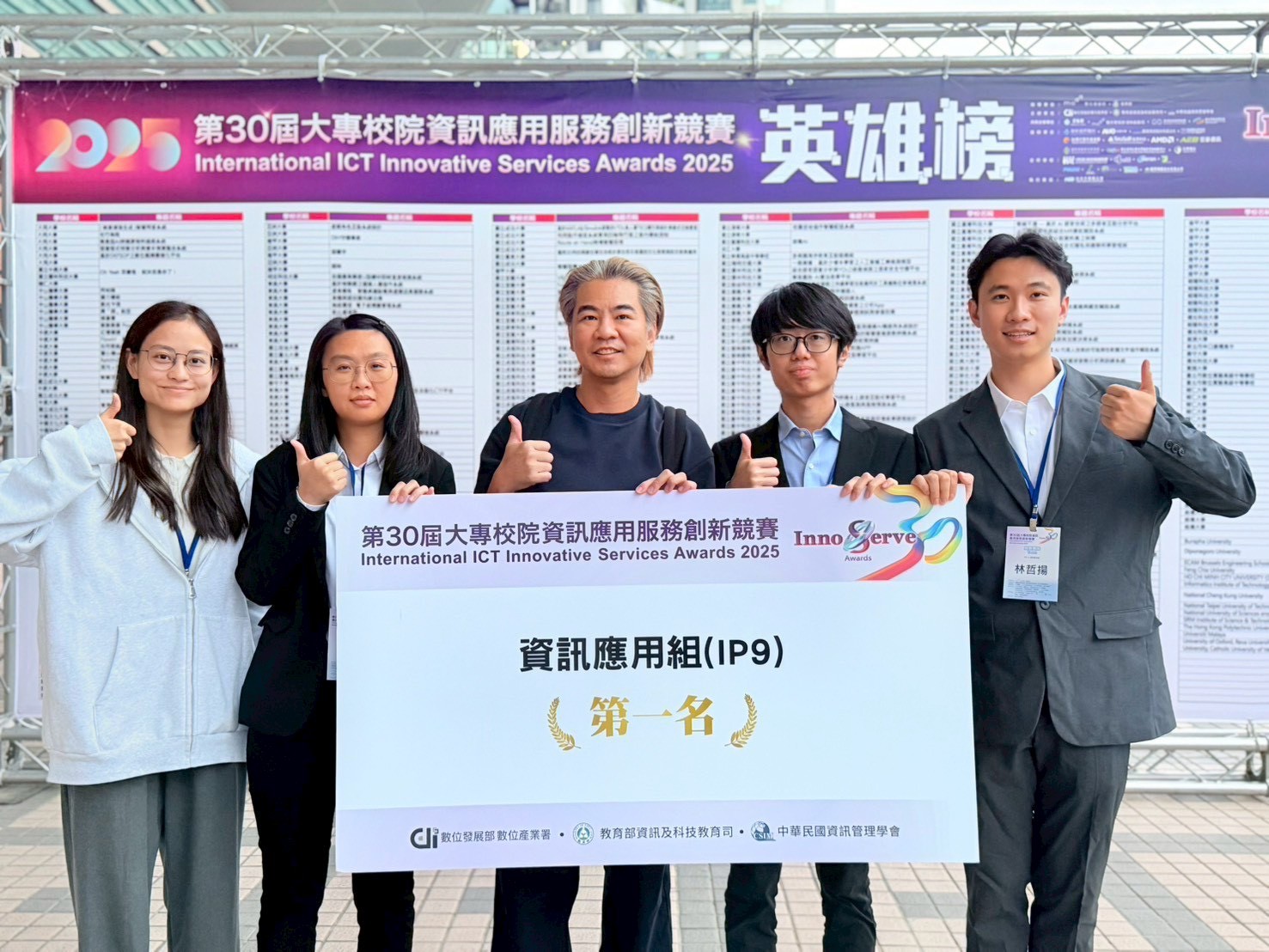
Professor Yi-Zeng Hsieh (center) led team members Chun Chen (far left), Chia-Hsuan Wu (second left), Che-Yang Lin (far right), and Cheng-Hao Tsou (second right) to participate in the “International ICT Innovative Service Awards”, winning first place in the Information Application category (IP9).
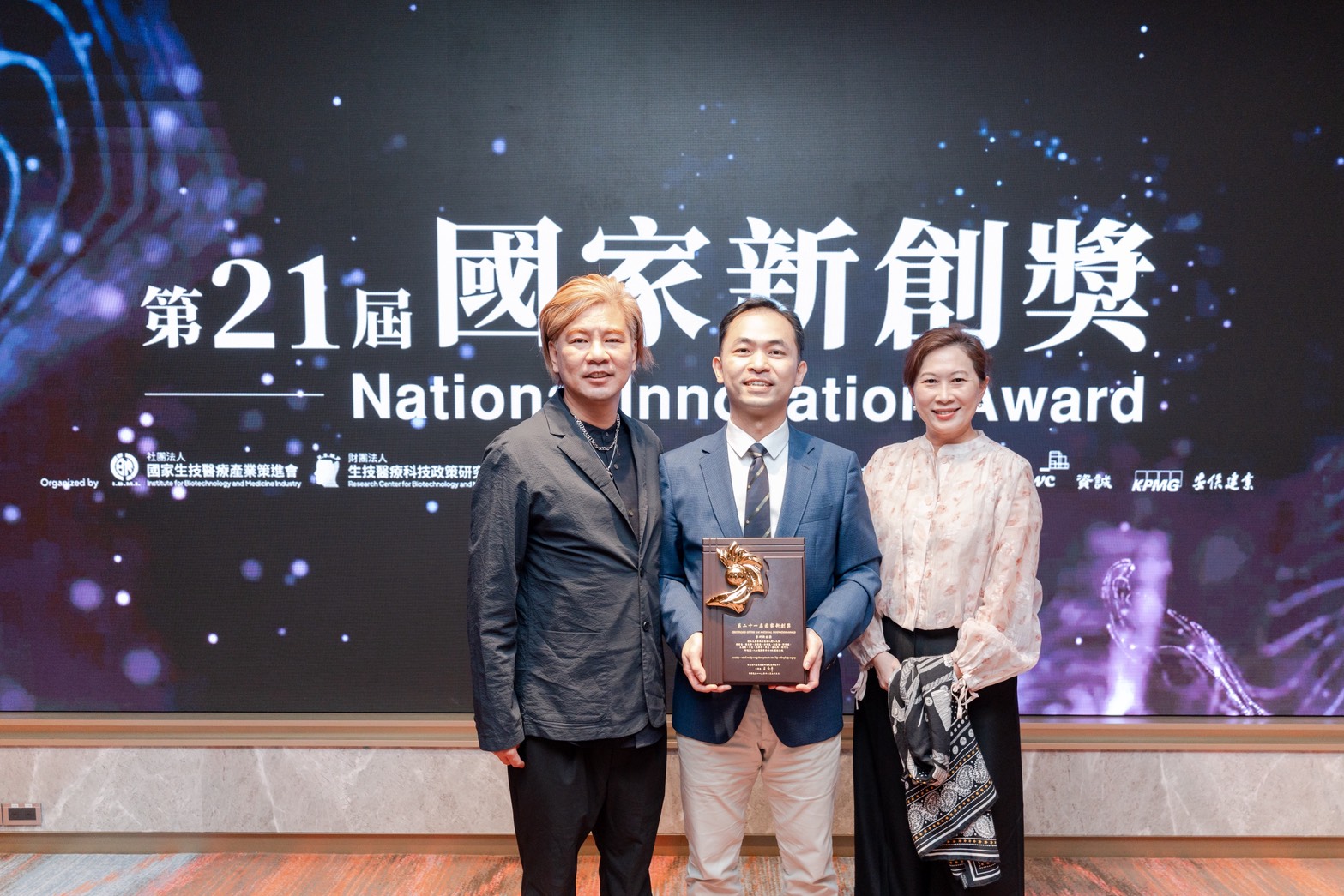
Professor Yi-Zeng Hsieh (left) collaborated with orthopedic physician Shu-Hao Chang (center) on the “MR-Assisted Hip Replacement Surgical Navigation System”, which received the prestigious “21st National Innovation Award”, a key benchmark award in Taiwan’s biomedical and health technology field. Ying-Jung Yeh (right), Vice President for International Affairs at Taiwan Tech, also participated in the project.
The team participated in the “2025 30th International ICT Innovative Service Awards”, where their “MR-Assisted Hip Replacement Surgical Navigation System” not only won first place in the Information Application category (IP9), but also received the prestigious “21st National Innovation Award”. These recognitions affirm the team’s achievements in smart healthcare innovation and highlight Taiwan Tech’s long-term commitment to interdisciplinary learning and practical application. Professor Yi-Zeng Hsieh further noted that research training is not only about developing technical skills, but also about enabling students to confront real-world problems and continuously iterate solutions. In the future, the team aims to secure funding to further optimize the system, pursue certification from the Taiwan Food and Drug Administration (TFDA), and advance toward clinical applications. They also plan to explore applications in surgical education and physician training to enhance surgical quality and expand smart healthcare solutions.
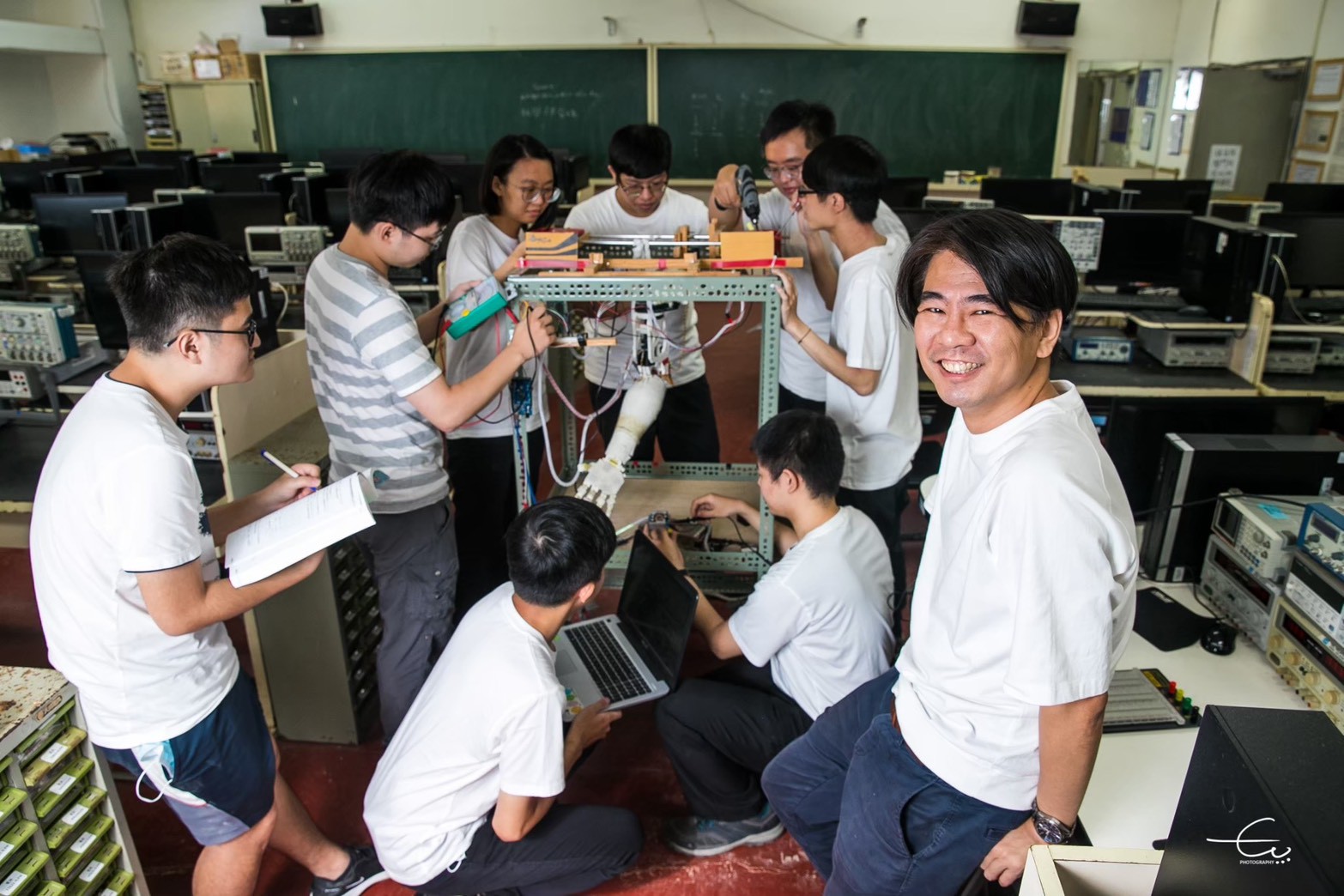
Professor Yi-Zeng Hsieh (right) leads students from the Department of Electrical Engineering at Taiwan Tech in system development and experimentation. He has long mentored students in research and competitions, cultivating many engineering talents with interdisciplinary R&D capabilities.