
Clean and safe water resources are fundamental to global sustainable development. However, with the continued expansion of industrialization and urbanization, water pollution has become an increasingly critical concern. A research team led by Professor Jinn Chu from the Department of Materials Science and Engineering at Taiwan Tech, in collaboration with Professor Zong-Hong Lin from the Department of Biomedical Engineering at National Taiwan University, has developed a liquid - solid triboelectric nanosensor. This innovative system can simultaneously detect heavy metals and bacteria while purifying water without relying on an external power source. The findings have been published in the high-impact international journal Advanced Functional Materials (Impact Factor: 19.0), offering a new technological direction for intelligent water quality monitoring.
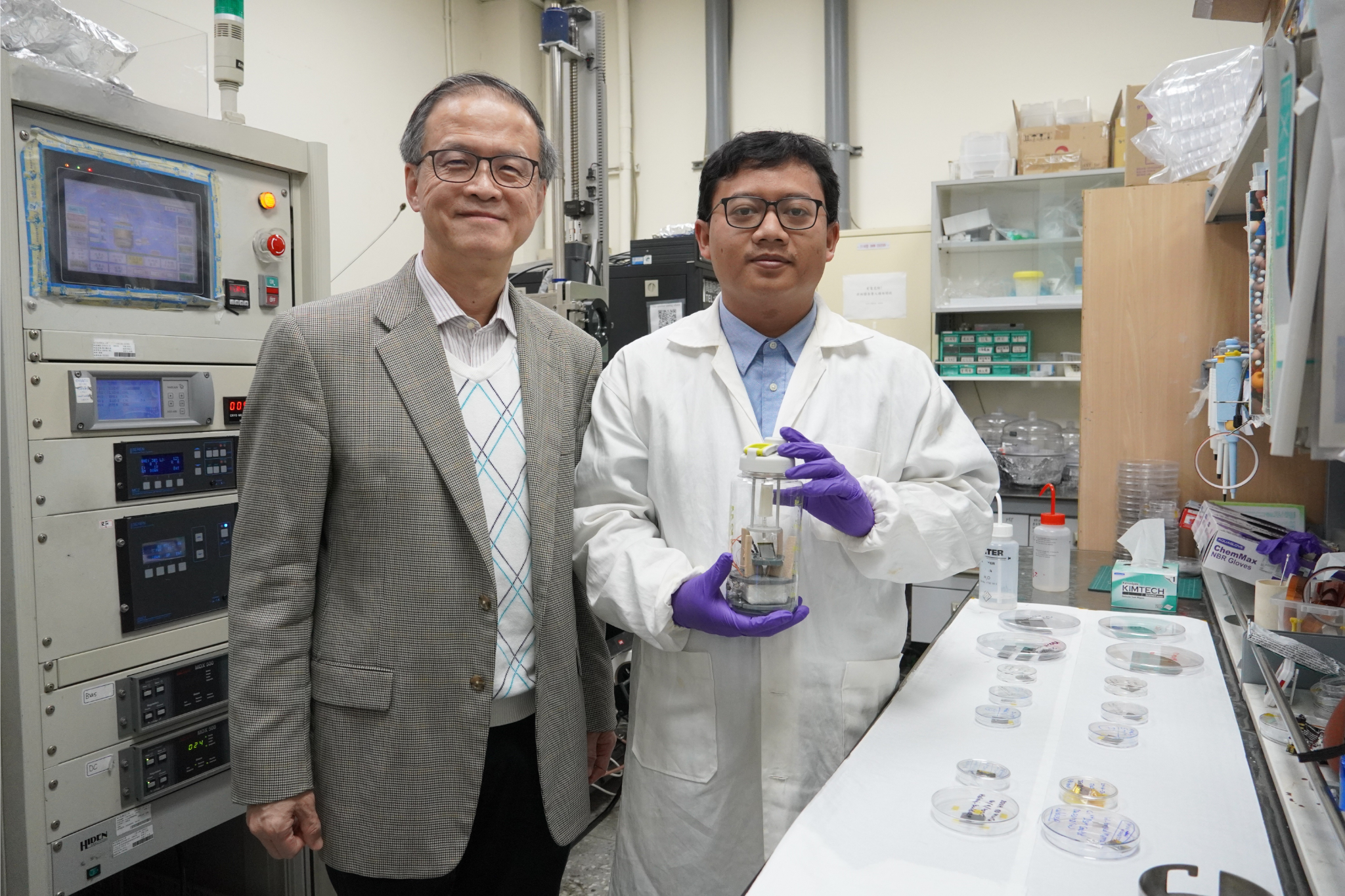
A research team led by Professor Jinn Chu from the Department of Materials Science and Engineering at Taiwan Tech, in collaboration with Professor Zong-Hong Lin’s team from the Department of Biomedical Engineering at National Taiwan University (NTU), has developed a liquid–solid triboelectric nanosensor capable of simultaneously detecting heavy metals and bacteria while purifying water without the need for an external power source. From left: Professor Jinn Chu (Taiwan Tech) and doctoral student Helmi Son Haji.
The liquid–solid triboelectric nanosensor integrates the research strengths of both universities in materials engineering and biomedical sensing. Professor Zong-Hong Lin’s team has long been dedicated to the development of smart biomedical materials and self-powered chemical sensors, with well-established expertise in remote monitoring platforms and biomedical applications. Meanwhile, Professor Jinn Chu’s team focuses on metallic nanotube array structures and surface engineering, developing high-performance nanomaterials. Through the integration of these complementary technologies, the two teams successfully created a self-powered water quality monitoring system that combines pollutant detection with water treatment.
In terms of materials design, the Taiwan Tech team developed metallic nanotubes composed of nickel–tungsten–nickel (Ni–W–Ni) as the core structure. When water droplets roll across the nanotube surface, contact and separation between the droplets and the nanostructures generate triboelectric charges. These charges are collected and converted into electrical energy to drive sensing and sterilization. Unlike most conventional water monitoring systems that require continuous power supply or external devices, this technology generates electricity through the motion of water droplets, reducing energy consumption while offering a more energy-efficient, low-carbon, and environmentally sustainable solution for water quality monitoring.
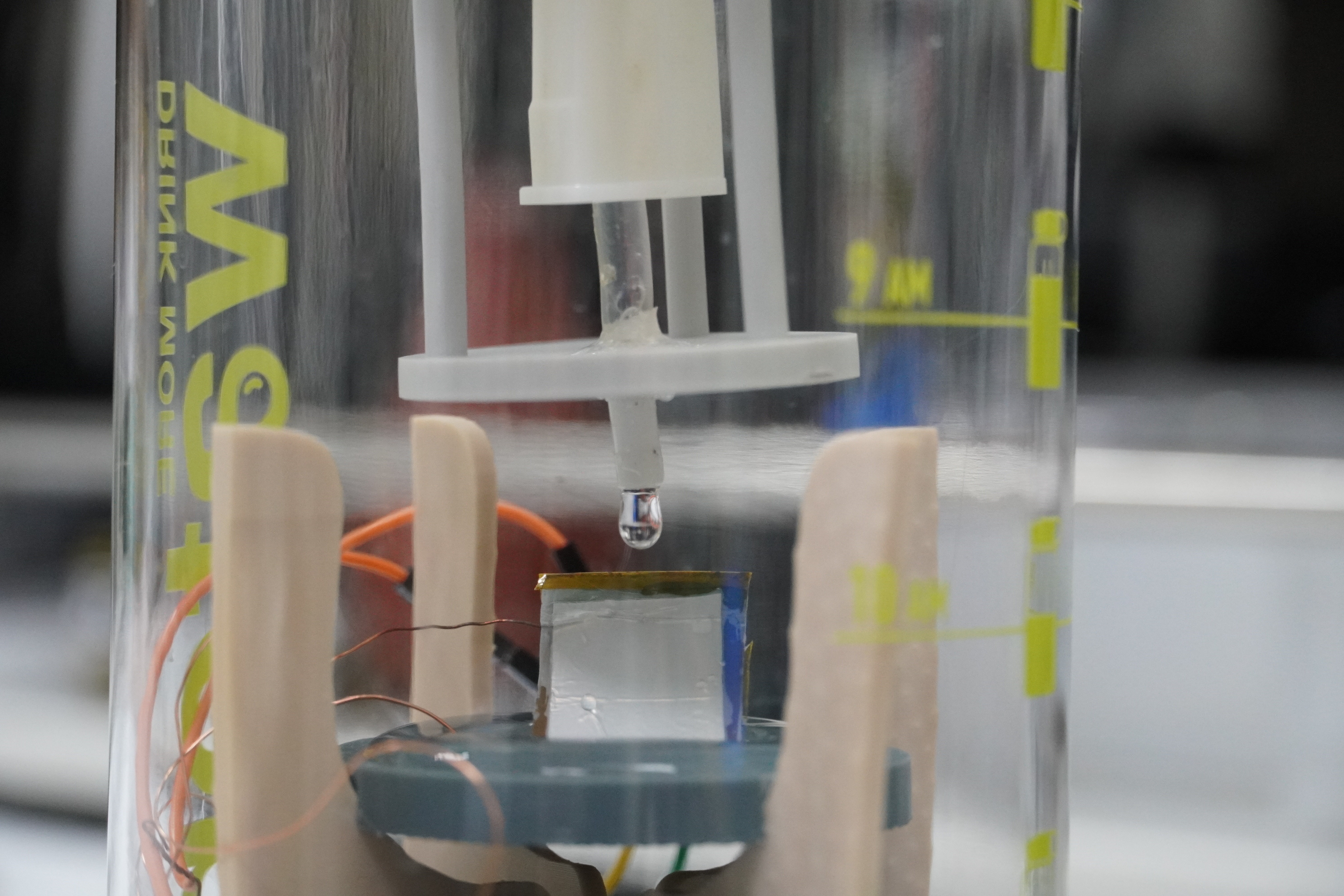
The Taiwan Tech team designed metallic nanotubes composed of nickel–tungsten–nickel (Ni–W–Ni) as the core structure. When water droplets roll across the nanotube surface, the contact and separation between the droplets and the nanostructures generate triboelectric charges. These charges are then harvested and converted into electrical energy to drive sensing and sterilization.
In addition, the sensor developed by the research team can be integrated with various detection chips to identify heavy metal ions such as chromium, lead, and mercury, while also detecting common pathogens including Escherichia coli and Staphylococcus aureus. In terms of performance, the sensor demonstrates a rapid response time of approximately 20 milliseconds for ion detection and achieves a sensitivity of up to 163 mV/decade for E. coli, showing significantly faster and more sensitive monitoring capabilities compared to conventional sensing technologies.
Beyond pollutant detection, the team also coated the nanotube surface with bismuth telluride (Bi₂Te₃), which can generate hydrogen peroxide (H₂O₂) under a temperature difference of about 10°C. This enables sterilization rates of approximately 97% for E. coli and 95% for Staphylococcus aureus, as well as a reduction efficiency of around 95% for hexavalent chromium. According to the research team, a detection module of approximately 1 cm² can process about 10 mL of water. Furthermore, by adjusting factors such as surface wettability, nanotube diameter, length, and array density, both sensing sensitivity and energy generation efficiency can be tuned, allowing the system to be customized for different application needs.
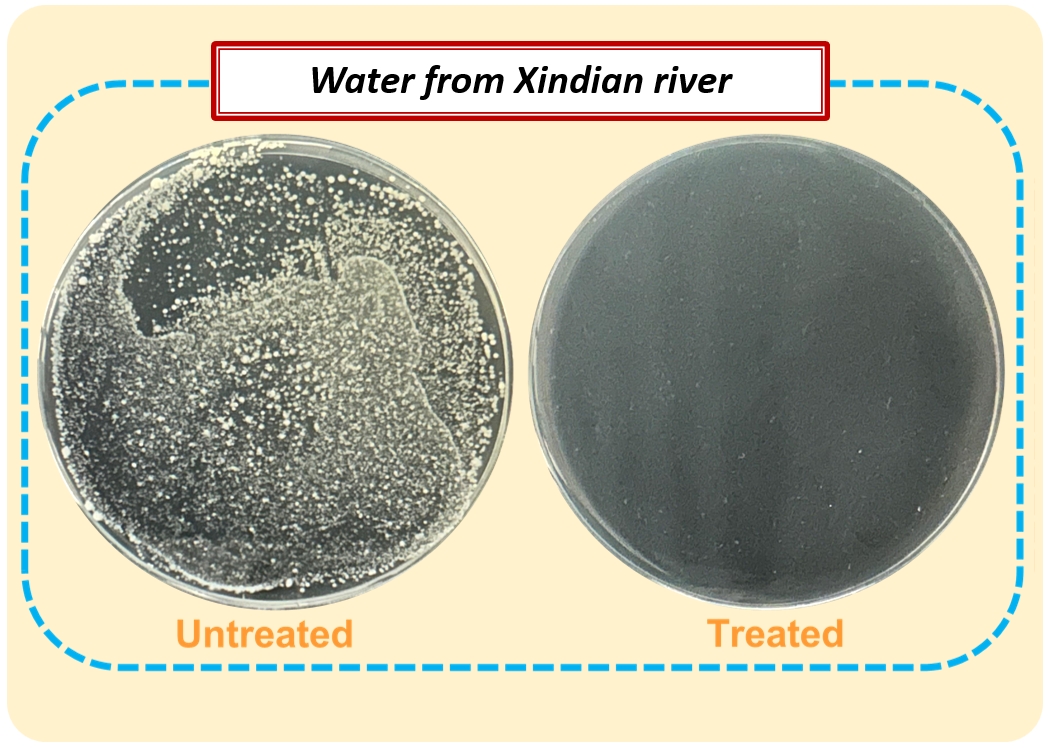
The research team coated the nanotube surface with bismuth telluride (Bi₂Te₃) and conducted experiments using water from the Xindian River. Through a thermocatalytic effect, the system achieved an Escherichia coli sterilization rate of approximately 97%.
To bring the technology closer to real-world applications, the team integrated sensing, sterilization, and monitoring functions into a “wireless sensing bottle”. Users simply drop a water sample into the device, and the system can immediately perform contaminant detection and preliminary purification. The data can also be transmitted wirelessly to an Internet of Things (IoT) platform, enabling the establishment of an intelligent water quality monitoring network. This system is well suited for decentralized monitoring and real-time treatment scenarios, such as river pollution detection, water quality monitoring in remote areas, emergency water inspection at disaster sites, and on-site screening of industrial wastewater discharge. As a portable, self-powered solution, it provides rapid detection and initial treatment on-site, serving as an important first line of defense.
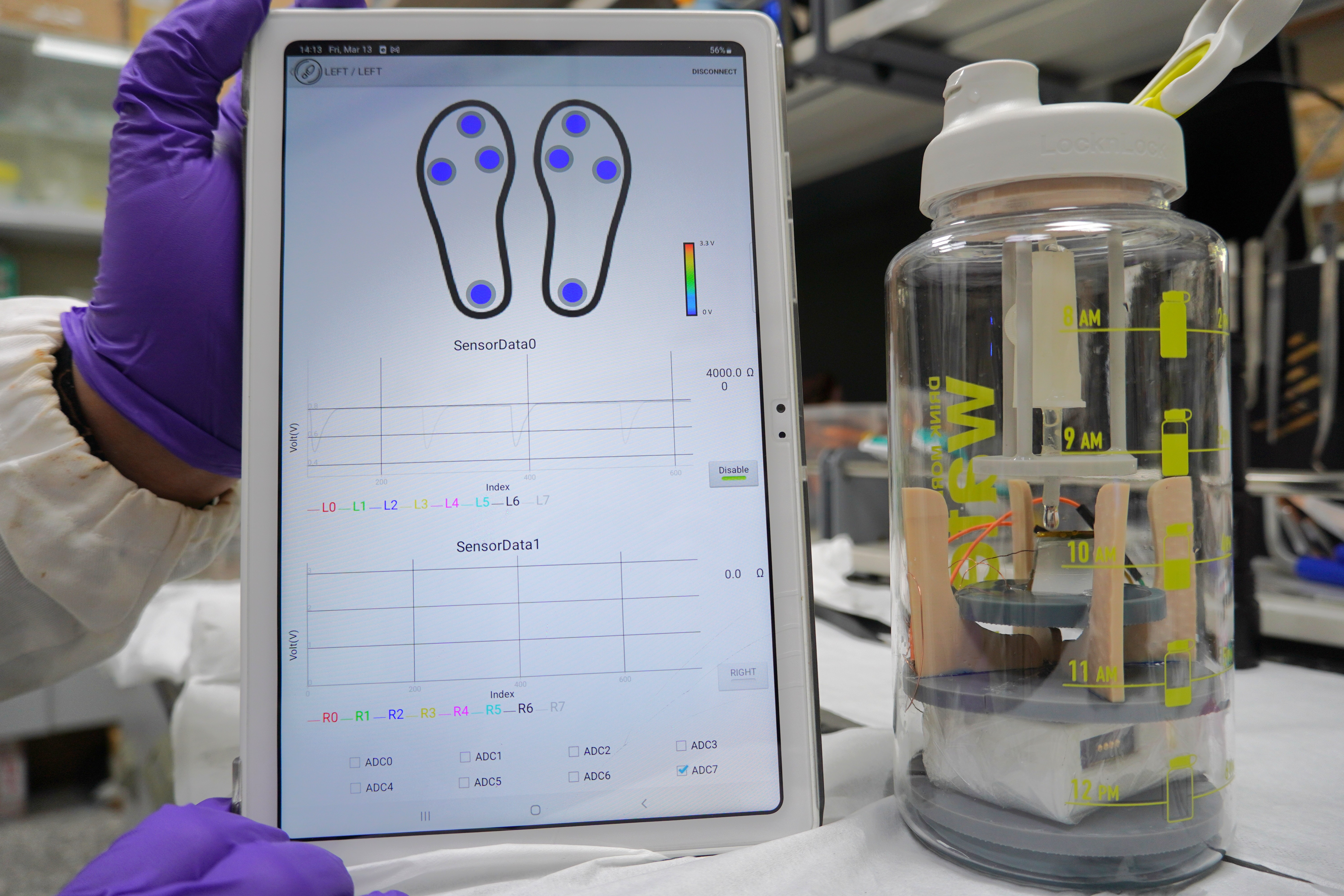
The research team developed a “wireless sensing bottle” device along with a dedicated app. Users simply drop a water sample into the device, and the system can simultaneously generate power and detect pollutants. The collected data can then be transmitted wirelessly to a system platform, enabling the establishment of an intelligent water quality monitoring network.
Helmi Son Haji, a member of the research team, noted that water in real-world environments often contains complex mixtures of pollutants, which may lead to surface fouling or degradation of the sensing layer. Future work will therefore focus on enhancing anti-fouling design, surface protection technologies, and modular replacement mechanisms to improve the system’s long-term stability and durability. In addition, by replacing detection chips, the system can be expanded to detect pesticide residues, other chemical contaminants, and even emerging pollutants.
Through cross-institutional collaboration between Taiwan Tech and NTU, the research teams have developed a platform that is self-powered, modular, portable, and capable of integrating sensing with sterilization. This innovation provides a new technological approach to water resource monitoring and pollution control, and with further optimization, it is expected to have an even greater impact in the fields of environmental monitoring and sustainable water resource management.
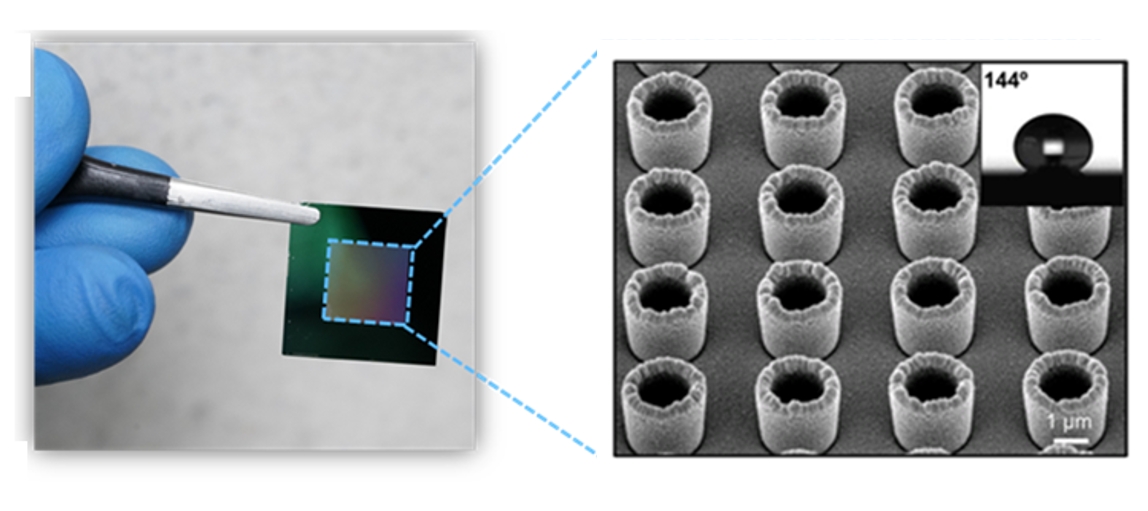
The research team noted that a detection module of approximately 1 cm² can process around 10 mL of water. By adjusting factors such as surface wettability, nanotube diameter, length, and array density, the system’s sensing sensitivity and energy generation efficiency can be tuned, enabling customized design to meet different application needs.