
Scientific progress rarely arrives with spectacle. More often, it unfolds quietly through long experimental cycles, interdisciplinary dialogue, and institutions willing to invest in questions whose answers may take years to mature. Transformative breakthroughs are cumulative. They grow where persistence is protected, and long-term purpose outweighs short-term visibility.
At National Taiwan University of Science and Technology (NTUST), this philosophy is not aspirational; it is structural.
Q: What distinguishes NTUST’s approach to energy research?
For international mobile researchers, rankings and funding matters, but ecosystems determine whether meaningful work can truly take root. NTUST has deliberately designed an environment where talent compounds through collaboration, infrastructure, and strategic alignment.
In energy sciences, this ecosystem is especially visible. Electrochemistry connects seamlessly with nanoscience. Materials engineering aligns with industrial strategy. Fundamental interface studies translate into scalable technologies. Research is structured to move across laboratories and centers, linking scientific depth with national sustainability priorities and global energy transitions.
Q: How does Professor Bing-Joe Hwang embody this ecosystem model?
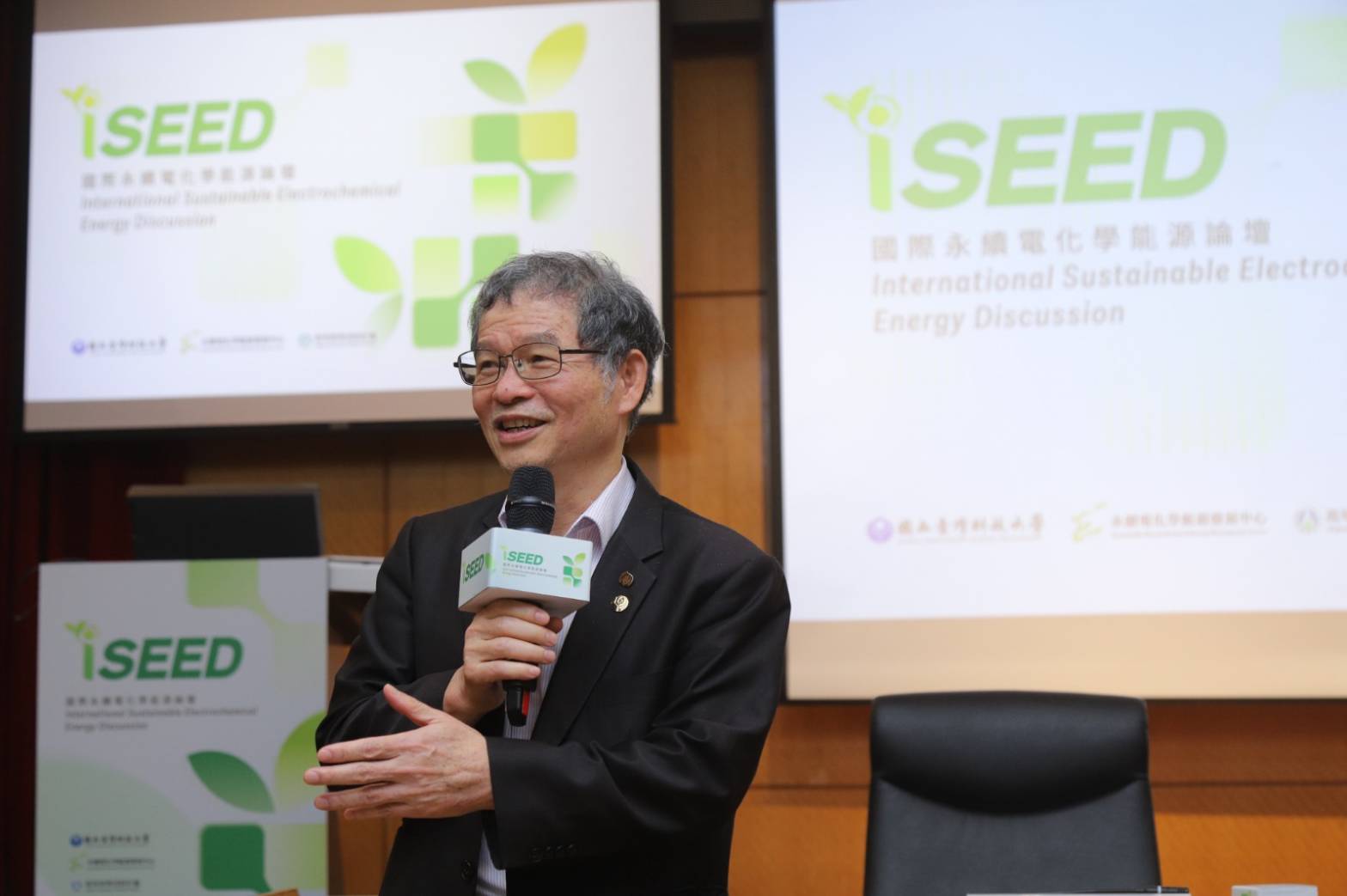
Within this environment, Bing-Joe Hwang, National Chair Professor and leader at the SEED Center, represents what sustained continuity can achieve.
His scholarship spans electrochemistry, interfacial phenomena, nanoscience, fuel cells, solar cells, sensors, electrocatalysis, and advanced energy materials. Across these domains, his work deepens global understanding of reaction mechanisms and material interfaces that underpin modern energy systems.
Rather than pursuing isolated advances, his research integrates fundamental science with engineering scalability, ensuring that laboratory insights inform technologies capable of real-world deployment.
Q: What recent breakthroughs highlight this impact?
In recent years, Professor Hwang’s group has accelerated next-generation lithium-ion and solid-state battery technologies through advanced surface and interface engineering. Notable developments include:
These breakthroughs reflect a deliberate bridging of fundamental electrochemical science with scalable, green manufacturing strategies; critical components of the global transition toward carbon neutrality.
His guiding philosophy, “Infinite Efforts = Infinity Opportunities,” captures more than personal discipline. It mirrors an institutional culture at NTUST designed for sustained impact.
Q: What is the broader narrative beyond individual achievement?
The larger story extends beyond any single laboratory. What stands out at NTUST is how leadership, infrastructure, interdisciplinary collaboration, and national ambition reinforce one another. When these elements align, research momentum becomes self-sustaining; each discovery strengthens the conditions for the next.
As the global transition toward carbon neutrality accelerates, the true differentiator will not be isolated from brilliance, but ecosystems capable of nurturing excellence over decades. At NTUST, excellence is not episodic recognition; it is structural continuity.
It is the steady convergence of effort, collaboration, and shared purpose; the kind that quietly shapes industries, influences policy, and builds the scientific foundations of a more sustainable future.