
Universities of science and technology have long placed strong emphasis on aligning academic learning with workplace needs. In recent years, they have also actively developed English for Specific Purposes (ESP) courses that integrate professional knowledge, English proficiency, and workplace contexts to help students strengthen their competitiveness in the job market. To support the 2030 Bilingual Nation Policy and the Second Phase of the Bilingual Education Program, the Ministry of Education commissioned the EMI Teaching and Learning Center at Taiwan Tech to promote the “ESP Hub Project.” On July 23, Taiwan Tec held the “ESP Workplace Context Forum and Hub Establishment Ceremony” at National Chin-Yi University of Technology. For the first time, the initiative brought together 11 universities of science and technology to jointly sign a memorandum of understanding (MOU), formally establishing an inter-university ESP professional English collaboration network. Through inter-university collaboration, the network will integrate professional-field faculty members, English instructors, and teaching resources to jointly develop ESP teaching materials and instructional models that closely respond to industry needs.
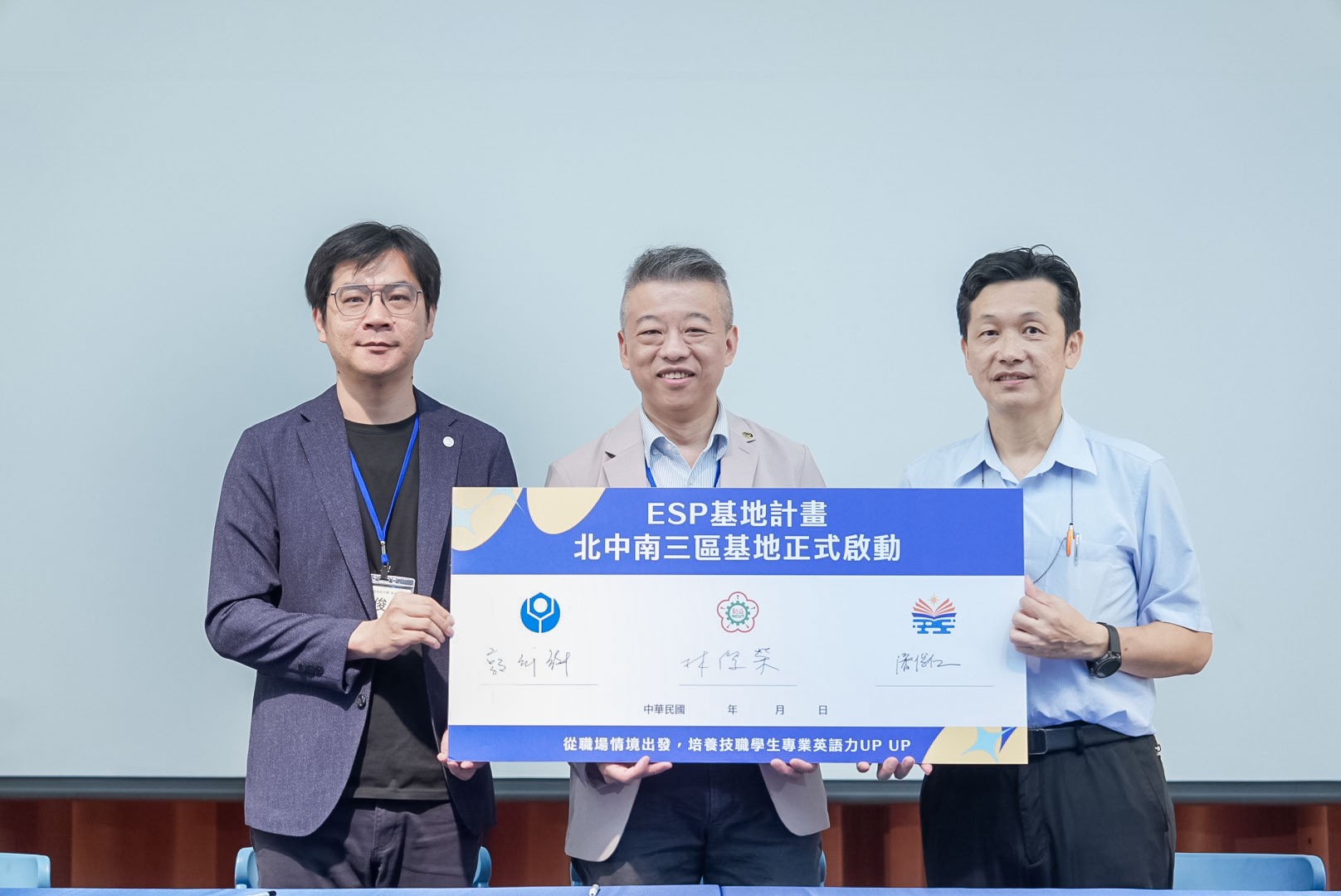
Taiwan Tech, National Chin-Yi University of Technology, and National Kaohsiung University of Science and Technology serve as the coordinating universities for the northern, central, and southern regions, respectively. Together with eight other universities, they signed a memorandum of understanding and officially announced the establishment and launch of the ESP Hub Project. From left: Chun-Jen Pan, Deputy Vice President for Academic Affairs and Director of the Center for Teaching and Learning Development at NKUST; Yu-Lin Kuo, Chief Secretary of Taiwan Tech and Executive Director of the EMI Teaching and Learning Center; and Chun-Jung Lin, Executive Director of the EMI Teaching Development Center and Section Chief of the Teaching Resource Section, Office of Academic Affairs, at National Chin-Yi University of Technology.
Under the ESP Hub Project, Taiwan Tech, National Chin-Yi University of Technology, and National Kaohsiung University of Science and Technology serve as the coordinating universities for the northern, central, and southern regions, respectively. Together with partner universities Ming Chi University of Technology, Asia Eastern University of Science and Technology, Lunghwa University of Science and Technology, Chaoyang University of Technology, National Taichung University of Science and Technology, Central Taiwan University of Science and Technology, Hungkuang University, and Cheng Shiu University, the initiative has established eight inter-university working groups. The working groups focus on six major professional fields plus one additional category - engineering, electrical and computer engineering, management, hospitality, healthcare, design, and other fields—to promote teaching-material development, faculty exchange, and the sharing of teaching resources.
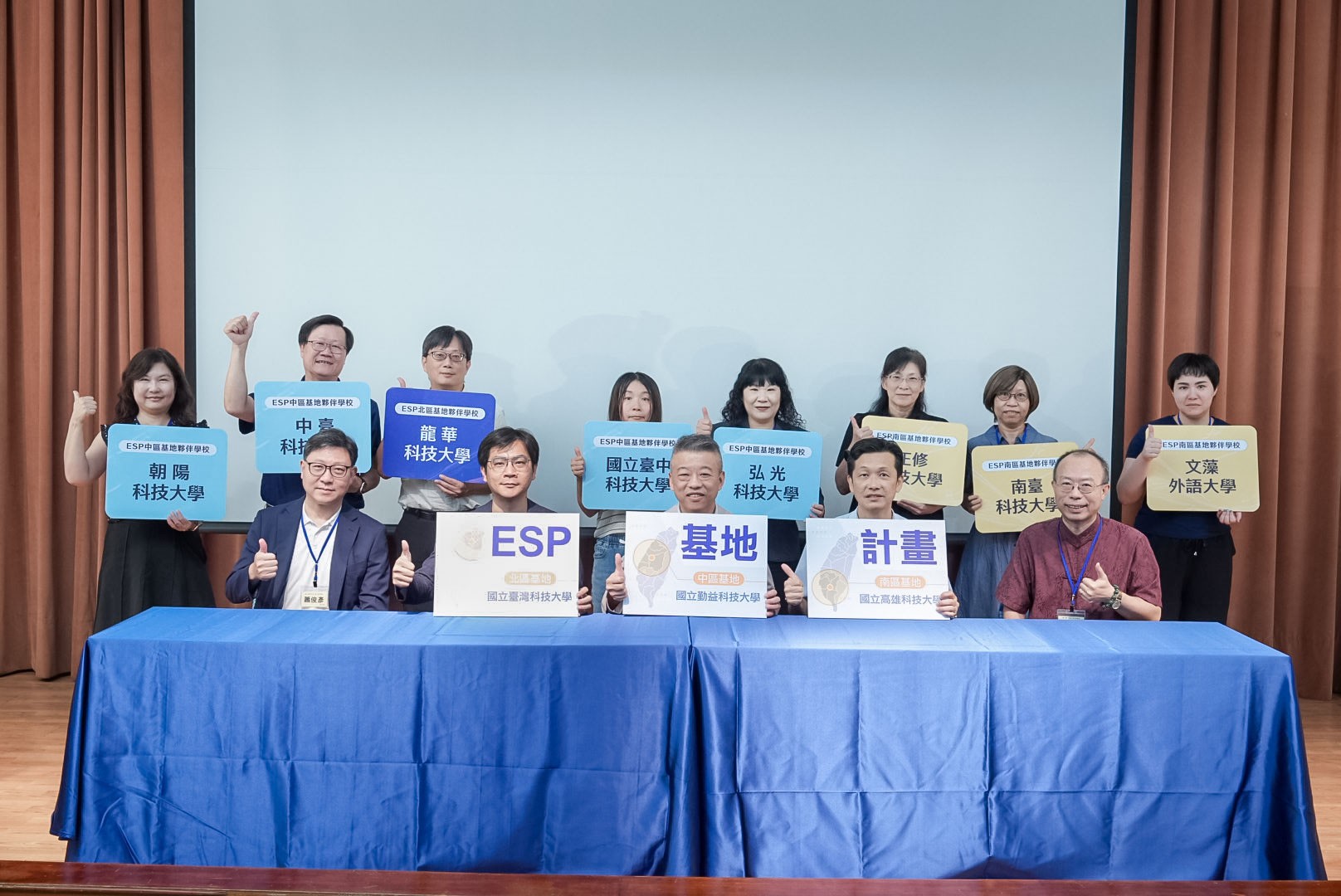
For the first time, the ESP Hub Project has connected 11 universities of science and technology across northern, central, and southern Taiwan to jointly develop English teaching resources for professional fields and workplace-context teaching materials.
To ensure that the teaching materials more closely reflect real-world industry practices, the project uses authentic workplace contexts as the foundation for material development. Each working group invited alumni who graduated in recent years and are currently working on the front lines of their respective industries to participate in interviews. The interviews collected information on job responsibilities, common communication situations, and competencies required in the workplace, which will serve as important resources for designing teaching materials. Based on the interview findings, the project will subsequently produce workplace-context videos and develop supplementary materials suitable for students at different levels of English proficiency. These resources will enable instructors to incorporate authentic workplace situations into their courses, allowing students to encounter English applications in different professional fields while still at university and helping narrow the gap between academic learning and workplace needs.
The event also featured a “Sharing of Interview Findings” session and a panel discussion titled “From Real-World Workplace Needs to ESP Classroom Practice.” The sessions brought together administrators from the three regional hub universities, teachers from the working groups, and participating representatives to share findings from the first stage of interviews, introduce directions for developing teaching materials in different fields, and present workplace-context cases. Participants also exchanged views on inter-university collaboration, teaching-material design, course implementation, experiences of cross-university collaboration, and future development. Through the sharing of practical outcomes, the participants worked together to further improve ESP teaching materials and instructional models.
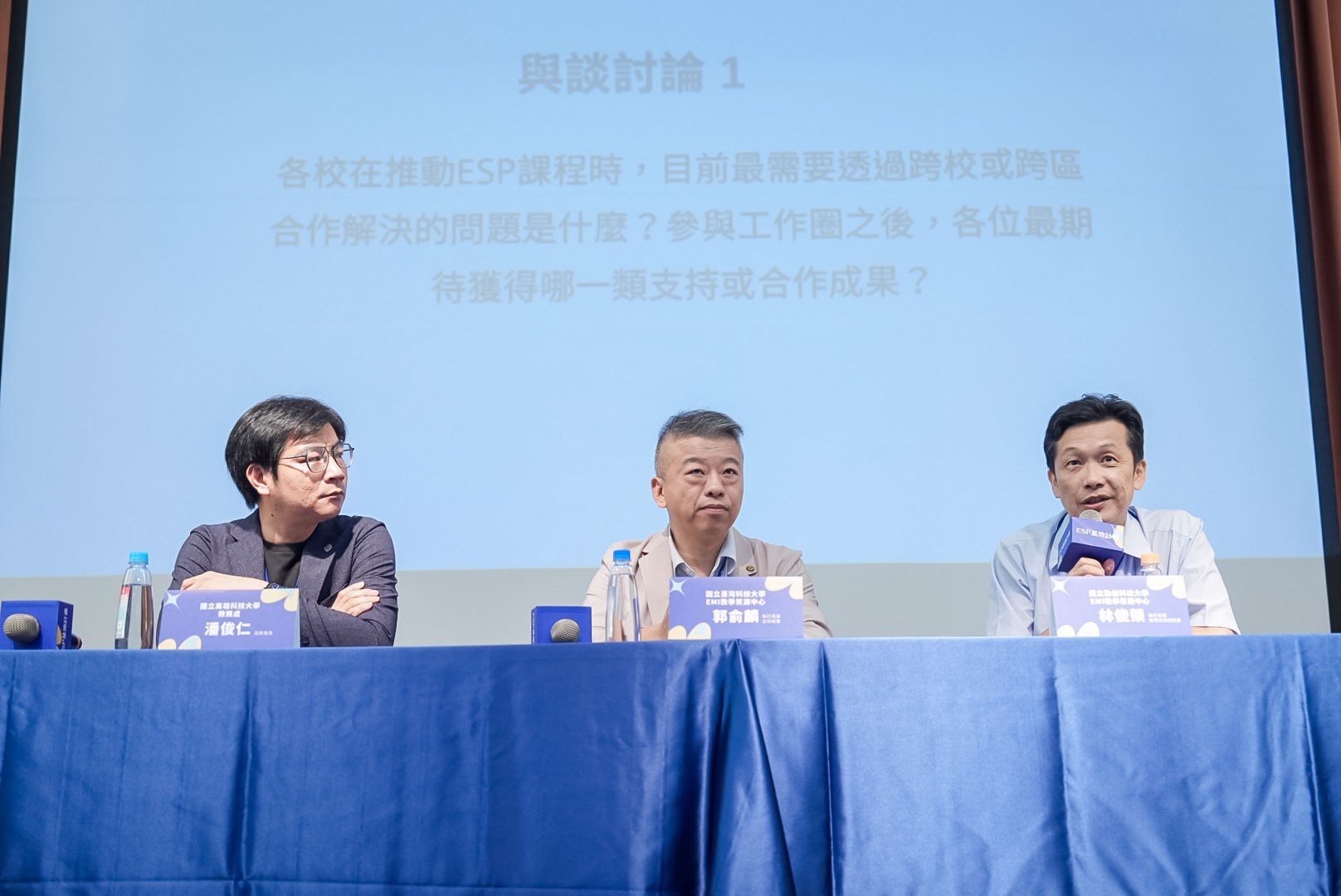
Taiwan Tech, National Chin-Yi University of Technology, and National Kaohsiung University of Science and Technology, serving as the coordinating universities for the three regions, discussed the operation of the working groups, material development, and experiences of inter-university collaboration during the panel discussion.
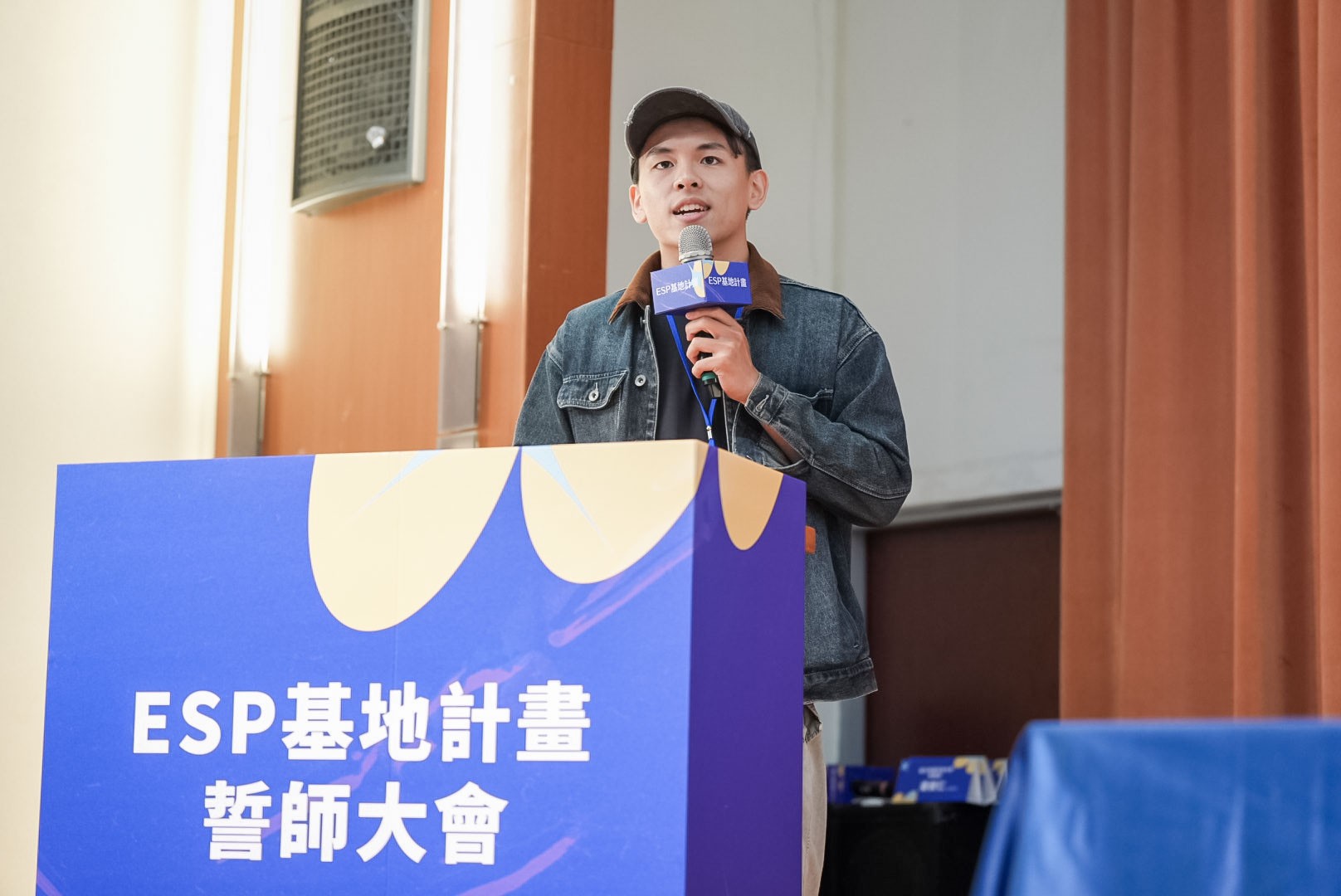
Ting-Hsu Wu, a recent graduate working in the electrical and computer engineering field and a member of the Northern Region Working Group, shared his real-life experiences using English during his internship. He expressed hope that authentic workplace-context teaching materials and resources could help students strengthen their ability to apply professional English and better prepare for their future careers.
Yu-Lin Kuo, Chief Secretary of Taiwan Tech and Executive Director of the EMI Teaching and Learning Center, said that many alumni have reported a gap between the English they learned at university and the actual situations in which English is used in the workplace. Therefore, the ESP Hub Project hopes to collect authentic workplace cases and integrate professional contexts into English courses, enabling students to encounter English communication situations in different professional fields while they are still studying and strengthening their ability to apply professional English.
Yu-Lin Kuo pointed out that the “working groups” are not merely an organizational structure but also represent a philosophy of collaboration. Developing ESP teaching materials requires professional instructors to provide workplace contexts, English instructors to design instructional content, and administrative staff to help integrate resources and coordinate collaboration among universities. “Without any one of these roles, the project could not be successfully implemented. Every participant is therefore an indispensable part of the initiative. The EMI Teaching and Learning Resource Center will also continue to serve as a strong support for partner universities as they promote ESP courses.”
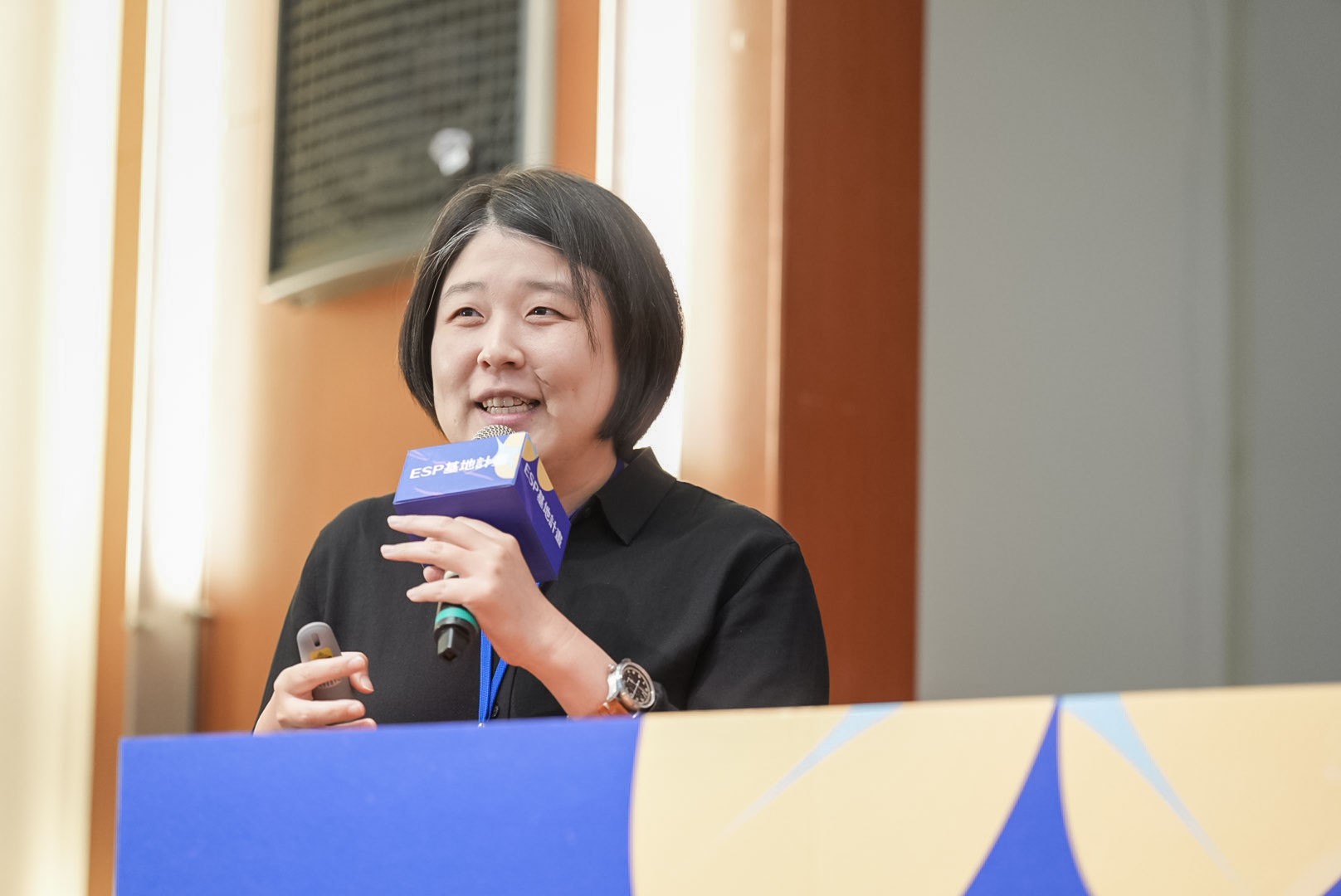
Chih-Hsuan Chang, Director of the Bilingual Education Promotion Center at National Kaohsiung University of Science and Technology and a member of the Southern Region Working Group, shared workplace conditions and challenges identified through interviews with alumni in the fields of engineering and aquatic and marine technology.
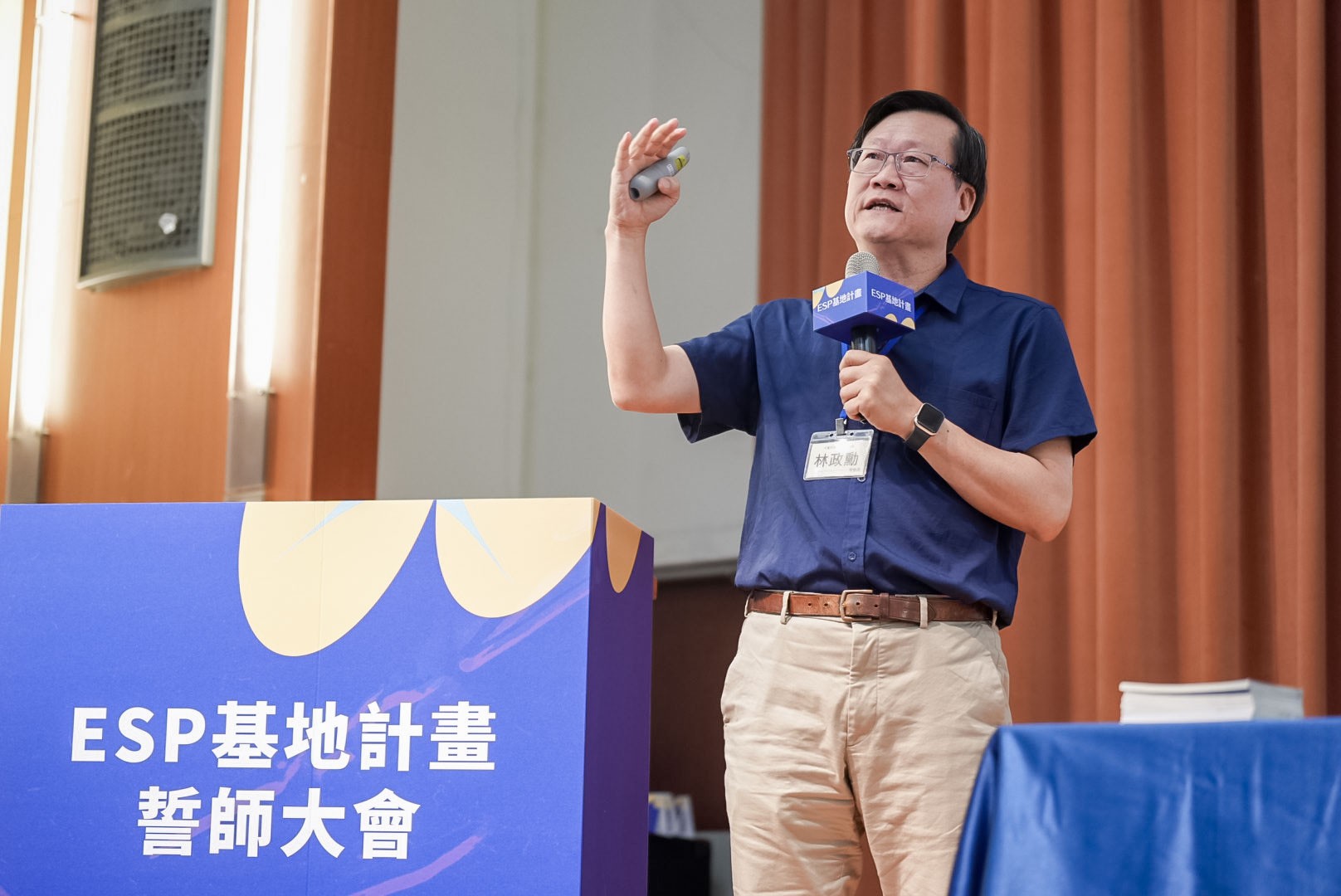
Cheng-Hsun Lin, Dean of Student Affairs at Central Taiwan University of Science and Technology and a member of the Central Region Working Group, shared the workplace English communication skills required by frontline professionals in medical radiology amid the increasing presence of international residents. He also expressed hope that the working groups could connect the professional English teaching expertise of universities of science and technology in the healthcare field across different regions.
Chun-Jung Lin, Executive Director of the EMI Teaching Development Center at National Chin-Yi University of Technology, noted that the needs of vocational and technical education have also changed in response to an increasingly internationalized environment. He expressed his appreciation for the support of all partner universities and looked forward to attracting more teachers and universities interested in promoting ESP courses to join the initiative in the future, working together to build a more comprehensive professional English education environment.
The Taiwan Tech EMI Teaching and Learning Center stated that it will continue to deepen collaboration with partner universities in the ESP Hub Project. It will gradually establish ESP teaching materials and teaching resources for different professional fields, support universities of science and technology in developing professional English courses that more closely respond to industry needs, further deepen bilingual education, and cultivate talent equipped with both professional expertise and the ability to connect Taiwan with the international community.
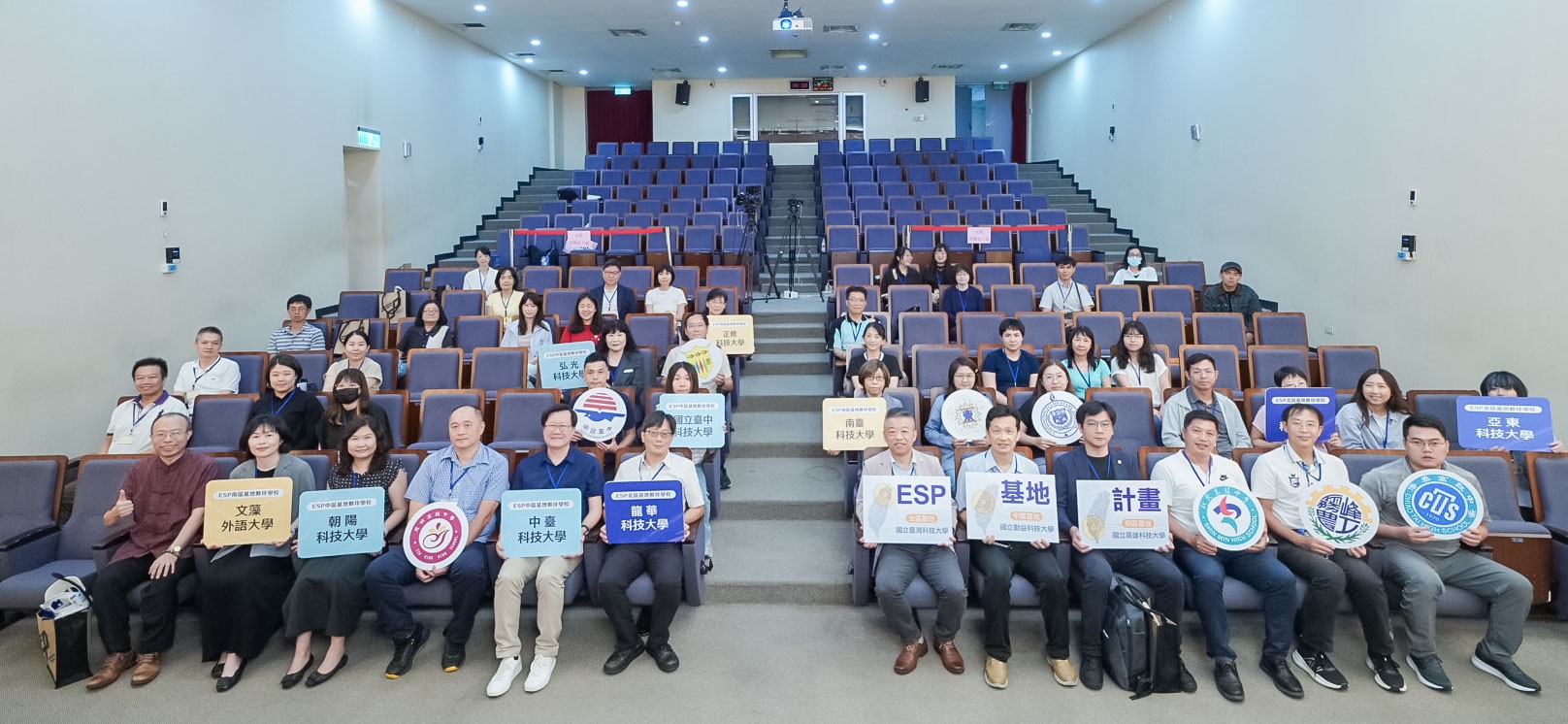
The “ESP Workplace Context Forum and Hub Establishment Ceremony” invited faculty members, teachers, and distinguished guests from partner universities, as well as senior high school and vocational high school institutions, to attend. The event aimed to promote the continued development and dissemination of bilingual teaching capacity from higher education institutions to the secondary education level.