
From agricultural facilities in Indonesian villages and drinking water facilities at Vietnamese primary schools to disaster prevention education in a snowy Japanese village, the Taiwan Tech’s Engineers in Action (EIA) team travelled to Indonesia, Vietnam and Japan during the summer of 2026. Working with faculty members and students from local universities, the team engaged with communities and schools, applying classroom knowledge to real-world service projects. Through international collaboration and hands-on practice, students explored solutions to local needs and put university social responsibility into action.
For the first stop of the programme, Taiwan Tech’s Engineers in Action team partnered with Institut Teknologi Sepuluh Nopember (ITS) in Indonesia and travelled to Pacet village, approximately a three-hour drive from Surabaya. The team helped install outdoor exercise equipment and road safety signs to improve public activity spaces and traffic conditions for local residents. They also converted an unused space at a local primary school into a reading room, providing children with a more suitable environment for reading and learning.
In response to local agricultural and environmental education needs, the team helped establish a solar-powered aquaponic greenhouse system, introducing renewable energy and circular agriculture to the community. They also held a workshop on making candles from recycled cooking oil to promote waste reuse. For primary school pupils, the team organised waste-sorting games and a DIY activity in which discarded bottle caps were turned into accessories, helping children understand waste classification and recycling through hands-on learning.
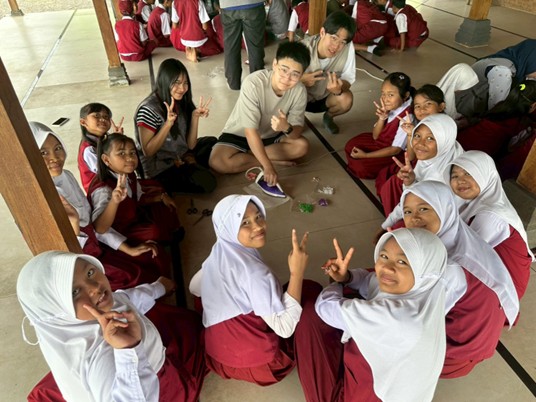
The team conducts a waste-sorting awareness activity for primary school pupils in Pacet village. Through a DIY activity using discarded bottle caps, children learn about waste sorting and resource reuse through games and hands-on practice.
Another team worked with faculty members and students from Widya Mandala Catholic University Surabaya (UKWMS) in Indonesia and visited the Gubug Lazaris community. They helped repair leaks in ponds and irrigation channels to reduce water loss and maintained greenhouse irrigation facilities to meet local agricultural water needs. The team also organised a workshop on making charcoal briquettes from agricultural by-products, exploring resource reuse with residents and tailoring engineering service to local living and production conditions.
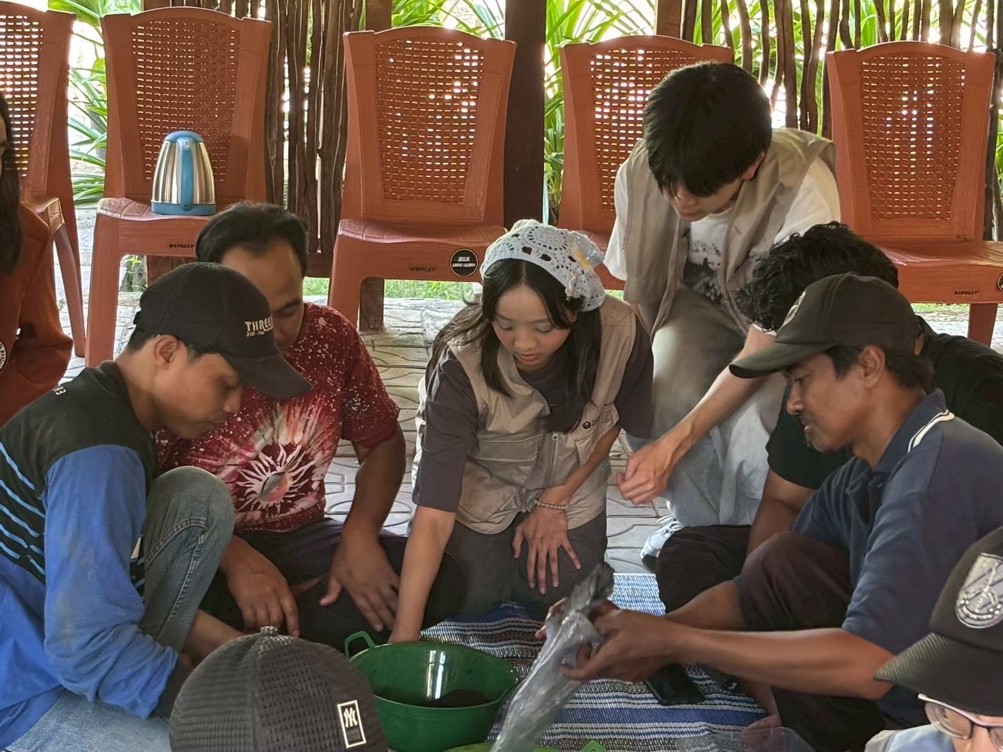
The team holds a DIY charcoal briquette workshop, where residents of Gubug Lazaris use agricultural waste to make charcoal briquettes. The activity promotes resource reuse while fostering interaction between Taiwanese students and local residents.
In Vietnam, Taiwan Tech’s Engineers in Action team partnered with Can Tho University (CTU) and visited Hoa-An 1 Primary School to improve the school environment, focusing on drinking water, sanitation and recreational facilities. The team helped install a reverse osmosis (RO) water filtration system and incorporated a hydroponic vegetable-growing rack into plans for water reuse, introducing pupils to the concept of water recycling through plant cultivation.
In addition to improving drinking water facilities, the team renovated the school toilets, repainting and decorating deteriorating walls and installing lighting to create a better sanitation environment. They also tidied up the outdoor play area and football pitch, providing children with more suitable spaces for activities. By focusing on facilities used by pupils every day, the team integrated environmental improvements into everyday school life.
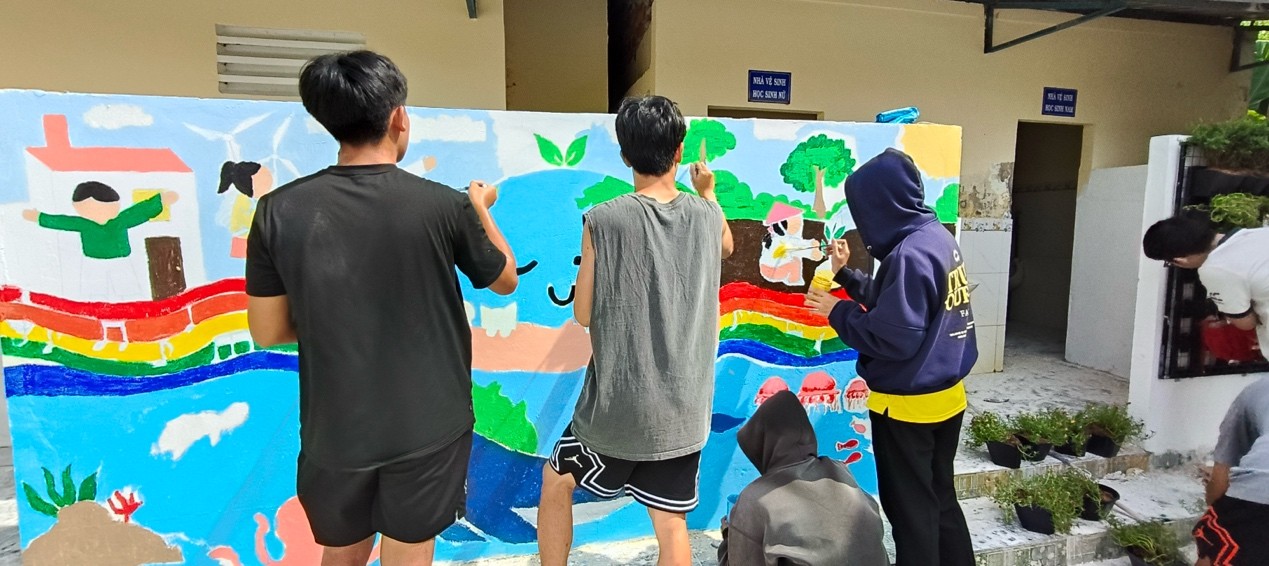
The team paints and decorates the toilets at Hoa-An 1 Primary School, refreshing deteriorated walls and creating a cleaner, brighter environment.
Meanwhile, another team partnered with Osaka Institute of Technology (OIT) in Japan and travelled to Otari Village in Nagano Prefecture to support local revitalisation and disaster preparedness education. To address the challenges posed by seasonal fluctuations in tourism, students helped repair a tennis court and restore an outdoor lawn, improving the recreational environment around tourist accommodation facilities. They also produced a promotional video showcasing Otari Village’s natural scenery and local attractions, with the aim of encouraging visitors to explore the area throughout the year.
Given the heavy snowfall that shapes daily life in Otari Village during winter, the team also designed a load-bearing model house workshop for local primary school pupils. Using a limited number of strands of spaghetti, the children built model houses and tested their load-bearing capacity in a competition. By observing how different structures performed, they learned about the relationship between building design and the weight of accumulated snow. As Taiwanese students helped the children build, test and discuss their models, they also practised translating engineering knowledge into everyday concepts that young learners could understand.
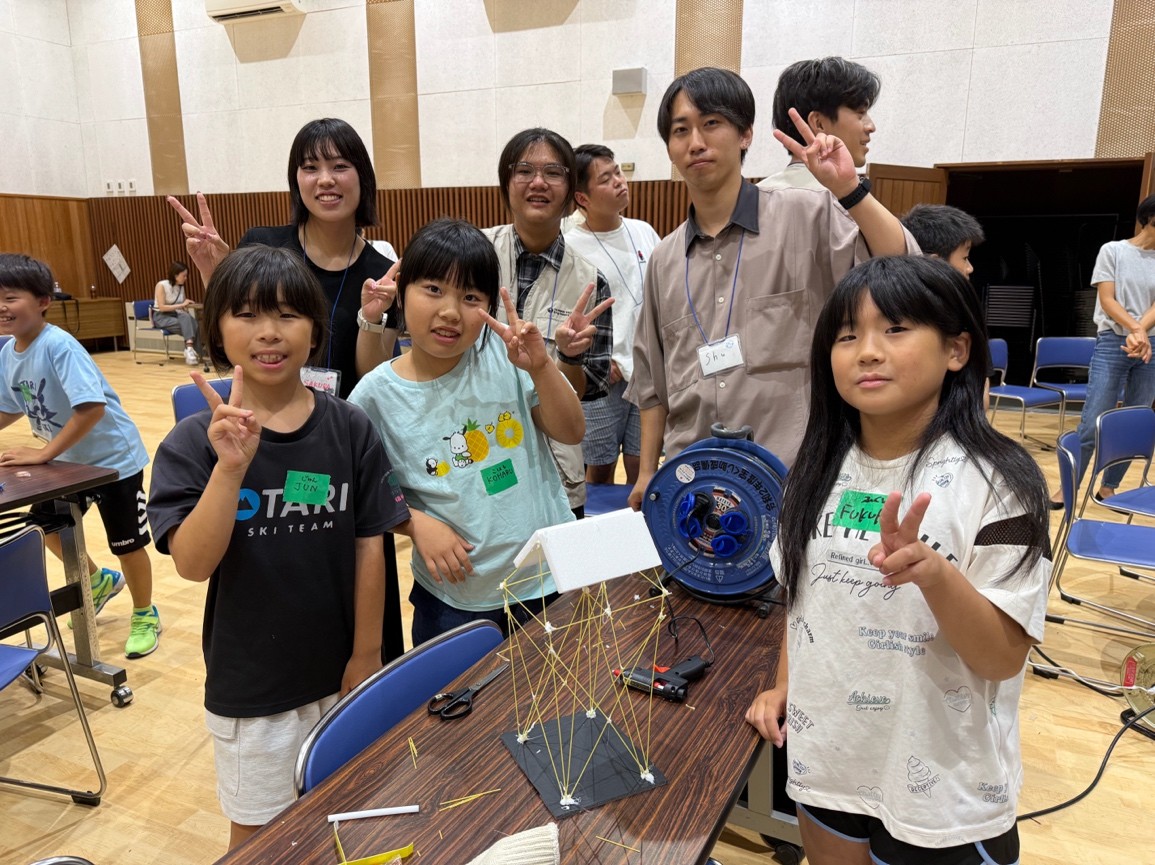
The team holds a load-bearing model house workshop based on local housing conditions. Using a limited number of strands of spaghetti, primary school pupils build model houses and explore the relationship between structural design and the weight of accumulated snow through a competition.
International service challenges students not only to apply their practical skills but also to understand local needs, communicate with partners from different cultural backgrounds and work together to achieve shared goals. From community water resources and school facilities to disaster preparedness in snowy regions, the varied living conditions in each location encourage students to consider how engineering can make a difference in real-world settings. Exchanges with residents and partner universities also broaden their international perspectives.
Through overseas service projects, Taiwan Tech’s Engineers in Action programme extends engineering education into communities, helping students understand the relationships between technology, people and the environment as they apply their professional knowledge. These cross-border, hands-on experiences also demonstrate Taiwan Tech’s approach to talent development, which integrates professional education, international collaboration and university social responsibility. The programme encourages students to use their engineering skills to address societal needs and turn learning into concrete actions that improve people’s lives.