
The 2026 FutureTech Awards are jointly organised by Taiwan’s National Science and Technology Council, Academia Sinica, the Ministry of Education, and the Ministry of Health and Welfare, among other agencies. This year, five teams from Taiwan Tech received the awards for research in green ammonia, green hydrogen, cybersecurity, smart wearables and materials design. The winning teams will showcase their research at the Future Tech Pavilion of the Taiwan Innotech Expo (TIE), held at Taipei World Trade Center Hall 1 from 17 to 19 September.

Five Taiwan Tech teams received the 2026 FutureTech Awards for research in green ammonia, green hydrogen, cybersecurity, smart wearables and materials design. The winning teams will showcase their research at the Future Tech Pavilion of the Taiwan Innotech Expo (TIE), held at Taipei World Trade Center Hall 1 from 17 to 19 September.
Professor Dong-Hau Kuo of the Department of Materials Science and Engineering leads a research team comprising Quoc-Nam Ha, Yen-Wei Huang, Yu-Hsiang Huang, Jung-Tsun Pan, Tzu-Ching Chang and Fang-Chih Lei. Moving beyond conventional manufacturing processes that rely on high temperatures, high pressures and fossil fuels, the team has developed a technology for producing green ammonia and high-value derivative chemicals directly from air. The process uses plasma to activate air and capture the resulting precursor solution, followed by electrochemical reduction to produce green ammonia at ambient temperature and pressure. This establishes a process for converting air directly into ammonia products, with potential applications in fertilisers, ammonia fuels, hydrogen carriers and nitrogen-based chemicals. In the future, the technology could be integrated with renewable energy and modular equipment to reduce energy consumption and supply-chain costs, offering a potential pathway for producing low-carbon ammonia and its derivatives.
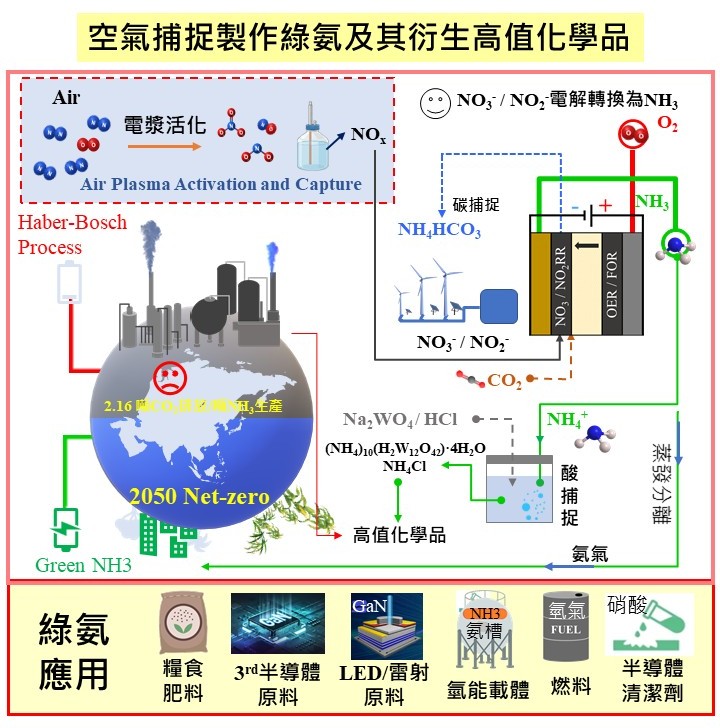
Professor Dong-Hau Kuo and his research team use plasma to activate air and capture the resulting precursor solution, followed by electrochemical reduction to produce green ammonia at ambient temperature and pressure, establishing a low-carbon process for converting air directly into ammonia.
In addition to green ammonia production, hydrogen energy is another important area of low-carbon energy technology. Professors Wei-Nien Su and Chih-Chia Cheng of Taiwan Tech’s Graduate Institute of Applied Science and Technology, together with Associate Professor Min-Hsin Yeh of the Department of Chemical Engineering, collaborated with Professor Chi-Yang Chao of National Taiwan University’s Department of Materials Science and Engineering, Assistant Professor Meng-Che Tsai of National University of Tainan’s Department of Green Energy, and Assistant Professor Hsin-Chih Huang of National Formosa University’s Department of Materials Science and Engineering. Their cross-university team developed a system titled “Breaking the Green Hydrogen Cost Barrier: A Next-Generation Dual-Benefit Hydrogen Electrolysis System with 20% Lower Electricity Consumption”. Using non-precious metals and domestically produced natural membrane materials, the system introduces an innovative approach that couples a value-added anodic reaction with hydrogen production at the cathode, reducing electricity consumption to 3.63 kWh per cubic metre of hydrogen.
Meanwhile, the anodic reaction converts 5-hydroxymethylfurfural (HMF), a biomass-derived compound, into 2,5-furandicarboxylic acid (FDCA), a valuable chemical that serves as a key feedstock for bio-based polyethylene furanoate (PEF). PEF has the potential to replace conventional polyethylene terephthalate (PET), which is commonly used in plastic bottles. Revenue from this high-value chemical could help offset hydrogen production costs and improve the commercial viability of the technology.
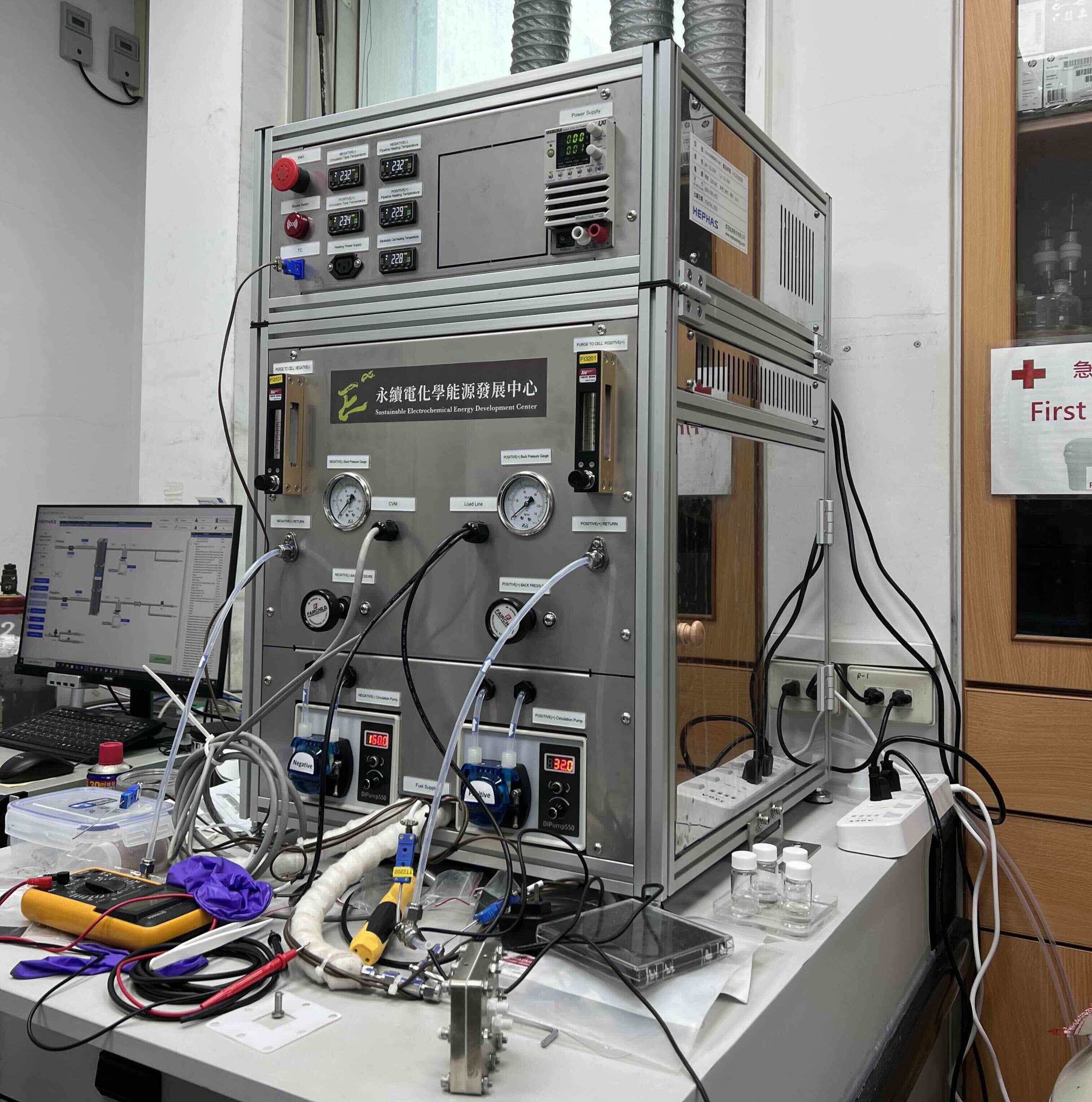
Professor Wei-Nien Su’s research team developed a next-generation dual-benefit hydrogen electrolysis system designed to reduce electricity consumption by 20%. The process also produces FDCA, a high-value bio-based chemical, to help offset hydrogen production costs and improve commercial viability.
As smart factories and Industrial Internet of Things (IIoT) applications continue to expand, connections and data exchanges between production equipment are becoming increasingly complex. Cybersecurity systems must therefore identify known attacks while minimising false alarms that could disrupt production. Professor Shin-Ming Cheng and Assistant Professor Shao-Jui Wang of Taiwan Tech’s Department of Computer Science and Information Engineering, in collaboration with Professor Ying-Dar Lin of National Yang Ming Chiao Tung University’s Department of Computer Science, have developed a lightweight AI-powered intrusion prevention system for the IIoT driven by large language models (LLMs). The system uses LLMs to interpret the semantic meaning of industrial network packets, enabling it to identify abnormal command intentions even when attacks are disguised in legitimate data formats. Combined with lightweight AI models deployed on edge devices, the system can detect emerging attacks by learning normal network traffic patterns.
The technology combines accurate threat detection with reduced risk of false alarms that could halt production. It can also be integrated into industrial switches and gateways without modifying existing machinery. The team is already collaborating with industry partners and promoting applications in sectors such as semiconductor manufacturing through a start-up company. The technology aims to reduce production-line disruptions caused by false-positive cybersecurity alerts and help Taiwan’s smart manufacturing industry establish protection systems capable of meeting international regulatory requirements.
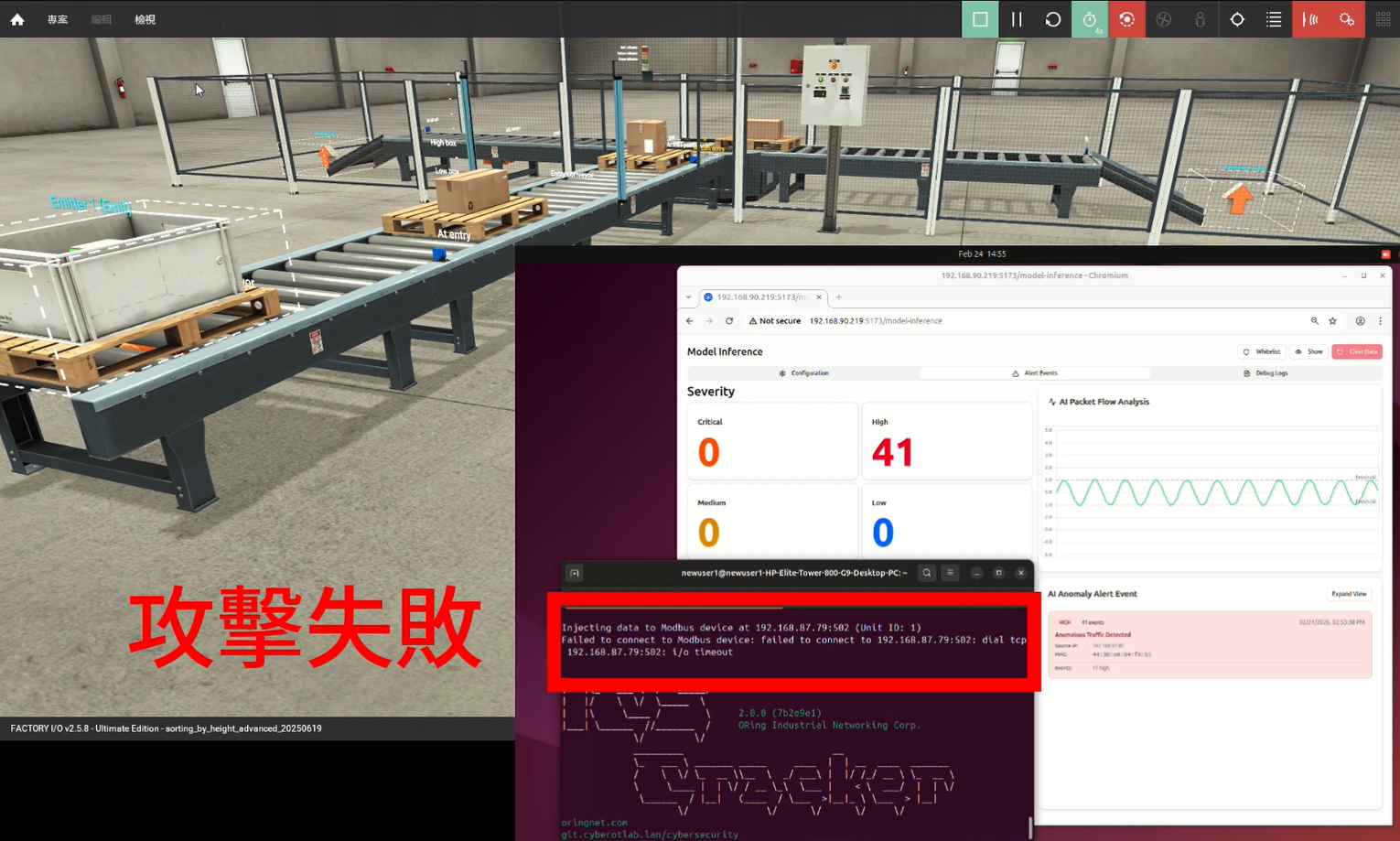
Professor Shin-Ming Cheng’s research team uses a large language model (LLM) to detect abnormal network traffic and add suspicious traffic to a blacklist to block cyberattacks. The image shows the LLM-powered lightweight AI intrusion prevention system protecting a digital factory.
Beyond cybersecurity in industrial environments, AI and wearable sensing technologies are increasingly being used in sports training and health management to help users monitor physical indicators and movement patterns. Professor Wei-Chun Hsu of Taiwan Tech’s Graduate Institute of Biomedical Engineering, Assistant Professor Yi-Jia Lin of the Graduate Institute of Artificial Intelligence, and Professor Yi-Hung Liu of the Department of Mechanical Engineering have jointly developed an AI-powered wearable system for sports injury risk assessment and movement feedback. By integrating sports biomechanics, AI-based time-series models, human pose estimation and portable force sensors, the system establishes an intelligent assessment process that interprets key indicators, including knee-joint loading, landing impact and movement control.
After a user completes a jump, edge AI provides real-time risk scores and loading trends, helping coaches and sports medicine professionals manage training. Potential applications include sports injury prevention, training-load management and precision health. Compared with conventional laboratory-based measurement procedures, the system offers lower costs, requires less manpower and can be used outside laboratory settings.
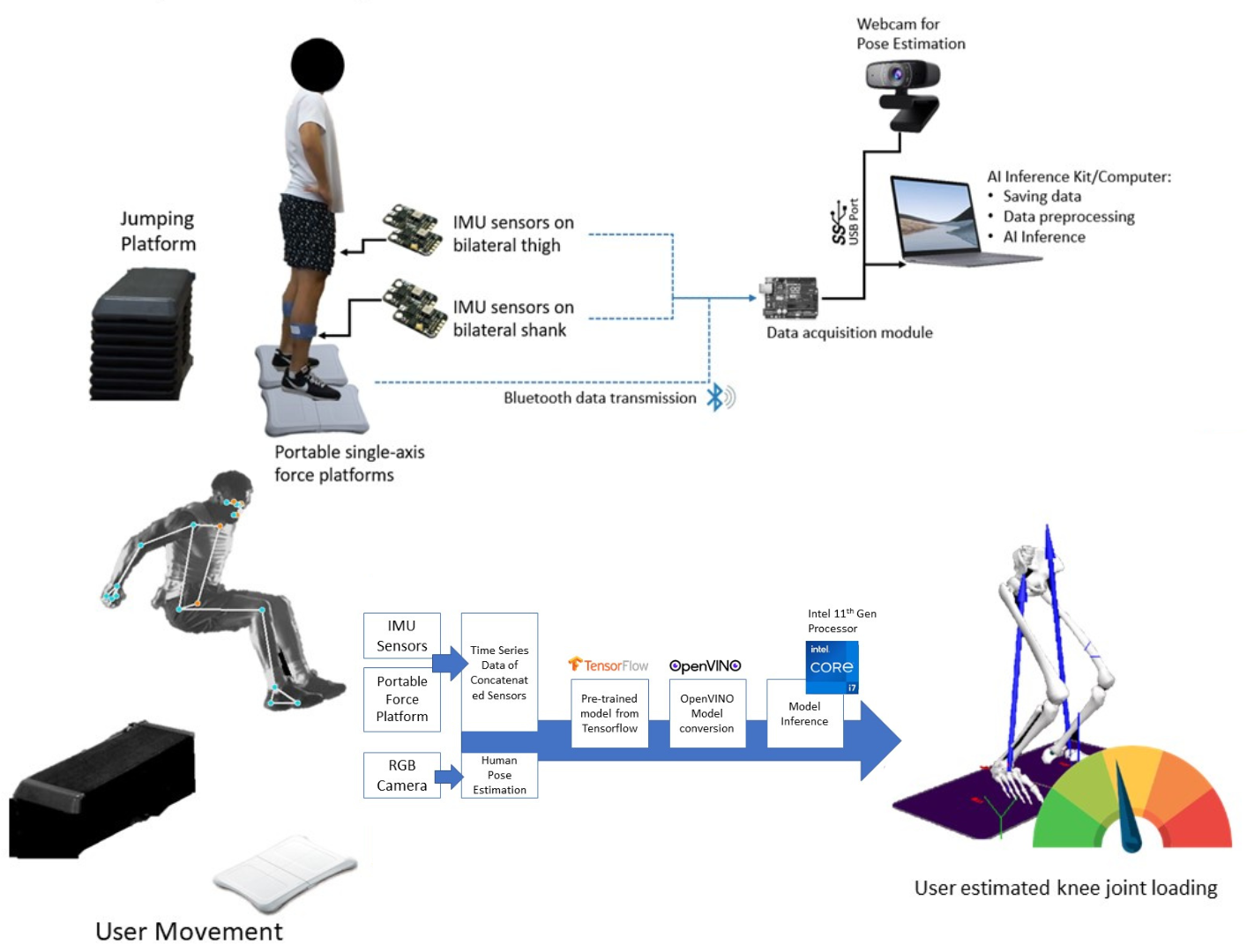
Professor Wei-Chun Hsu of the Graduate Institute of Biomedical Engineering and Professor Yi-Hung Liu of the Department of Mechanical Engineering have jointly developed an AI-powered wearable system for sports injury risk assessment and movement feedback. The system evaluates key indicators, including knee-joint loading, landing impact and movement control.
Materials research is fundamental to industries such as batteries, semiconductors and energy. However, conventional materials development often requires repeated formulation and experimental validation, consuming considerable time and resources. To address this challenge, Associate Professor Ping-Chun Tsai of Taiwan Tech’s Department of Mechanical Engineering leads a research team that has developed an intelligent platform for predictive materials design through computation-guided experimentation. The platform integrates multiscale computational methods, artificial intelligence and experimental validation to establish a research workflow in which computational results guide materials experiments.
The platform can predict material properties, screen candidate materials and optimize designs before experiments begin, substantially reducing trial-and-error time and improving the likelihood of success. It has already been applied to materials development for lithium-ion and solid-state batteries, with related findings recognised by leading international academic journals. By integrating computational modelling with experimental validation, the platform can help companies shorten materials research and development cycles, reduce experimental costs and minimise trial-and-error risks. Its potential applications could also extend to semiconductors, hydrogen energy and smart manufacturing.
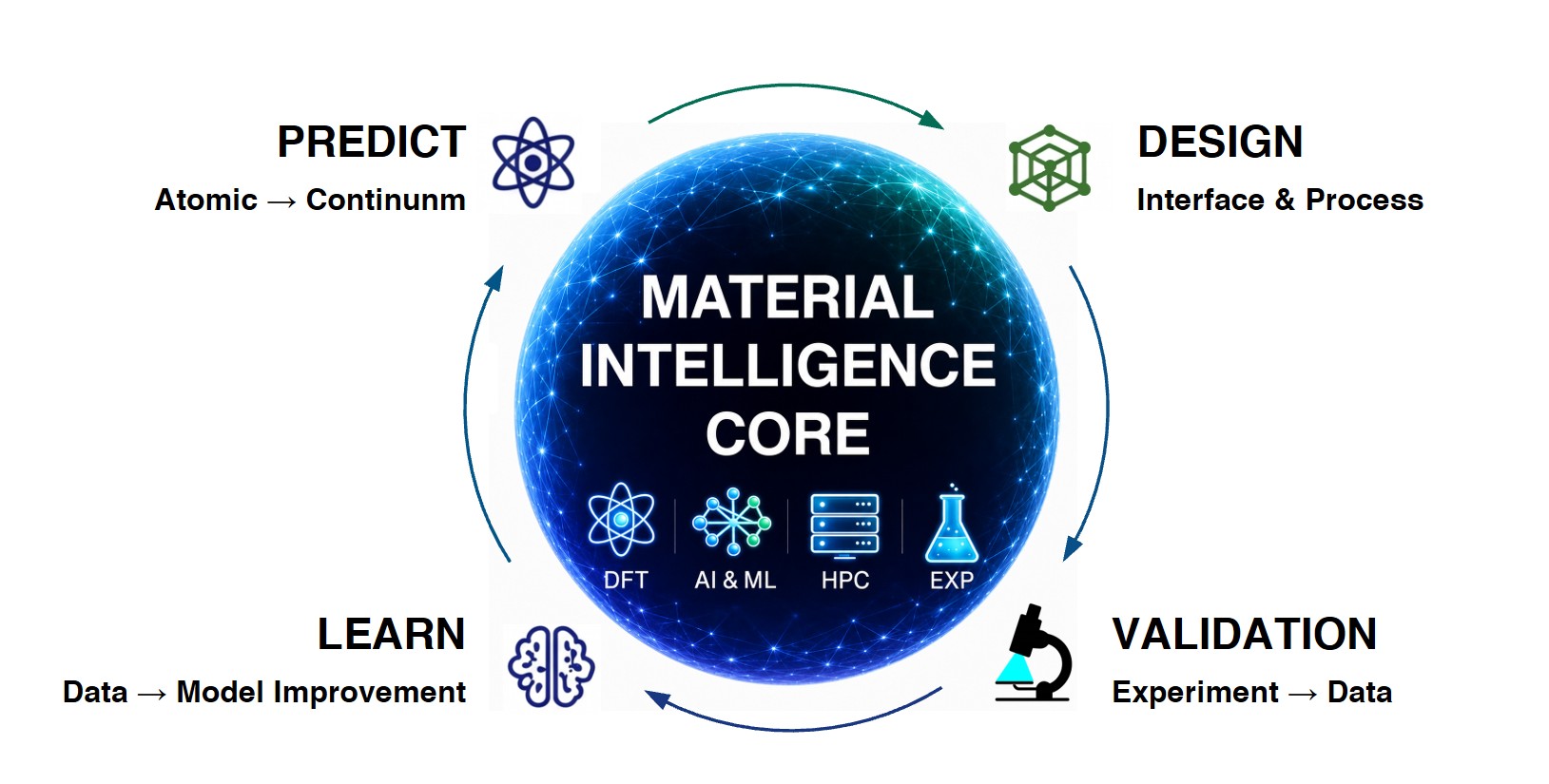
Associate Professor Ping-Chun Tsai’s research team developed an intelligent platform for predictive materials design through computation-guided experimentation. The platform predicts material properties, screens candidate materials and optimizes designs before experiments begin, reducing trial-and-error time and improving the likelihood of success.
From low-carbon energy and industrial cybersecurity to sports health and materials research, Taiwan Tech’s award-winning technologies span a wide range of industrial applications. Building on their existing research, the teams continue to collaborate with industry partners to validate their technologies. Some projects have progressed to patent applications, technology transfer or practical implementation. Through continued collaboration between academia and industry, Taiwan Tech is working to align research outcomes with industrial needs and bring innovative technologies into everyday life.