
Taiwan Tech held its 2026 Freshman Orientation today (September 4), welcoming new students from diverse backgrounds to join the Taiwan Tech community. President Jia-Yush Yen encouraged the new students to recognise that their four years at university are about more than earning a degree. More importantly, they should make good use of the university’s resources and build confidence and capabilities through learning, interaction, and a wide range of experiences. “When you graduate from Taiwan Tech four years from now, I hope you will discover that you have become stronger and more capable than before”.
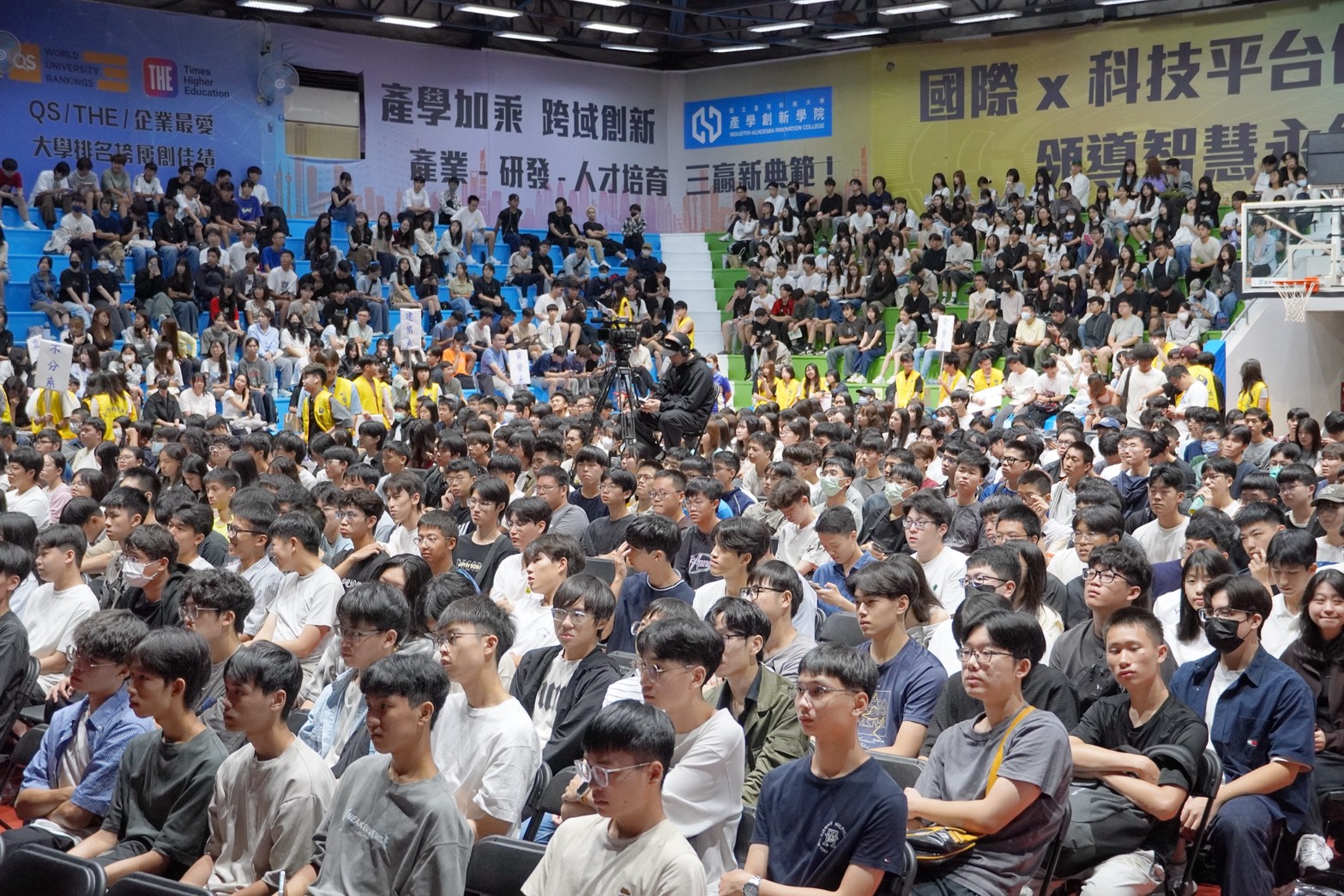
Taiwan Tech held its 2026 Freshman Orientation today (September 4), bringing new students together on campus as they officially embarked on their university journey.
President Jia-Yush Yen noted that although the Taiwan Tech campus is relatively small, it has abundant academic and teaching resources. In recent years, the university has consistently ranked among the top universities in Taiwan in various university rankings. However, rather than focusing on rankings, he places greater emphasis on the kind of education the university can provide to its students. In the face of the rapid development of AI, technology has made access to knowledge increasingly convenient. However, university education offers much more than knowledge; it also encompasses interpersonal interaction and the experiences accumulated through direct participation.
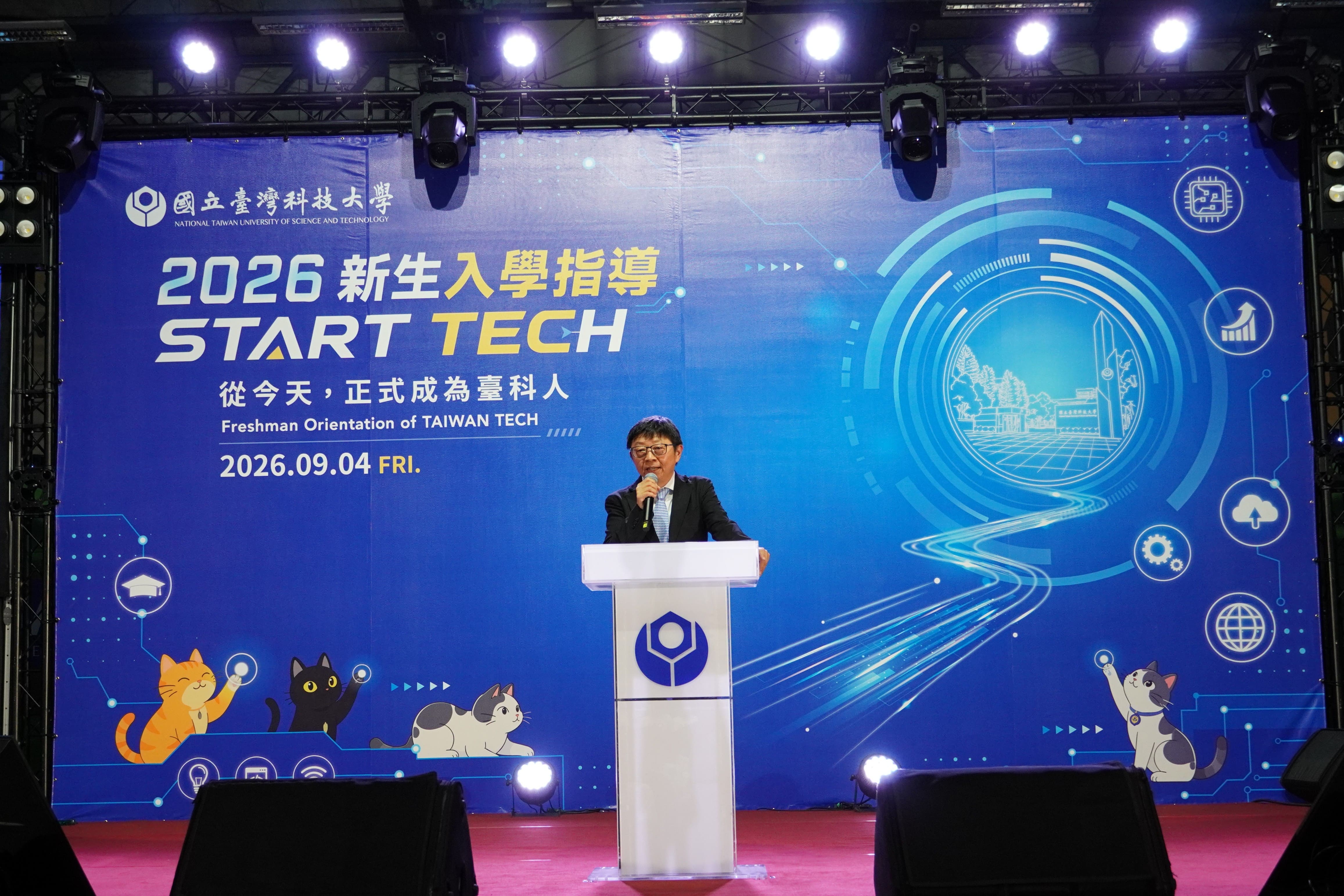
President Jia-Yush Yen encouraged new students to make the most of their four years at university by taking advantage of opportunities for learning and interaction on campus and accumulating life skills and experiences beyond their professional studies.
“The university gives you more than an education. It also provides training and experiences for life”. He encouraged new students to take advantage of the many opportunities for learning and interaction on campus, including engaging with their teachers and classmates, participating in international exchanges, and taking part in campus activities. During their four years at university, he encouraged them to “participate as much as possible, have as much fun as possible, and study as much as possible”, broadening their horizons, building confidence, and enriching their own university experiences through diverse encounters.
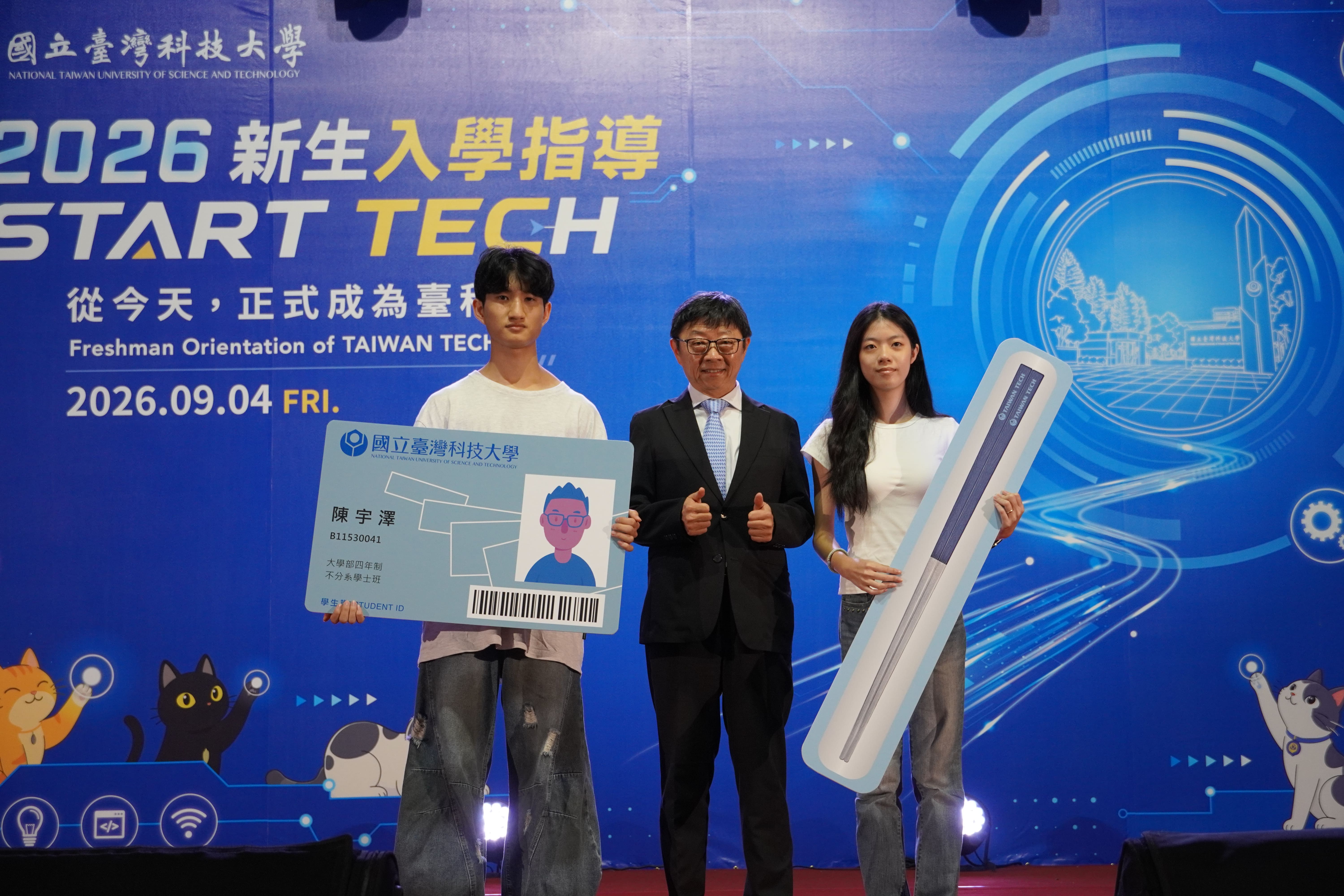
Taiwan Tech held its 2026 Freshman Orientation, with President Jia-Yush Yen (centre) welcoming the new students to Taiwan Tech and encouraging them to explore more possibilities and build momentum for personal growth over the next four years.
Among this year’s new students, Wei-En Du, from the Department of Electrical Engineering at the Vocational Senior High School Division of the National Taitung Junior College, became the first student from the school to gain admission to Taiwan Tech through Four-Year College and Two-Year Junior College Placement Registration System. Moving from Taitung to Taipei, he had not had many senior students to turn to for guidance on the path to university. As a result, he developed the habit of actively searching online for information about university admissions and joining online admissions communities. Through these communities, he came to know a number of Taiwan Tech senior students and received considerable advice. Gradually, Taiwan Tech became his target university.
To pursue this goal, he even made a special trip to the entrance of Taiwan Tech to take a photograph. “A senior student told me that if I went to the Taiwan Tech entrance and took a photo, I would get in”, he said with a smile. Although this was a small “urban legend” circulating among students, the photograph prompted him to begin imagining what his future life at Taiwan Tech might be like. Today, the campus that once stood behind a gate in that photograph has truly become the place where he will spend the next four years studying and living.
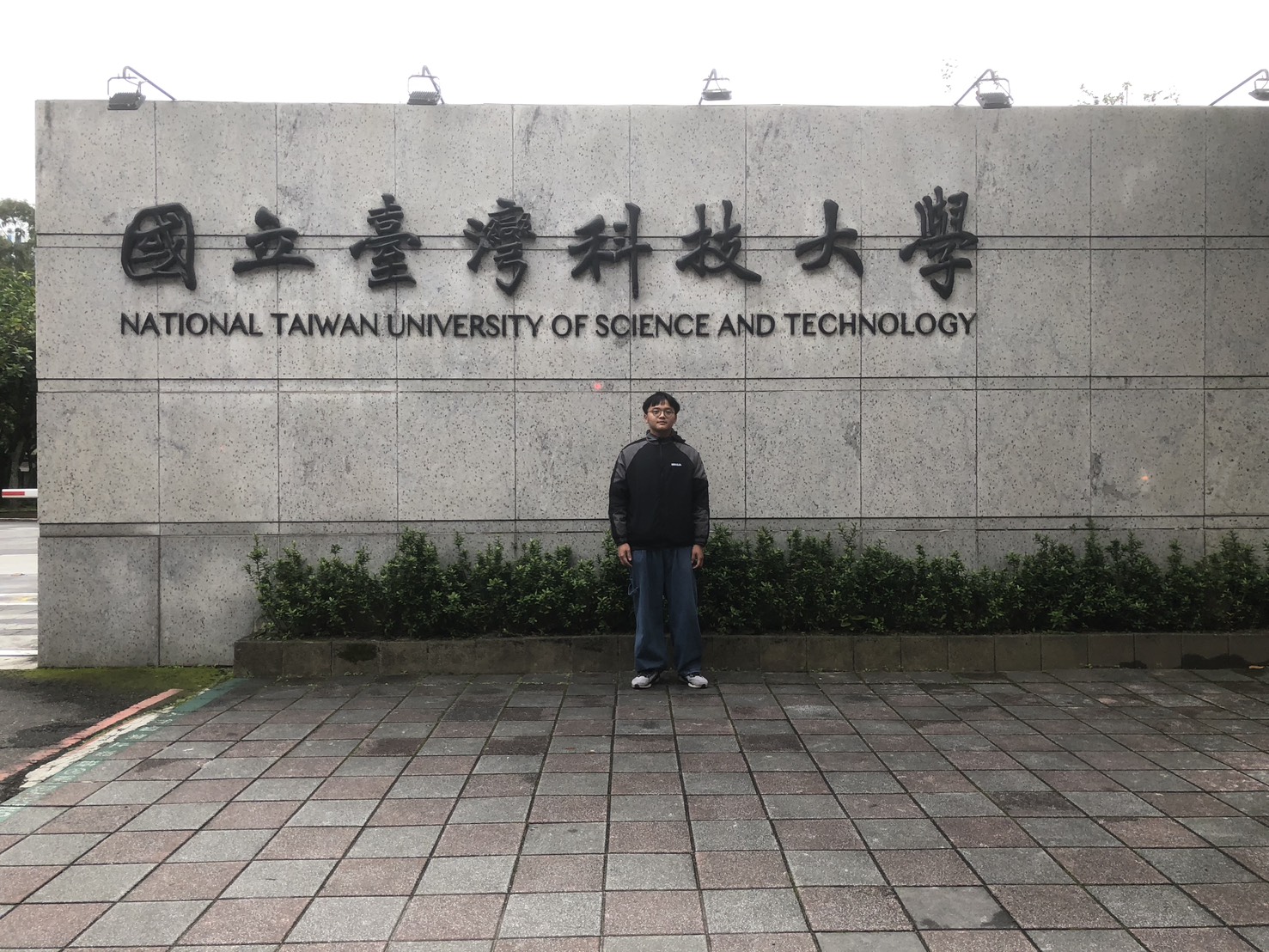
Wei-En Du visited the entrance of NTUST and took a photograph as a symbol of his university goal. Now that he has been admitted to the Department of Electrical Engineering at Taiwan Tech, his imagined university life has officially become reality.
His journey did not initially point towards electrical engineering. Wei-En Du had previously studied in a music programme before later turning to electrical engineering. Although this may appear to be a major change in direction, his musical training left him with an important ability: becoming accustomed to repetition and accepting that learning inevitably involves periods of monotony. “Practising music means repeating the same thing over and over. Studying is also about doing practice questions repeatedly and constantly looking at what you got wrong. You cannot regard it as boring.” Because he knew where he wanted to go and had a clear vision of his future, he was able to maintain the motivation to keep moving forward throughout his three years of study.
This habit of seeking opportunities also extended beyond the classroom. After graduating from high school, he learned about the “NHI Project for Young People to Pursue Their Dreams Overseas” through social media. He independently searched for information and applied for an interview, and before entering Taiwan Tech, he travelled to Canada to participate in an Indigenous cultural exchange programme. As a member of the Bunun people, he also drew on his own background to explore cultural confidence, identity, and a sense of belonging through traditional songs. This journey became his first overseas learning experience before the beginning of his university life.
After moving from Taitung to Taipei, Wei-En Du’s expectations extend beyond gaining expertise in electrical engineering. International students account for more than one-tenth of the Taiwan Tech student population, and President Jia-Yush Yen also particularly encouraged new students at the opening ceremony to take advantage of the university’s international environment by actively interacting with international students, practising languages through everyday communication, and learning about different cultures. This expectation aligns closely with Wei-En Du’s own vision for university life. He hopes to improve his spoken English at Taiwan Tech and take advantage of international exchange opportunities in the future, including the possibility of returning to Canada. After four years, in addition to developing professional skills, he hopes to learn how to take responsibility within a team and “become an important member of the team”.
In addition to professional development and international exchange, President Jia-Yush Yen also reminded new students that university is an important stage in gradually learning to take responsibility for themselves and developing their own perspectives on life. He encouraged students to interact frequently with their teachers and, when facing difficulties in their daily lives or emotional well-being, to actively seek support from university resources, including the Office of Student Affairs, counselling teachers, and psychological counselling services. “Please, by all means, do not keep things bottled up inside.” In this way, the campus can become a place where students not only learn professional knowledge but also feel secure as they explore, grow, and develop.
As he prepares to embark on his four years of university life, Wei-En Du has a simple reminder for himself: “It’s okay to be lazy, but don’t be lazy too often”. The road ahead is long. Life is not a sprint but an endurance race, and adjusting one’s pace appropriately is essential for building the strength needed for the longer journey. From once standing outside the Taiwan Tech entrance and taking a photograph to now becoming a genuine member of the Taiwan Tech community, his admission represents both an arrival and the beginning of his next stage of learning.
Every new student enters Taiwan Tech with a different background, learning journey, and set of life goals. As President Jia-Yush Yen said at the opening ceremony, university is not simply about knowledge and degrees; it is also about training and experiences for life. Taiwan Tech will continue to accompany its new students through professional education, diverse learning resources, and an international environment, helping them make the most of the next four years, develop their capabilities through each learning experience and new encounter, and forge their own paths forward.