
The Taiwan Tech’s Center for Internet of Things Innovation (Taiwan Tech IIoT) and the University of Applied Sciences and Arts of Southern Switzerland (SUPSI) jointly organised the “2026 Taiwan-Europe Smart Manufacturing Summer Program (2026 SUPSI_MSE ASIA Program)”, which successfully concluded in July 2026. Now in its fourth year, the program has remained committed since its second edition to promoting bilateral student exchanges and reciprocal visits.
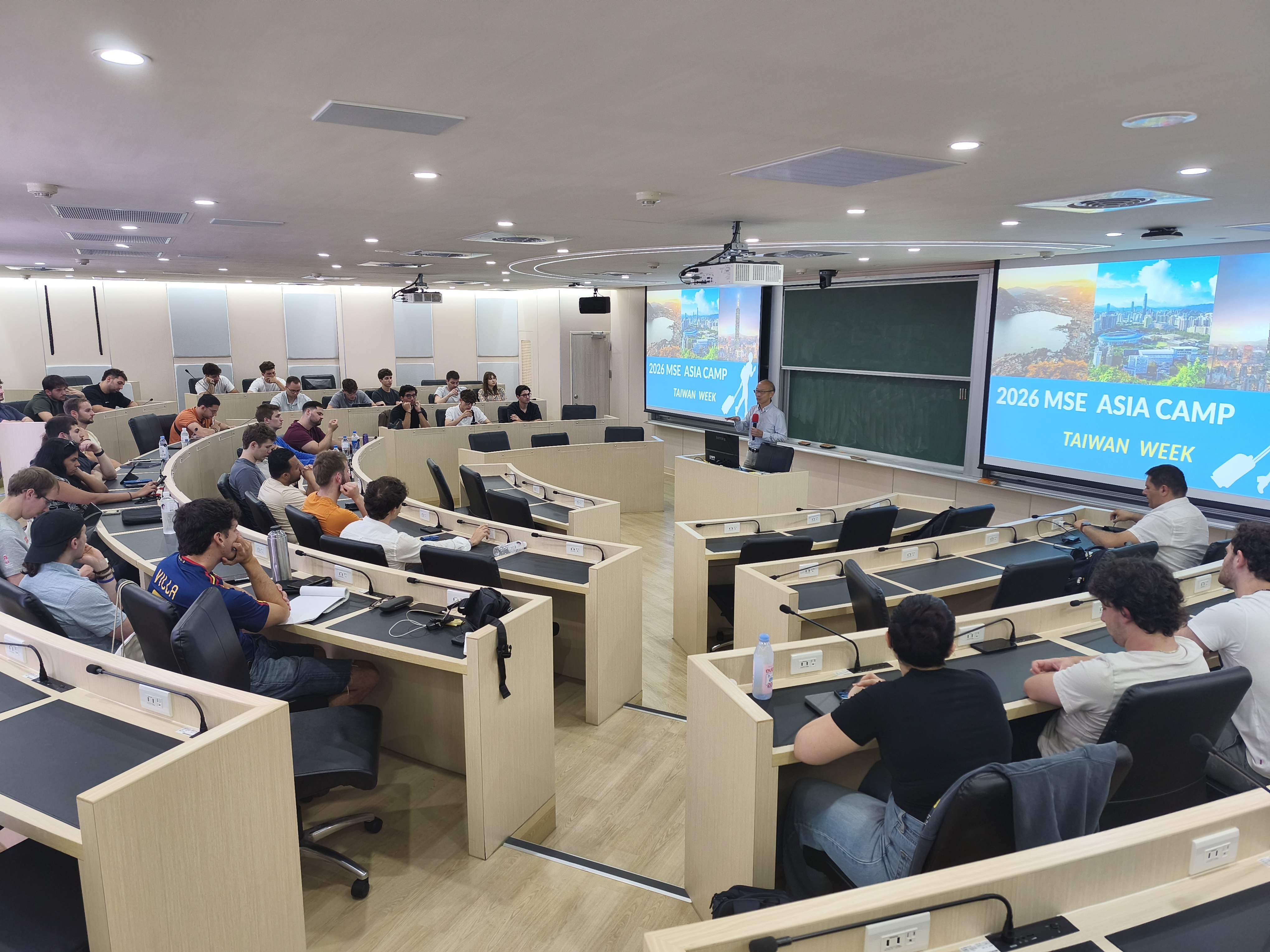
The “2026 Taiwan-Europe Smart Manufacturing Summer Program – Taiwan Week” officially opened at Taiwan Tech, with Distinguished Professor Shuo-Yan Chou, Director of the Center for Internet of Things Innovation, presiding over the exchange session and launching the five-day industry-academia program.
This year, the program continued its two-way exchange model. Five Taiwan Tech students first travelled to Switzerland for an off-campus study program, followed by a return visit to Taiwan by 34 European students led by Professor Luca Canetta of SUPSI. They engaged in a week-long program of in-depth exchanges with eight Taiwan Tech students. A total of 43 faculty members and students from seven countries and regions - Taiwan, Switzerland, Germany, Italy, Spain, Paraguay, and Indonesia - participated in the program. Through visits to 15 leading companies and research institutions, the program achieved tangible outcomes in cross-border industry-academia collaboration and people-to-people diplomacy.
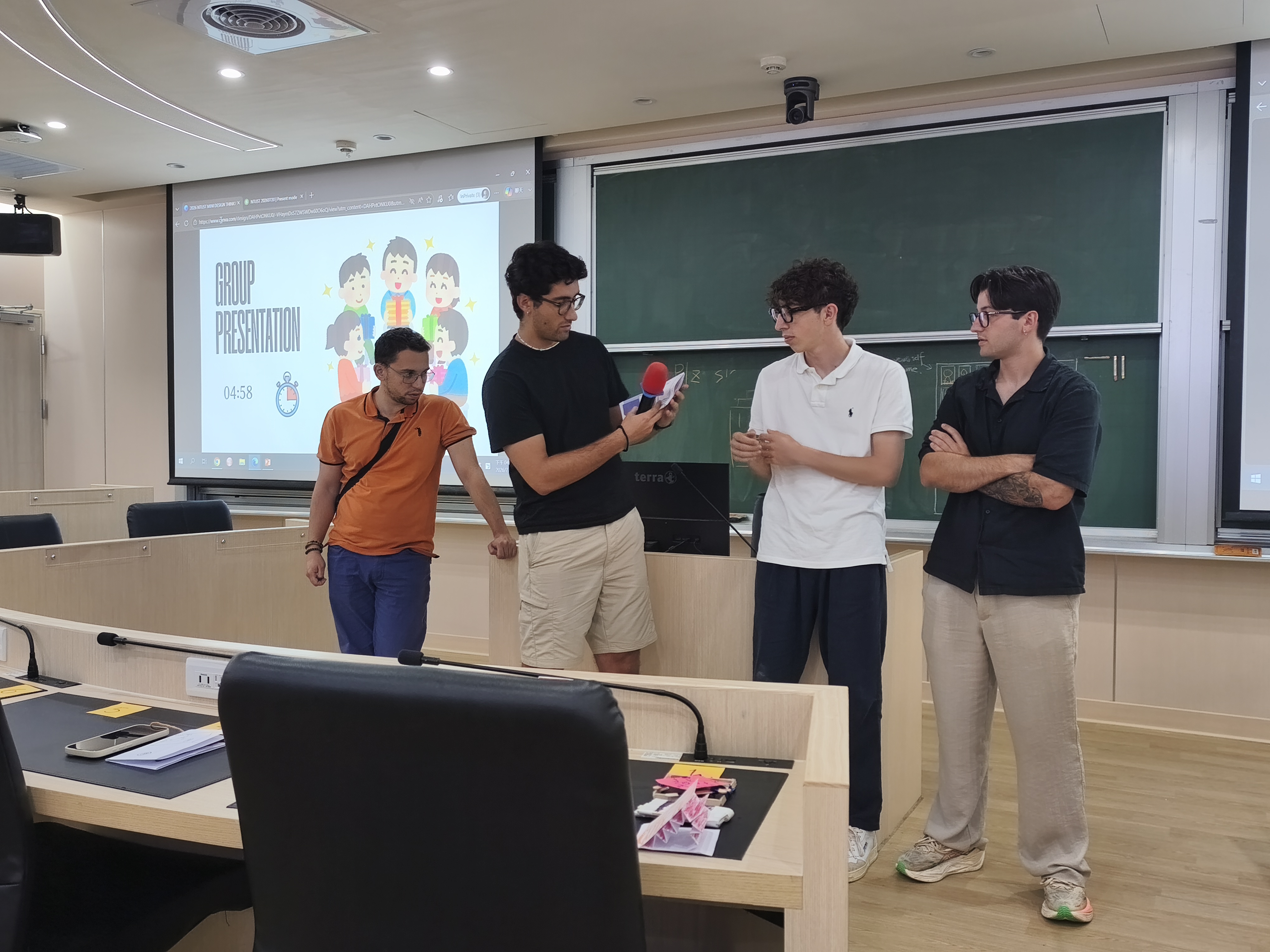
During the “Design Thinking Workshop”, participants presented their group projects, demonstrating creativity in product development and teamwork through cross-cultural brainstorming between Taiwan and Europe.
During the Swiss study visit from July 6 to 10, the group made in-depth visits to eight leading companies across different industries. In the fields of high-precision machinery and industrial automation, participants visited Mikron to observe the production of micrometre-precision tools, and Agie Charmilles to gain first-hand insight into electrical discharge machining (EDM) technology. They also visited Tornos SA and Rollomatic to learn about Swiss-made sliding-headstock turning machines and CNC tool-grinding processes. These visits gave participants a deeper understanding of Switzerland’s exceptionally high standards in precision manufacturing and industrial control.
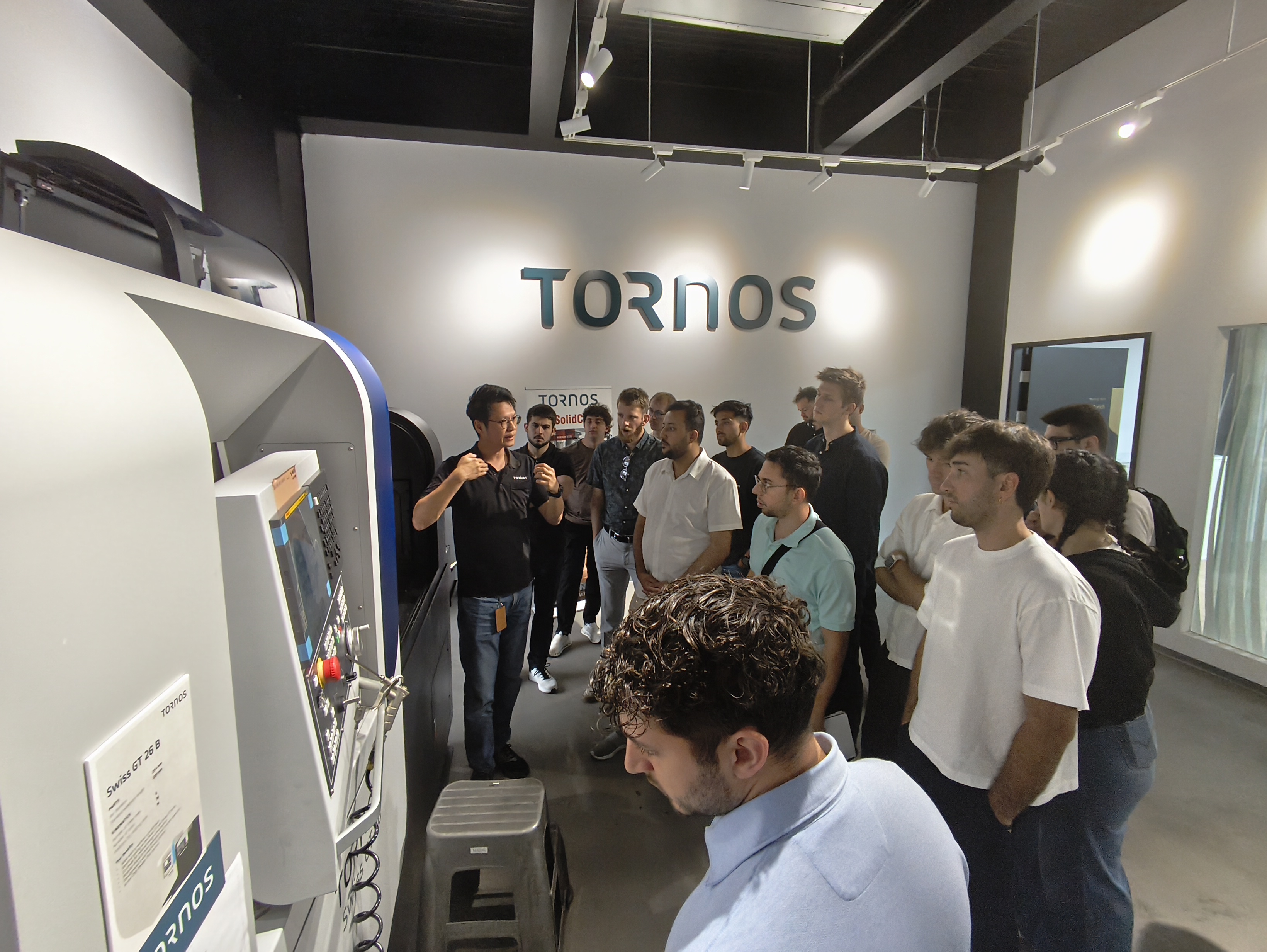
The program team visited the Taiwan site of Swiss precision manufacturing company Tornos in Houli, Taichung, where they observed the operation of advanced sliding-headstock turning machines and exchanged views with industry experts on the integration of Taiwanese and Swiss approaches to technology and management, as well as on cross-border collaboration.
In the fields of smart equipment and large-scale transportation manufacturing, participants visited Schindler Elevator to observe the PORT smart destination-dispatching system and gain an understanding of IoT-based dispatching in complex buildings. At Eugster Frismag AG, they gained an in-depth understanding of professional coffee-machine manufacturing and ODM/OEM mass-production management. They also visited the Stadler Rail facility to observe the customised production processes of large railway vehicles. In the field of ICT operations and innovation ecosystems, participants visited Acer Europe to explore the practical deployment of big data and large language models (LLMs). They also participated in the “From Ticino to Asia: Entrepreneurship, Innovation and Global Markets” forum organised by the City of Lugano, helping participants develop a broader global business perspective.
Taiwan Week, held from July 20 to 24, guided European faculty and students in exploring the core strengths of Taiwan’s high-tech supply chain. In the fields of semiconductors and advanced research and development, the group visited the TSMC Innovation Museum to learn about the technological evolution and strategic position of the world’s leading semiconductor foundry. They also visited the Hsinchu Research Headquarters of the Industrial Technology Research Institute (ITRI) to gain an in-depth understanding of the history of innovative technology development, ITRI’s role in leading industrial development, and future technological directions.
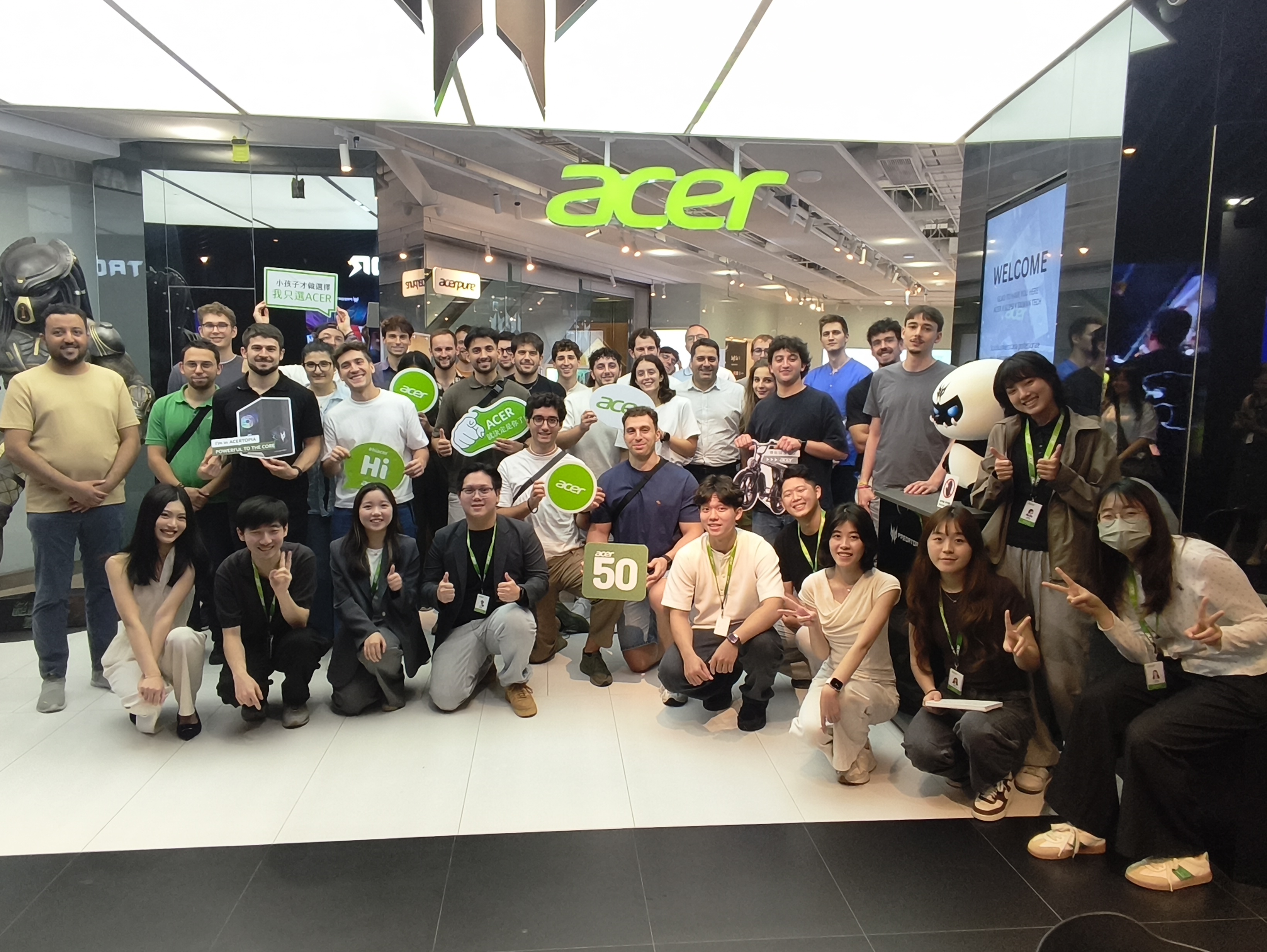
The program team visited Acer’s global headquarters, where they exchanged views on the global operational strategies of ICT products and the pathways for translating technologies into commercial applications.
In the areas of ICT manufacturing and brand operations, participants visited the Pegatron Taoyuan plant to observe automated production lines. They also visited Acer’s global headquarters to explore global operational strategies for ICT products and pathways for technology commercialisation, gaining first-hand experience of the highly efficient operations of Taiwan’s electronics manufacturing and branded-product sectors. At the same time, the program also focused on the Taiwan operations of Swiss precision machinery manufacturers and smart logistics. Participants visited Tornos to observe machine-tool production in practice and visited Bossard to learn about the latest materials warehousing and human-machine collaboration solutions. They also exchanged views with on-site experts on differences between Taiwanese and Swiss approaches to technology and management, learning how different cultures and business philosophies can be integrated through adaptation and cross-border collaboration. The group also visited ALP Logistics Development's Ruifang campus, where they observed automated warehousing and cold-chain logistics facilities first-hand. The visit enabled European faculty and students to gain a deeper understanding of Taiwan’s high degree of flexibility and operational efficiency in supply-chain management.
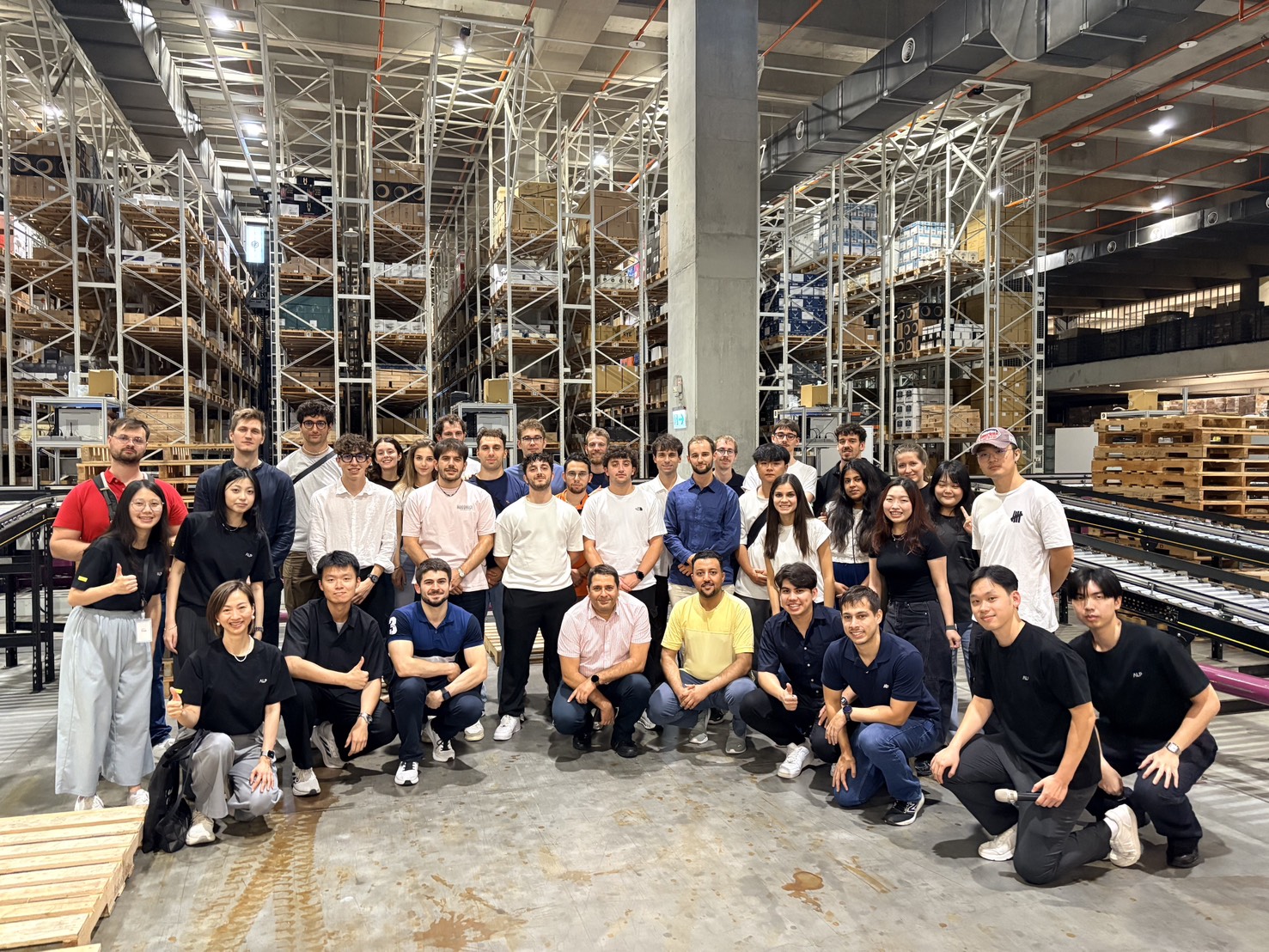
The program team visited the ALP Logistics Development's Ruifang campu, taking for a group photo in front of its high-bay automated warehouse and smart logistics facilities and gaining first-hand insight into smart warehousing and automated logistics applications.
In addition to on-site corporate visits, the program included three specialized courses: “Design Thinking Workshop”, “Semiconductor Knowledge and Career Experiences”, and “Cross-Strait History and Geopolitical and Economic Relations”. These courses provided a learning environment combining technological foresight with humanistic depth. Outside the classroom, participants visited the mountain town of Jiufen, Longshan Temple in Wanhua, the National Palace Museum, and Taipei 101. They also strengthened their interactions through experiences with local Taiwanese cuisine and a celebration banquet. Students from multiple countries developed strong friendships through technical discussions, culinary experiences, and cross-cultural interaction, successfully achieving substantive outcomes in people-to-people diplomacy.
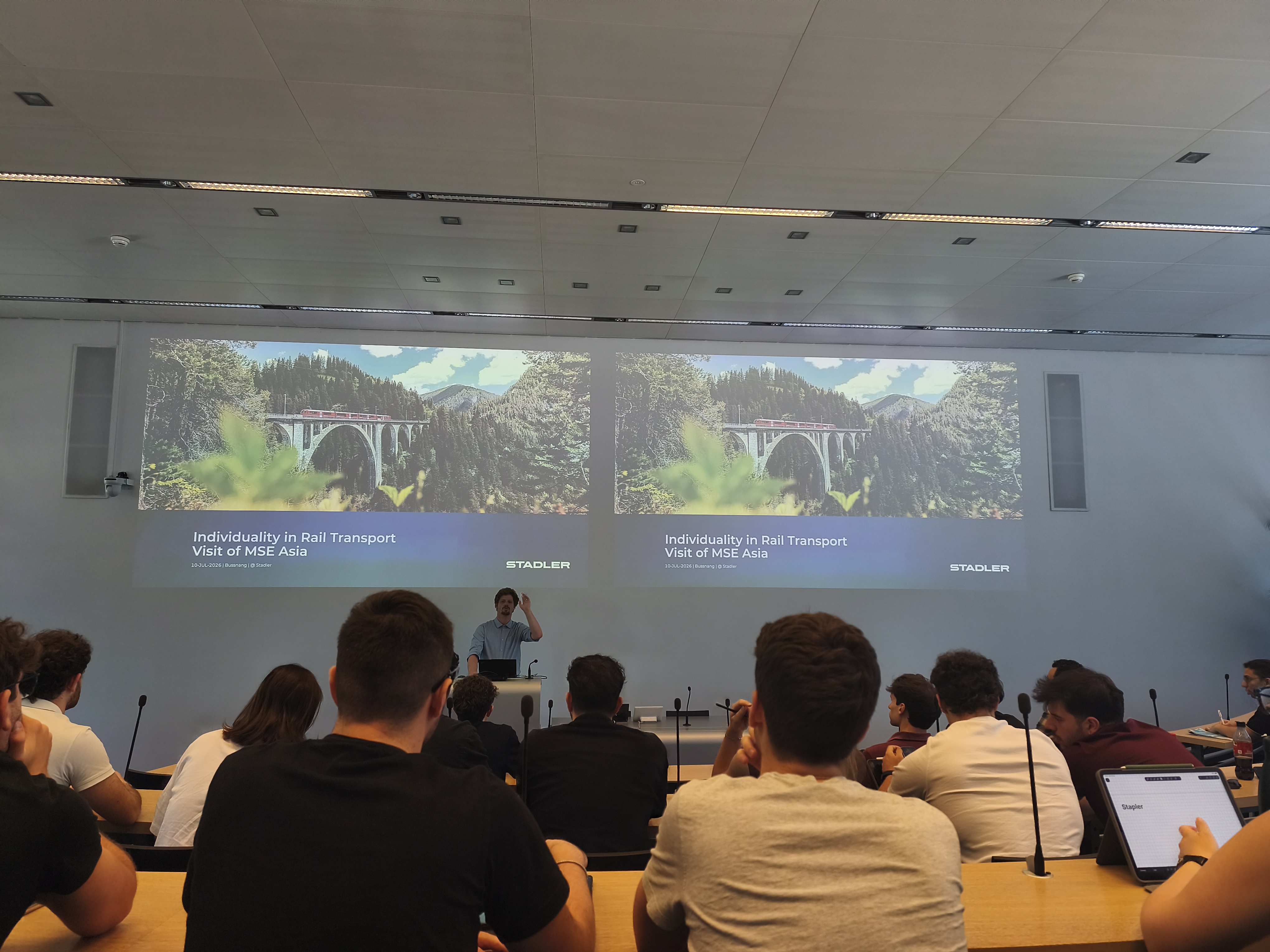
The program team visited Stadler Rail SA, a major Swiss railway-vehicle manufacturer, where they attended a presentation on customised design and international operations in rail transportation.
All visits and courses were carefully planned in advance and successfully completed. Looking ahead, the organisers hope to assess the feasibility of establishing a credit-recognition mechanism with the University of Applied Sciences and Arts of Southern Switzerland (SUPSI) and Zurich University of Applied Sciences (ZHAW), attract more outstanding international young people to participate, and elevate bilateral cooperation to a strategic level encompassing high-tech talent development and substantive people-to-people diplomacy between Taiwan and Switzerland.