


Taiwan Tech and WT Microelectronics launch semiconductor AI business applications course with 10 industry experts.[27 Jul. 2026]
Semiconductor courses incorporating AI technology are no longer uncommon. However, integrating semiconductors, artificial intelligence, and business applications into a single course, with a company involved throughout the curriculum planning and hands-on instruction, is a distinctive feature of the cross-disciplinary course jointly developed by the Department of Mechanical Engineering at Taiwan Tech and WT Microelectronics, a global distributor of semiconductor and electronic components. Since 2025, the two sides have jointly offered the course “Business Applications of Artificial Intelligence in Semiconductors”. At the end of the semester, a workshop was held, with WT Microelectronics sending 10 managers and senior employees from different departments, including Field Application Engineers (FAEs), Sales, and Human Resources (HR), to teach the course and mentor students on their final projects. Through this industry-integrated approach, the 119 students enrolled in the course learned not only AI technologies but also how to apply AI in industry and create business value.
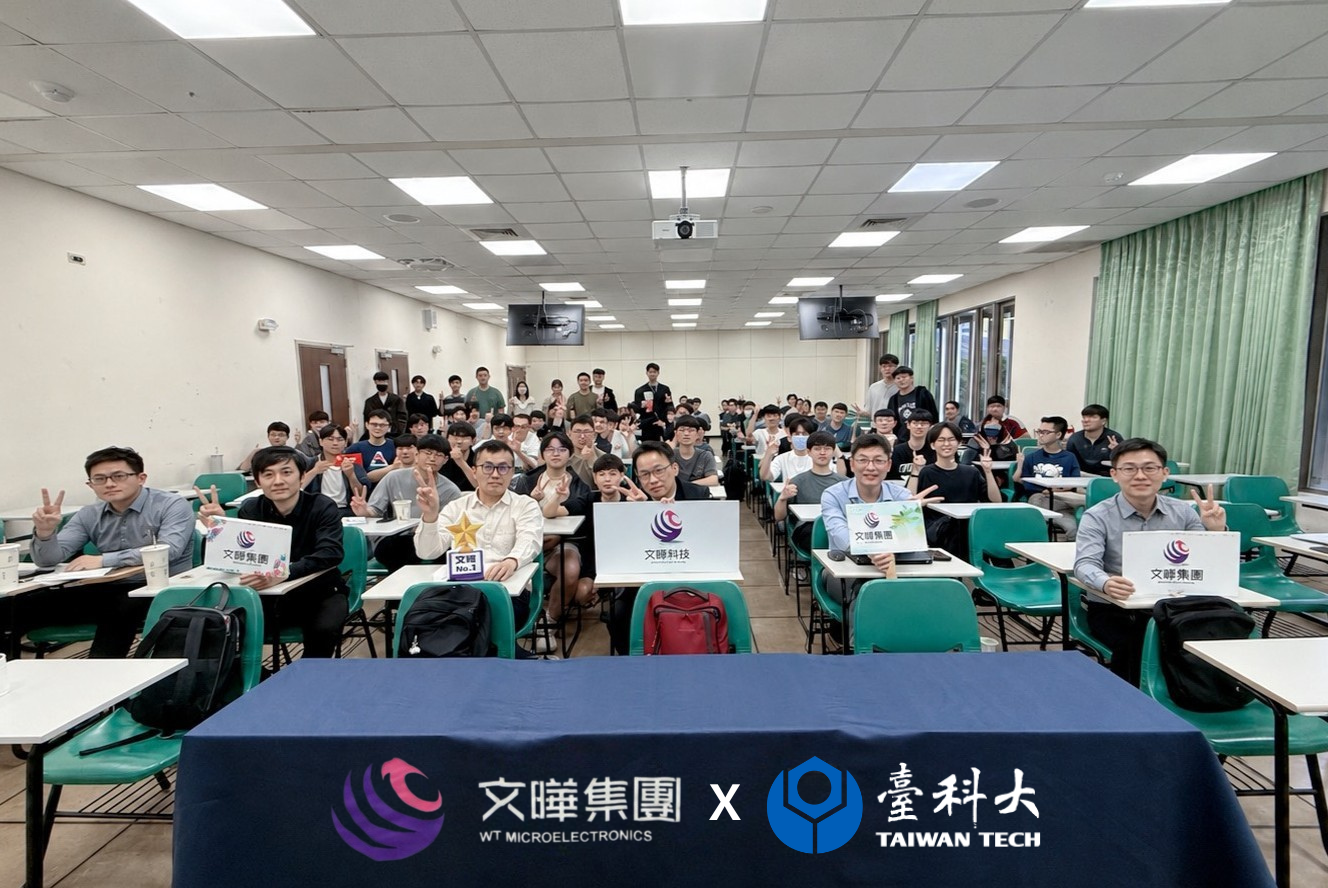
Taiwan Tech and WT Microelectronics jointly offer the course “Business Applications of Artificial Intelligence in Semiconductors”. working together to cultivate interdisciplinary talent with expertise in AI and semiconductors.
In response to the growing demand for interdisciplinary talent in the AI and semiconductor industries, the course was expanded this year to allow graduate students from the College of Electrical and Computer Engineering and the College of Engineering to enroll alongside fourth-year students from the Department of Mechanical Engineering. Course content covers the semiconductor industry supply chain and development trends, humanoid robots, AI controllers, automotive processors, AI tools and upstream/downstream management, as well as business negotiation and partnership management. The curriculum is continuously adjusted in response to the latest AI developments and industry cases, enabling students to stay abreast of the latest technologies and market trends.
Ching-Chi Hsu, Chair of the Department of Mechanical Engineering at Taiwan Tech, explained that WT Microelectronics connects semiconductor manufacturers with various electronic product manufacturers and possesses extensive experience in industrial applications. Therefore, the two sides jointly designed the course to help students understand AI applications in the semiconductor field from an industry-practice perspective, rather than limiting learning to theoretical knowledge. The course not only introduces core knowledge related to the applications and development of artificial intelligence but also guides students in understanding chips, software tools, and diverse technological trends, gradually cultivating their ability to apply AI in semiconductor-related business contexts.
Professor Ching-Chi Hsu pointed out that the greatest value of direct corporate participation in the course lies in enabling students to apply the theoretical foundations and technical tools they learn in class to real-world industrial contexts and problem-solving. The course provides detailed introductions to practical tools such as Intel OpenVINO, NXP AI tools, the MediaTek AI platform, and Tiny Machine Learning. “For mechanical engineering students, these skills can be applied not only to the semiconductor industry but also extended to fields such as robotics, biomedical engineering, and mechanical manufacturing. They are also highly beneficial for interdisciplinary development.”
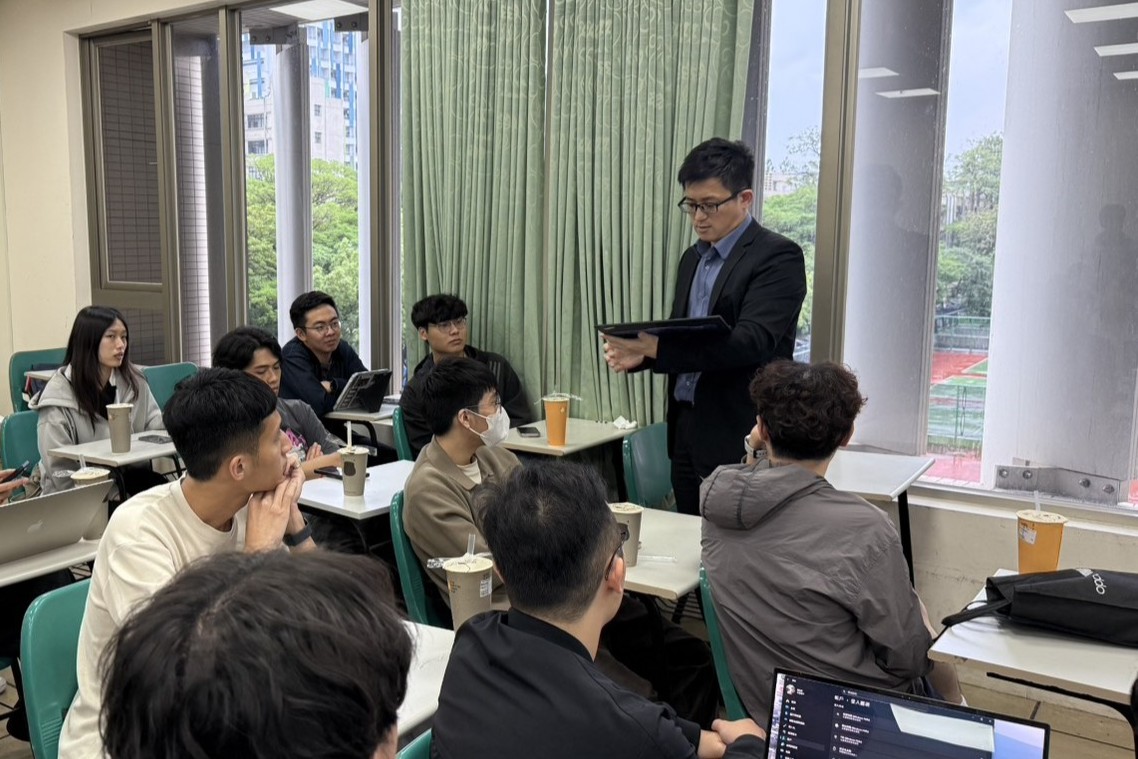
WT Microelectronics sent 10 managers and senior employees from different departments, including FAE, Sales, and HR, to teach the course and mentor students on their final projects.
Cheng-Yen Chou, Manager of the Human Resources Department at WT Microelectronics, believes that the greatest value of universities and companies jointly offering courses lies in narrowing the gap between academic learning and practical application and ensuring that talent cultivation is aligned with industry needs. “The semiconductor industry’s demand for talent is no longer limited to a single technical skill. Instead, companies are looking for interdisciplinary talent equipped with semiconductor knowledge, AI application capabilities, and business thinking.”
Compared with classroom knowledge, first-hand workplace experience is often more difficult to convey fully through textbooks. Using WT Microelectronics as an example, he explained: “FAEs and Sales professionals are not simply technical or business roles. They also need to think from the customer’s perspective, integrate resources from manufacturers, customers, and internal company teams, and provide the most appropriate solutions. Therefore, in addition to professional knowledge, they need capabilities in communication and coordination, needs analysis, cross-departmental collaboration, and business thinking.”
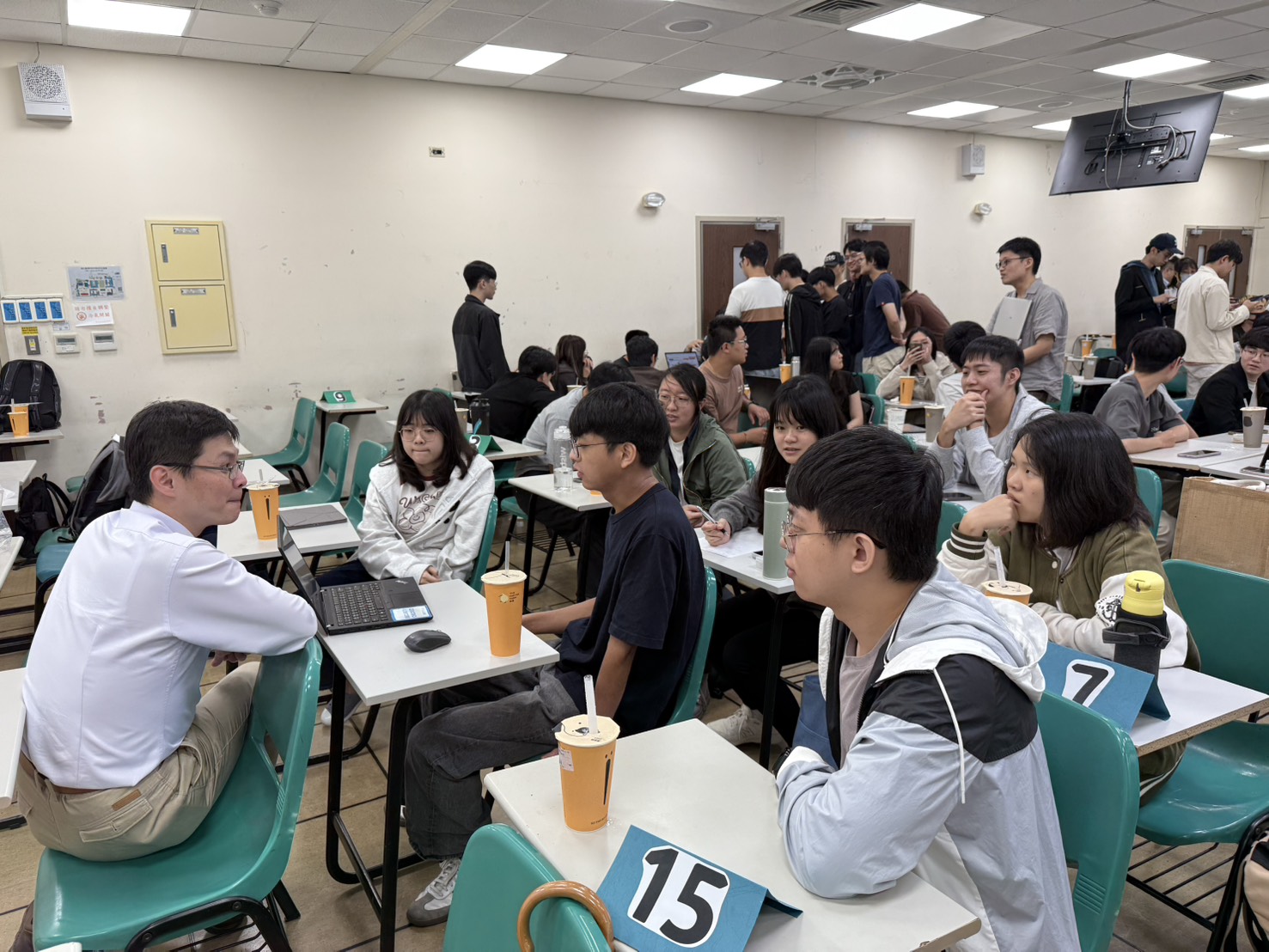
In response to the growing demand for interdisciplinary talent in the AI and semiconductor industries, the course was expanded this year to allow graduate students from the College of Electrical and Computer Engineering and the College of Engineering to enroll alongside fourth-year students from the Department of Mechanical Engineering.
This year, 15 student teams completed and presented their research projects on AI applications in industry. WT Microelectronics not only awarded gift certificates to the top three outstanding teams but also provided four enrolled students with summer internship opportunities. This allowed them to enter a corporate environment in advance, participate in industrial operations, accumulate workplace experience, and prepare themselves for future careers in the semiconductor and AI-related industries.
Students enrolled in the course shared that “Business Applications of Artificial Intelligence in Semiconductors” gave them a deeper understanding of the current robotics and AI industries. Rather than worrying about whether they would eventually be replaced by robots, they are now actively exploring how to use robots and AI as tools to improve work efficiency. Another student said that the course gave them a better understanding of the market demand for controllers and electronic components and their practical applications. It also provided a clearer understanding of the semiconductor industry supply chain and future career directions.
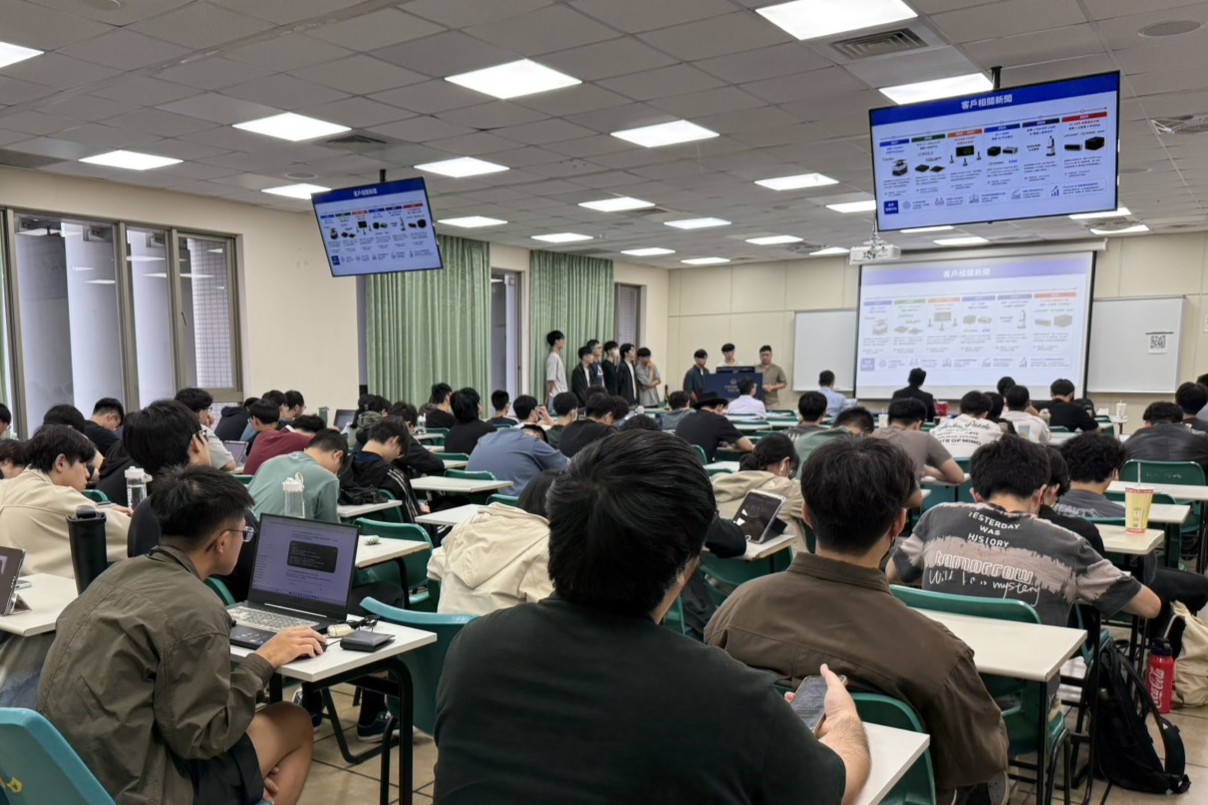
This year, 15 teams, comprising a total of 119 students, completed and presented their research projects on AI applications in industry.
As AI is increasingly becoming an important tool across industries, Ching-Chi Hsu said that the Department of Mechanical Engineering will continue to build a “Mechanical Engineering × AI” learning environment. The department will encourage existing faculty members to integrate AI technologies into professional courses and research, while also continuing to expand its faculty expertise in AI-related research, with the goal of equipping students with interdisciplinary competitiveness. At the same time, the department will continue to support students through industry-academia collaboration projects, helping them apply AI technologies to solve real-world problems faced by companies and progressively implement its talent-development goal of “learning AI, using AI, and solving industrial problems”.


