


From classroom to global stage: Taiwan Tech interdisciplinary micro-programs foster innovation and real-world skills.[23 Jul. 2026]
The Center for General Education at Taiwan Tech promotes the STEM/STREAM Interdisciplinary Micro-Program, cultivating students’ abilities in cross-disciplinary integration, innovative practice, and problem-solving through interdisciplinary courses, hands-on projects, and cross-university collaboration. Kuan-Hao Huang, a student in the Department of Finance at National Taiwan University who took courses across universities through the three-university alliance, is a successful example. After taking Taiwan Tech’s interdisciplinary hands-on project course, he co-founded EZee Technology with students from the Department of Electrical Engineering at Chung Yuan Christian University and developed the “Smart Sustainable Energy Recovery System (SSERS)”. The team not only represented Taiwan at SusHi Tech Tokyo 2026 in Japan but also recently won first place in the Startup Enterprise Category of the 21st National Innovation and Entrepreneurship Competition. The team further participated in the signing of an international sustainability cooperation MOU at the Legislative Yuan, promoting substantive cooperation between Taiwan and the Kingdom of Eswatini in sustainable development and talent cultivation. By continuously extending classroom learning into international exchanges and sustainability initiatives, the team demonstrates the outcomes of Taiwan Tech’s interdisciplinary micro-program and practice-oriented education in cultivating talent.
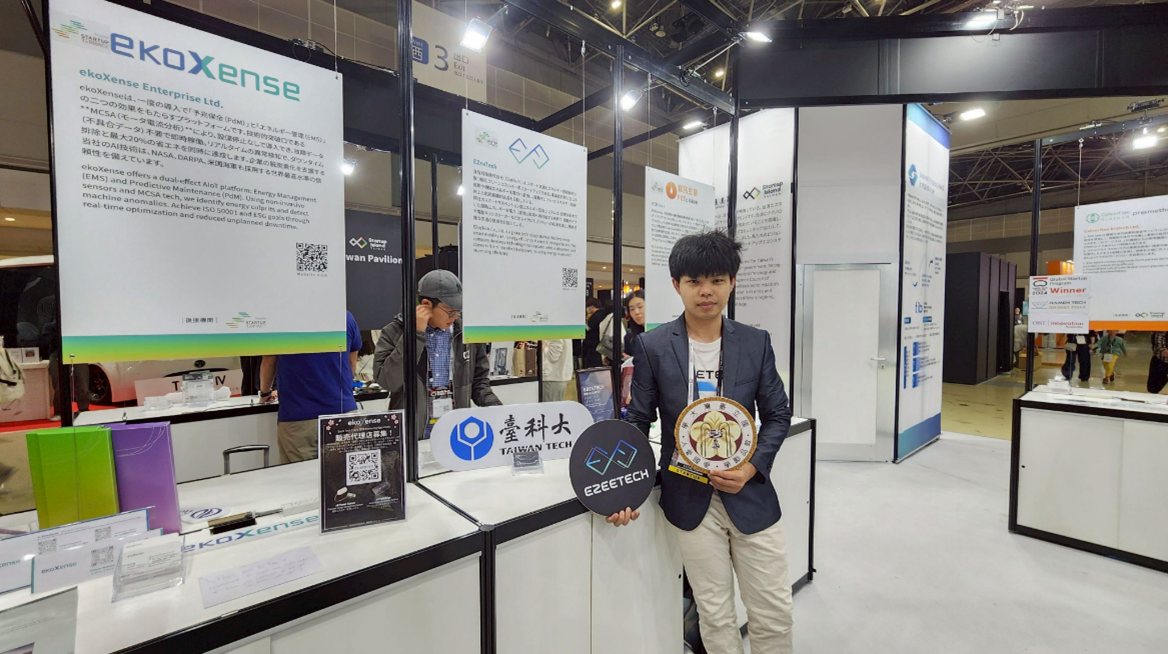
The Taiwan Tech interdisciplinary micro-program student Kuan-Hao Huang’s team traveled to Tokyo, Japan, to participate in an international startup exhibition, where they introduced their project, the SSERS Smart Sustainable Energy Recovery System, to international visitors.
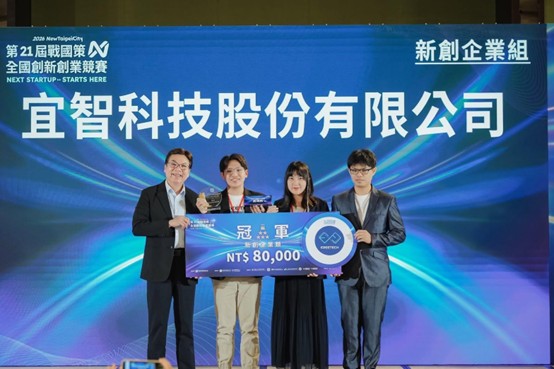
The EZee Technology team won first place in the Startup Enterprise Category of the 21st National Innovation and Entrepreneurship Competition, demonstrating its strength in innovation and entrepreneurship.
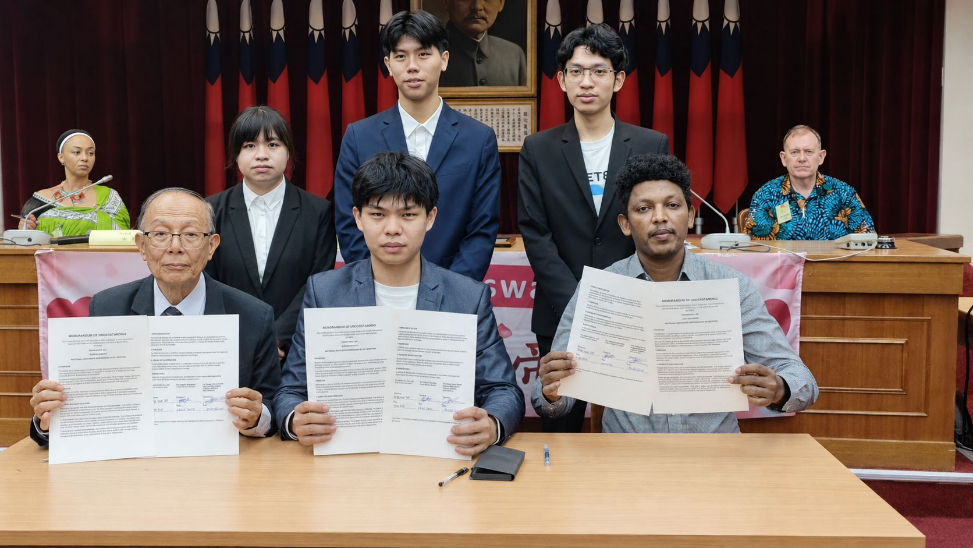
Kuan-Hao Huang (center, front row), who participated in Taiwan Tech’s interdisciplinary micro-program, represented his co-founding team at the signing of an international sustainability cooperation MOU at the Legislative Yuan, demonstrating his ability to transform what he learned into international achievements.
The STEM/STREAM Interdisciplinary Micro-Program is grounded in Science, Technology, Engineering, and Mathematics (STEM), and further incorporates Reading and the Arts. Through problem-based course design, the program guides students to begin with real-world social issues. In addition to progressively developing students’ interdisciplinary knowledge, the courses encourage students, through hands-on projects, to integrate different professional backgrounds and introduce new perspectives to address complex issues.
Assistant Professor Shu-Yi Huang of the Taiwan Tech Center for General Education, who teaches in the program, explained that the greatest strength of the interdisciplinary micro-program lies in bringing students from different fields together to learn and inspire one another. Kuan-Hao Huang, for example, is a student in the Department of Finance at National Taiwan University. When he took the EMI English-taught course “Sustainable Development and Society II”, he brought his own expertise in finance into the classroom. On topics such as organizational carbon inventories, green finance, and corporate sustainability (ESG), he offered perspectives different from those of students with engineering backgrounds at Taiwan Tech, generating more meaningful exchanges across disciplines.
Shu-Yi Huang observed that Kuan-Hao Huang’s greatest strengths are his initiative and willingness to learn. Although he did not have a background in sustainability, he recognized his own limitations and therefore devoted considerable time to studying new knowledge. With strong communication and coordination skills, he also successfully collaborated with partners from different universities and academic disciplines to complete their entrepreneurial project. She believes that it was his open-mindedness and ability to collaborate across disciplines that enabled him to gradually transform classroom learning into entrepreneurial achievements and eventually step onto the international stage. These qualities, she noted, provide valuable inspiration for other students.
Recalling the most memorable part of the teaching process, Shu-Yi Huang shared that Kuan-Hao Huang did not perform well on his first in-class examination. However, rather than giving up, he asked whether there was an opportunity to make up for his performance. She therefore asked him to reorganize and review the product development process and gain an in-depth understanding of topics including road safety needs and mechanical principles. Although he initially found the task challenging, Kuan-Hao Huang actively completed it and subsequently applied the results of his research to product development and competitions, turning classroom learning into an important source of practical knowledge and application.
Shu-Yi Huang believes that the greatest value of the course lies in encouraging students to step outside their comfort zones and challenge themselves. In a rapidly changing era, a single area of expertise is no longer sufficient to address the complexity of real-world problems. The course therefore adopts a real-world issue-oriented teaching approach in which students proactively identify problems and seek solutions. The teacher acts more like a “running partner” who accompanies students throughout their growth, helping them integrate knowledge from different fields while cultivating interdisciplinary collaboration, innovative thinking, and problem-solving abilities.
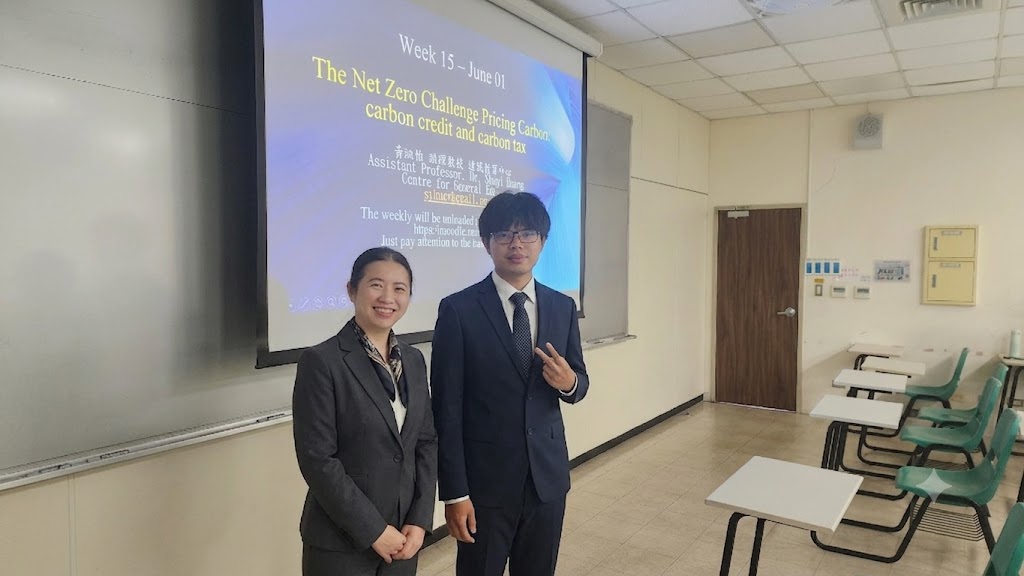
Student Kuan-Hao Huang (right) took courses taught by Professor Shu-Yi Huang (left) through Taiwan Tech’s interdisciplinary micro-program, integrating knowledge and hands-on experience from different fields to develop his abilities in interdisciplinary integration and innovative practice.
Taiwan Tech not only provides solid practical training and interdisciplinary resources but also supports students in transforming classroom learning into practical sustainability solutions through innovation and entrepreneurship education and industry-academia collaboration platforms. Kuan-Hao Huang expressed his deep gratitude to Taiwan Tech for nurturing him through the interdisciplinary hands-on project, as well as to Assistant Professor Shu-Yi Huang and Assistant Professor Chin-Yu Chen for their professional guidance. Taiwan Tech not only provides solid practical training and interdisciplinary resources but also supports him in transforming classroom learning into practical sustainability solutions through innovation and entrepreneurship education and industry-academia collaboration platforms.
With its educational philosophy centered on hands-on practice and interdisciplinary integration, Taiwan Tech gives students opportunities to transcend departmental boundaries and communicate and collaborate with partners from diverse backgrounds. Looking ahead, Taiwan Tech hopes that more students will make full use of the resources provided by the Center for General Education, bravely take on challenges in different fields, combine creativity with professional expertise, and create more opportunities to reach the international stage.


