


Taiwan Tech turns the south side into a living classroom to build cross-disciplinary skills.[13 Aug. 2026]
In the face of a rapidly changing future society, cultivating young people’s abilities in interdisciplinary integration, local engagement, and innovative practice has become an important priority in higher education. From July 7 to 10, 2026, the Center for General Education at Taiwan Tech organized the “2026 Urban Learning: Taiwan Tech Knowledge and Vision Summer School (Learning for Success)”, bringing together 13 high school and vocational high school students from across Taiwan and 15 Taiwan Tech undergraduate peer-learning partners. Centered on the concepts of “South Side Learning × Immersive Learning × Becoming an Adult”, the four-day, three-night immersive camp integrated technology and the humanities, local revitalization, and self-directed learning. Students were guided into real-world social settings in the southern area to develop essential competencies for navigating the future world.
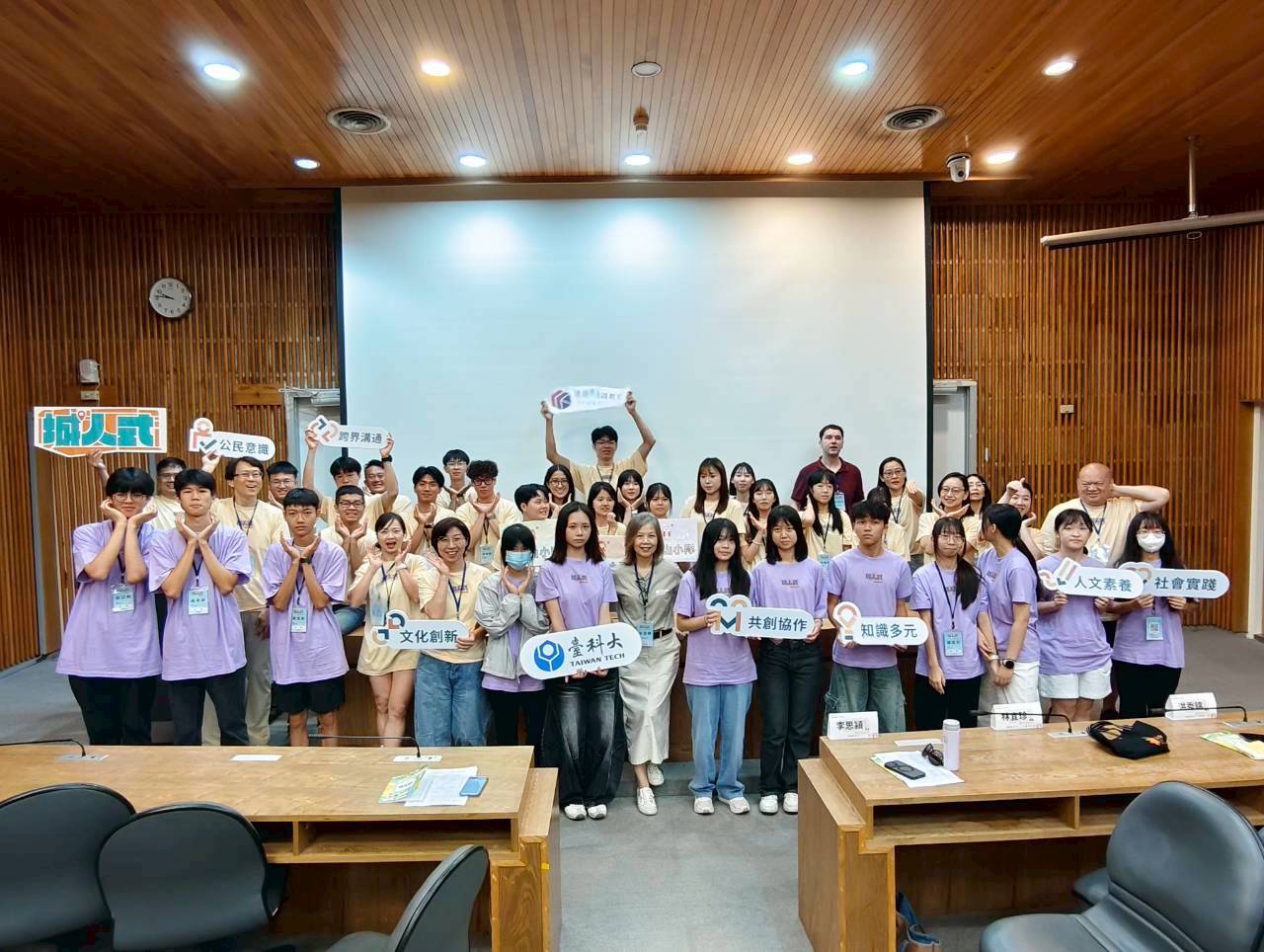
At the opening ceremony, Director Sy-Ying Lee (center) of the Center for General Education takes a group photo with peer-learning partners, participants, faculty members, and teachers.
The summer school brought together nearly all full-time faculty members of the Taiwan Tech Center for General Education and incorporated the educational spirit of STREAM (Science, Technology, Reading, Engineering, Arts, and Mathematics). Using the cultural communities in the South Side area surrounding Taiwan Tech as learning sites, the program employed fieldwork, issue exploration, interdisciplinary hands-on activities, project proposals, and teamwork to help students extend their learning from acquiring knowledge to observing society, and from individual reflection to public participation. The program demonstrated Taiwan Tech’s educational mission of promoting interdisciplinary general education and social engagement. Through a liberal arts education approach, the camp provided an interdisciplinary, camp-based learning experience. Meanwhile, the 15 Taiwan Tech undergraduate students fully embraced the spirit of “big hands holding little hands” through peer learning, accompanying high school and vocational high school students from different cities and counties throughout the process of developing “South Side Learning.”
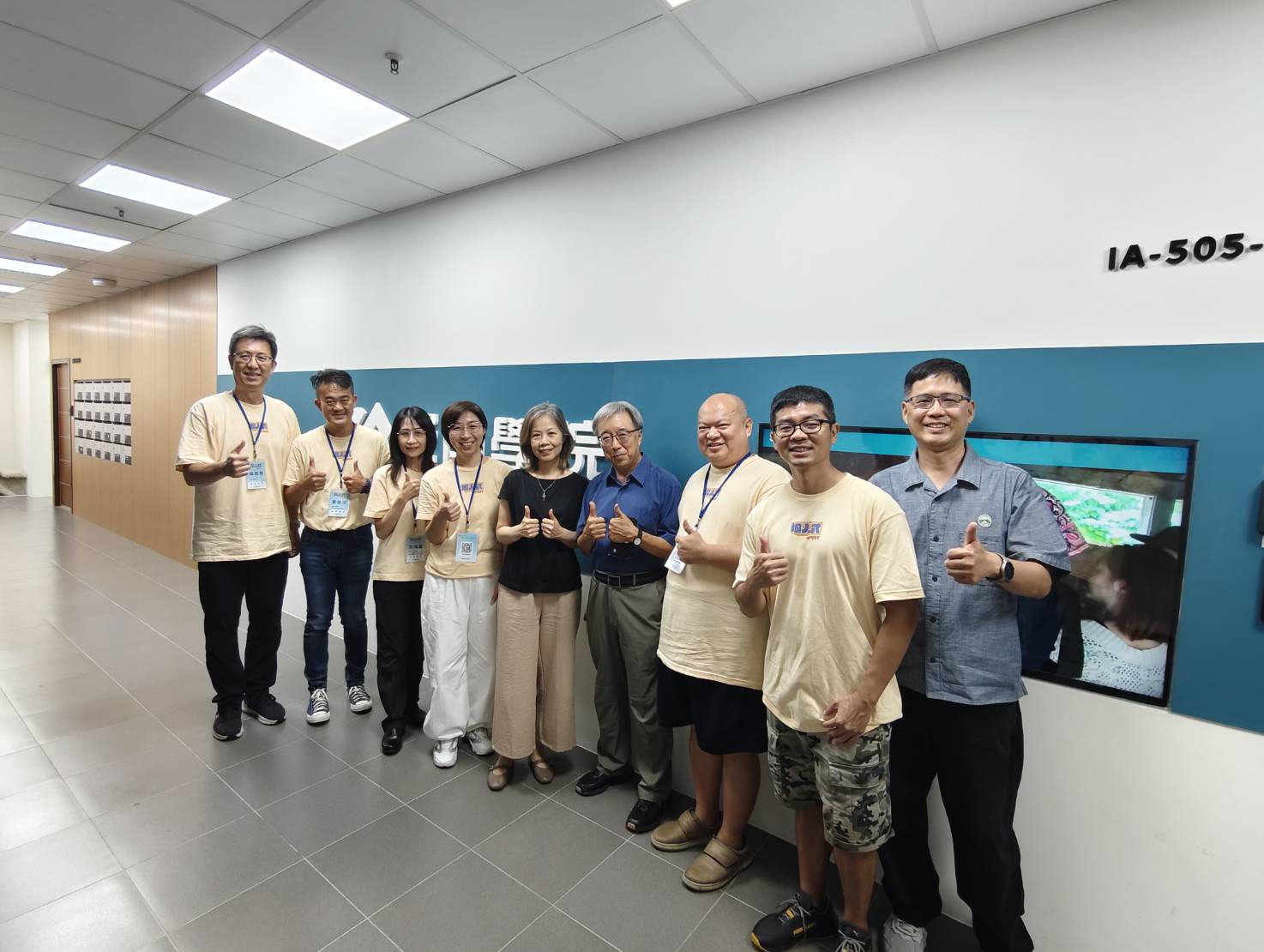
Faculty members involved in organizing the “2026 Urban Learning: Taiwan Tech Knowledge and Vision Summer School” take a group photo. (Center: Director Sy-Ying Lee of the Center for General Education, along with Taiwan Tech Vice President Charles C.J. Wang.)
The South Side area of Taipei is rich in cultural history and settlement heritage. A key feature of this summer school was its use of South Side culture as the core learning framework, with three major cultural communities - Treasure Hill Artist Village, Fanglan Mountain, and Huan Min Village - selected as field-based learning sites. Students explored issues including the coexistence of art and residential life, ethnic cultures, and aging military dependents’ villages. Through game-based activities, field investigations, and environmental observation, they reflected on important issues such as cultural preservation, local revitalization, and cultural sustainability in the southern area.
The camp adopted a “learning family” model inspired by the traditional academy-style educational approach. Each group was led by Taiwan Tech undergraduate students serving as peer-learning partners, while full-time faculty members from the Center for General Education served as family mentors and accompanied the high school and vocational high school students throughout their exploration tasks. Through group discussion, reflection, and hands-on practice, students were encouraged to explore independently and develop problem analysis, teamwork, and interdisciplinary integration skills in authentic social contexts.
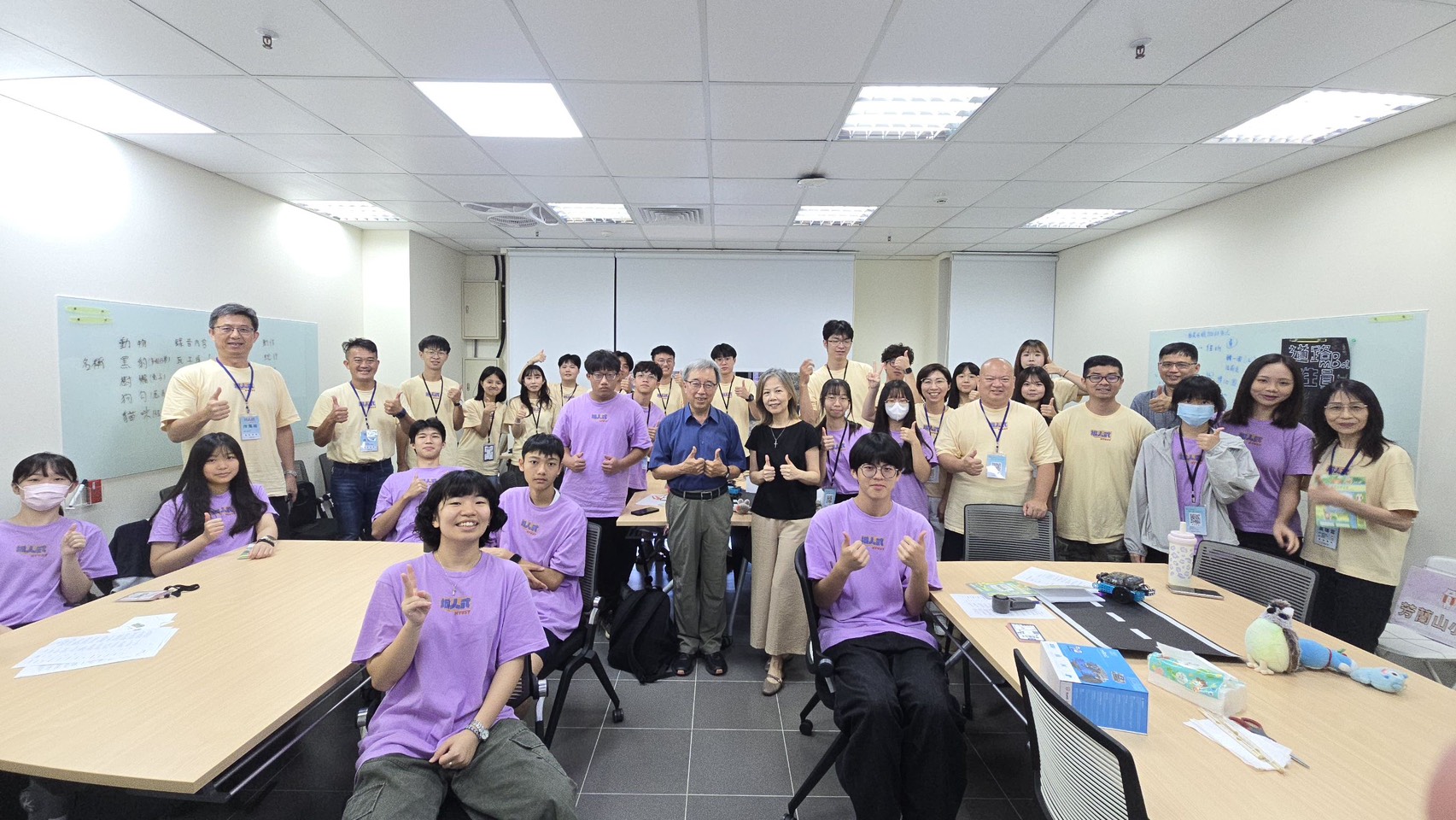
Taiwan Tech Vice President Charles C.J. Wang (center) visits the camp to learn about its activities.
The camp curriculum covered a diverse range of topics, including M-bot intelligent robot operation, game design, green energy, design thinking, and English as a Medium of Instruction (EMI) learning. Through interdisciplinary course design, students were encouraged to use technological tools to examine local issues and develop creative and feasible solutions.
Notably, the program introduced “immersive peer learning” and a “mentorship system” in an effort to move beyond the traditional model of knowledge transmission commonly used in camps. Each evening, family mentors and peer-learning partners guided students through in-depth reflection and discussion, sharing their observations from the day, discussing local issues, and refining their project ideas. Beyond completing the daily activities, students continuously reflect and engage in dialogue, gradually developing critical thinking, empathy, and a sense of social responsibility, allowing learning to become an internalized force for action.
The summer school also placed particular emphasis on the learning and experience gained by the undergraduate peer-learning partners. Serving as peer-learning partners, the university students were involved for more than three months in training, from activity preparation, field visits, and curriculum planning to large-scale game design and the implementation of the summer school. From April through July, the peer-learning partners completed a series of activities, including orientation sessions, field investigations, site explorations, large-scale game design, lesson-plan discussions, simulation exercises, and intensive training. Through repeated discussion and revision, they not only enhanced their teaching abilities but also accumulated valuable experience in interdisciplinary collaboration and event planning.
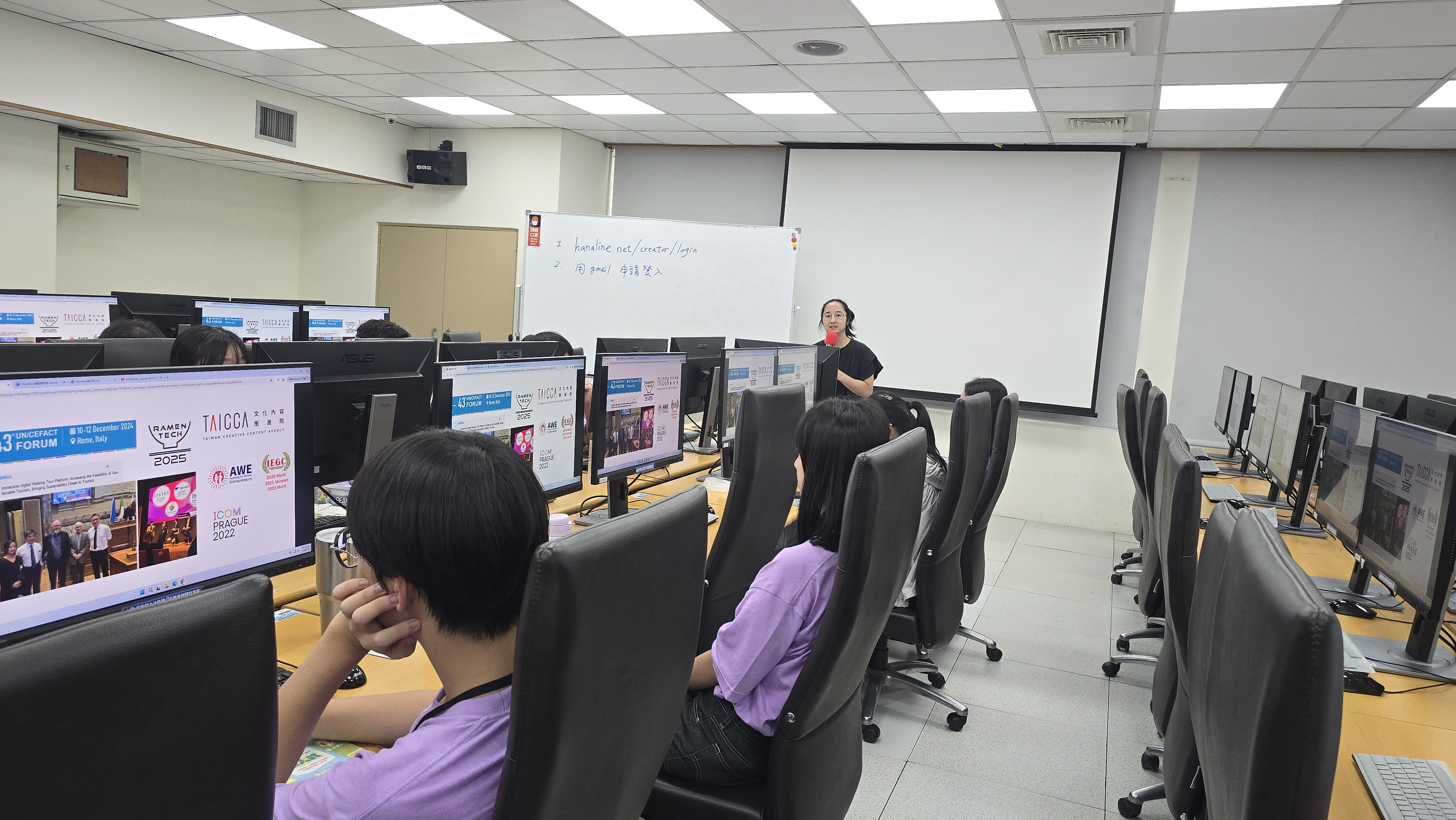
The game design course guides students in using technological tools to examine local issues and develop creative and feasible solutions. The course was taught by Ms. Chih-Chen Kuo.
During the program, students worked in teams to develop projects integrating technology with local issues. Drawing on what they learned during the camp, they proposed innovative ideas in response to problems observed at the learning sites. During the final presentations, they shared their learning processes and proposed solutions, demonstrating a complete process of thinking that progressed from problem observation and analysis to proposal design.
Director Sy-Ying Lee of the Taiwan Tech Center for General Education said that the “2026 Urban Learning: Taiwan Tech Knowledge and Vision Summer School” was not simply a summer camp, but also a learning experiment designed to prepare young people for future society. Through immersive learning, site-based exploration, and interdisciplinary courses, the program sought to cultivate young people’s abilities in self-directed learning, interdisciplinary integration, public participation, and social innovation. While exploring local culture, students were also encouraged to reconsider their relationship with society. By combining technology education with humanistic concern, the program aims to create more interdisciplinary peer-learning platforms, enabling young people to learn in the world, grow through practice, and become members of a new generation equipped with international perspectives, local awareness, and innovative capabilities.
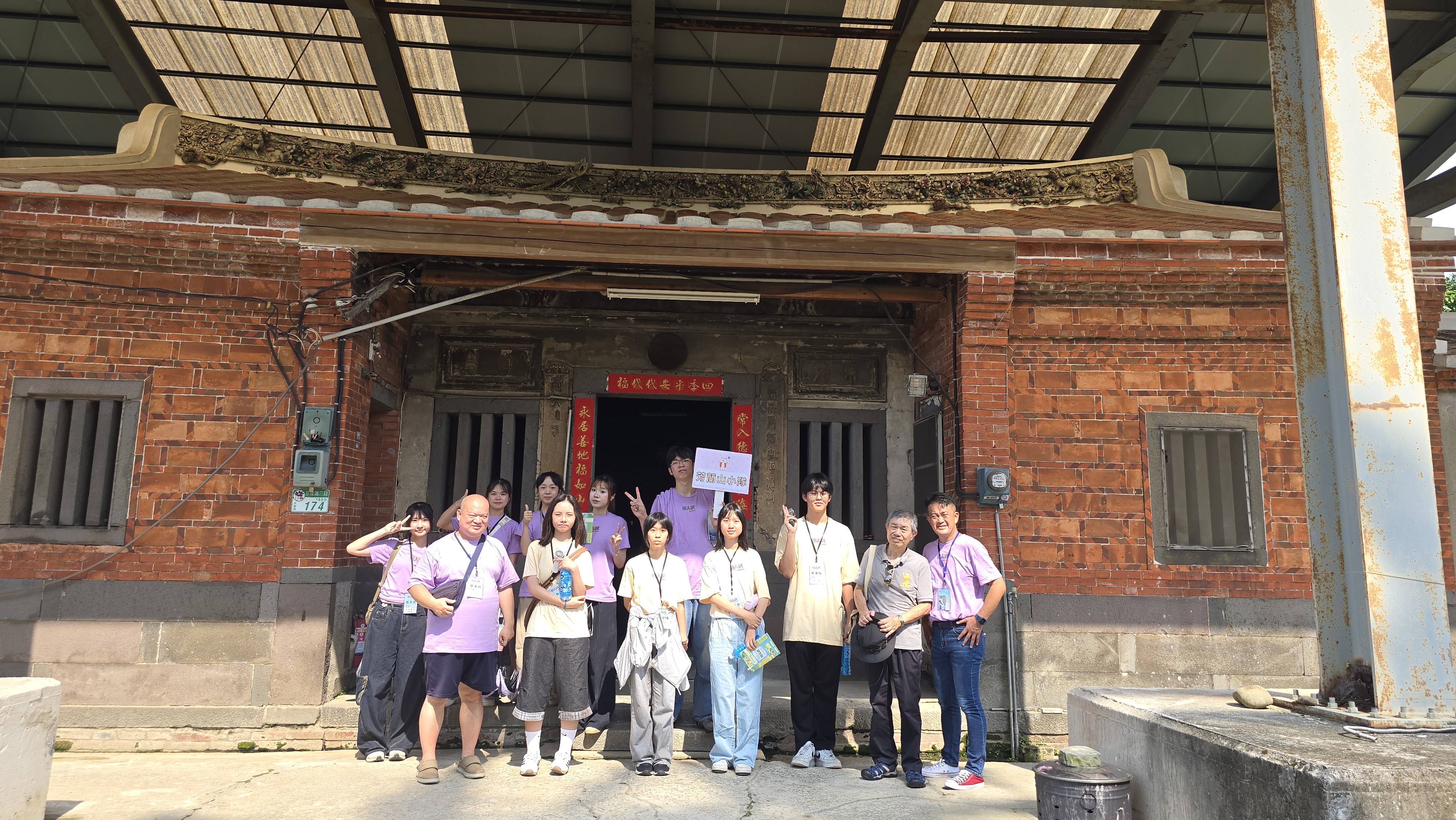
Participants conduct field research at Fanglan Dacuo.
On the final day of the summer school, the program was moved online due to a typhoon. Taiwan Tech Vice President Charles C.J. Wang expressed strong appreciation for the peer-learning partners and participants, who took the opportunity to experience and learn about the cultural communities surrounding Taiwan Tech and gain a deeper understanding of the cultural richness of the southern area. He also looked forward to meeting these high school and vocational high school participants again in classrooms on the Taiwan Tech campus in the future and continuing their learning journeys together.
The summer school fully demonstrated the Taiwan Tech Center for General Education’s commitment to innovative education, social engagement, and local sustainability. Through the deep integration of technology, the humanities, and local culture, the program guided young people into urban and community settings, enabling learning to genuinely respond to social needs while creating a new educational model for cultivating Taiwan’s future talent.
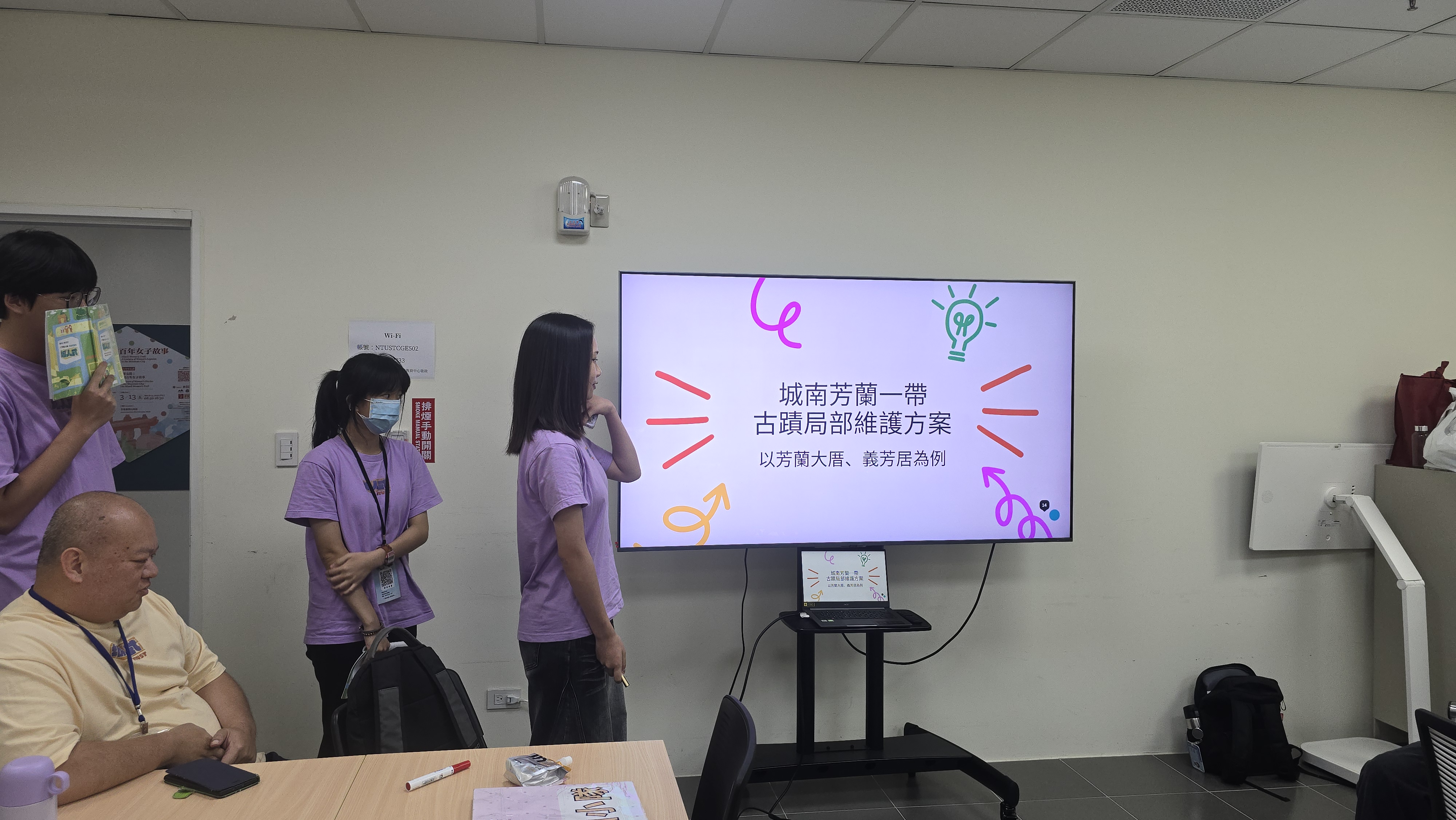
Participants conduct a simulation of their final project presentations.


