


Taiwan Tech students create a new model for Yuanli’s Rush Grass Heritage.[ 6 Aug. 2026]
Yuanli, Miaoli, was once a major center of Taiwan’s rush grass industry. As the industry moved elsewhere and the population possessing traditional craft skills grew older, this traditional craft, which has accompanied the local community for more than a century, has also faced a gap in transmission. Hsien-Tse Lai, a master’s student in the Department of Design at Taiwan Tech, has started from his hometown and combined his design expertise with practical experience in the local community to explore how “system design” can offer a new way of thinking about the transmission of rush grass culture. His goal is not only to preserve a traditional craft, but also to establish a mechanism that enables more people to participate in, learn, and carry on this cultural heritage. His project received the BEST 100 Award in the Regional Design category of the GOOD DESIGN AWARD 2025 (Japan Good Design Award) and also received the GOOD FOCUS AWARD [NEW BUSINESS DESIGN], earning two prestigious honors.
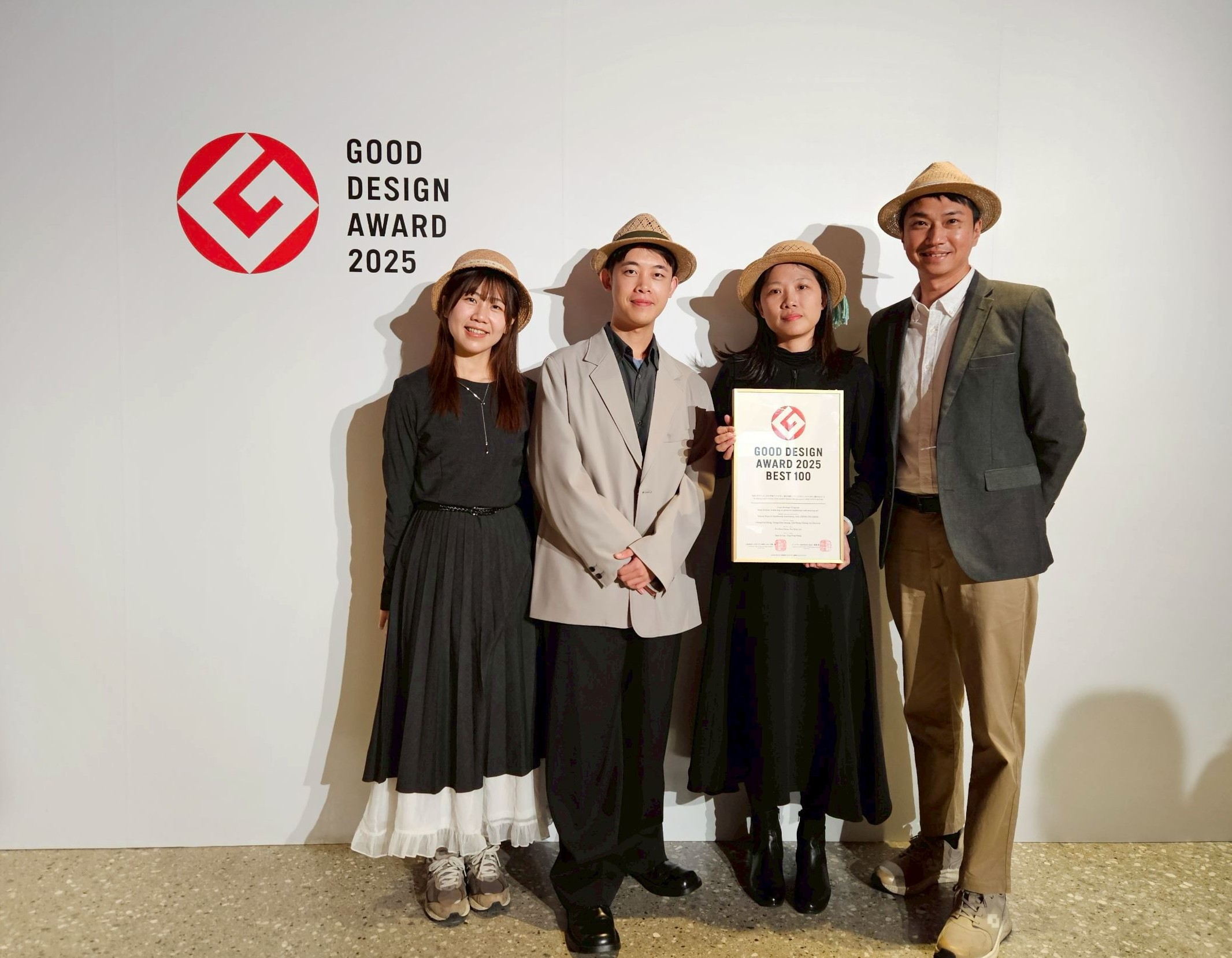
Winner of the BEST 100 Award in the Regional Design category of the GOOD DESIGN AWARD 2025 (Japan Good Design Award). Hsien-Tse Lai is second from the left.
After graduating from university, Hsien-Tse Lai returned to Yuanli, Miaoli, and joined the Taiwan Rush Grass Association. For more than two years, he has been responsible for graphic publicity materials, website development, the planning of rush grass educational materials, and innovative experience design, gradually bringing his design expertise into local cultural promotion.
As a native of Yuanli, when he went to Taipei for university, he deliberately played down his hometown background and was reluctant to proactively mention that he was from Miaoli. It was not until he truly became involved in the local community and encountered rush grass culture that he came to rediscover his hometown and began to take pride in being from Yuanli. He explains that rush grass embodies an important craft tradition of the Miaoli Plains Indigenous peoples, representing the accumulated wisdom of living shaped jointly by the land and history.
The rush grass industry in Yuanli was once highly prosperous. During the Japanese colonial period, the area produced large quantities of rush grass products, including Dajia-style hats and woven mats. Japan even hoped to use these products to compete with Panama hats in the international market. As times changed and the processing industry underwent transformation, many local residents moved into factory work. Rush grass weaving gradually declined, and the number of skilled craftspeople rapidly decreased. How to continue this craft has therefore remained a long-standing concern for the local community.
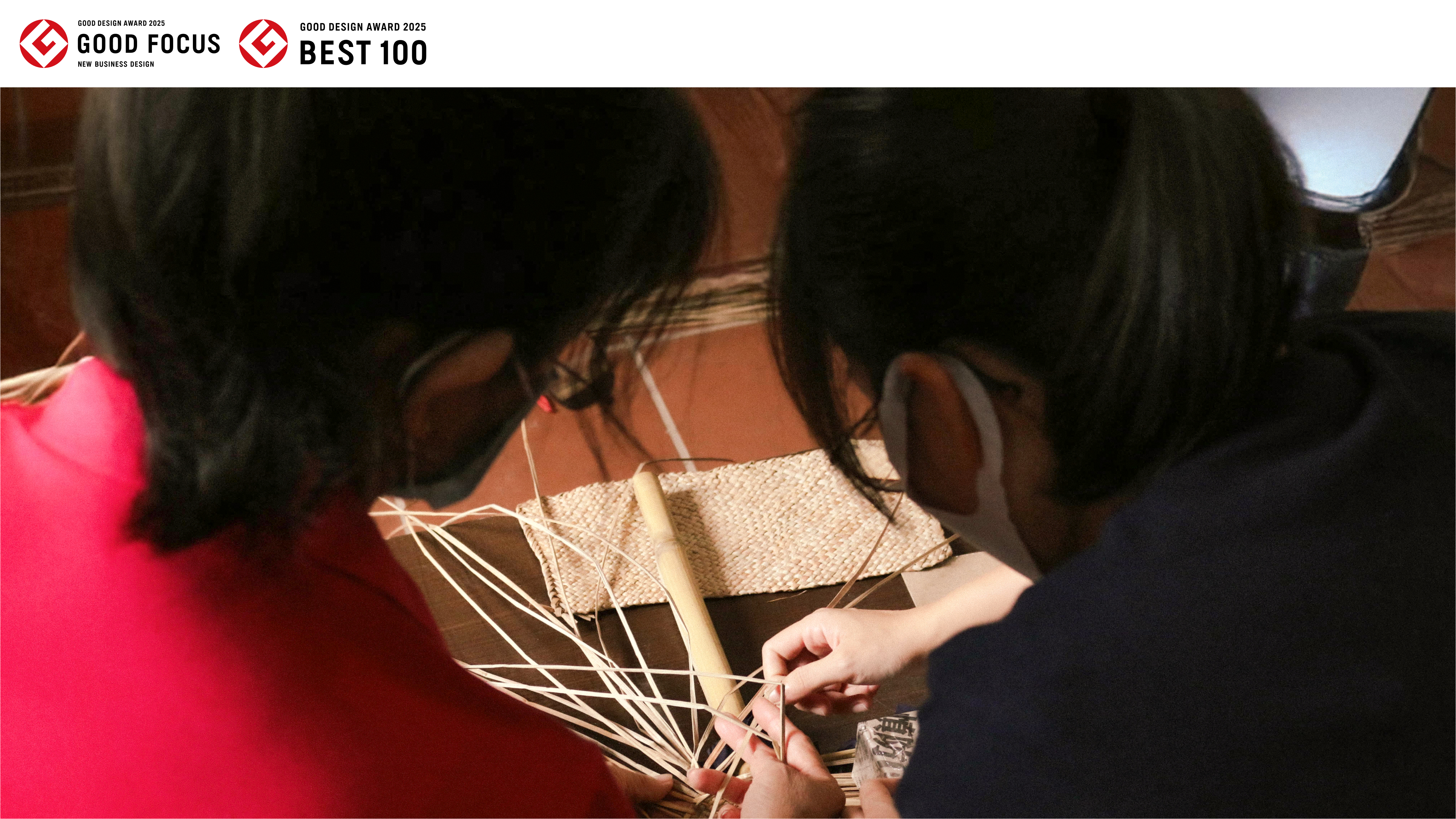
Rush grass weaving instruction.
Hsien-Tse Lai believes that what truly needs to be designed is not just a product, but a transmission system that can operate sustainably. Together with the Taiwan Rush Grass Association, he has organized knowledge that was previously passed down mainly through master–apprentice oral instruction into illustrated teaching materials. Combined with regenerated rush grass materials, these resources allow learners to progressively learn rush grass weaving even at home. At the same time, through short-term intensive training, the development of seed teachers, and the matching of instructors with learners, the traditional master–apprentice system, which previously focused primarily on vocational training, is gradually being transformed into interest-based learning and public education. This approach attracts people from a wider range of backgrounds to engage with the craft while creating more possibilities for subsequent material design and product development.

Rush Grass Banquet.
In addition to establishing an educational system, Hsien-Tse Lai has continued to participate in local revitalization initiatives, including assisting with the restoration of rush grass fields, promoting community revitalization, and preserving traditional craft culture. He hopes to encourage more people to enter the fields and understand the complete process of rush grass - from cultivation and harvesting to weaving and craft creation. In recent years, he has also combined local agricultural products with craft culture to develop rush grass banquets. Using rice produced in Yuanli as the main ingredient, the banquets incorporate the fresh aroma and imagery of rush grass into the dining experience. He has also collaborated with ceramic artists to design tableware featuring patterns inspired by rush grass weaving, extending craft culture from everyday objects to culinary experiences and opening up more diverse ways of interpreting and experiencing the culture.
Hsien-Tse Lai notes that in recent years, Yuanli’s rush grass industry has gradually established a complete industry chain covering cultivation, materials, production, education, and promotion. More importantly, the average age of participants has gradually decreased from their seventies to their forties. This demonstrates that through system design and intergenerational collaboration, traditional crafts can indeed attract more young people to become involved.
Bringing his practical experience from the local community back to campus, Hsien-Tse Lai chose to pursue a master’s degree at Taiwan Tech in the hope of strengthening his research methods and theoretical foundation. He explains that many decisions in his previous work relied heavily on experience and intuition. Now, in graduate school, he has learned to use discussion, analysis, and more comprehensive frameworks of thought to re-examine the rationale behind each design before deciding how it should be implemented. In the face of the rapid development of AI, he believes that although tools will continue to advance, it is ultimately people who will determine the future—and human beings remain irreplaceable.
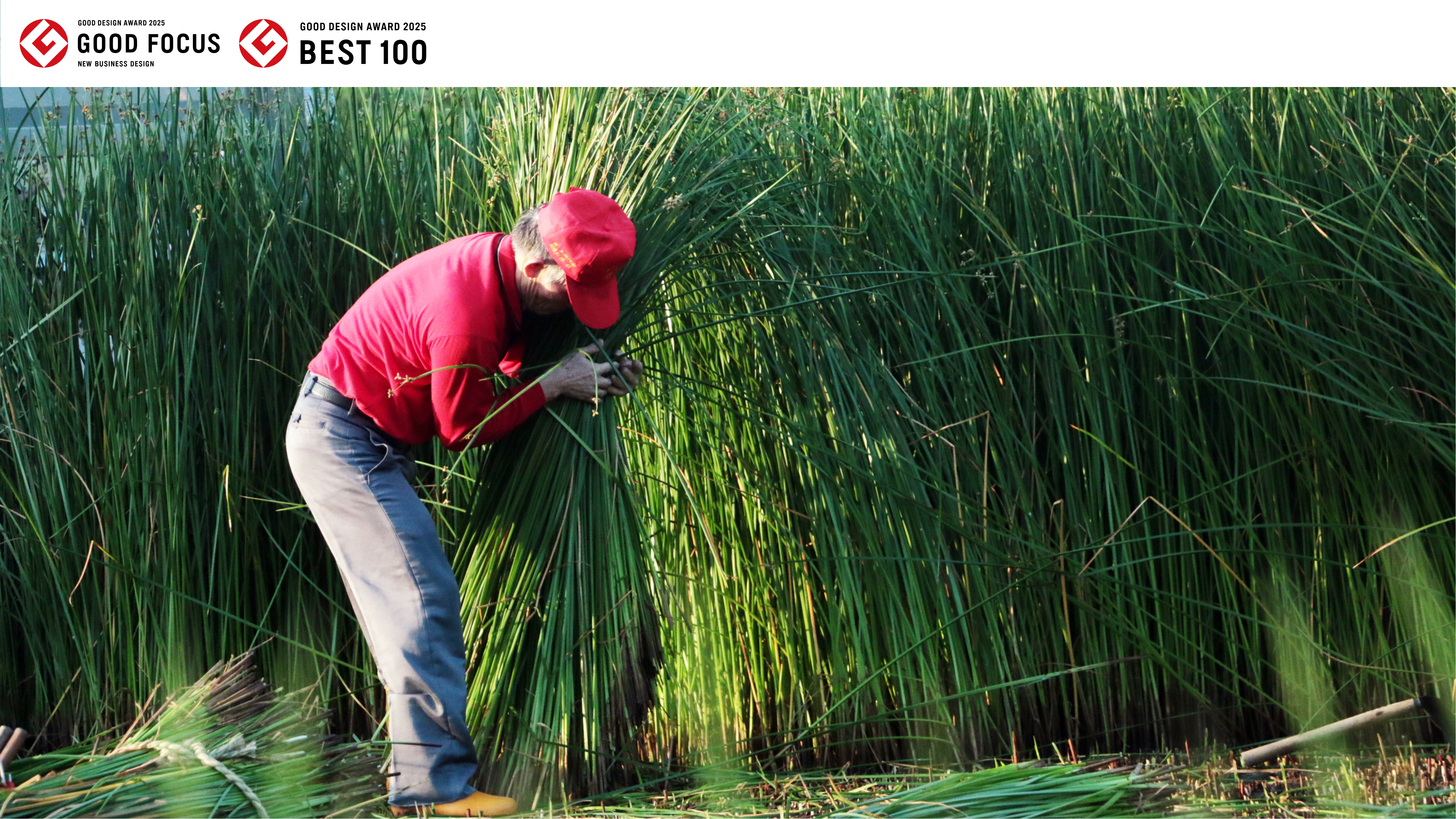
Rush grass harvesting.
After graduation, Hsien-Tse Lai hopes to pursue further studies abroad and expand his international perspective through Taiwan Tech’s sister-university exchange programs. He once had to cancel an exchange opportunity in Denmark because of the COVID-19 pandemic. Now, he hopes to seize another opportunity to study overseas, bring international experiences in design education and cultural preservation back to Taiwan, and continue creating new directions for the development of rush grass craftsmanship in his hometown.
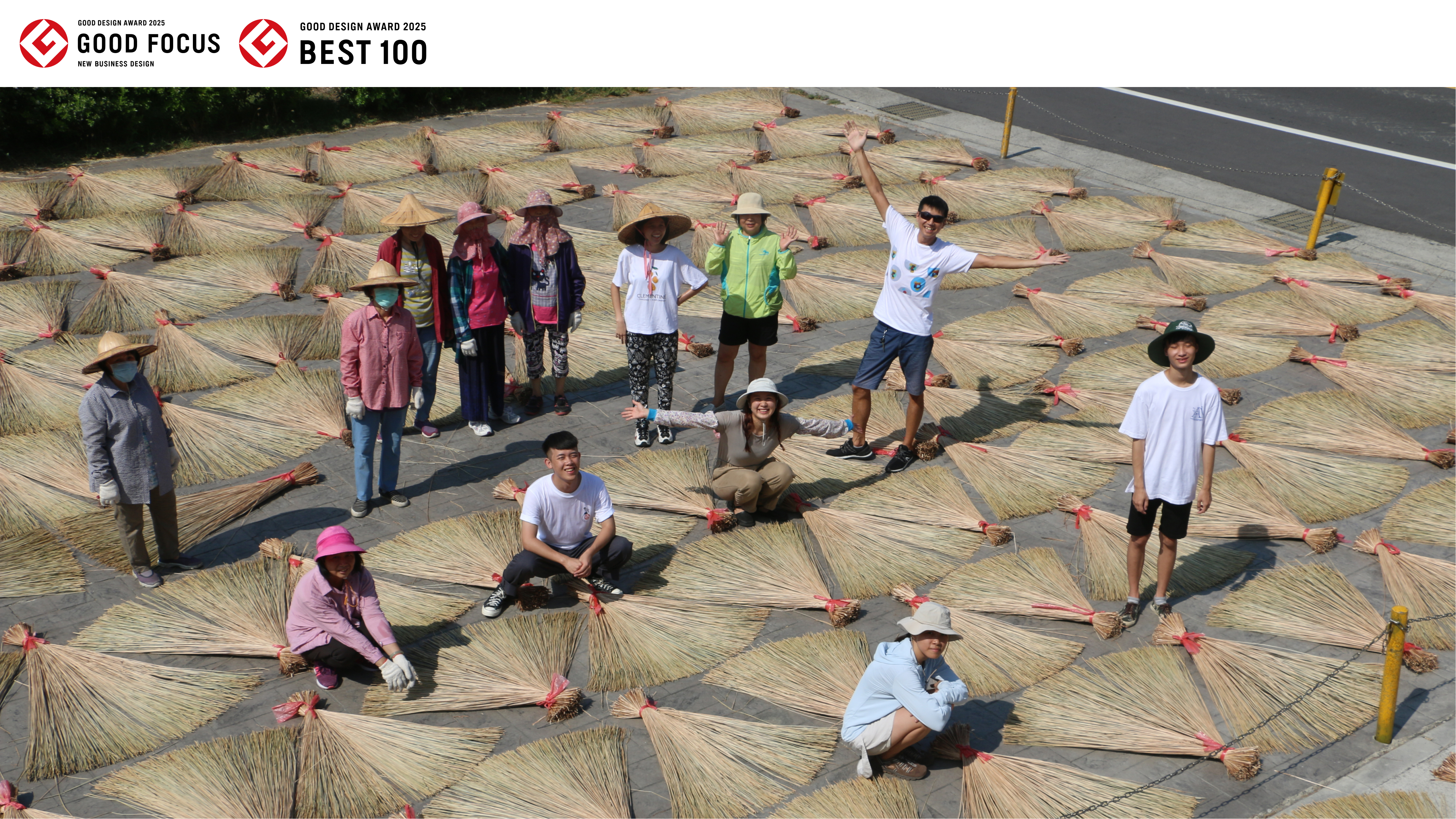
Rush grass drying in the sun.


