


Taiwan Tech connects Taiwan, Japan, US and Indonesia through global USR collaboration.[21 Sep. 2026]
To strengthen international exchange and sustainable practices in University Social Responsibility (USR), the Ministry of Education’s 2026 USR Collaborative Empowerment Programme, “New Horizons for Sustainability: Innovation, Scaling and International Collaboration”, was held at Taiwan Tech on 18 September. The event brought together academics and practitioners from Taiwan, Japan, the United States and Indonesia to share case studies on local revitalisation, smart governance, community resilience and cross-border curricular collaboration. Through group workshops, participants explored how Taiwanese universities can expand social responsibility from local practice to international collaboration. They also exchanged practical insights into international USR initiatives, challenges in cross-border partnerships and approaches to curriculum integration, strengthening connections between local experience and global sustainability issues.
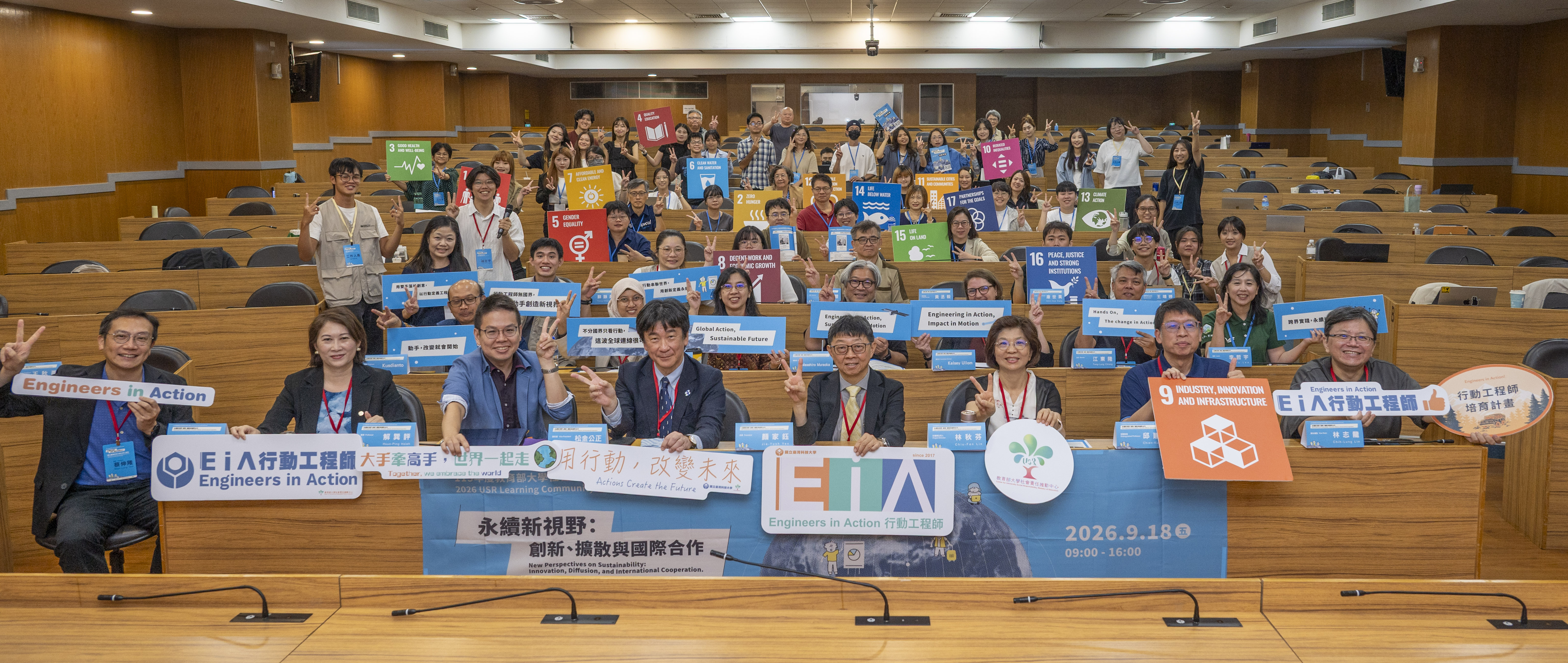
The 2026 Ministry of Education USR Collaborative Empowerment Programme brought together academics and practitioners from Taiwan, Japan, the United States and Indonesia to exchange experiences in international USR collaboration and sustainable practice.
Taiwan Tech President Jia-Yush Yen said that USR is one of the university’s core development priorities. Many students have transformed their lives through higher education and professional training, and the university hopes they will use their knowledge and skills to give back to society after gaining opportunities for personal growth and change. In response to the challenge of ensuring that some past projects generated lasting impact, Taiwan Tech has actively adjusted its strategies in recent years, placing international partners and established local communities at the centre of its collaboration efforts. Through stable, long-term partnerships, the university aims to ensure that social engagement extends beyond one-off activities to address local needs continuously while building mutual trust and lasting impact.
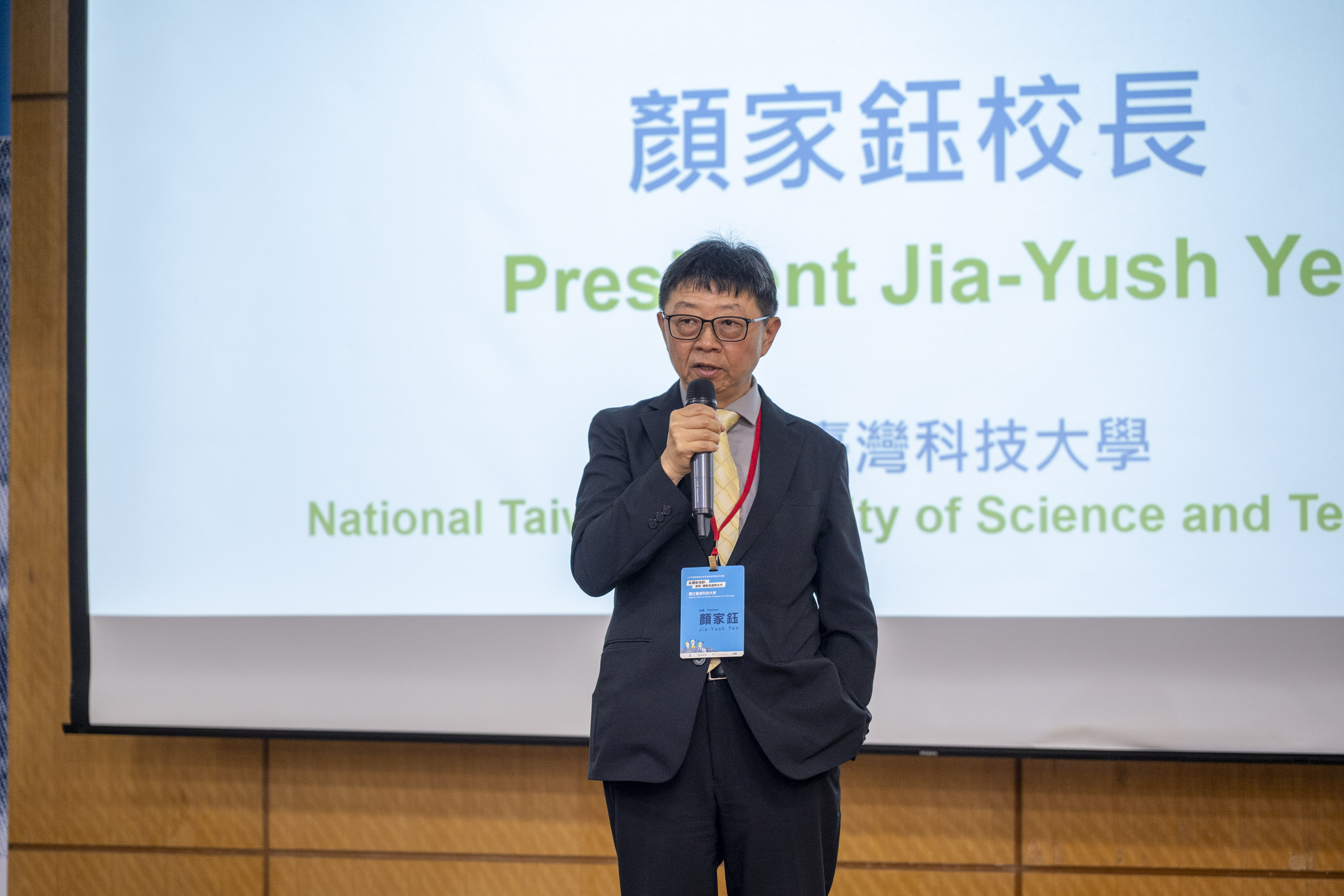
Taiwan Tech President Jia-Yush Yen delivers remarks, highlighting the university’s commitment to strengthening the lasting impact of university social responsibility through long-term local partnerships and international collaboration.
Professor Emerita Chiu-Fen Lin, principal investigator of the Ministry of Education’s University Social Responsibility Project Promotion Center, noted that the Ministry has been promoting USR for nine years. Its two central priorities are talent development and local engagement. USR must be closely integrated into curricula to help students understand real-world social issues and collaboratively explore ways to improve conditions and solve problems through practical activities. As projects enter a new phase of international collaboration, Taiwanese universities are increasingly extending their local achievements overseas and working with international students and faculty to address globalisation and sustainable development.
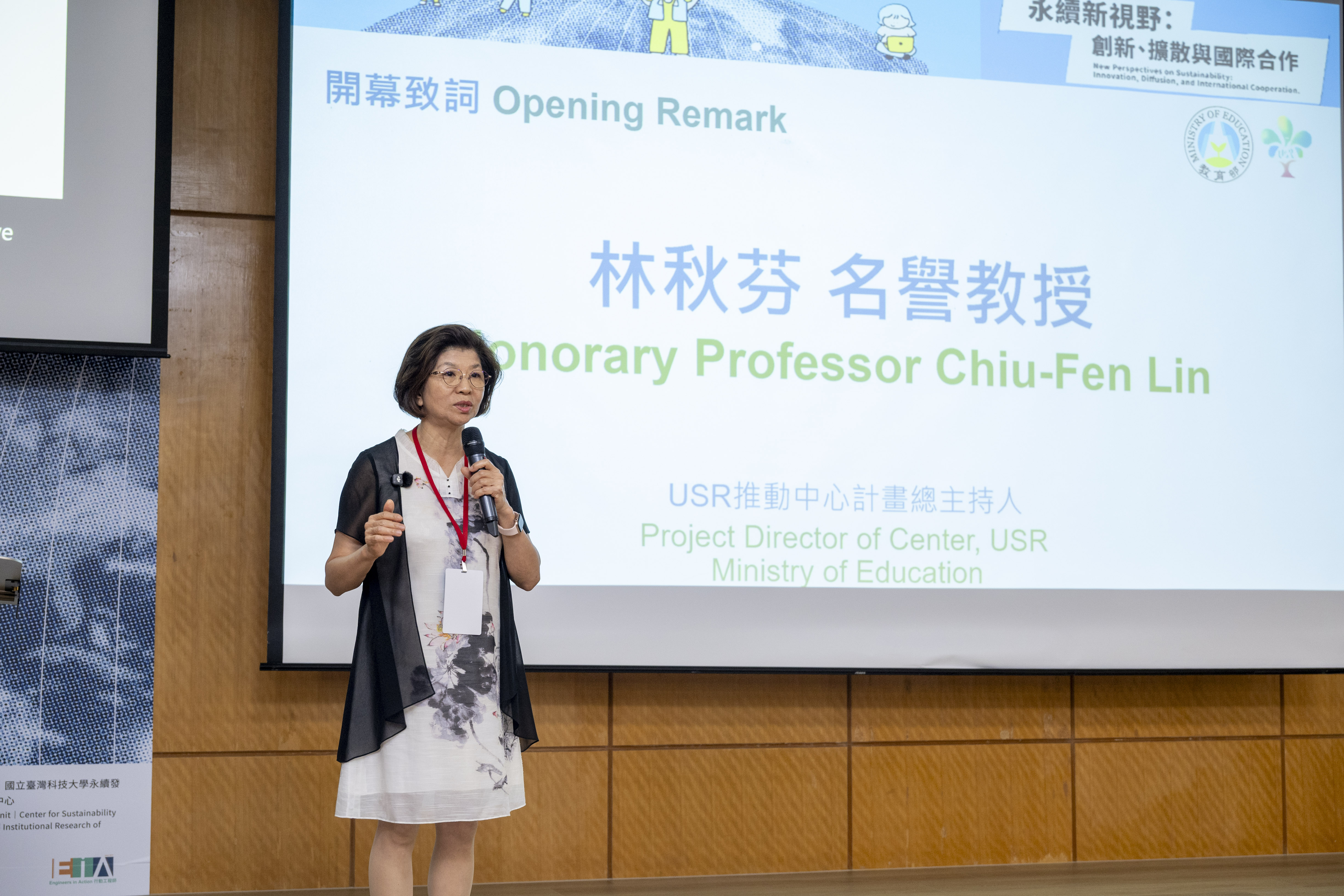
Professor Emerita Chiu-Fen Lin, principal investigator of the Ministry of Education’s University Social Responsibility Project Promotion Centre, shares Taiwan’s achievements in USR and future directions for international collaboration.
Professor Lin further reported that this year’s USR programme involves 121 universities and 267 projects, with international connections spanning 33 countries and 492 sites. Although only 13 projects are specifically classified as international collaboration projects, many sustainability-focused, distinctive and long-term development projects have also established diverse cross-border partnerships. She expressed hope that the event would help universities build their international collaboration experience and provide useful references for future project implementation and planning for the fifth phase, gradually enhancing Taiwan’s international influence and contribution through USR.
The morning session, themed “International Collaboration for a Sustainable Future”, was moderated by Ying-Jung Yeh, Vice President for International Affairs at Taiwan Tech. Professor Masatada Matsugane, Vice President of Utsunomiya University in Japan, opened with a discussion of how regional national universities in Japan connect public policy and communities through USR and local revitalisation. Professor Hsun-Ping Chieh of the Department of Electrical Engineering at National Cheng Kung University then used smart governance to illustrate how data engineering can foster interdisciplinary connections and collaborative urban learning. Distinguished Professor Chien-Kuo Chiu of Taiwan Tech’s Department of Civil and Construction Engineering drew on experience from the Nankuan community to explore how community resilience can grow from local initiatives and gradually engage in dialogue with the international community.
The afternoon session focused on “Internationalising Technology Innovation and Sustainable Practices”. Professor Shu-Yii Wu of the Department of Chemical Engineering at Feng Chia University shared practices combining carbon reduction and international collaboration, using the Green Synergy International Alliance as an example. Participants then joined three workshops: “Practical Guidelines for International USR Initiatives”, “Challenges and Strategies for Cross-Border USR Collaboration” and “Integrating Field-Based International Practice with USR Curricula”. Speakers from Taiwan, Japan, the United States and Indonesia exchanged case studies on Indigenous sustainability, urban co-creation hubs, sustainable community engineering, engineers in action, veterinary care for disadvantaged animals, design thinking and local revitalisation. Drawing on different institutional and cultural contexts, they explored collaborative approaches that could be sustained and adapted to different settings.
Ting-Yu Yang, a fifth-year student in the Global Engineering programme, said the Collaborative Empowerment Programme deepened participants’ understanding of the core principles of USR projects. By exchanging experiences with different teams, participants could also learn from one another’s strengths and approaches to community-based practice. He was particularly struck by several speakers’ emphasis on shifting from “work for the local” to “work with the local”. Rather than providing assistance unilaterally, universities should discuss and implement initiatives together with local partners. He added that the event encouraged participants to reflect on the original purpose of their projects and gain greater clarity about the direction and significance of their involvement in USR.
Taiwan Tech’s “Engineers in Action” programme is an international collaboration project under the Ministry of Education’s fourth-phase USR Sustainable Development category. It encourages students to “step boldly into the world and welcome the world in”. The programme applies engineering expertise to address the needs of remote communities overseas, particularly in environmental sanitation, water resource use and quality of life. Its partners include Surabaya Institute of Technology and Widya Mandala Catholic University in Indonesia, Can Tho University in Vietnam, and Osaka Institute of Technology in Japan. The programme is also gradually involving senior high and vocational high school students, enabling young people at different educational stages to explore their professional interests, career paths and social responsibilities through intercultural, hands-on experiences.
Taiwan Tech has long drawn on engineering, technology and interdisciplinary expertise to address societal needs. Through the Engineers in Action programme, it brings faculty members and students into communities and connects them with international partners. The university will continue to strengthen the integration of curricula and social engagement, helping students develop professional competence, intercultural communication skills and a sense of public responsibility through real-world challenges. By building long-term partnerships, Taiwan Tech also aims to expand the international impact of Taiwanese higher education on sustainable development.
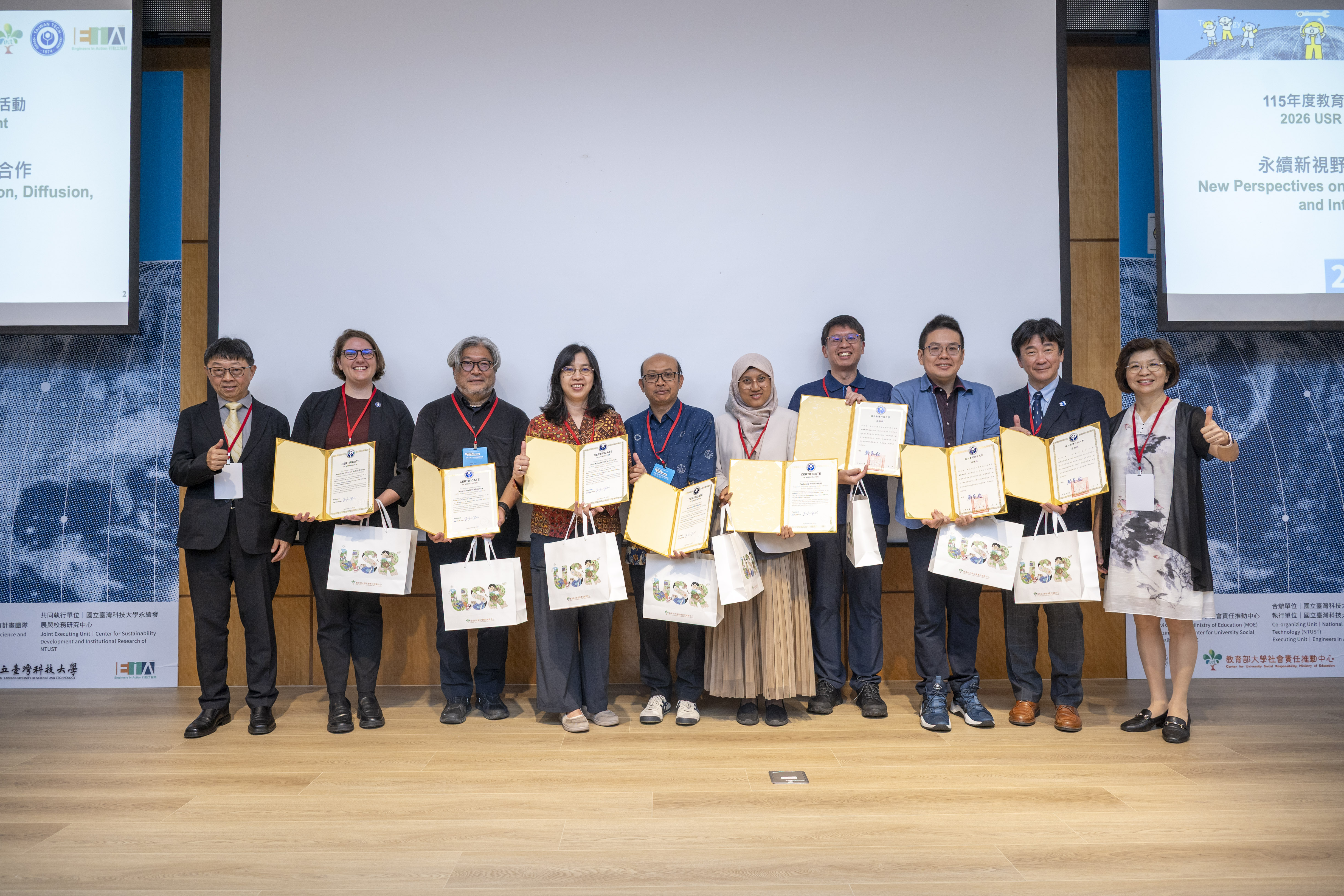
Taiwan Tech President Jia-Yush Yen (first from left) and Professor Emerita Chiu-Fen Lin (first from right) present certificates of appreciation to international speakers and partners in recognition of their contributions to cross-border USR exchange and knowledge sharing.


