


Taiwan Tech establishes Taiwan’s first urban campus microgrid to boost energy resilience.[18 Sep. 2026]
To enhance campus energy self-sufficiency and strengthen urban disaster resilience, Taiwan Power Company (Taipower) has launched the University Energy Conservation and Power Resilience Development Programme. Taiwan Tech was selected as the first university in northern Taiwan to participate in the initiative. In early 2026, Taiwan Tech completed the installation of a microgrid system at its Hwa Hsia Campus, creating Taiwan’s first urban campus microgrid. Integrating solar photovoltaic power generation, energy storage, backup generation and smart energy management, the system improves energy efficiency under normal conditions while providing independent power supply and emergency backup during disasters. It also incorporates community services, teaching, research and energy education, establishing a campus environment that combines sustainability, smart energy and public safety.
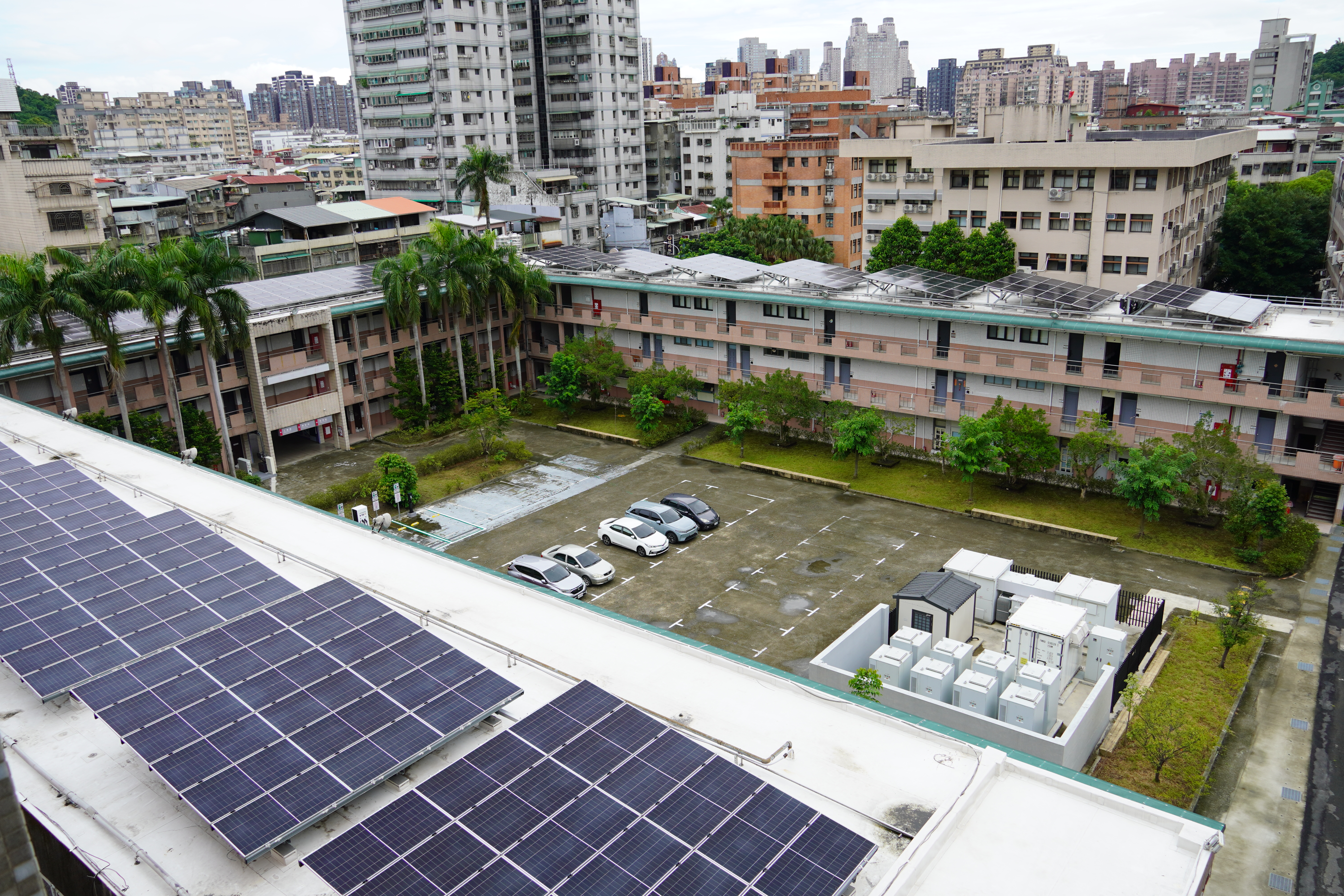
Taiwan Tech collaborated with Taipower to complete the installation of a microgrid system at its Hwa Hsia Campus in early 2026, creating Taiwan’s first urban campus microgrid. The photograph shows the solar panels on the roof of the campus teaching building. The electricity generated is prioritised for campus consumption, achieving 100% self-consumption of the renewable electricity produced.
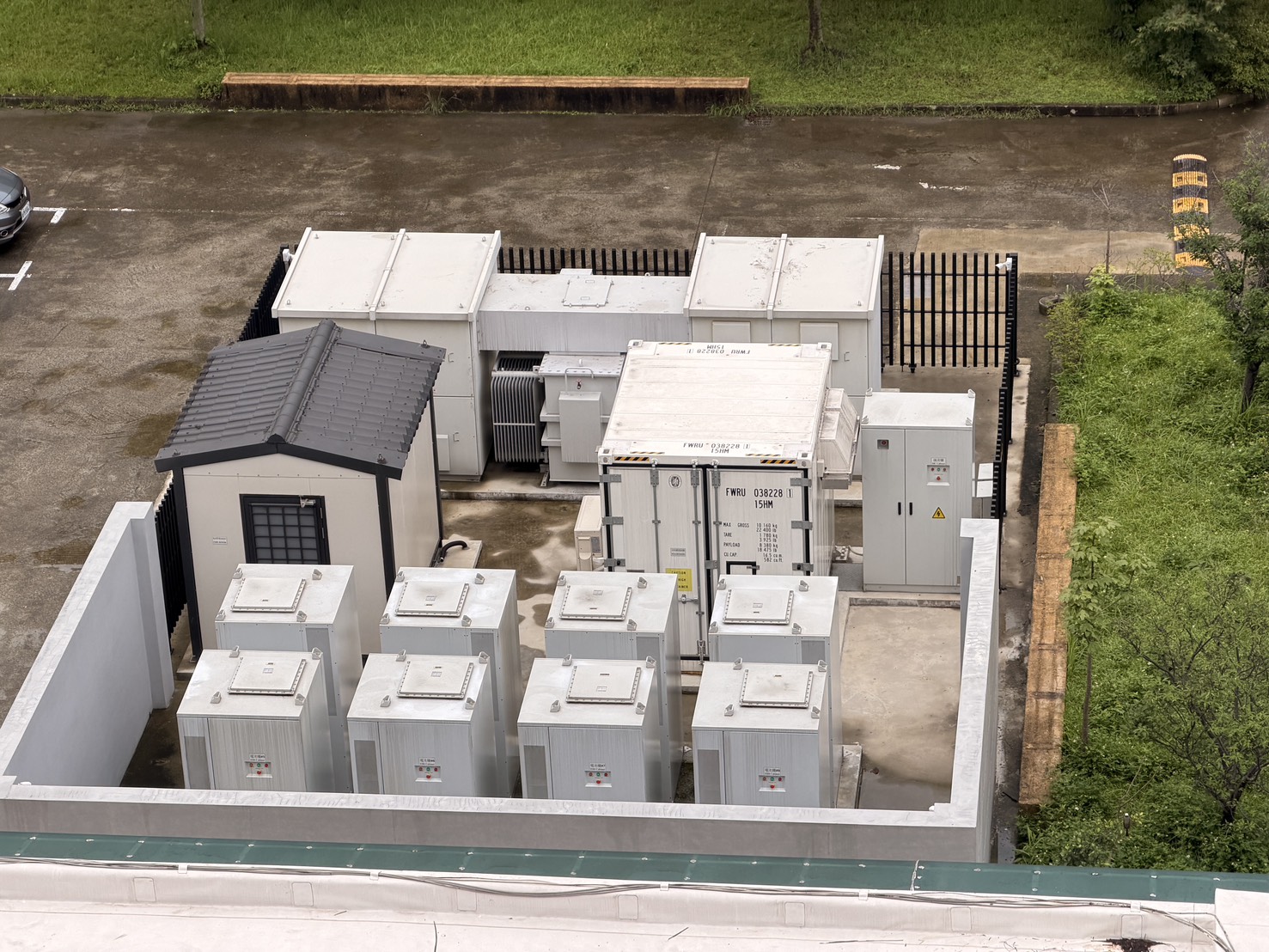
The energy storage system incorporates enhanced site drainage, drainage gradient and fire wall designs to ensure safe and reliable operation.
The Hwa Hsia Campus microgrid normally operates in parallel with Taipower’s electricity grid. An Energy Management System (EMS) optimizes energy dispatch by coordinating time-of-use electricity pricing, peak and off-peak load shifting, battery charging and discharging, and renewable energy management. These functions improve energy efficiency. The system is estimated to save approximately NT$540,000 in electricity costs annually. By further optimizing the energy storage reserve ratio and selling renewable energy certificates, the total annual benefits could reach approximately NT$1.26 million, helping reduce the campus’s long-term energy costs.
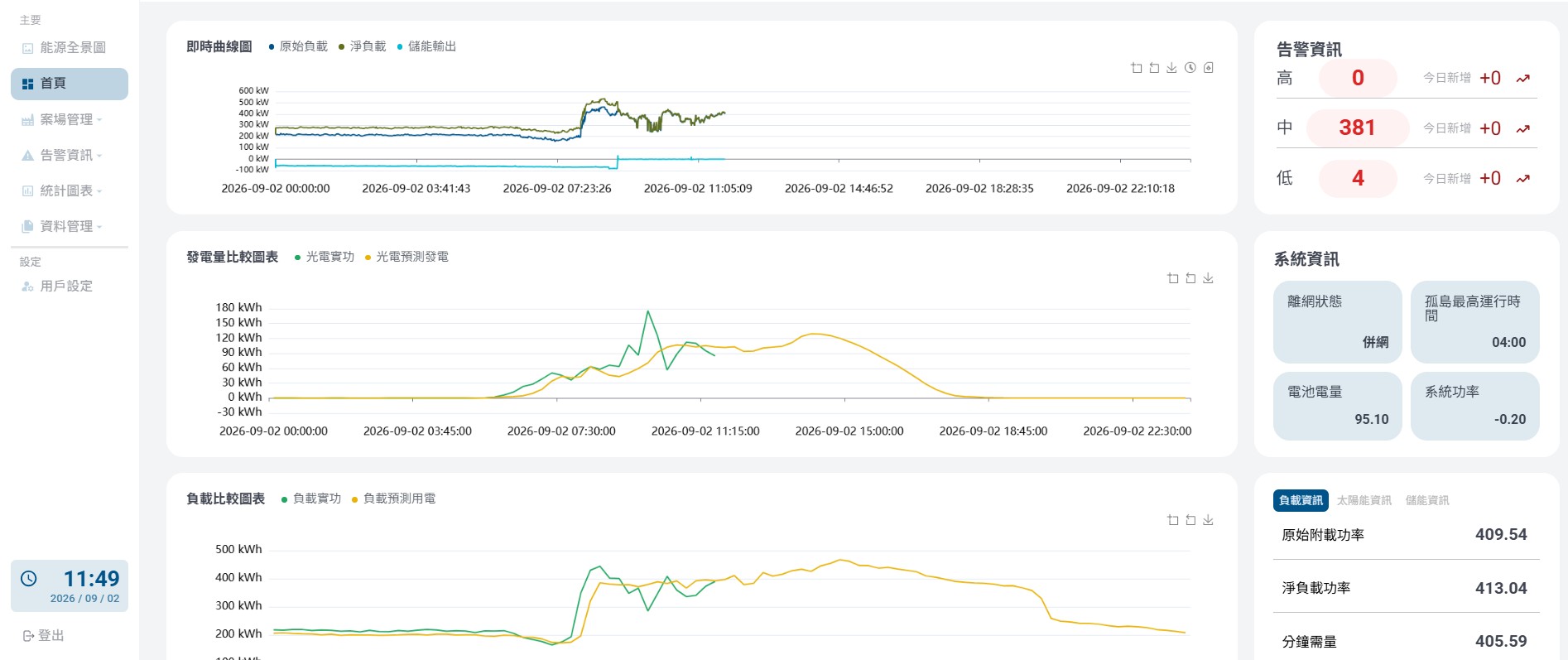
The EMS provides 24-hour real-time monitoring, day-ahead power generation forecasting, optimized energy dispatch, battery health assessment, islanding control and time-of-use electricity management, enabling the university to monitor energy consumption and adjust energy distribution flexibly.
In terms of green electricity application, the Hwa Hsia Campus teaching building is equipped with 229.68 kWp of rooftop solar photovoltaic panels. Through the microgrid’s integration of campus electricity consumption and energy storage, the renewable electricity generated by the solar panels is prioritised for on-campus use. This achieves 100% self-consumption of the renewable electricity produced, improves solar energy utilisation and reduces reliance on external electricity supplies.
Beyond energy conservation and carbon reduction, the microgrid strengthens the campus’s power resilience in the event of emergencies. If typhoons, earthquakes or other unexpected incidents interrupt the public electricity supply, the system can automatically switch to island mode and maintain the campus’s normal electricity consumption for four hours, ensuring that essential facilities continue to operate. If large air-conditioning systems are switched off through load-shedding measures, while the energy storage system and diesel backup generator prioritise electricity supply to lighting, communications, information equipment and other essential services at the emergency shelter, island-mode operation can be extended to eight hours.
Jui-Sheng Chou, Director of General Affairs at Taiwan Tech and co-principal investigator of the Hwa Hsia Campus microgrid project, explained that integrating energy generation, storage and management not only helps reduce the campus’s carbon footprint and improve energy efficiency but also puts energy transition and Environmental, Social and Governance (ESG) principles into practice. Beyond tangible benefits such as electricity cost savings and energy arbitrage, the microgrid is particularly valuable for strengthening disaster resilience and serving as a living laboratory for teaching, research and energy education. In this way, the campus becomes more than an energy consumer: it also serves as an important hub for community engagement and the practical implementation of sustainability.
The microgrid installation includes a 229.68 kWp solar photovoltaic system, a large-scale energy storage system with a capacity of 2 MWh, two 100 kW DC fast-charging stations, a diesel backup generator with a continuous output capacity of 400 kW, and an EMS demonstration room. The solar installations incorporate advanced waterproofing techniques to enhance rooftop durability. The energy storage system features improved site drainage, drainage gradients and fire protection measures to ensure safe operation. The diesel generator supplies backup electricity during island-mode operation and can also support peak shaving and valley filling when operating in parallel with the grid, improving overall energy dispatch efficiency. The two 100 kW DC fast-charging stations are also available for electric vehicles owned by faculty, staff and students, allowing the campus community to experience the practical benefits of the microgrid in everyday life.
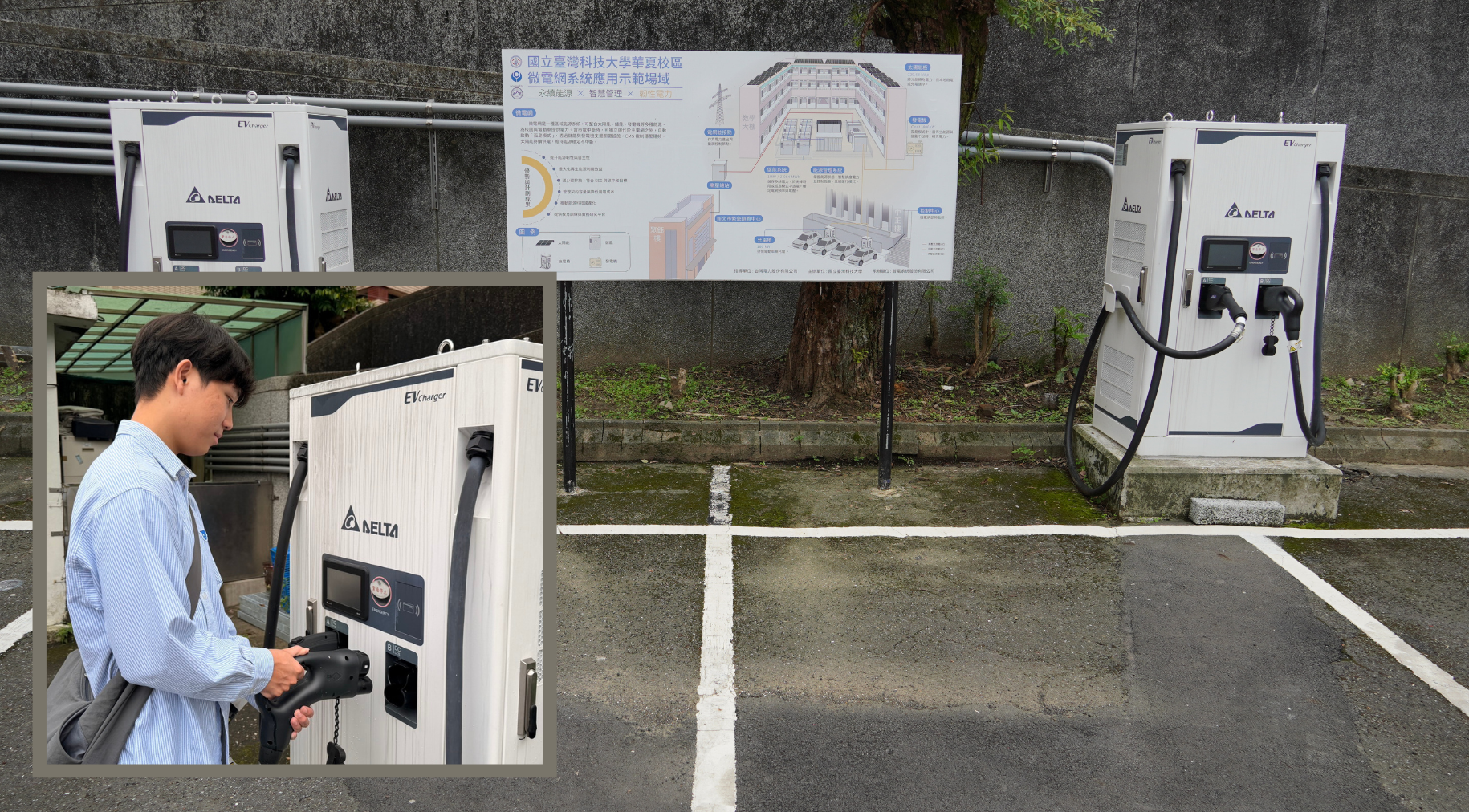
The Hwa Hsia Campus has installed two DC fast-charging stations for electric vehicles used by faculty, staff and students, allowing the campus community to experience the practical benefits of the microgrid in everyday life.
For smart energy management, the EMS provides day-ahead power generation forecasting, optimized energy dispatch, battery health assessment, time-of-use electricity management, islanding control and 24-hour real-time monitoring. These functions help the university monitor energy consumption and adjust energy distribution flexibly. The campus’s solar photovoltaic system has obtained Taiwan Renewable Energy Certificates (T-RECs), while the outdoor battery energy storage system has received Voluntary Product Certification (VPC) for the installation. Through future industry-academia collaborations, these achievements could also help enterprises strengthen their sustainability profiles. To complete the microgrid project, Taiwan Tech invested more than NT$50 million in civil engineering and supporting infrastructure improvements, complemented by NT$100 million in funding from Taipower, progressively enhancing campus energy management and emergency backup capabilities.
In addition to strengthening campus energy resilience, the microgrid also supports the surrounding community. The Juyu Building at Hwa Hsia Campus serves as one of New Taipei City’s emergency shelters. Six sets of emergency power outlets have been installed in the campus security office, each equipped with two 110 V power outlets and three USB charging ports. During large-scale power outages in nearby communities, residents can use these facilities to charge essential devices such as mobile phones and laptops, helping maintain basic daily activities and communication. This initiative demonstrates Taiwan Tech’s commitment to university social responsibility and its role in supporting the local community.
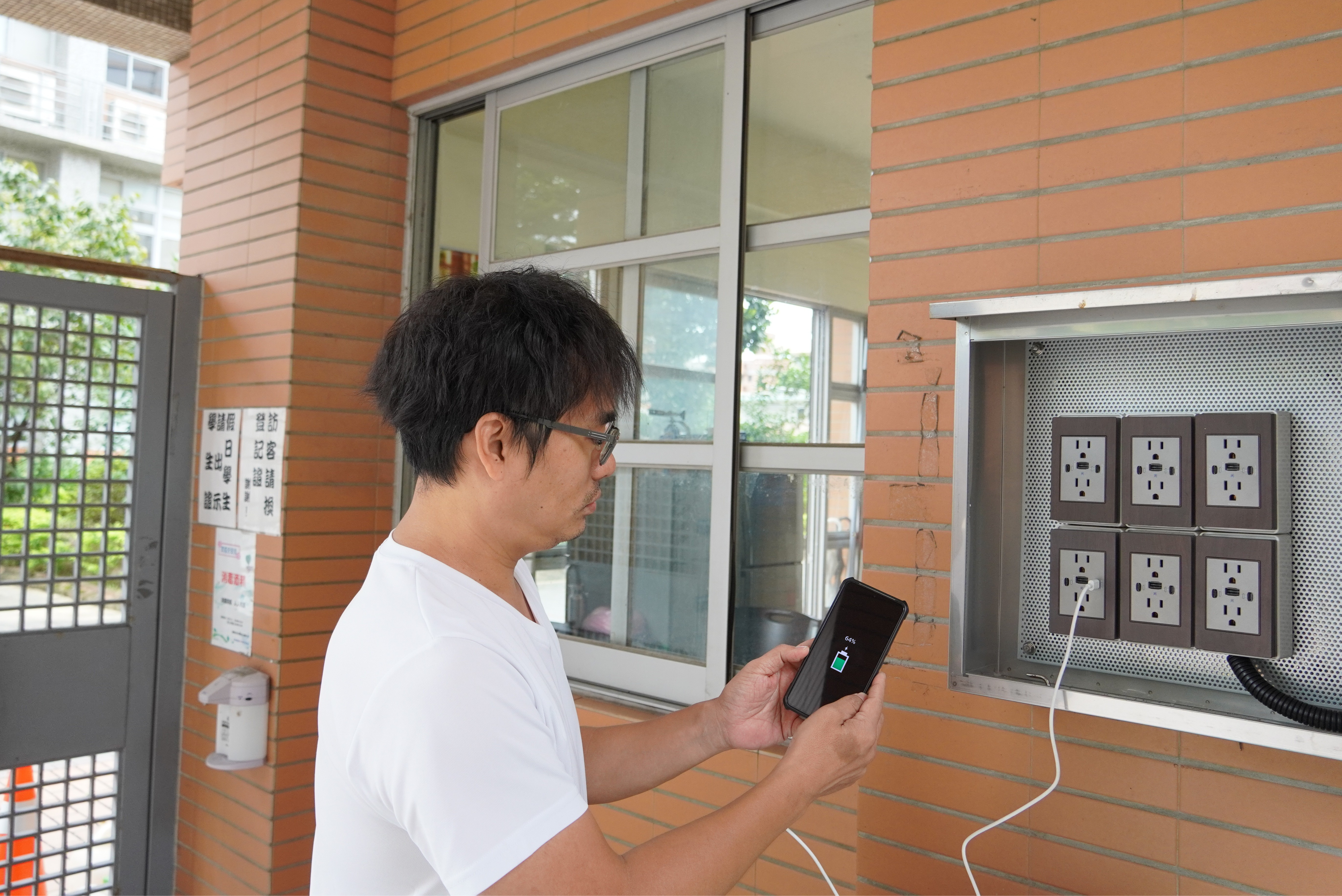
Emergency power outlets have been installed in the Hwa Hsia Campus security office, providing 110 V outlets as well as USB and USB-C charging ports. During disaster-related power outages, these facilities enable nearby residents to charge mobile phones and other devices, helping meet basic daily and communication needs while supporting disaster preparedness and community services.
By integrating solar photovoltaic generation, energy storage, fast-charging stations, a diesel backup generator and an EMS platform, Taiwan Tech has successfully established a comprehensive microgrid system that combines renewable energy generation, intelligent energy management, emergency backup power, education and research. The campus now serves as a demonstration site for smart energy applications in higher education. Moving forward, Taiwan Tech will continue to validate energy technologies and application models in real-world settings and share its experience in system installation and operational management. These efforts will provide practical, replicable and scalable insights to support energy transition and disaster resilience at campuses across Taiwan.
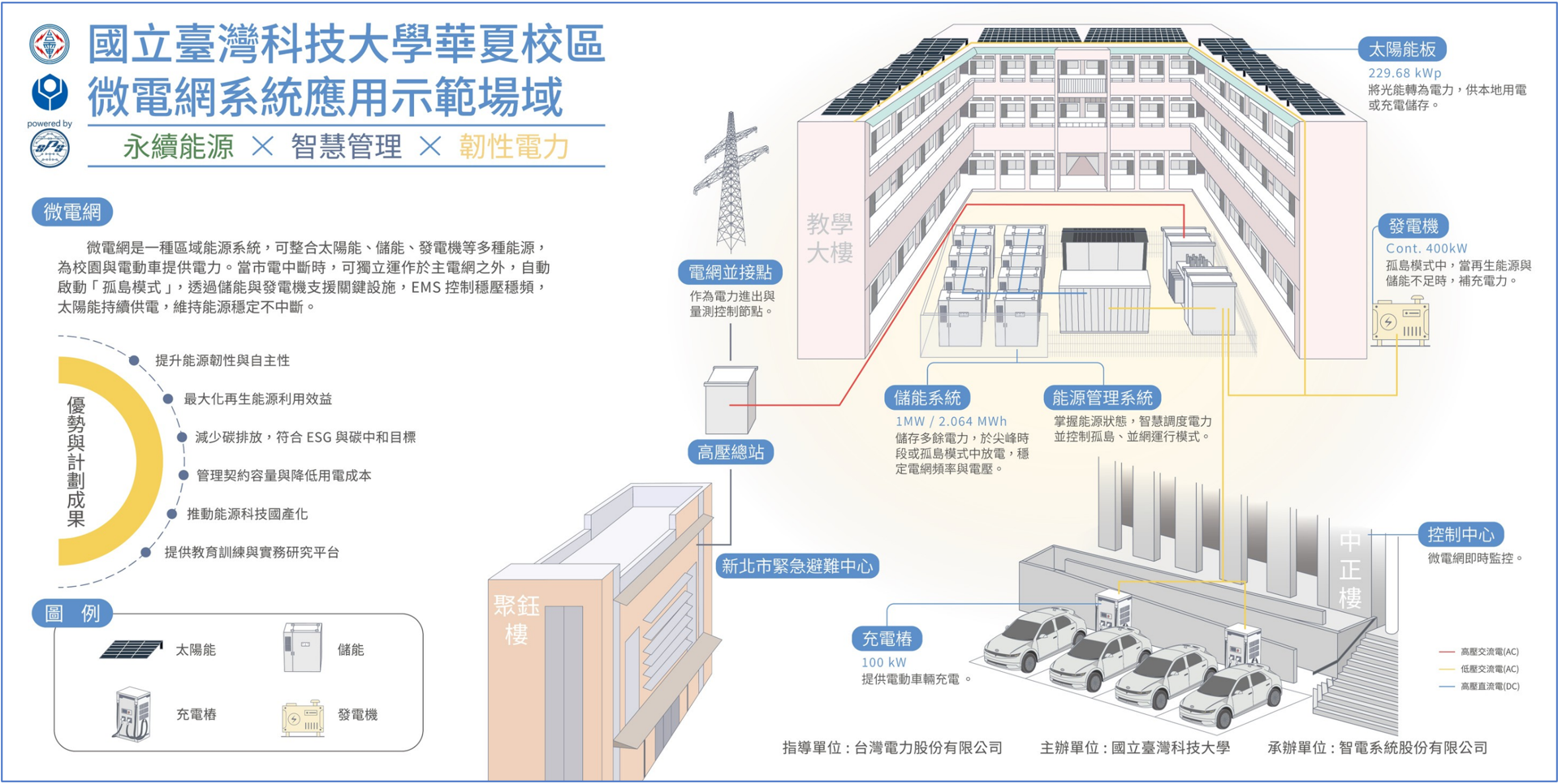
Taiwan Tech will continue to validate energy technologies and application models in real-world settings and share its experience in system installation and operational management, providing practical and replicable insights for campus energy transition and disaster resilience across Taiwan.


