MOE and Taiwan Tech launch Taiwan–Vietnam Talent Hub for global industry leaders.[ 16 Dec. 2025]
To address Taiwan’s declining birthrate and the industry’s demand for mid- to high-level technical talent, the Ministry of Education (MOE) launched the International Industry Talent Education Program (referred to as the “New Program”) starting in 2024. The initiative pools resources from the government, industry, and universities to recruit international students in STEM, finance, semiconductor, and other fields to study in Taiwan and remain for employment. Taiwan Tech has been commissioned by the MOE to serve as the lead institution for the Taiwan–Vietnam International Talent Circulation Hub (referred to as the “Taiwan–Vietnam Hub”). Taiwan Tech is responsible for cross-university coordination, recruitment promotion, and local partnerships, as well as connecting educational and industry resources, and implementing the New Program across northern, central, and southern Vietnam. This approach establishes a stable talent circulation chain between Taiwan and Vietnam across government, industry, academia, and research sectors, supporting corporate workforce needs through practical collaboration and enhancing Taiwan’s industrial competitiveness.
Vietnam is a key partner under Taiwan’s New Southbound Policy, with a large youth population and strong academic foundations, and maintains close ties with Taiwan across the IT and manufacturing supply chains. Taiwan Tech President Jia-Yush Yen stated that, through the Taiwan–Vietnam Hub and government support, Taiwan Tech can further connect with Vietnam’s top universities, raising awareness of the New Program among outstanding students and faculty. This enables Taiwanese companies to recruit and cultivate talent directly from campuses, allowing graduates to remain employed in Taiwan, reducing recruitment costs, and improving workforce efficiency.
He also noted that many Taiwanese companies continue to expand operations in Vietnam. Students trained under the New Program not only gain internship and work experience with Taiwanese companies but also become prime candidates for future overseas assignments in Vietnam or roles within local Taiwanese corporate networks. This model allows students, after fulfilling their obligations to remain in Taiwan, to pursue diverse career paths and even emerge as professional talent bridging the Taiwan–Vietnam industrial supply chain.
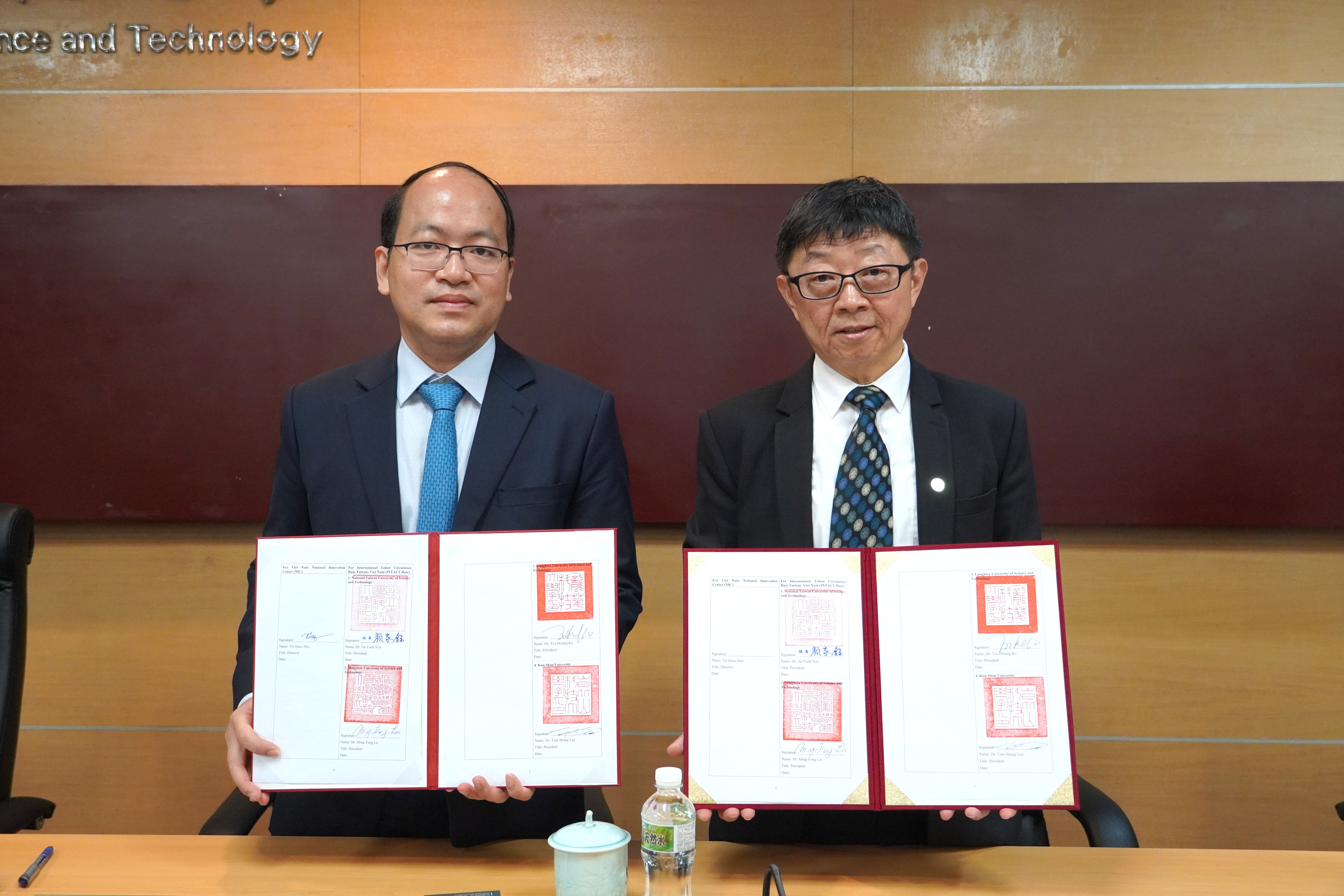
Recently, Taiwan Tech President Jia-Yush Yen (right) and Vũ Quốc Huy, Director of Vietnam’s National Innovation Center (NIC), signed a memorandum of understanding to promote Vietnamese students enrolling in the New Program in Taiwan, as well as to develop dual-degree programs, academic exchanges, and overseas research initiatives.
Taiwan Tech has long been active in educational collaboration with Vietnam, where Vietnamese degree students rank second among all international students. After taking the lead as the coordinating institution for the Taiwan–Vietnam Hub, Taiwan Tech has partnered with Minghsin University of Science and Technology, Lunghwa University of Science and Technology, and Kun Shan University to jointly promote recruitment, provide free Mandarin courses, and facilitate industry connections. Currently, approximately 150 companies participate in the program, spanning industries such as semiconductors, ICT, electronics, smart manufacturing, and materials, including well-known firms like Nvidia, TSMC, ASE, MediaTek, and Micron.
Chao-Lung Yang, Vice President for Industry–Academia Affairs at Taiwan Tech and project leader of the Taiwan–Vietnam Hub, stated that several supporting measures have been planned to boost application and enrollment rates for the New Program. Since some schools and students in Vietnam are still unfamiliar with the New Program system and remain hesitant, the Hub will continue outreach and engagement across Vietnam to clarify program details and make information more transparent, enabling students to make informed choices based on their own conditions and needs. Additionally, for the new academic year, students with strong interest from partner universities in Taiwan offering dual-degree programs will be pre-matched, which is expected to improve overall enrollment conversion rates.
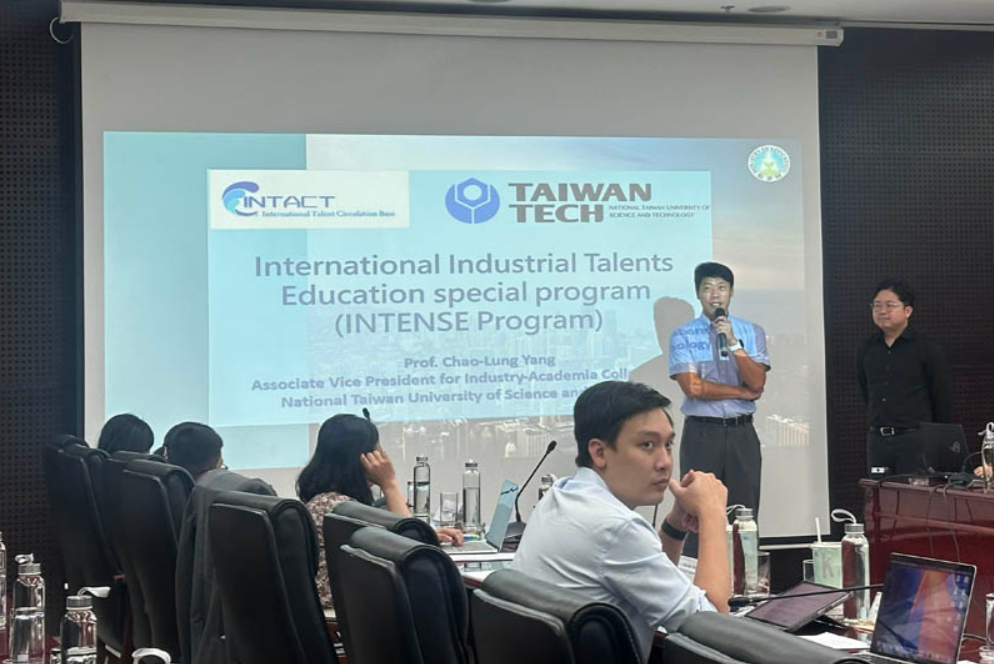
Yang Chao-Lung, Vice President for Industry–Academia Affairs at Taiwan Tech and project leader of the Taiwan–Vietnam Hub, held an information session on the New Program scholarship initiative at the Da Nang Investment Promotion and Support Center in Vietnam, attracting approximately 80 students, teachers, and parents.
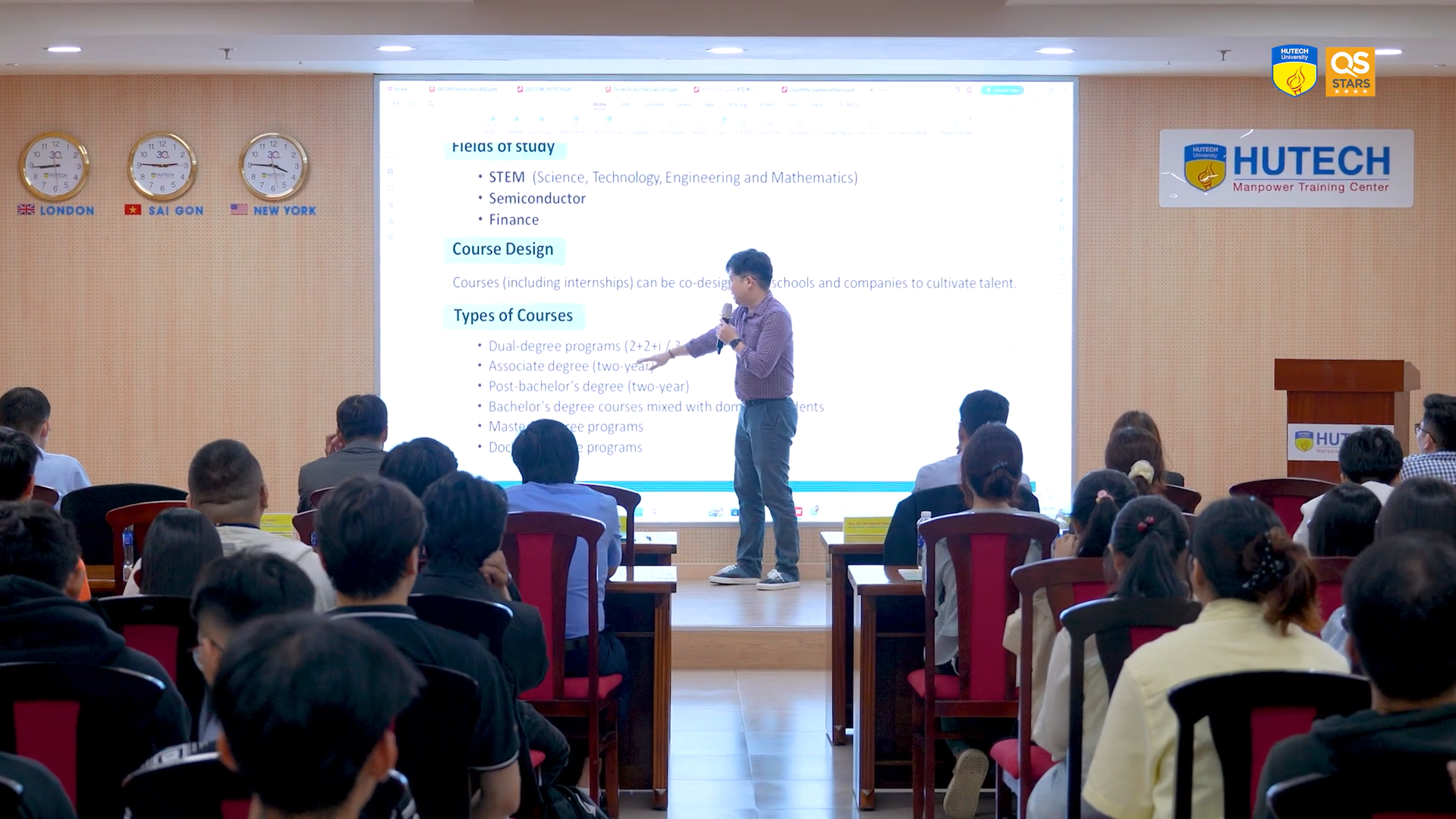
Professor De-Sheng Wu, co-lead of the Taiwan–Vietnam Hub INTENSE Program, introduced the New Program’s dual-degree and industry–academia collaboration courses at Ho Chi Minh City University of Technology (HUTECH), offering students diverse career development pathways.
In addition to recruitment and promotional activities, the Taiwan–Vietnam Hub also focuses on connecting students’ actual study experience with their subsequent career development. The Hub helps students gain early insights into corporate roles and continuously strengthens both online and in-person Mandarin courses to reduce dropouts caused by expectation gaps or language adaptation challenges. Chao-Lung Yang likened it to a scenario where an Ivy League program allowing Taiwanese students to study and work in the U.S. would naturally attract high enrollment; similarly, the New Program holds strong appeal for Vietnamese students.
In October of this year, the Taiwan–Vietnam Hub established an office at the National Innovation Center (NIC) in Hanoi, serving as the primary recruitment and cross-institutional coordination center for the New Program in Vietnam. A Ho Chi Minh City office is planned for next year at the Taipei Economic and Cultural Office (TECO) to enhance regional promotion. This year, the Hub has held 33 recruitment briefings in Hanoi, Ho Chi Minh City, and Da Nang, participated in cross-university education fairs and industry forums, and organized corporate matchmaking events to facilitate direct exchange of information between companies and universities, allowing them to understand talent cultivation systems and training processes.

In October of this year, the Taiwan–Vietnam Hub established an office in Hanoi, serving as the main recruitment and cross-institutional coordination center for the New Program in Vietnam, enhancing regional promotion efforts.
The Taiwan–Vietnam Hub not only strengthens Taiwan’s educational collaboration and overseas recruitment efforts in Vietnam but also helps Taiwan build a cross-border talent supply chain amid industrial transformation and growing workforce demand. Taiwan Tech will continue to support the Ministry of Education in advancing program recruitment, Mandarin instruction, and other initiatives in partnership with domestic and international collaborators, while assisting companies in establishing diverse and stable talent pipelines, thereby creating a sustainable international talent circulation model for Taiwan.
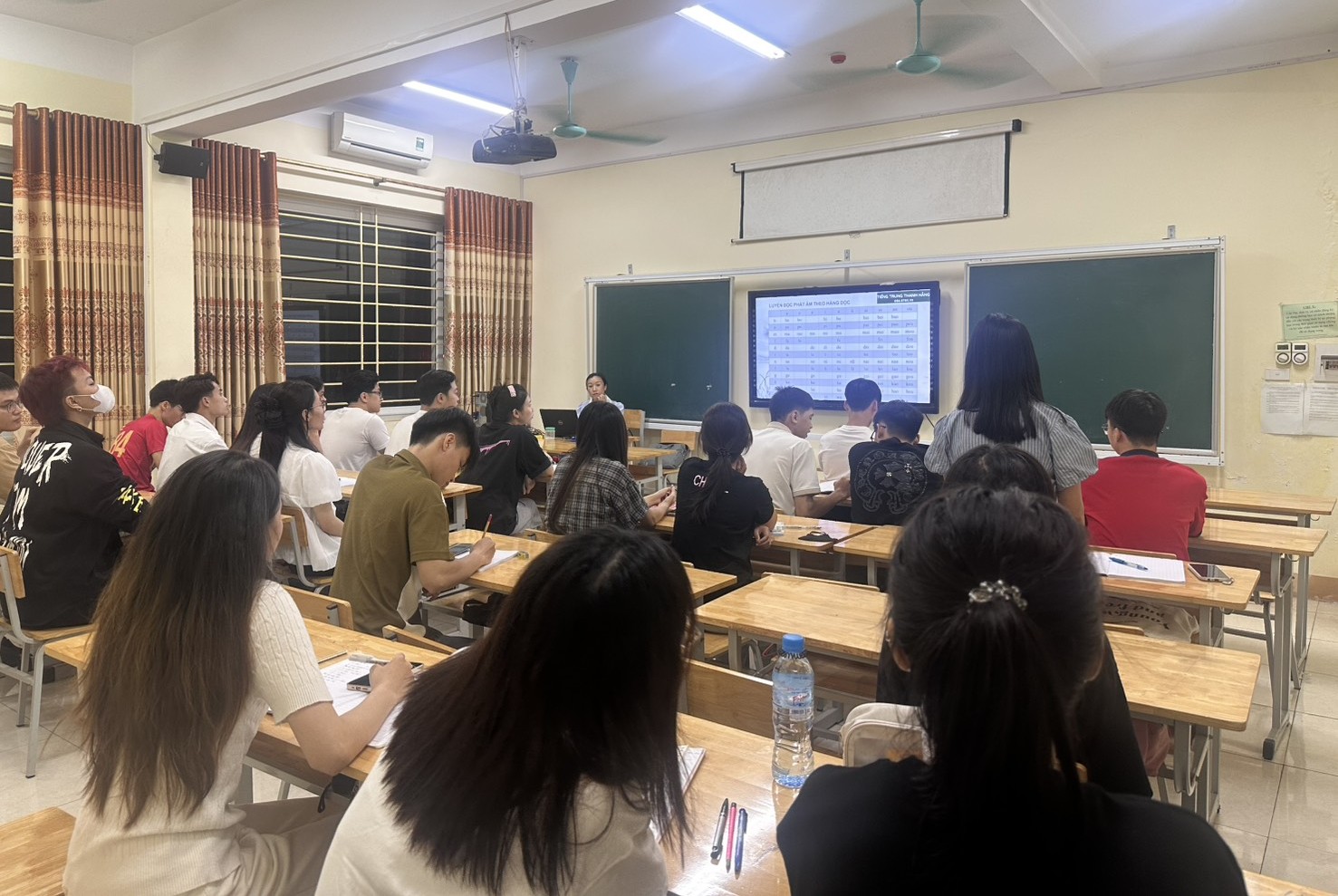
Offering free pre-departure Mandarin courses is one of the Taiwan–Vietnam Hub’s key initiatives, helping Vietnamese students develop the language skills needed for living, studying, and working in Taiwan. The photo shows a Mandarin class at Thai Nguyen University in Thai Nguyen Province, northern Vietnam.