Taiwan Tech hosts English “SDGs Tongue Twister Challenge” to promote sustainability awareness.[7 Jan. 2026]
Taiwan Tech actively promotes English-Medium Instruction (EMI) to strengthen students’ English proficiency and international communication skills. In addition to jointly organizing the EMI Technology and Academic Month to advance internationalized learning through diverse activities, the College of Electrical Engineering and Computer Science, the College of Engineering, the School of Management, and the College of Applied Sciences collaborated on November 28, 2025, to host the “Tongue Twisters: SDGs and Competition”. By combining fun English language challenges with the United Nations Sustainable Development Goals (SDGs), the event attracted enthusiastic participation from both local and international students. The activity not only showcased the achievements of cross-college collaboration but also aligned with Taiwan Tech’s EMI-driven internationalization initiatives, becoming a notable highlight in the promotion of sustainability education.
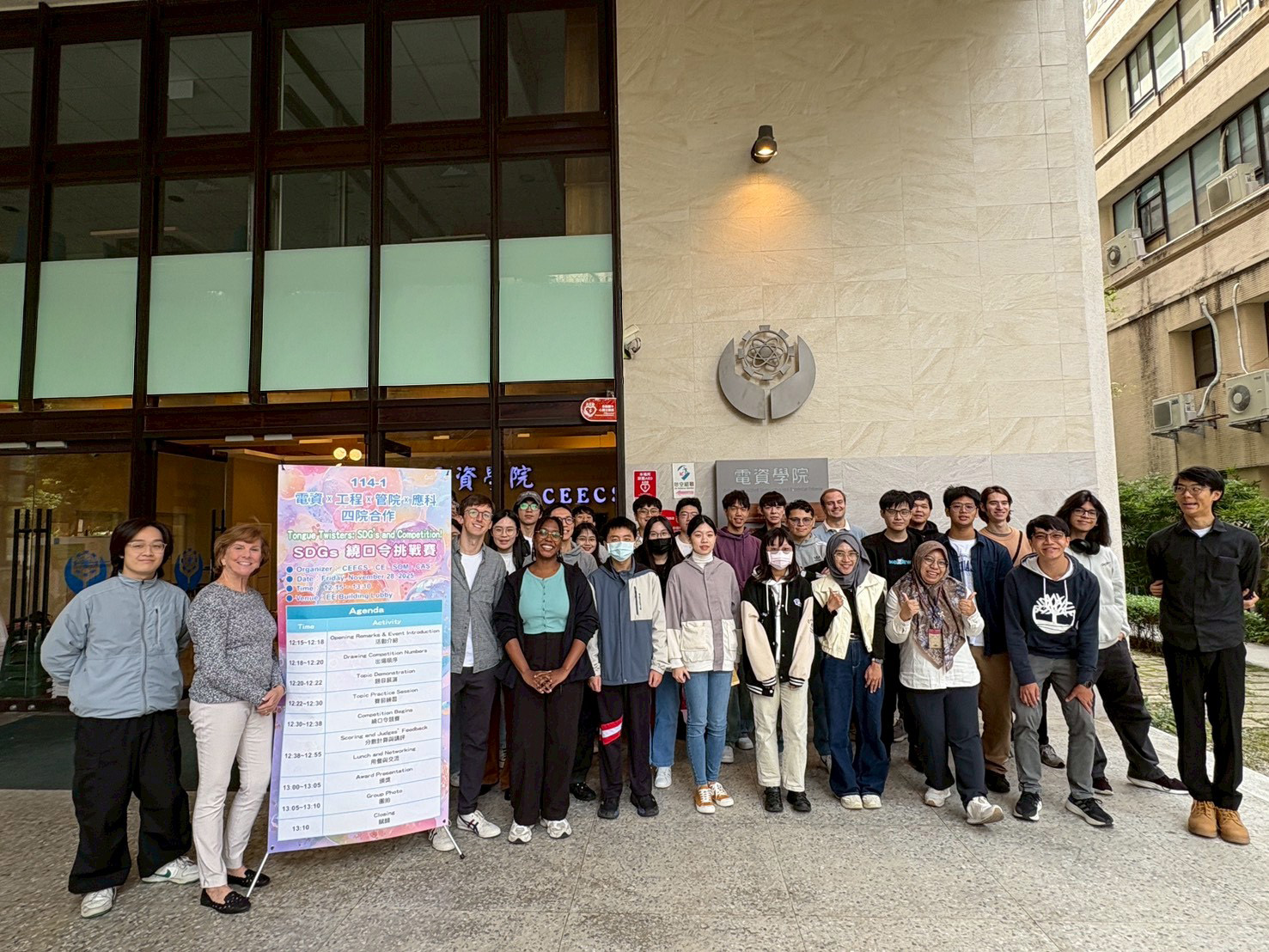
Group photo of all participants.
The event invited instructors from the Foundation for Scholarly Exchange (Fulbright) to introduce the event flow and competition rules entirely in English. The instructors also guided participants through group demonstrations and practice sessions, helping students become familiar with rhythm, pronunciation, and oral expression techniques for delivering tongue twisters in English. During the competition, students from each college took turns challenging each other with English tongue twisters. The judging panel evaluated participants based on three criteria: pronunciation, speed, and clarity, providing a comprehensive assessment of pronunciation accuracy, fluency control, and on-the-spot performance. Immediate feedback was offered after the competition to help students refine their English expression skills, reflecting the practical language competencies emphasized in EMI instruction.
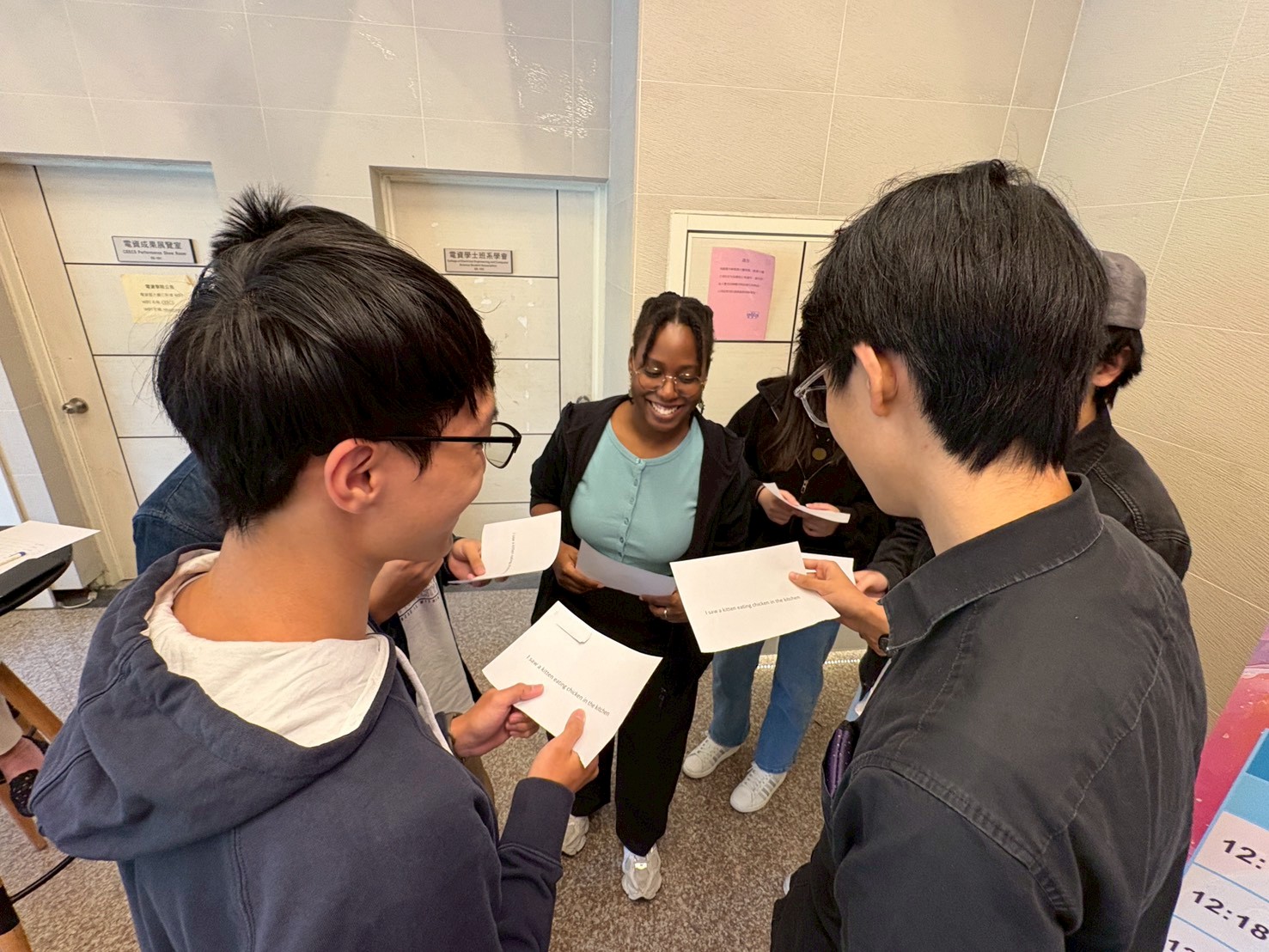
Fulbright instructors guiding participants in tongue twister practice.
Another highlight of the event was the active participation of international students, who attended the competition and engaged enthusiastically with local students. Through English-language discussions on sustainability-related topics, students from diverse cultural backgrounds exchanged perspectives, transforming the activity from a language contest into a platform for cross-cultural understanding and global engagement. This interaction vividly demonstrated the diverse and inclusive EMI campus environment fostered at Taiwan Tech.
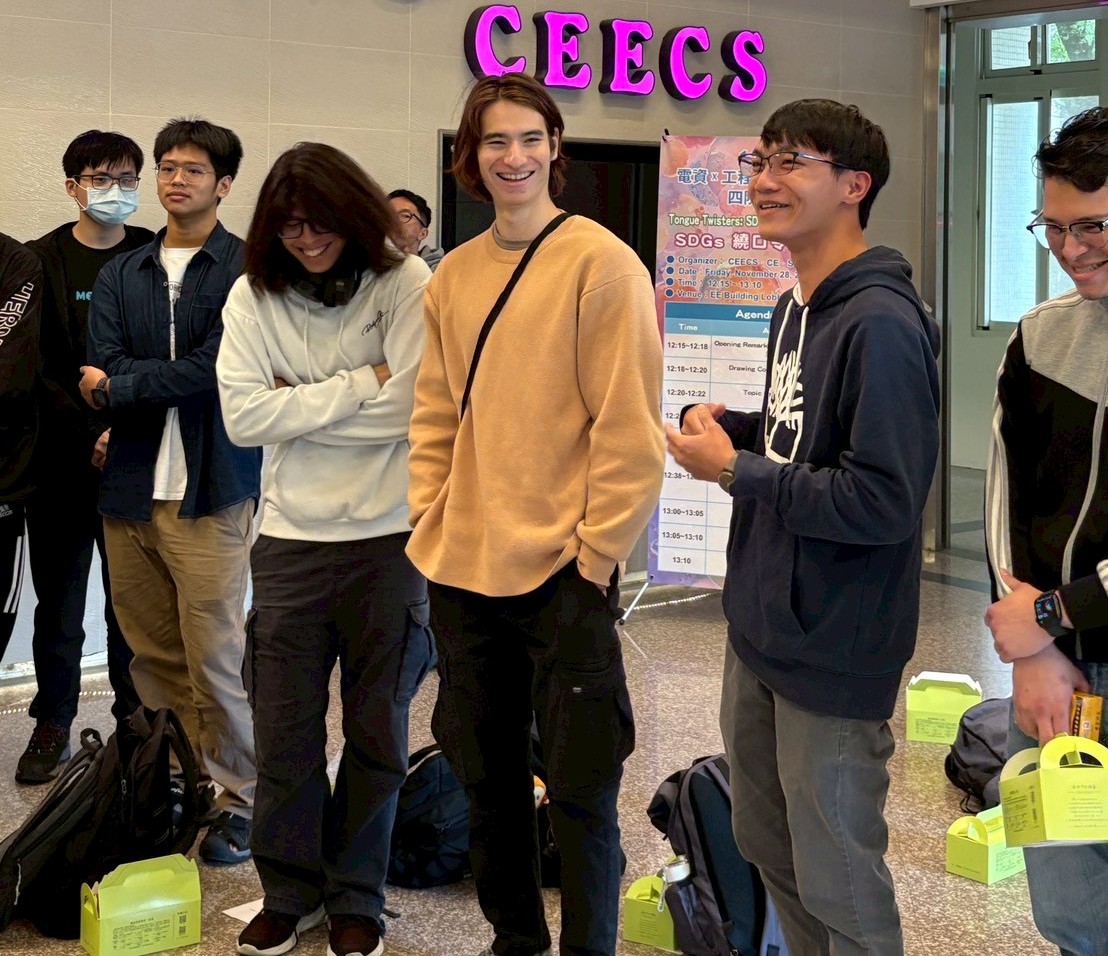
International and local students are engaging in lively discussions.
The latter part of the event featured an exchange and award ceremony session. In a relaxed, friendly atmosphere, students shared their language-learning experiences and insights into sustainability issues, further deepening interdisciplinary collaboration and enhancing international understanding. The event concluded with a group photo, marking a successful and memorable end to a language challenge that was both educational and enjoyable.
The four colleges - the College of Electrical Engineering and Computer Science, the College of Engineering, the School of Management, and the College of Applied Sciences - expressed their hope that innovative EMI-based language activities like this one would allow students to engage with the core values of the SDGs in a natural and dynamic English-language environment, while enhancing cross-cultural communication and global competence. Looking ahead, the colleges plan to continue collaborating on activities that integrate language learning, sustainability, and global issues, incorporating more elements to strengthen students’ English proficiency and international communication skills. Through these efforts, Taiwan Tech aims to create a campus environment with strong international characteristics, empowering students to broaden their global perspectives and develop the competencies needed to engage confidently with the world.
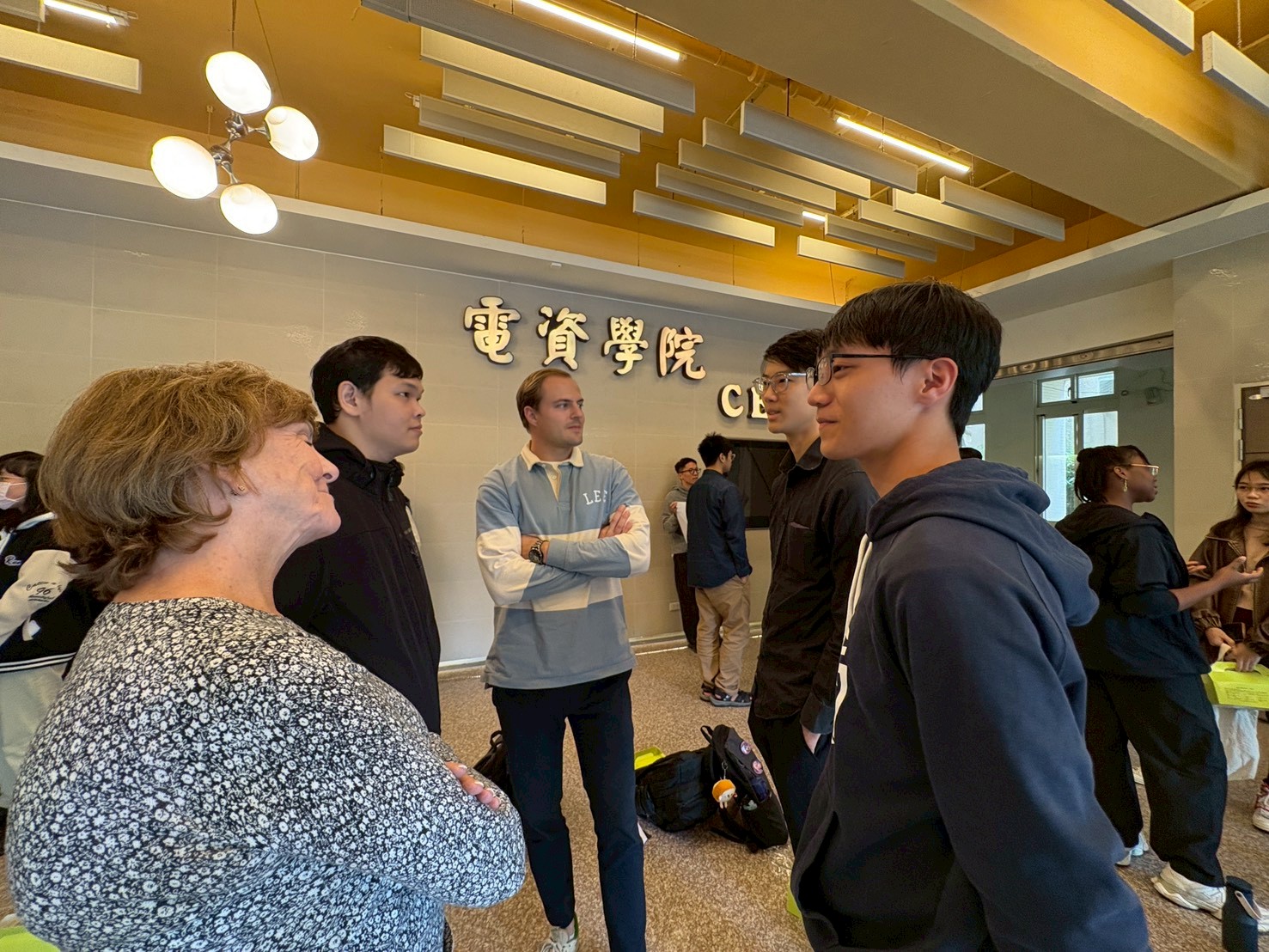
Local, international, and instructor students are engaging in active exchange.