Taiwan Tech and Alumni build eco-defense against biting midges, reviving a greener campus.[19 Feb. 2026]
In response to the problem of biting midges on campus, Taiwan Tech introduced the microbiome application technology developed by Dr. Hou-Te Wu of the Global Sustainable Creation Promotional Association for six months following last (Year 114) summer vacation. A “micro-ecological defense line” against biting midges was established on the large lawn in front of the School of Management, covering an area of 5,000 square meters. This approach centers on altering the soil microbiome by disrupting habitat ecology, cutting off the food chain of biting midges, inhibiting larval development, and interfering with adult reproduction. It establishes a natural and sustainable biological control mechanism that not only effectively reduces midge infestations but also contributes to the long-term health of the ecosystem.
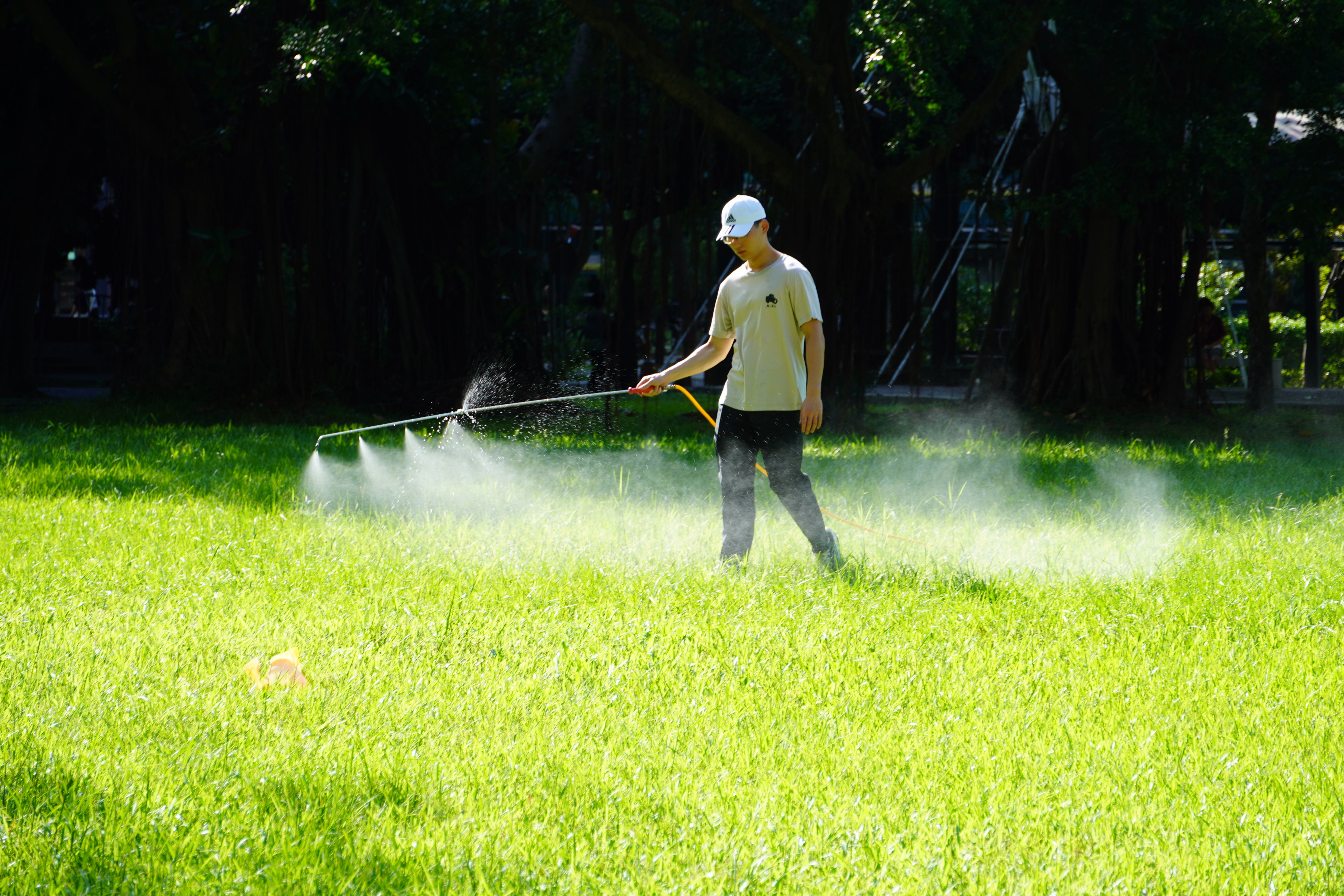
Taiwan Tech introduced microbiome application technology to establish a “micro-ecological defense line” against biting midges on the large lawn in front of the School of Management. The photo shows students from the Roots & Shoots Club assisting with spraying.
The smooth implementation of the biting midge control project was made possible first through the coordination efforts of distinguished alumnus Lung-An Lee, and special thanks are due to Hung-Yi Chen, President of the Alumni Association of Taiwan Tech, for his strong support and generous donation. Chen has long been concerned about the university’s development and places great importance on campus environmental improvement and sustainable governance, facilitating this exemplary cross-disciplinary collaboration that integrates alumni resources with scientific research applications.
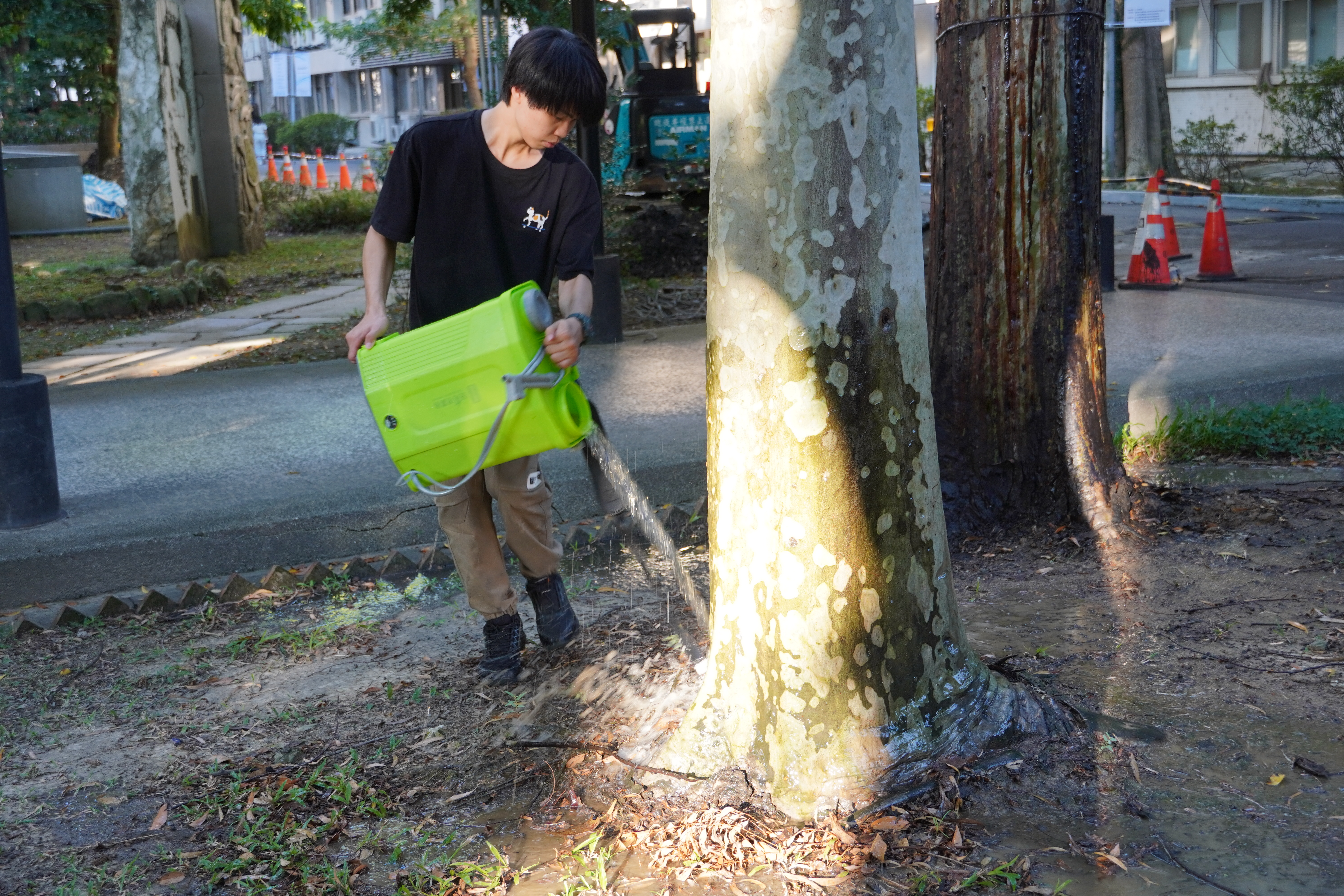
By improving the soil microbial composition, not only can the habitat conditions of insects be altered, but soil fertility can also be strengthened, effectively promoting the health and restoration of banyan tree root systems. The photo shows students from the Roots & Shoots Club assisting in banyan tree restoration.
Yu-Lin Kuo, Secretary-General of Taiwan Tech, stated that compared with traditional chemical control methods, the introduction of microbiome-based techniques is more environmentally friendly and harmless, taking into account both the health of faculty and students and environmental sustainability. The selected treatment site - the large lawn in front of the School of Management - is not only a frequently used outdoor activity area for students but also a key green space on campus. Through the integration of technology and ecology, the university hopes to create a more comfortable and pleasant learning and living environment.
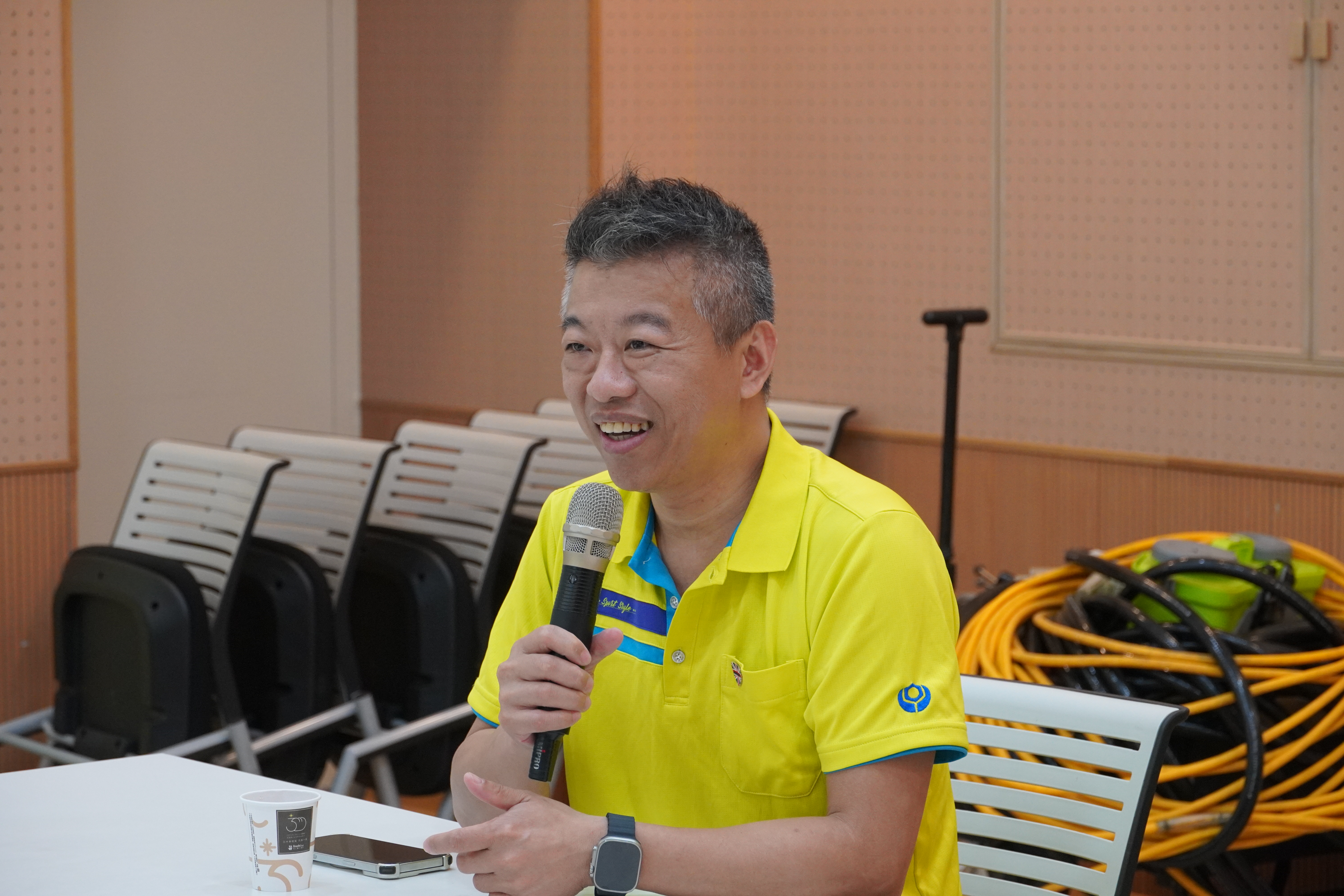
Yu-Lin Kuo, Secretary-General of Taiwan Tech, stated that compared with traditional chemical control methods, the introduction of microbiome-based techniques is more environmentally friendly and harmless, taking into account both the health of faculty and students and environmental sustainability.
In addition to controlling biting midges, Taiwan Tech has further applied microbiome technology to the conservation of banyan trees in front of Engineering Building I. This area, approximately 700 square meters, had been the most severely affected “banyan disaster zone”. By improving the soil microbial composition, not only can insect habitat conditions be altered, but soil fertility can also be strengthened, effectively promoting the health and restoration of banyan tree roots and realizing the sustainable concept that “protecting the soil is protecting the trees.” This initiative carries significance aligned with the “Life on Land” goal of the United Nations Sustainable Development Goals (SDGs), symbolizing the university’s concrete actions in promoting a green campus and ecological restoration.
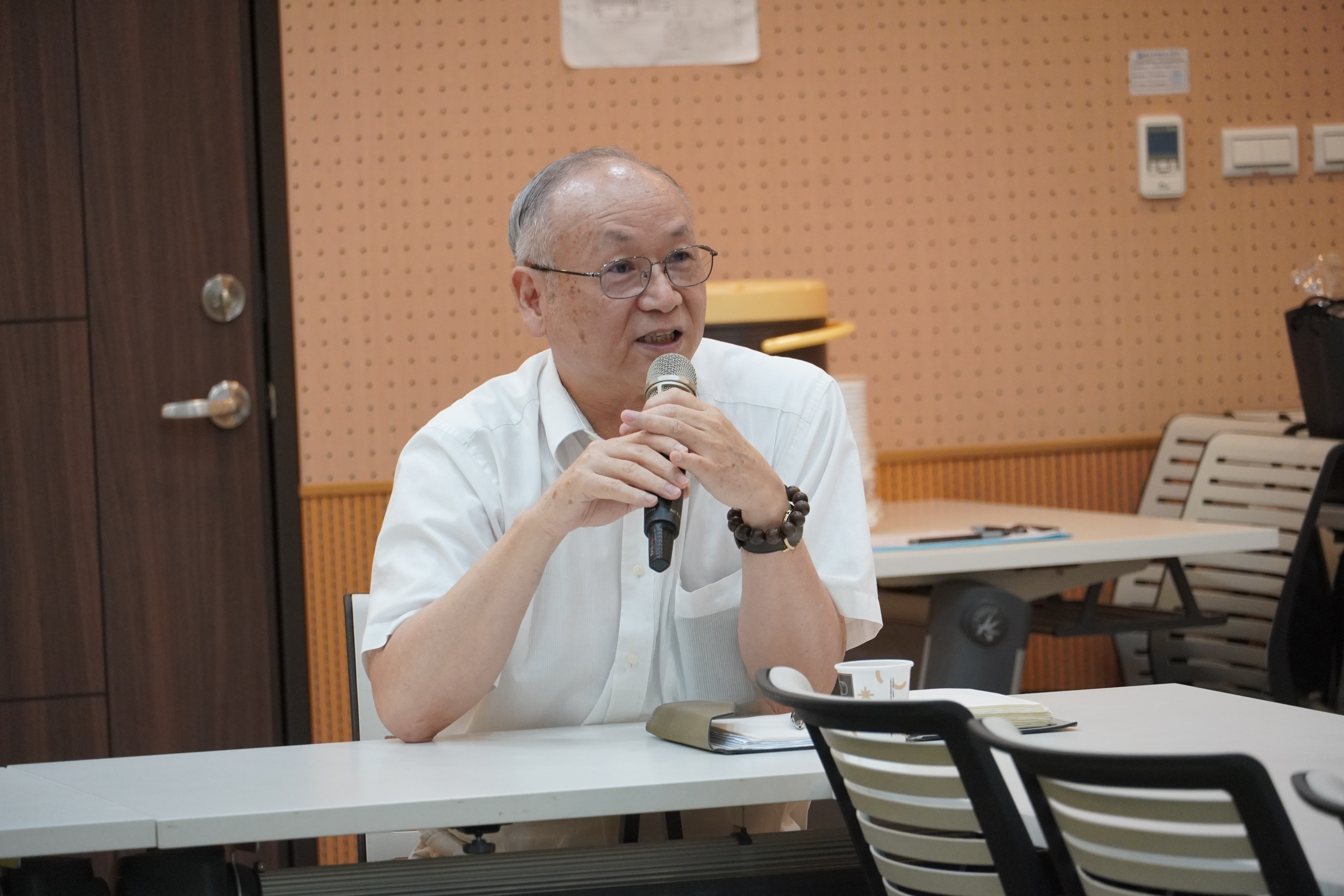
Hung-Yi Chen, President of the Alumni Association of Taiwan Tech, has long been concerned about the university’s development and places great importance on campus environmental improvement and sustainable governance, facilitating this exemplary collaboration integrating alumni resources with scientific research applications.
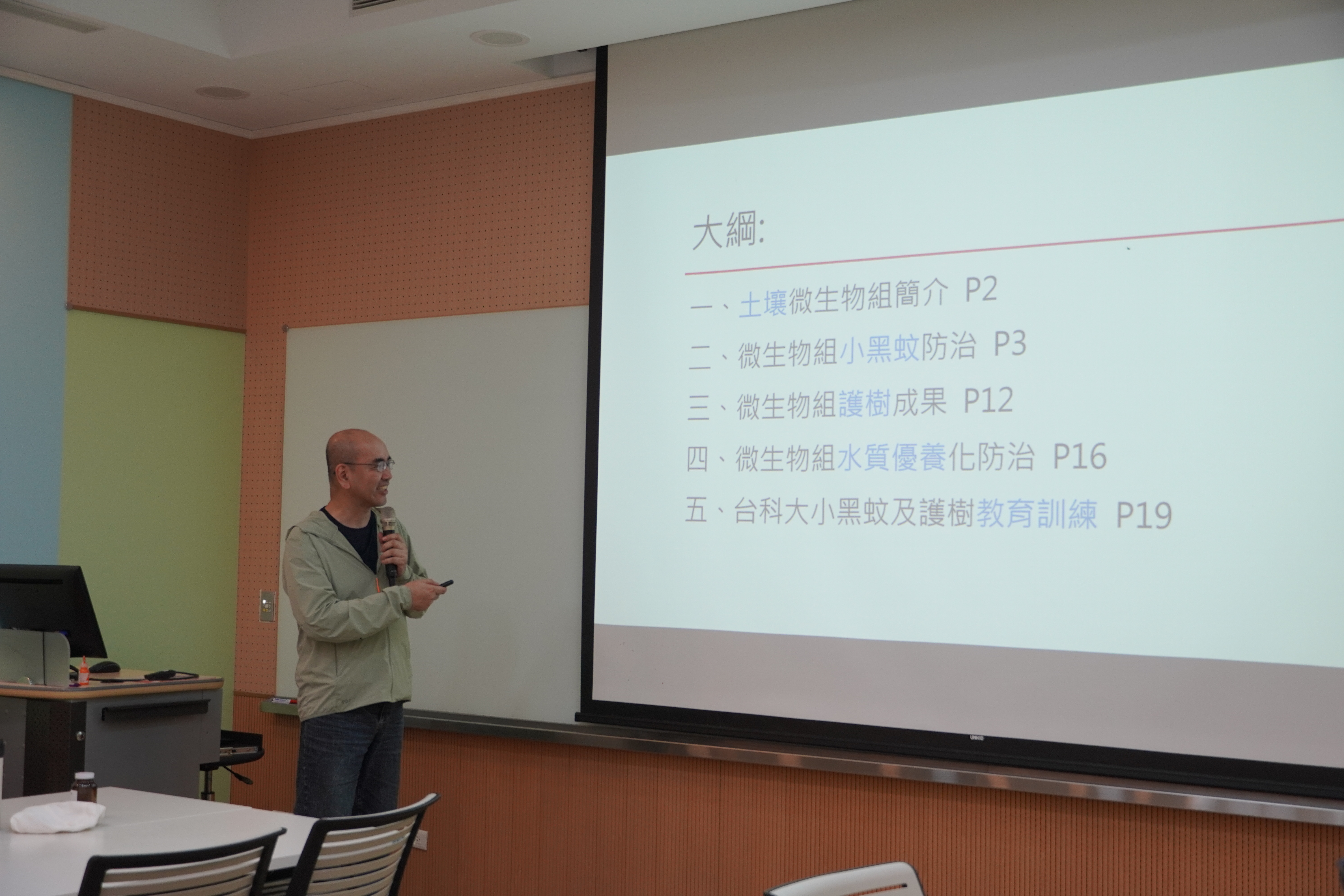
Dr. Hou-Te Wu of the Global Sustainable Creation Promotional Association introduced the microbiome application technology during a training session.
Hung-Yi Cheng, President of the Roots & Shoots Club at Taiwan Tech and a sophomore in the Department of Mechanical Engineering, said that he initially thought the activity was merely routine chemical spraying. Only after attending meetings prior to formal implementation did he truly understand its importance for the environment and campus soil ecology. After more than a month of spraying, there have been almost no further reports of biting midges around the treated area. As the soil became healthier, campus trees became another clear beneficiary. Through ongoing restoration efforts for the trees beside Engineering Building I, it has been observed that even in winter, the leaves have become greener and more luxuriant. Witnessing the campus gradually improve through their collective efforts has been an indescribable joy.
In addition, Taiwan Tech plans to expand the application of this microbiome treatment technology to Indigenous communities. The “Action Engineer Team”, which has long been engaged in the Dong’ao area of Yilan County, has already established strong partnerships with local communities. In the future, the team hopes to introduce this technology to help address the impact of biting midges on residents’ daily lives, applying technological expertise to improve environmental sanitation in rural areas and fulfill University Social Responsibility (USR) while fostering mutual prosperity with Indigenous communities.
Yu-Lin Kuo emphasized that the university will continue leveraging its technological expertise to promote eco-friendly measures, integrating alumni support, Indigenous engagement, and sustainability principles to build a greener campus that is more resilient and socially responsible, demonstrating the university’s forward-looking actions and social contributions in addressing climate and ecological challenges.
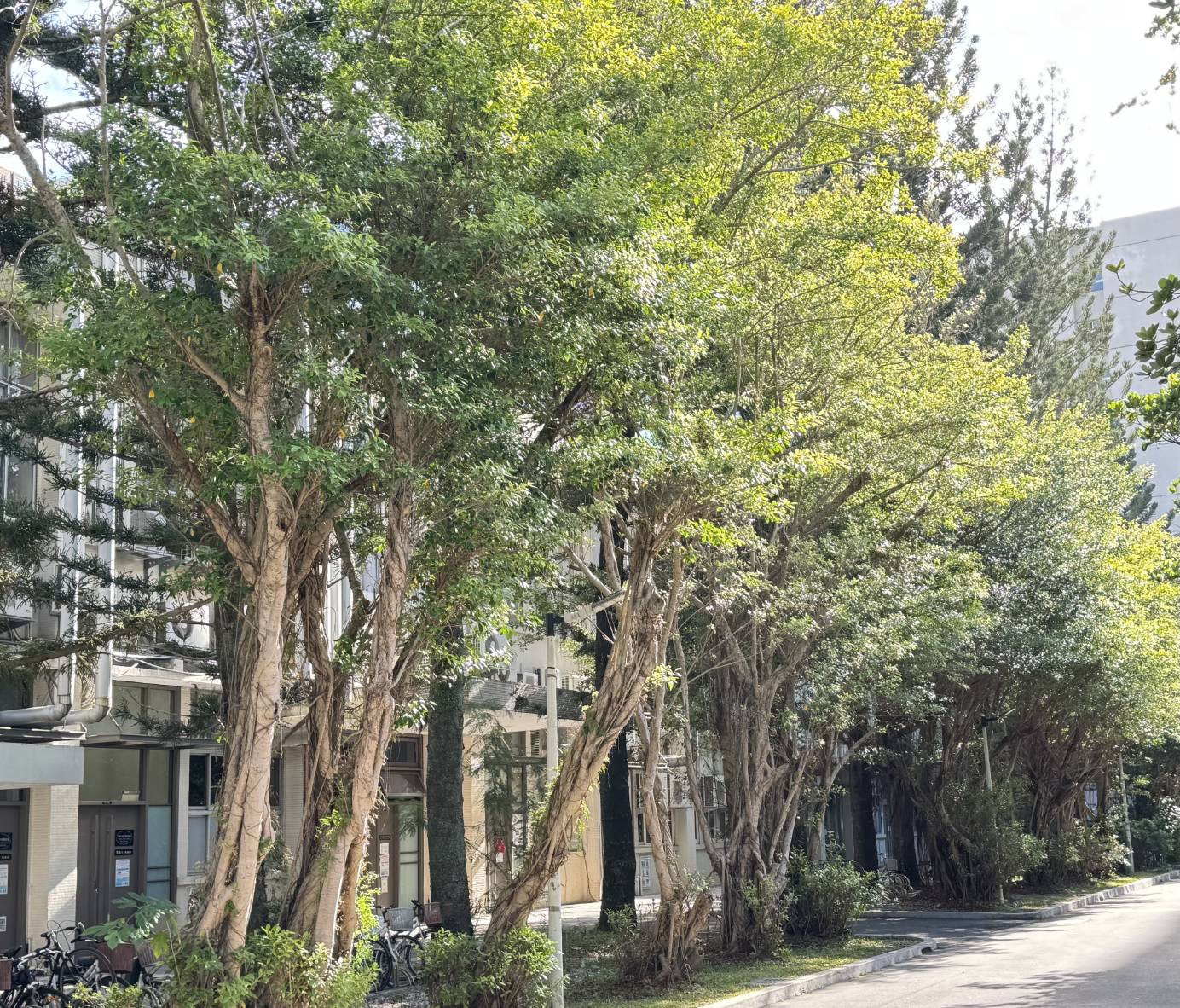
The scene of banyan tree restoration beside Engineering Building I on December 23.