Taiwan Tech advances bilingual education with 12 EMI achievements boosting international academic exchange.[25 Mar. 2026]
Taiwan Tech is actively advancing bilingual higher education, focusing on optimizing English-Medium Instruction (EMI) courses and deepening research and development in bilingual education. In response to Taiwan’s “2030 Bilingual Policy” led by the Ministry of Education, Taiwan Tech’s Office of Bilingual Education Initiatives hosted the “2026 2nd Bilingual Education Research Showcase”, inviting six domestic and international experts to present 12 research projects. Through dialogue and practical exchange, the event aims to implement strategies and strengthen the development of bilingual education in Taiwan.
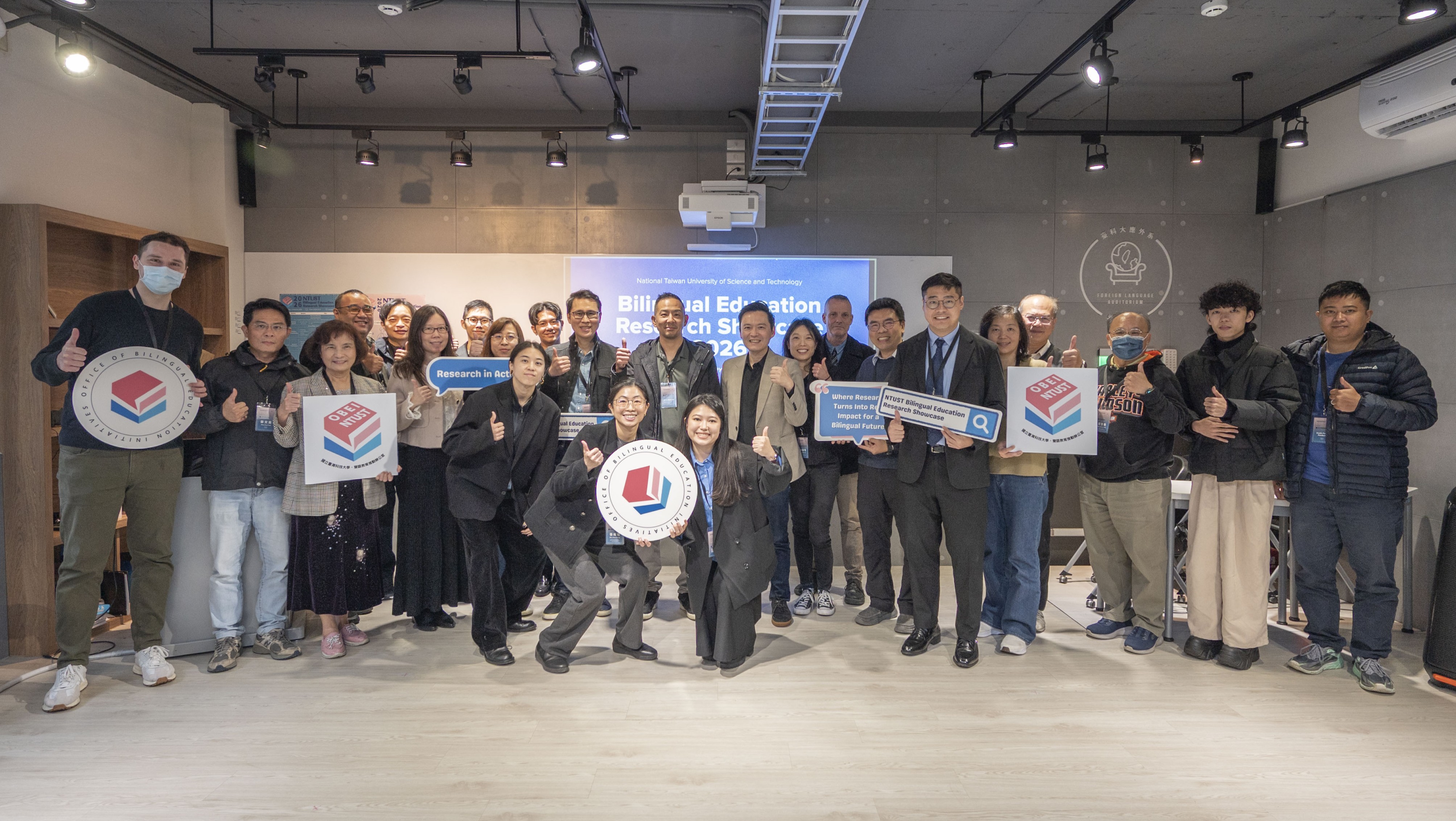
Group photo of the “2026 Taiwan Tech Bilingual Education Research Showcase.”
Professor Shao-Ting Hung, Executive Director of the Office of Bilingual Education Initiatives, emphasized that sustainable bilingual education and EMI development must be grounded in academic evidence. “Only initiatives built on rigorous research can generate long-term and stable impact.” He noted that the annual showcase and academic reviews not only promote exchange but also accumulate critical knowledge and experience for Taiwan’s bilingual education.
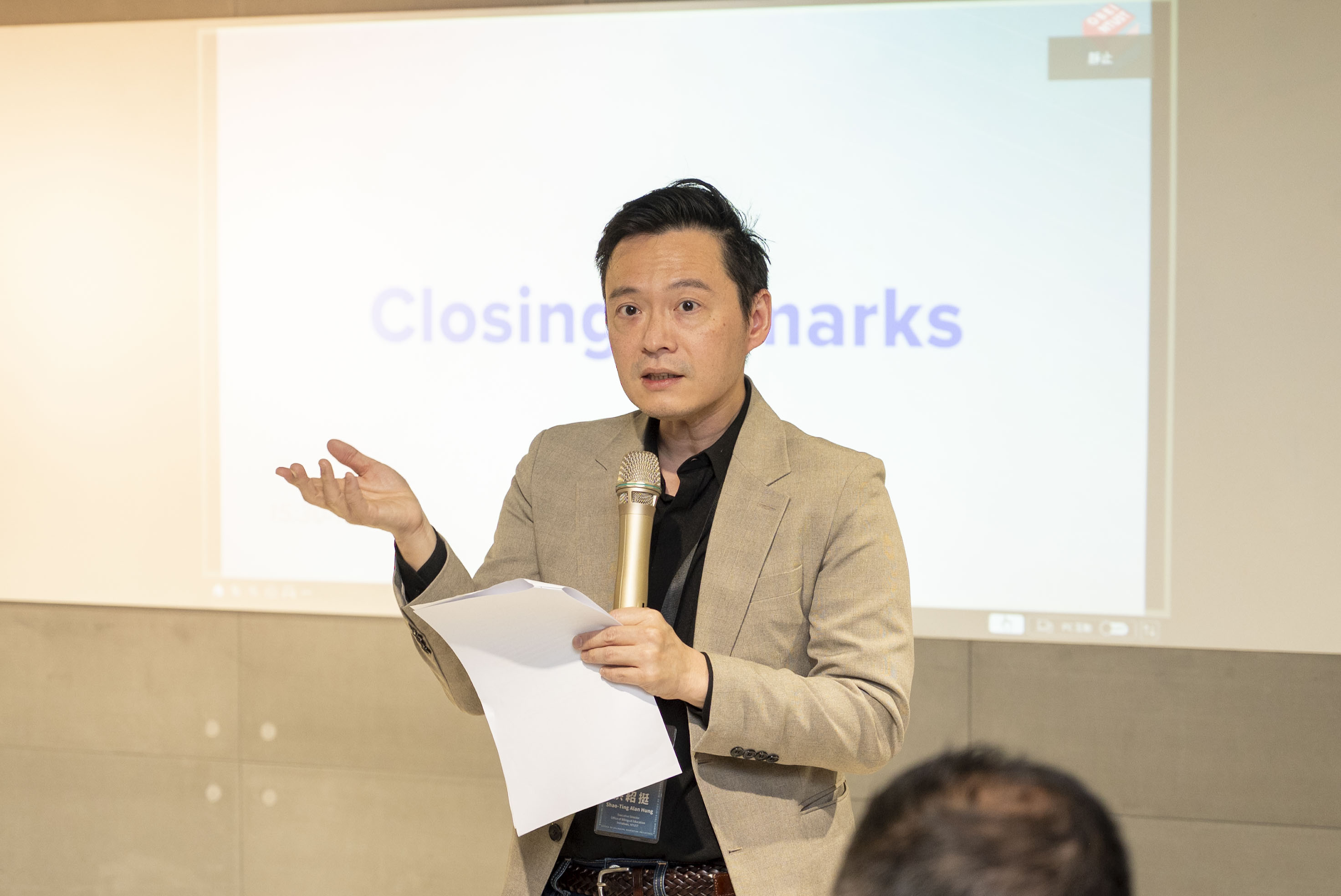
Professor Shao-Ting Hung further pointed out that sustainable bilingual education and EMI development must be evidence-based and continuously refined through critical reflection and rigorous research.
The event featured a keynote speech by Jerry Won Lee, Director of the Program in Global Languages & Cultures at University of California, Irvine, titled “Translanguaging as Language Policy?” Drawing on perspectives from language policy and multilingual practices, Professor Lee explored the role and significance of translanguaging in contemporary higher education and analyzed the opportunities it presents in EMI teaching contexts, offering new insights for participants.
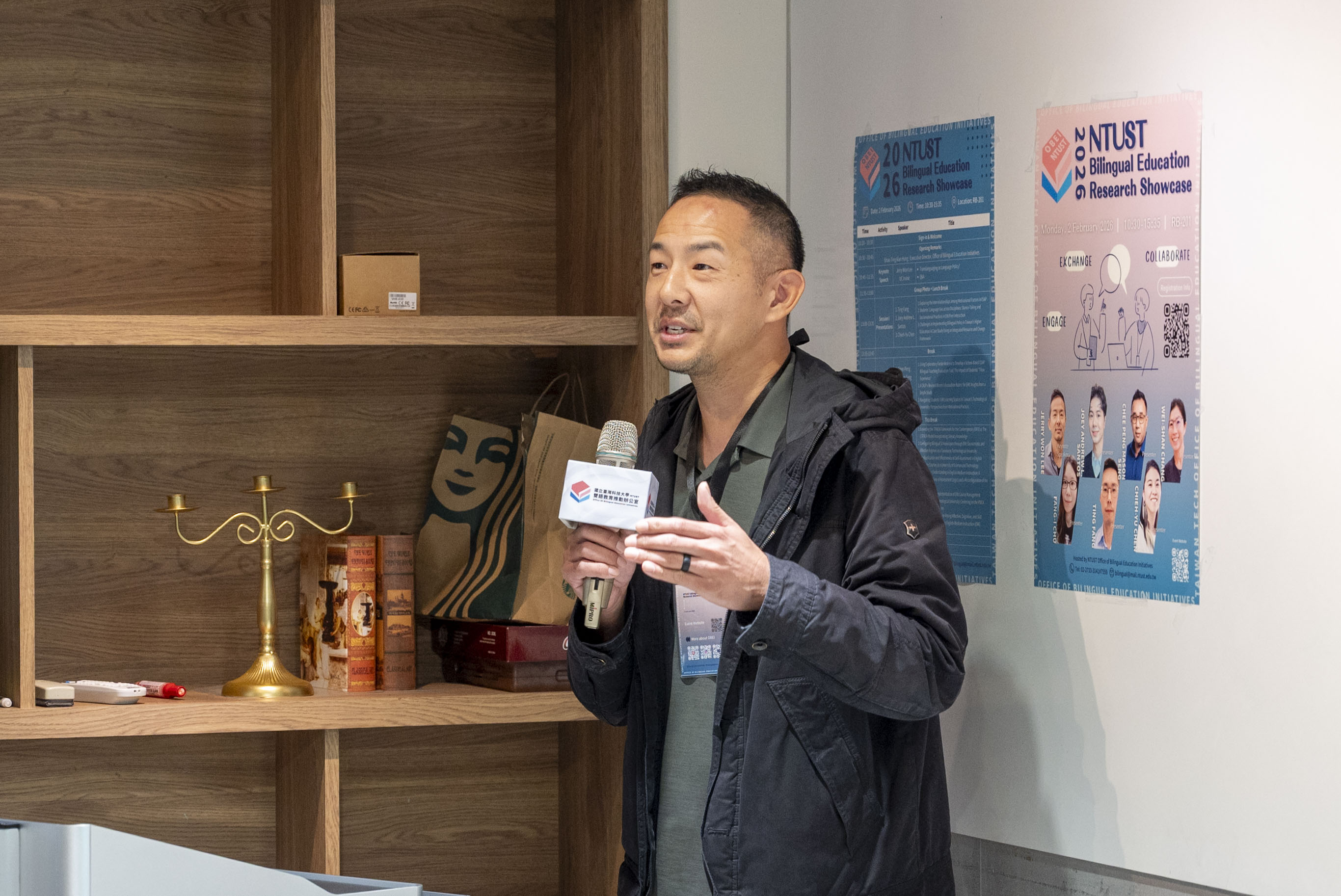
Professor Jerry Won Lee from University of California, Irvine examined the possibilities and challenges of translanguaging in modern higher education.
In addition, the bilingual office’s research team presented 12 studies, including six completed and six ongoing projects. Topics covered EMI course quality and assessment design, teaching practices, bilingual policy and institutional analysis, student learning outcomes, and language development. Completed studies were presented in formal academic presentation formats, while ongoing research was discussed in roundtable forums, encouraging interactive dialogue between scholars and research teams to generate new perspectives and ideas.
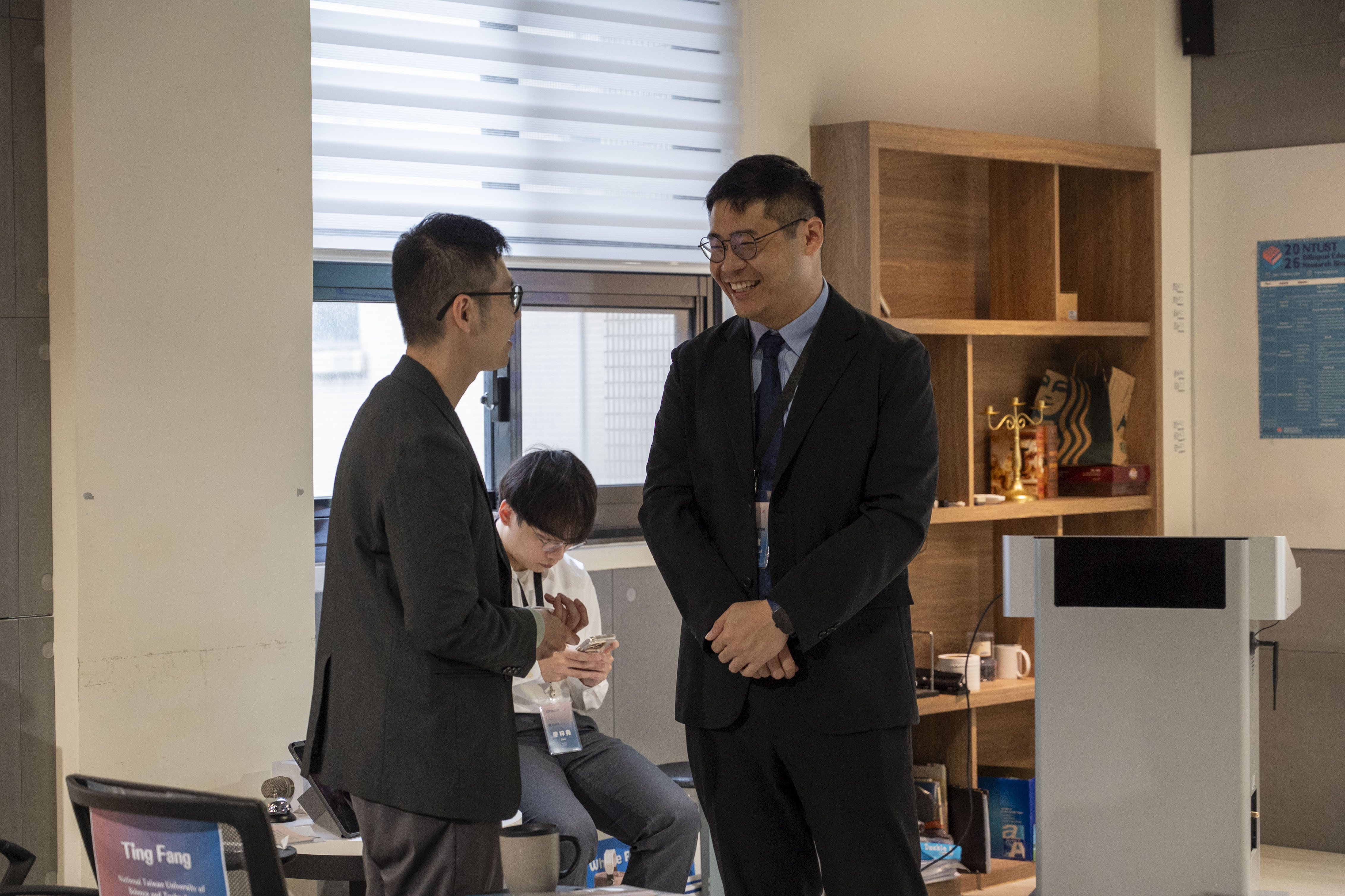
At the conference, Ting Fang, Assistant Professor at the Language Center, and Kuo-Wei Lai, Lecturer from the Foreign Language Education Division of the Office of Academic Affairs at National Taiwan Normal University, exchanged insights on bilingual education research and teaching practices.
Professor Shao-Ting Hung also invited five scholars to serve as discussants, including Jung-Hsien Lin, Director of the Intercultural Communication Lab (VR Lab) at University of California, Irvine; Li-Tang Yu, Associate Professor and Chair of the Department of English Instruction at National Tsing Hua University; Hui-Tzu Hsu, Assistant Professor at the Language Center of National Chung Cheng University; Heng-Tsung Huang, Associate Professor in the Department of Foreign Languages and Literatures at National Taiwan University; and Kuo-Wei Lai from National Taiwan Normal University.
Professor Jerry Won Lee noted that the Bilingual Education Development Office has successfully created a dynamic academic exchange platform, enabling EMI implementation to progress responsibly while maintaining educational quality. Lin Jung-Hsien, who was invited as a keynote speaker last year, added that this year’s conference not only demonstrated how EMI operates in classrooms but also bridged policy and practice, enriching students’ learning experiences.
Through the public presentation of 12 research results and professional commentary from cross-institutional scholars, the “Bilingual Education Research Showcase” showcased Taiwan Tech’s solid foundation in bilingual education research. It also signifies that Taiwan Tech is entering a mature stage in bilingual higher education research with growing capacity for international dialogue. Moving forward, the university will continue integrating interdisciplinary research across colleges, enhancing EMI quality, expanding international collaboration and inter-university exchange, and ensuring that research outcomes not only address teaching and policy needs but also serve as a foundation for global academic engagement.
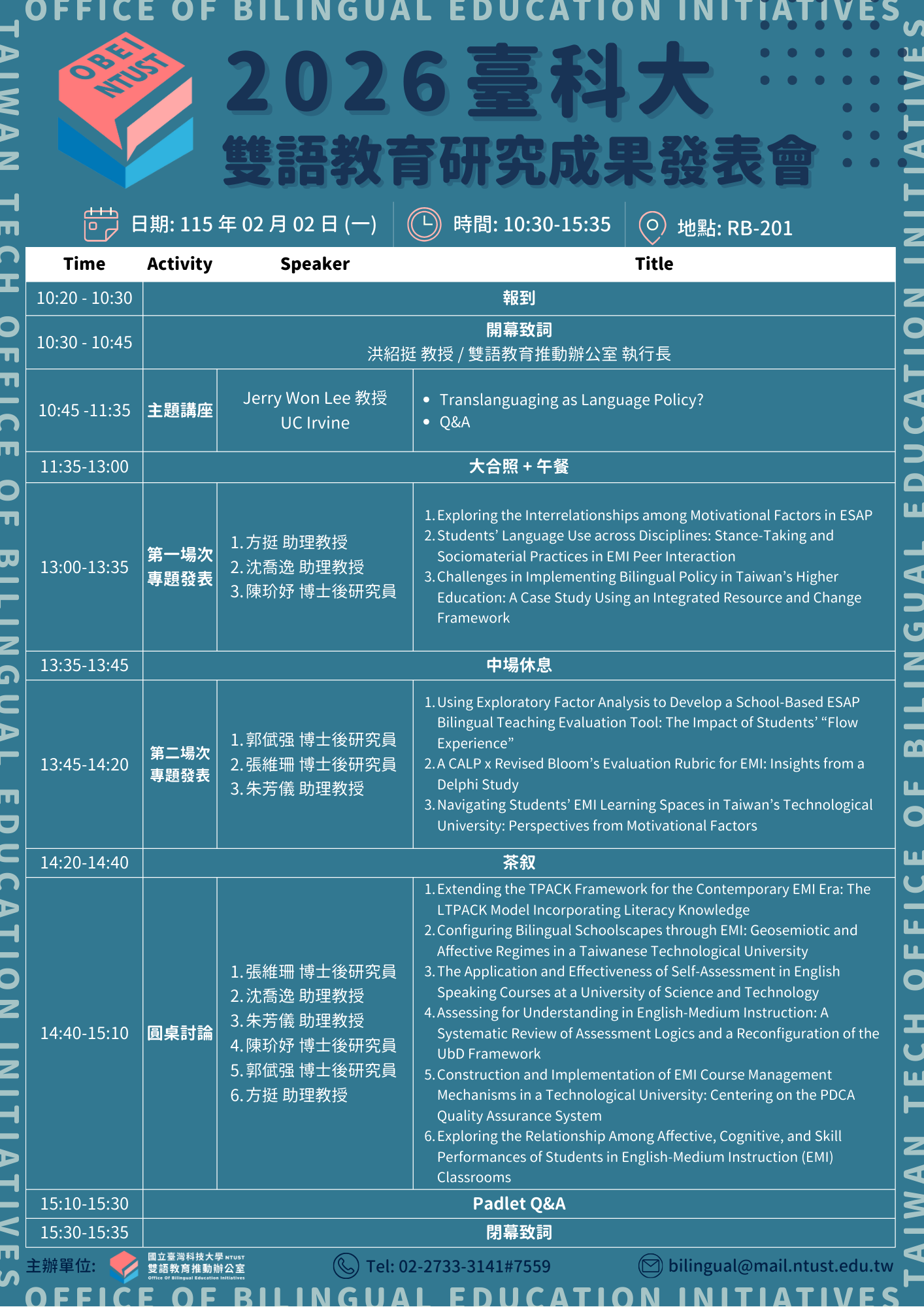
Program information for the “2026 Taiwan Tech Bilingual Education Research Showcase”.
For more details, please visit the event website: https://sites.google.com/view/bilingualresearchshowcase2026/home?authuser=0
Event Highlights Video: https://youtu.be/WA8_Jwodw1A