


Taiwan Tech strengthens academic talent through a decade of faculty development strategy.[30 Jun. 2026]
To address the growing wave of faculty retirements and the intense global competition for advanced STEM and interdisciplinary talent among universities, research institutions, and high-tech industries, Taiwan Tech plans to implement the Ministry of Education's Higher Education Talent Sustainability Development Program. Through this initiative, Taiwan Tech aims to strategically recruit distinguished scholars and practice-oriented experts in key fields, strengthening its research capacity and expanding industry-academia collaboration.
Taiwan Tech currently has 218 faculty members under the age of 55, accounting for 53.6% of its academic staff, while 112 faculty members are aged 60 or above, representing 27.5%. Based on its current workforce structure, approximately 101 faculty members are expected to reach retirement age within the next five years, signaling a significant generational transition. At the same time, salaries offered to specialists in strategic fields by international academia and industry often exceed those available under Taiwan's higher education pay scale, making it increasingly challenging for universities to attract top talent. Through the proposed program, Taiwan Tech aims to establish a more competitive recruitment framework to attract internationally recognized researchers and professionals with substantial industry experience, thereby enhancing teaching excellence, research performance, and industry engagement.
Following approval by the University Council on June 12, 2026, Taiwan Tech plans to implement the initiative over a 10-year period with a total budget of approximately NT$286 million, including an application for NT$216 million in funding from the Ministry of Education. In addition, the university will contribute an extra NT$50 million to support its InnoLeap Program for cultivating early-career scholars. During the first five-year phase, Taiwan Tech plans to recruit 75 faculty members in strategic disciplines, primarily focusing on engineering and information and communications technology (ICT). Approximately 48 positions will target key areas such as semiconductors, smart manufacturing, and ICT, strategically strengthening the university's core research capabilities and long-term competitiveness.
Recognizing the different roles of academic leaders, established researchers, and emerging scholars, Taiwan Tech will adopt a four-tier recruitment framework (S, A, B, and C), with differentiated incentive packages based on candidates' achievements, research capacity, and future potential. The S and A categories are intended for internationally distinguished scholars and highly productive researchers, while the B category targets experienced teaching and research professionals. The C category focuses on recruiting promising early-career academics with strong long-term development potential.
In addition to statutory salaries and existing university merit-based compensation, recruitment incentives will range from NT$2 million for Category C (NT$1.2 million upon appointment plus NT$800,000 for retention), NT$3 million for Category B (NT$1.8 million plus NT$1.2 million), NT$5 million for Category A (NT$3.6 million plus NT$1.4 million), and up to NT$6 million for Category S (NT$4.2 million upon appointment plus NT$1.8 million for retention). This tiered system is designed to balance the recruitment of immediately impactful scholars with the long-term cultivation of future academic leaders.
Taiwan Tech President Jia-Yush Yen stated that the university is committed to serving as an institutional platform for internationally oriented applied research and industry translation. The recruitment strategy is designed to address Taiwan's evolving higher education needs by attracting international researchers, scientists from public research institutes, and industry professionals who are not currently employed as full-time faculty members at Taiwanese universities. Particular emphasis will be placed on mid-career scholars with proven research achievements, industry influence, and leadership experience. Unlike researchers whose careers are driven primarily by high-impact publications, these professionals often value institutional stability, real-world research impact, and long-term societal contributions.
Taiwan Tech has long emphasized practice-oriented teaching and research while institutionalizing strong connections between faculty and industry. Under university policy, full-time faculty members are required to accumulate at least 180 days of industry-related professional engagement every six years through activities such as collaborative research projects, industrial consulting, corporate governance participation, or intensive professional training, ensuring that teaching and research remain aligned with evolving industrial needs.
Despite having only 587 full-time faculty members in the second semester of the 2025–2026 academic year, Taiwan Tech completed 653 industry-academia collaboration projects in 2025, generating NT$887.6 million in funding. Of these, 428 projects were funded by private-sector partners, totaling NT$510.3 million. The university also generated approximately NT$64.85 million in technology transfer revenue during the same year. Furthermore, 69 Taiwan Tech scholars were included in Stanford University's latest World's Top 2% Scientists list, demonstrating the university's outstanding research excellence and global academic influence.
As global competition for top academic talent continues to intensify, Taiwan Tech will further strengthen its talent recruitment and development strategies by leveraging its established advantages in industry collaboration and internationally competitive research. Through long-term, forward-looking faculty planning, the university aims to build a world-class academic community that combines research excellence with industrial impact while supporting Taiwan's technological innovation and the development of key industries.
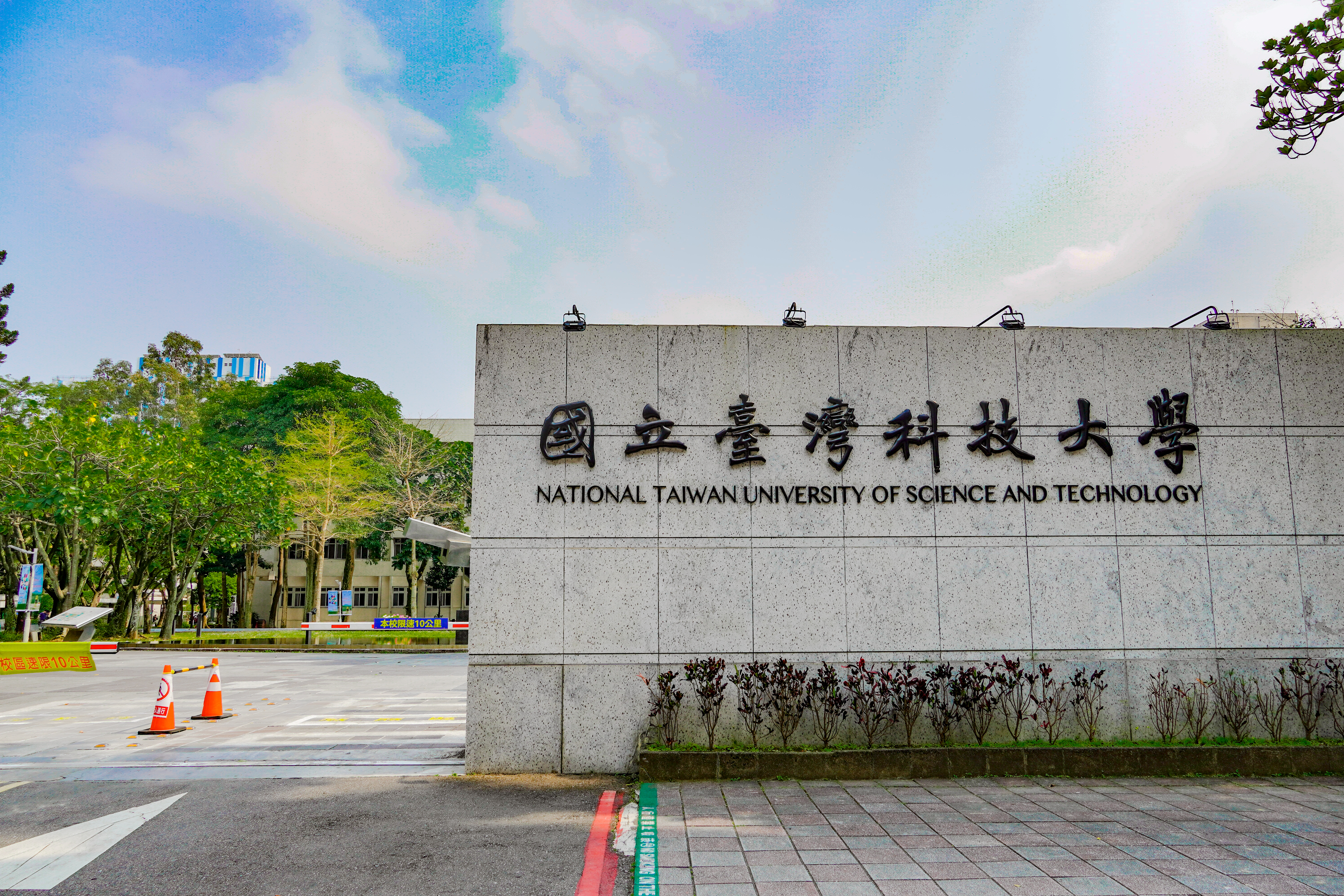
Taiwan Tech plans to leverage the Ministry of Education's Higher Education Talent Sustainability Development Program to strategically recruit distinguished scholars and practice-oriented experts in key fields, strengthening research excellence and industry-academia collaboration.


