


Professors Min-Hsin Yeh and Yi-Jia Lin from Taiwan Tech win Ta-You Wu Memorial Awards for Electrochemistry and AI Sports Science.[29 Sep. 2026]
The National Science and Technology Council’s Ta-You Wu Memorial Award recognizes young researchers with outstanding research achievements and strong potential for future development. In 2026, two researchers from Taiwan Tech received this prestigious honour: Associate Professor Min-Hsin Yeh of the Department of Chemical Engineering and Assistant Professor Yi-Jia Lin of the Graduate Institute of AI Cross-disciplinary Technology. Professor Yeh focuses on sustainable energy and electrochemical technologies, exploring new materials and technologies for energy conversion, storage and energy-efficient applications. Professor Lin combines wearable sensing with sports science to develop AI-based systems that create personalised training programmes and injury-prevention strategies for athletes.
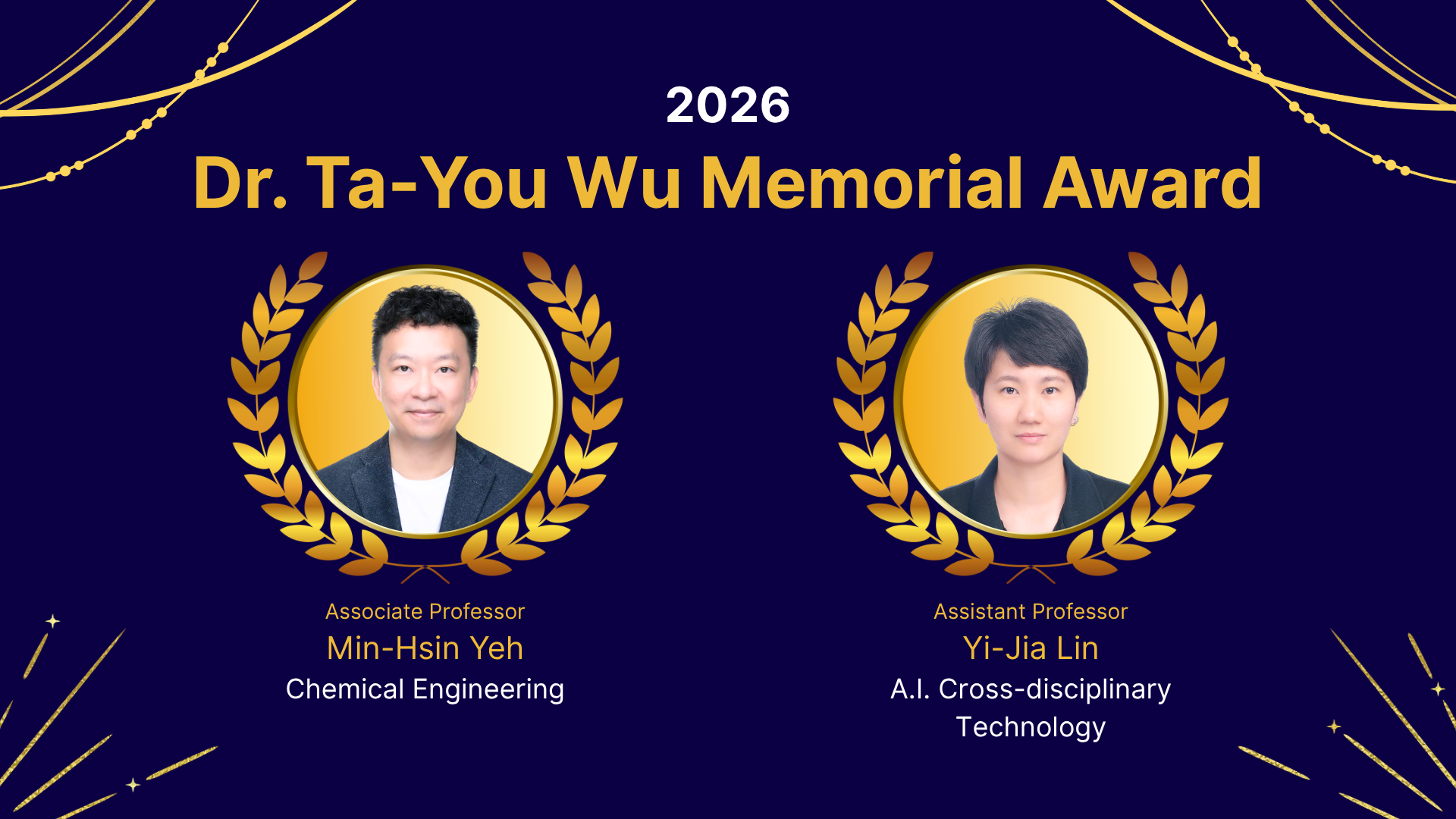
Associate Professor Min-Hsin Yeh of the Department of Chemical Engineering and Assistant Professor Yi-Jia Lin of the Graduate Institute of Interdisciplinary AI Technologies receive the 2026 Ta-You Wu Memorial Award.
Professor Yeh’s research covers sustainable energy harvesting and storage, the development and application of electrocatalysts, and self-powered electrochemical systems. He believes Taiwan is moving towards a low-carbon, high-recycling and sustainable future, and that electrochemical technologies have considerable development potential. However, cost remains a major challenge to their industrial adoption. His research therefore goes beyond investigating materials themselves to examine reaction mechanisms in depth, seeking alternatives to precious metals and stable manufacturing processes that can lower barriers to practical application.
“What if universities don’t pursue this research? Who will?” Professor Yeh, who has taught at Taiwan Tech for eight years, said that academic research sometimes needs to anticipate industrial needs. Although early-stage research into emerging technologies may seem highly speculative, it still has scientific value. Given the difficulty of predicting future demands, he aims to develop initial concepts and prototypes, then refine and improve them continuously so that they can be integrated into industrial processes more quickly when relevant needs emerge.
Professor Yeh has published 160 SCI-indexed papers, which have received more than 11,500 citations. His h-index is 54, and his average Field-Weighted Citation Impact (FWCI) is 3.84, demonstrating both the quantity and quality of his scholarly output.
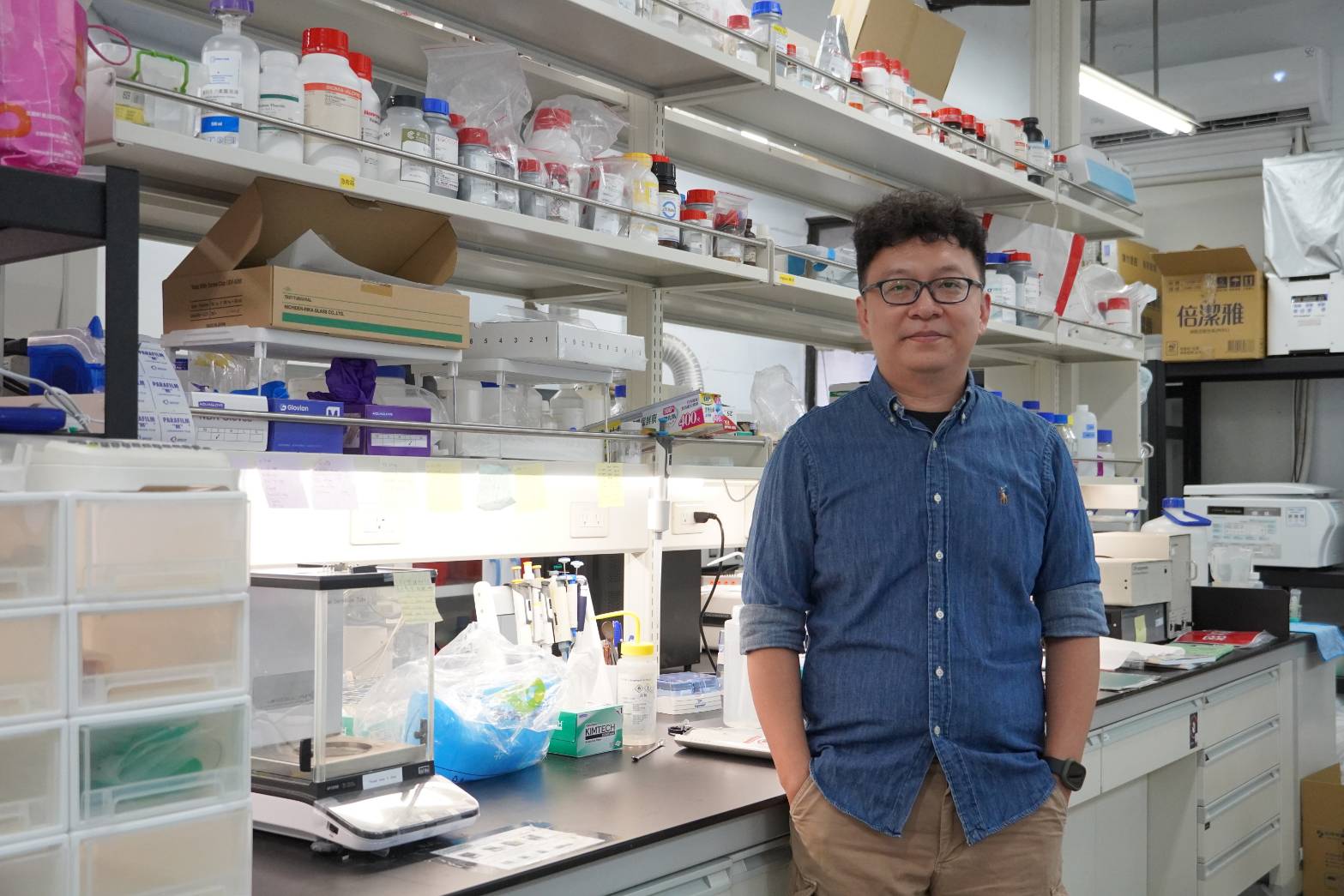
Professor Yeh’s research covers sustainable energy harvesting and storage, the development and application of electrocatalysts, and self-powered electrochemical systems.
Integrating solar energy directly into everyday environments is another area his team continues to explore. The team is working to integrate solar energy harvesting, energy storage and electrochromic devices into architectural glass. Using solar energy to change the glass’s colour and regulate the transmission of visible and infrared light could reduce indoor temperatures and improve cooling efficiency, paving the way for self-powered smart energy-saving windows. The research also explores new electrochromic structures using different materials and combinations of materials on both sides, with the aim of incorporating these technologies into green buildings and improving energy efficiency in the future.
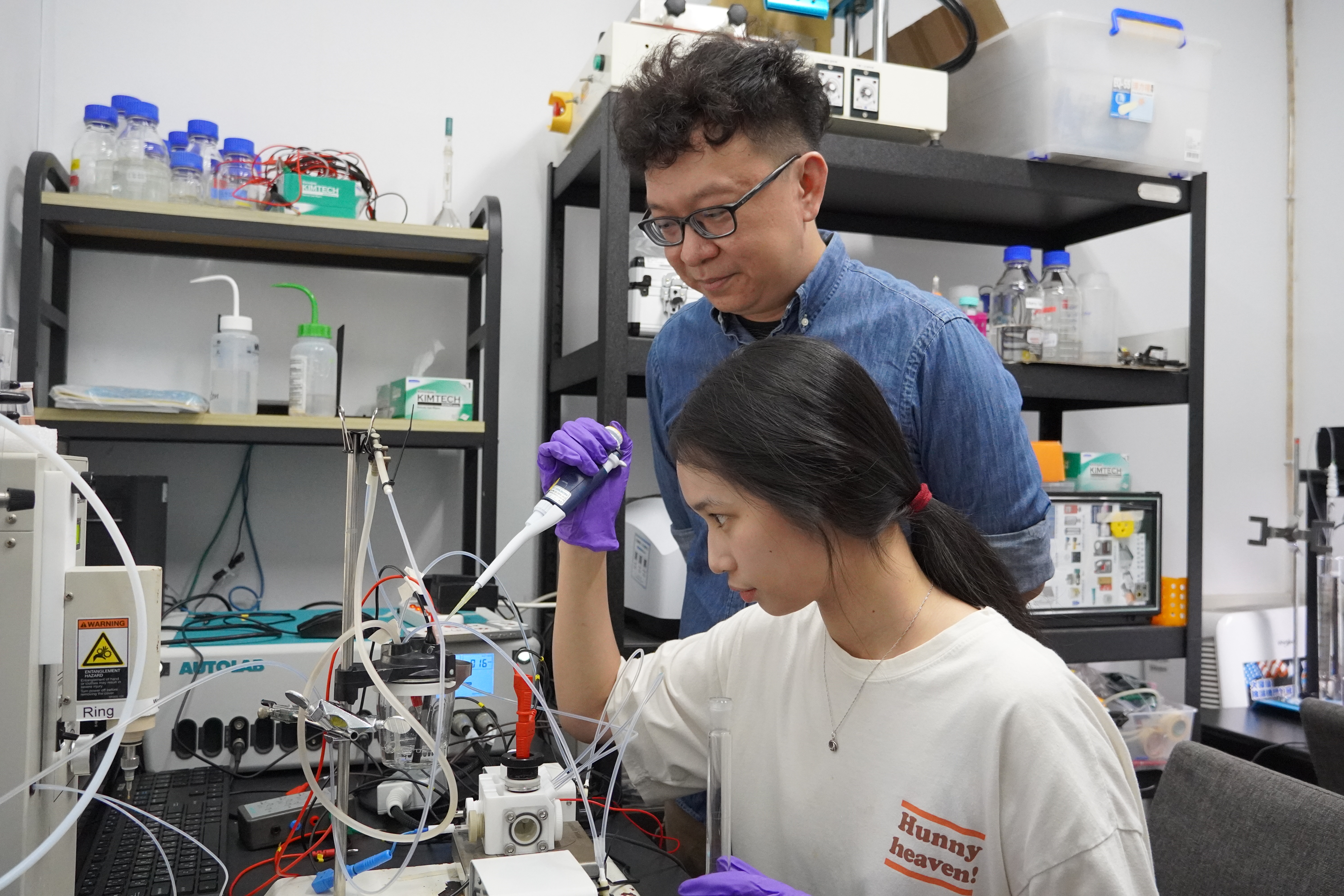
In addition to investigating materials, Professor Yeh’s team examines reaction mechanisms in depth to identify alternatives to precious metals and develop stable processes that lower barriers to practical application.
Professor Yeh said receiving the Ta-You Wu Memorial Award brings greater responsibility as well as positive pressure to keep improving. His curiosity about whether his ideas can actually work, together with the experience of watching students learn from repeated failures and eventually turn concepts into reality, motivates him to continue his research. He encourages students to explore different opportunities, learn from setbacks, accumulate experience and take on new research challenges. Exploring, experimenting and sharing discoveries with students, he said, is what keeps an academic career rewarding. Looking ahead, he hopes to deepen and broaden his research, secure better resources and platforms for students, and increase the potential for translating research outcomes into practical applications through closer industry collaboration.
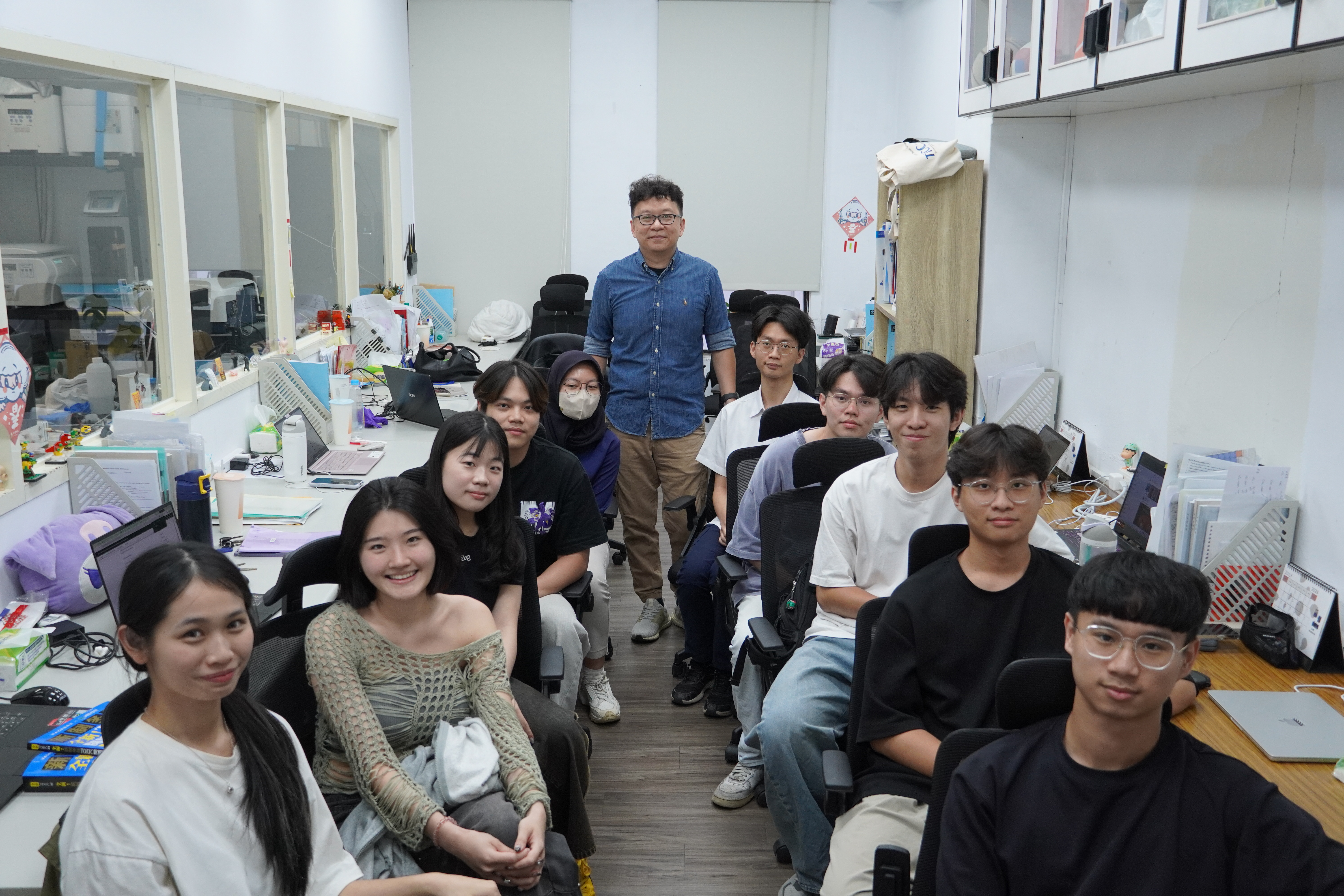
Professor Yeh, who leads the Emerging Energy Materials Laboratory, encourages students to explore different opportunities, learn from setbacks, accumulate experience and take on new research challenges.
While Professor Yeh approaches practical applications from the perspective of academic research, Professor Lin entered AI research through her frontline experience in sports injury prevention and athlete care, transforming years of professional practice into research questions. Having worked in clinical and sports settings, including Chang Gung Memorial Hospital, Shin Kong Wu Ho-Su Memorial Hospital and the National Sports Training Center, she encountered many situations in which problems were evident but existing methods proved inadequate. These experiences motivated her to combine sports injury prevention with AI and engineering technologies to develop more precise analytical tools.
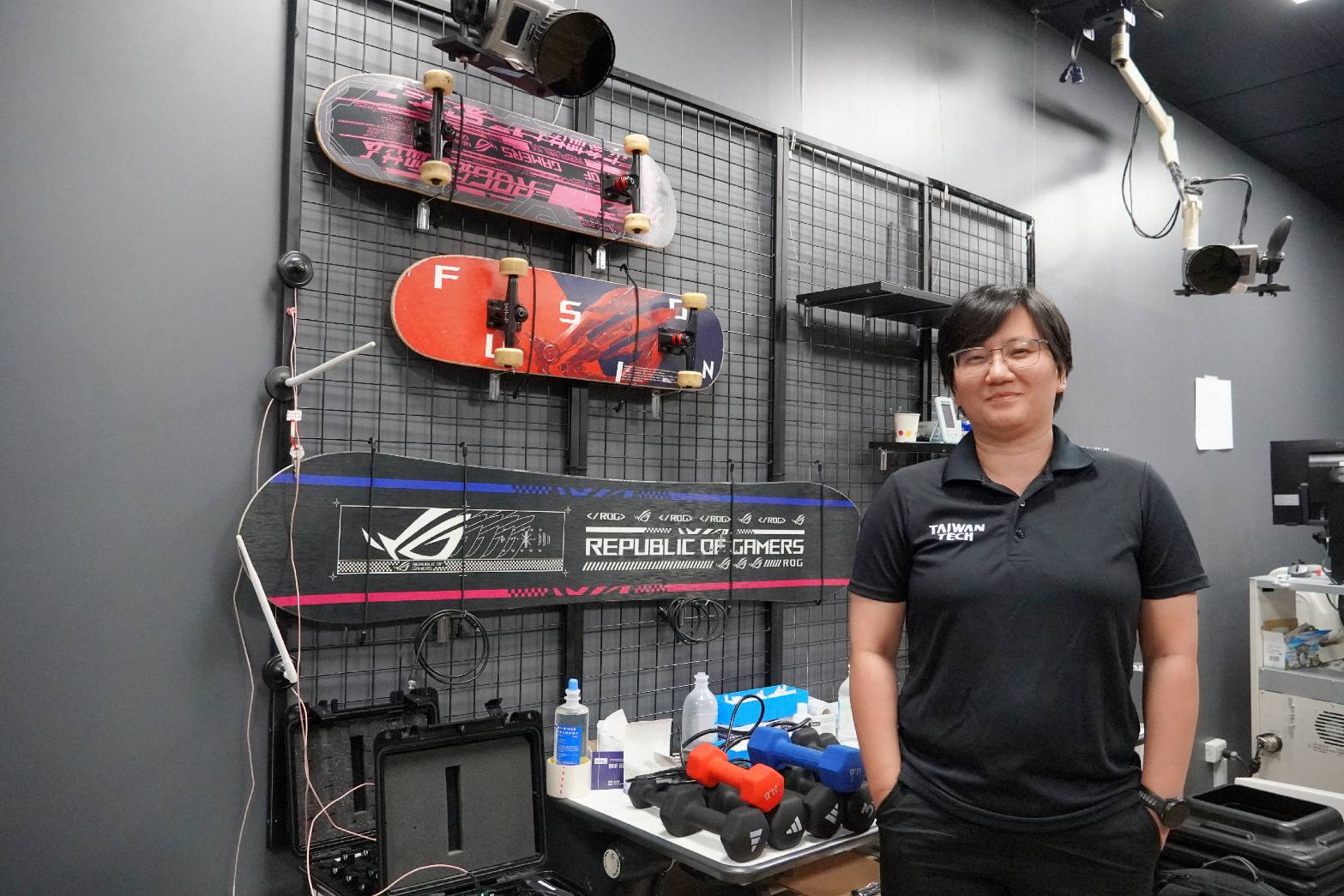
Assistant Professor Yi-Jia Lin of the Graduate Institute of AI Cross-disciplinary Technology combines wearable sensing and sports science to develop AI-based systems for personalised athlete training programmes and injury-prevention strategies.
One of Professor Lin’s major research directions is to collect athletes’ long-term physiological and training data and use it to build AI analytical models. Using wearable inertial measurement unit (IMU) sensors, image-based pose estimation and other tools, she gathers data on heart rate, heart rate variability (HRV), muscle oxygenation, strength, fatigue and training load. AI then analyses individual differences to help coaches and sports medicine personnel assess athletes’ conditions and develop training, recovery and injury-prevention plans tailored to their needs.
Professor Lin emphasises that AI and engineering technologies are not the end goal of her research; rather, they are tools for making sports science more precise. Because much previous research on training and sports science has focused primarily on male participants, she also studies female triathletes, building longitudinal datasets and AI analytical models that account for factors such as the menstrual cycle and physiological demands. Her goal is to develop training and health recommendations better suited to female athletes. In injury prevention, Professor Lin uses IMU sensors, video and AI models to analyse movements such as jump landings and assess knee joint loading and potential injury risks. She hopes to make sports science assessments that once required specialised laboratories more accessible within everyday training environments.
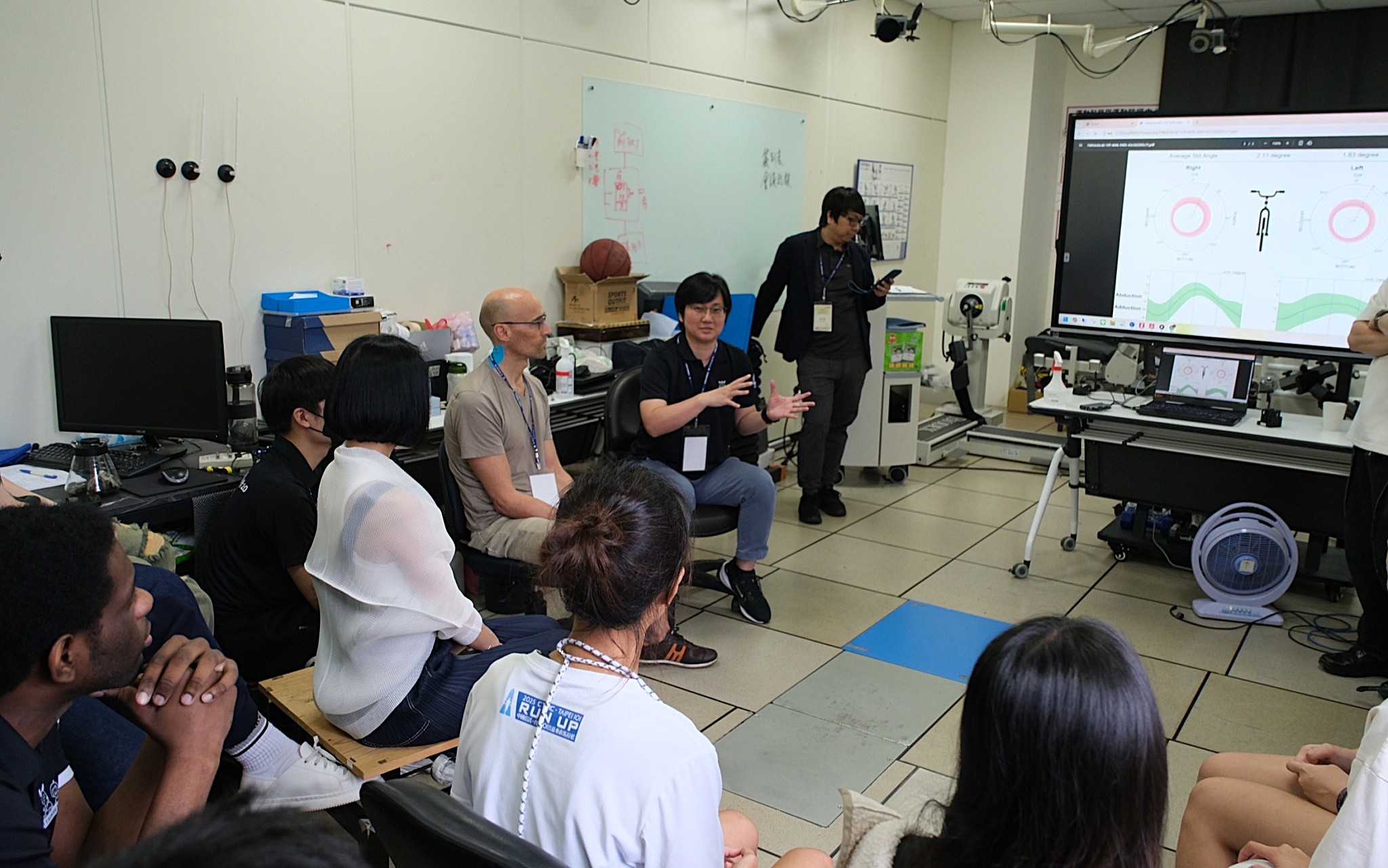
Professor Lin actively promotes international research and teaching exchanges, leading students in cross-border collaboration and practical field engagement to broaden their perspectives and experience in sports technology research.
Even after becoming a university faculty member, Professor Lin has continued to provide sports injury prevention and athlete care for para-athletes and Taiwan Tech varsity teams. She believes frontline experience is an important source of research questions and reminds researchers that “athletes are not just a set of data”. Each athlete has a different injury history, training background and set of living conditions. Research must therefore consider safety, ethics and practical needs alongside model accuracy. Moreover, Professor Lin has also maintained a long-term collaboration with Czech Technical University, researching remote physiological monitoring, wearable sensing and physical activity assessment. Through international visits, internships and competitions, she introduces students to different research teams and real-world settings, helping them develop the ability and sense of responsibility to identify problems, collaborate across disciplines and devise solutions.
Reflecting on the award, Professor Lin expressed gratitude to the teachers, students, collaborators and research participants who have supported her along the way. To her, the award is not simply proof of achievement but a reminder that “a path that may seem unconventional can gradually become one’s own”. Over the next five years, she hopes to deepen international collaboration and research into women’s sports science, while further developing AI-based movement analysis, wearable sensing technologies and biomechanical models that are better suited to real-world settings.
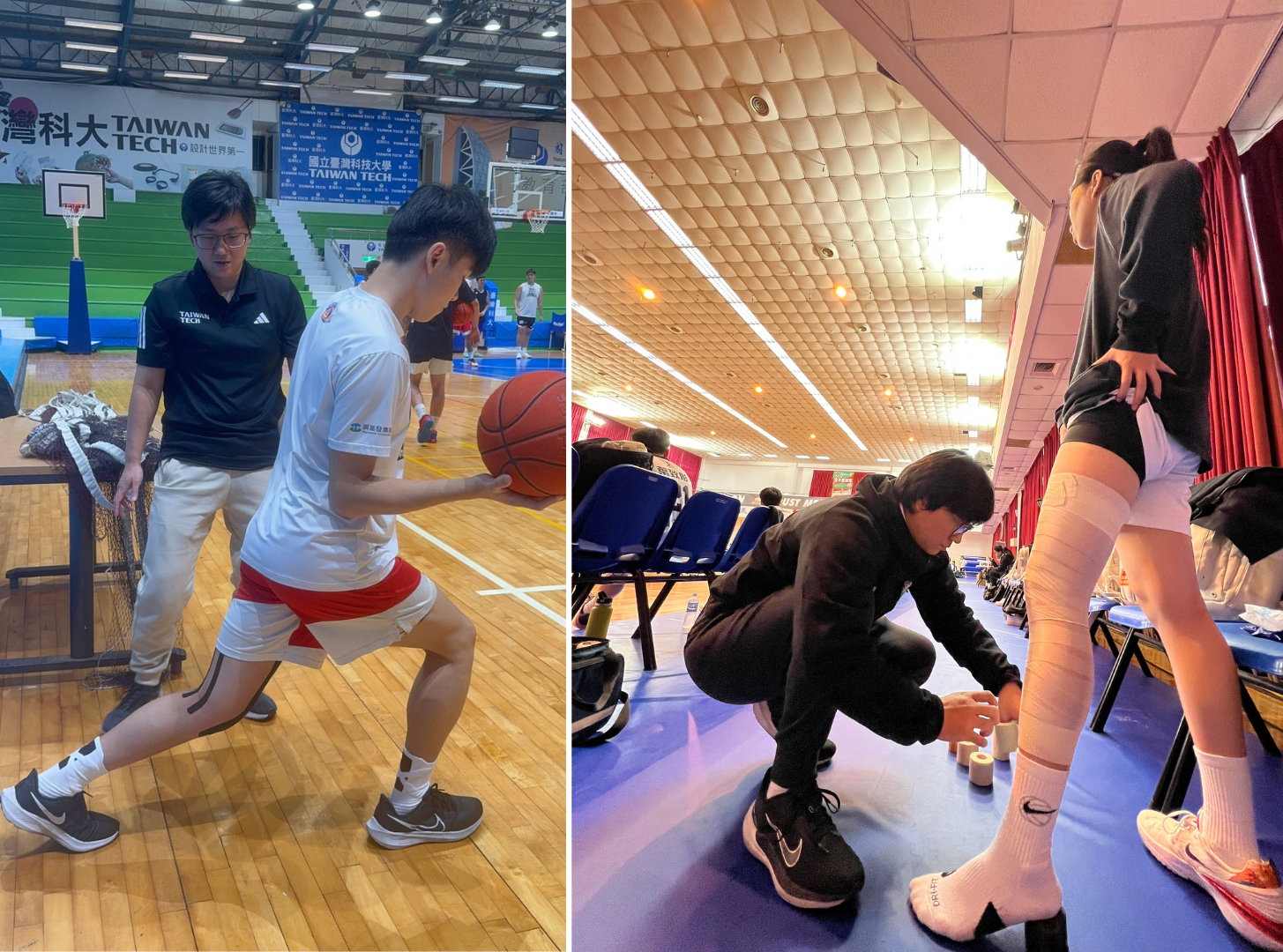
Professor Lin continues to conduct movement assessments and provide frontline sports injury prevention and athlete care, turning real problems encountered in training and injury management into research questions and seeking solutions through sports science and AI.


